
A Secret School for Girls
Inside the clandestine network of classrooms defying the Taliban in Afghanistan
By Jessie Williams
A group of teenage girls and young women gather in a nondescript room with pale walls, chatting and laughing. They have just finished their classes for the week and are about to head home. But they must leave one by one, so as not to draw any attention. If someone asks them where they have been, they say they were visiting the doctor. If they think someone might be on to them, the teachers move their classes to another person’s house. They leave their books at home. They must not be caught.
These girls live in Afghanistan, where education for girls beyond sixth grade is banned by the Taliban. They attend an underground girls’ school – one of five an Afghan NGO quietly runs across the country, with 28 teachers in different provinces providing free education to around 1,000 students, ranging in age from 13 to 45.
“I was very unhappy when the Taliban closed my school,” says Ada*, 15, who was in eighth grade when the Taliban returned to power on a hot summer day in 2021, following the withdrawal of U.S. and coalition forces. “I had depression.” The secret school she attends opened in the months afterward. “I feel better [now],” she says. “When I see the teachers and girls, I have power.”
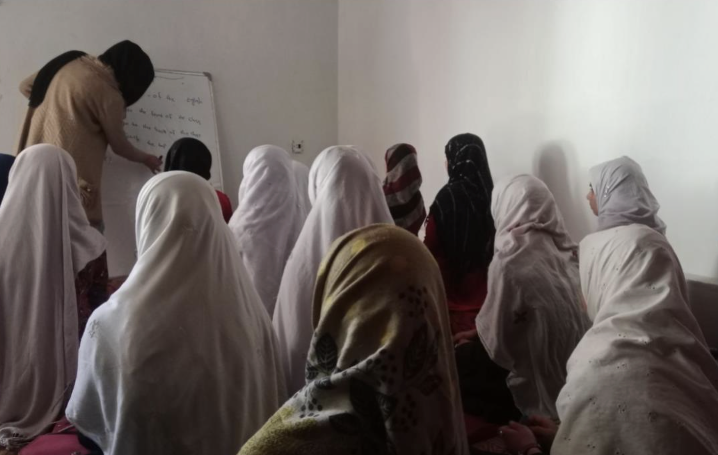
As a new school year begins in Afghanistan, more than 2.2 million girls are currently out of school. But some of them are defying the ban. Over the past few years, classrooms have emerged in the shadows—cropping up in basements, living rooms and bedrooms around the country, away from the prying eyes of the Taliban, who have informants to catch people violating their strict codes. The schools use certain tactics to evade those informants, including staggering the timing of classes, so that some girls attend in the afternoon and some in the evening. If the girls think they’re being followed, they change their route. Madrassas, or religious schools, are still allowed, so if they are caught, they say they were going there.
The schools run by the NGO, which we can’t name for safety reasons, started through a network of trusted people in different communities. They cost about $60,000 to run each year, which a grant from the Frontline Women’s Fund, an initiative that supports women’s rights activists around the world, helps cover. One class was established and then another, and before long the network had blossomed into a web of clandestine schools, turning girls into what the Taliban fears most: educated women. “An educated woman changes the world,” says Laleh, 25, who teaches English at one of the schools. “An educated mother nurtures, trains, educates her kid. The kid changes the society.”
The Meteor spoke to the teachers and students over Zoom on the condition that we hide their identities. The stakes are high; if the Taliban ever found out about the schools, the teachers would be sent to prison, while the girls themselves could also face imprisonment and beatings. Despite the risks, the educators continue to teach. “When I was a girl, I studied chemistry. My father said ‘It’s not safe to study.’ But I wanted to have a voice,” says Laleh. “When I teach the girls, they have the vocabulary to talk. It empowers me. When they learn, I think that I have done something in the world, that I didn’t live a worthless life.”
Without education, she says, “our people don’t even know how they should live and what their rights are…When half of our society is paralyzed, how can our country move forward?”
Since returning to power the Taliban has systematically eroded women’s and girls’ rights. Education for girls over sixth grade was the first to go, followed by barring women from university and nearly all forms of employment, then prohibiting them from playing sports, and even leaving the house without being completely covered and accompanied by a mahram or male guardian. The Taliban’s latest decree permits men to beat their wives as long as they don’t break any bones or leave open wounds.
The UN says that Afghan women are facing the most severe women’s rights crisis in the world, with many activists and human rights organizations calling it “gender apartheid”—a term meaning the systemic oppression, discrimination, and segregation of a specific group based on gender.
In January 2025, the International Criminal Court issued arrest warrants for the supreme leader and chief justice of the Taliban, accusing them of crimes against humanity for the persecution of women and girls. But nothing has been done to enforce the warrants. Even worse, the international community has begun to accept and normalize the Taliban as the de facto government, despite its draconian policies—like establishing embassies in Kabul, welcoming diplomats appointed by the Taliban, and inviting them to international summits.
Meanwhile, cuts to foreign aid budgets have meant dwindling humanitarian support for Afghanistan, and while the UN has continued its operations in the country, it faces major challenges—the main one being the ban on Afghan women entering UN premises, along with a 50 percent funding gap for UN work, which makes it difficult to provide services directly to women at a time when they desperately need it.
“Maybe they will arrest me and I go to jail. But I have to do this.”
Many Afghan women feel like the world has forgotten about them. Mariam, the 30-year-old executive director of the NGO that runs the schools, was a head teacher before the Taliban swept through the country. She says the international community should be doing more. “For five years girls and women can’t go to school. It’s terrible. But nobody is doing anything,” she says. “Why aren’t the UN with us?”
Mariam says there are many women who are struggling financially now that they cannot work, and girls are being forced into early marriages. At the same time, recent clashes with Pakistan and war in neighboring Iran are exacerbating the already dire economic crisis.
For these girls, the school offers a glimmer of hope in an increasingly dark world, giving them the chance to forge their own futures. Bahar, a 19-year-old with a wide smile, was in 10th grade when the Taliban closed the schools. “When I come here I feel so excited,” she says, giggling. “I feel complete and confident.” Her favorite subjects are English and math, and one day she hopes to become a psychologist. “Education is very important to me. When girls use education, they can help their family.”
All of the girls’ families are supportive of them attending the classes, despite the dangers. “I feel happy because I improve my skills in this school,” says one student, Lama, 18. She especially loves art because it allows her to express her feelings, but wants to be a doctor when she’s older. “I want to help my people, always.”
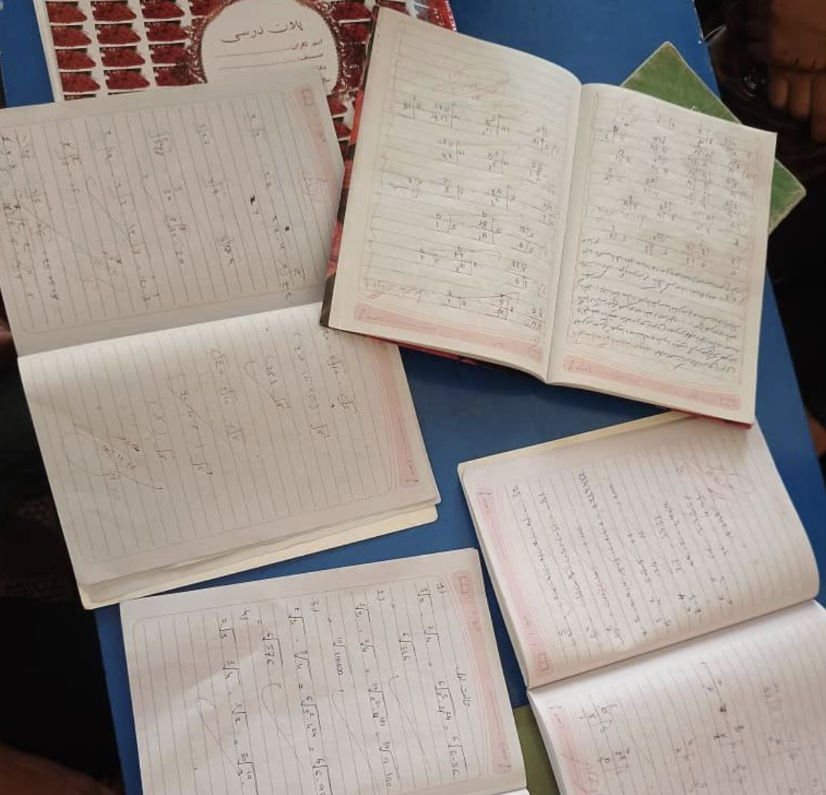
Rehan, 21, a math teacher, says when she was her students’ age, “I had these opportunities as a student and I felt great. They should become what they want; I always teach them to become stronger.” Many of her students are vulnerable, she says, and so she makes sure to focus on their mental health. “When I come to class I ask them, ‘How was your day? How are you?’ Sometimes many of them don’t have a good situation at home. First, I make sure they are safe, that they don’t have any mental problems. Then I start to teach what I planned. I like to make the class a safer place for them.”
As the students and teachers talk, it becomes clear: These are much more than just schools. They also seem to be sanctuaries for women and girls to connect, laugh, and dream with friends. They are like a family, and Mariam, the head of the NGO, is the matriarch. She calls the students “my daughters” and sees supporting them as her responsibility. “It’s a very big challenge,” she says. “We are afraid [of the Taliban finding out]. Maybe they will arrest me and I go to jail. But I have to do this.”
Despite the constant fear, they all still try to find joy – even if it’s fleeting. They dance and sing together when no one is looking. These girls are growing hope in the shadows; they’re creating cracks of light streaming through the darkness. “Sometimes we laugh, sometimes we cry,” says Mariam. “Maybe when the Taliban go, we will get our rights [back]. We want a new generation to feel peace.”
*All names in the piece have been changed to protect the subjects’ identity.

Jessie Williams is a freelance journalist focused on international affairs, humanitarian issues, and women’s rights, with work published in The Guardian, TIME Magazine, Foreign Policy, Al Jazeera, and more. She has reported from Syria, Lebanon, Iraq, and Ukraine, among other places.