
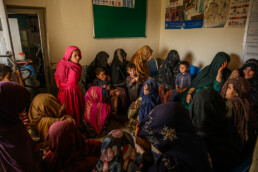
Five Years of the World's Most Repressive Regime
Since the Taliban seized power, Zahra Nader and her fellow journalists have been documenting the violence. This is what she’s seen.
BY CINDI LEIVE
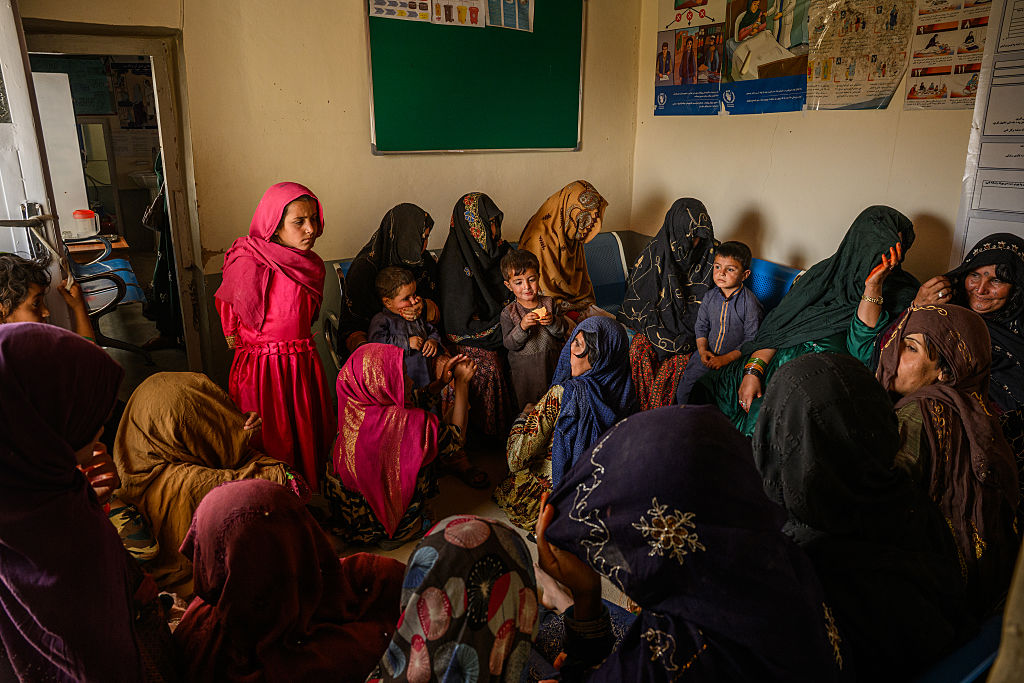
Five years ago today, the Taliban captured Kabul, Afghanistan’s capital city, and launched what the United Nations now calls the most thorough dismantling of women’s rights in modern history. The Taliban have issued more than 100 decrees barring women from going to school after sixth grade, traveling long distances, taking taxis, appearing on TV, speaking on TV, and speaking in public at all.
If you have heard about any of this, it is thanks to journalists like Zahra Nader, the executive director and editor-in-chief of Zan Times, an investigative newsroom led by Afghan women journalists fiercely dedicated to documenting what it’s like to live under gender apartheid. Nader, who once worked in the Kabul bureau of The New York Times, now lives “in exile” in Canada, as do several of her colleagues, and works with an undercover network of reporters inside Afghanistan, who file their stories secretly and at constant risk of discovery.
Their reporting is a series of gut punches: They have documented the country’s femicides; discovered the Taliban’s practice of arresting women for the clothing infractions known as “bad hijab” and then assaulting them; and exposed the heartbreaking spike in suicides among young girls under Taliban rule. But their work is also a series of miracles, each piece a bracing, furious counterpunch to the idea that women’s voices don’t matter.
I’ve marveled from afar at the work Zan Times does, and the courage with which these journalists do it. On this dark anniversary, The Meteor asked Zahra Nader to shine light on what’s happening.
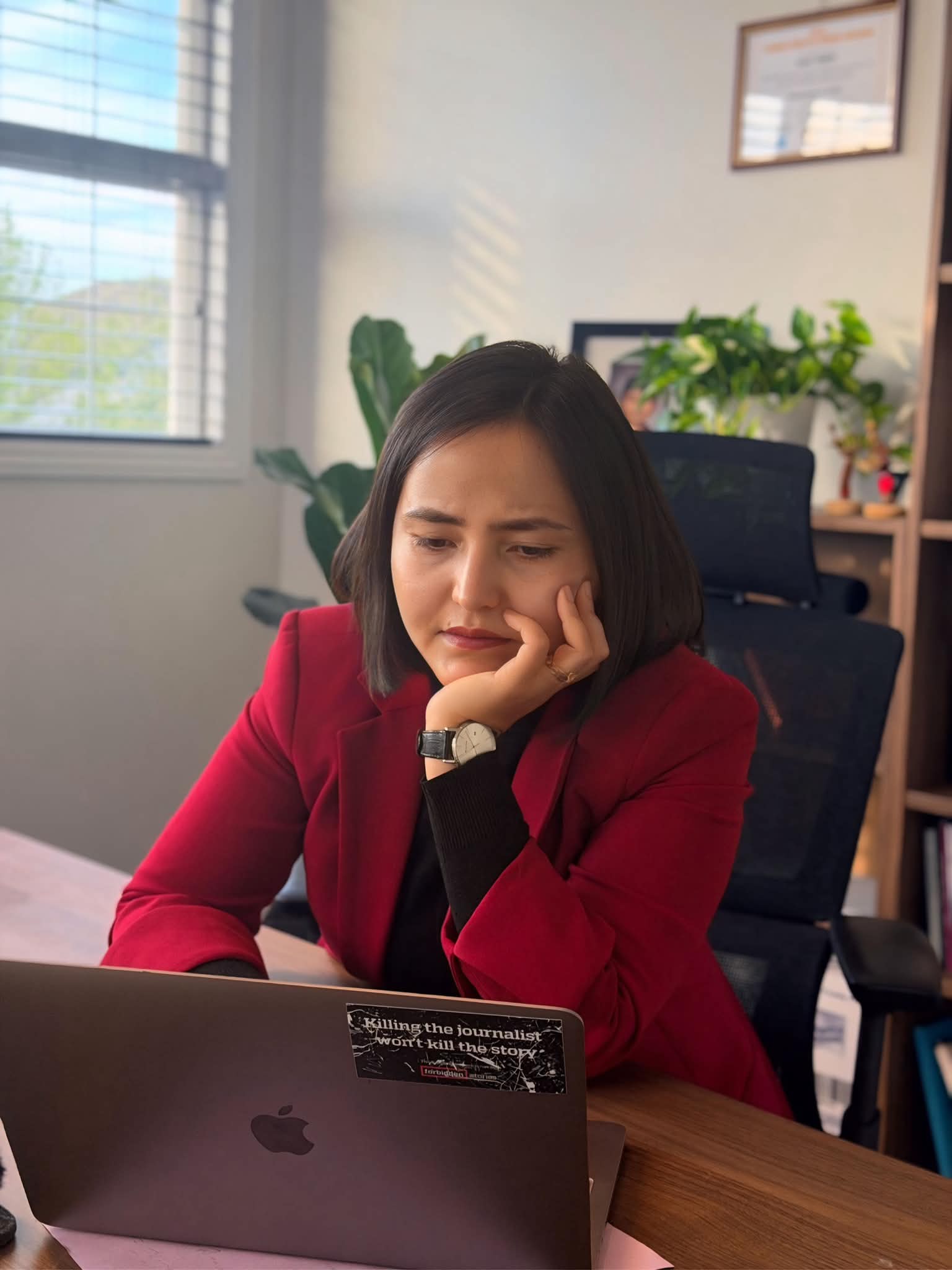
August 15 will mark five years since the Taliban took Kabul, a city you had lived and worked in as a journalist. You later told The Meteor that on that day, “it wasn’t only the fall of a country I was witnessing; it was the death of the hopes of my generation.” How do you feel today, on this anniversary?
It’s a sad day for us, because it's a reminder of what we have lost, and how our losses have become normalized…even by countries who in many ways see themselves as champions of women’s rights. The Taliban can be invited to Europe…Diplomatic relationships [are] opening up. It was hard in 2021 to look away from what was happening to women in Afghanistan. But it has become easier five years later to look away.
Five years ago, a girl of ten or 12 marrying and becoming pregnant was not the norm. And now [the attitude is] yes, it’s sad, women in Afghanistan are imprisoned in their home, but attention is fading...Our job [at Zan Times] is to make the picture so very, so real, that you can't look away. And if anyone does look away, at least we can tell them that you made a choice. It was not that you didn't know.
We want our reporting to be a kind of lived record of what the Taliban are doing, so if any country is willing to engage with them, they have to be able to look at these stories. We want to make it costly for any country that's engaging with the Taliban to do so. That is our hope.
I think there may be a global perception that the Taliban changed Afghan women's lives immediately, and things got bad, and they have remained bad. But your reporting makes clear how much additional violence has been enacted over the last five years. What are some of the milestones of how much worse it has gotten since 2021?
This is the thing: When the Taliban took over, they did not implement all of their policies of gender apartheid [at once]. In their first week, they said that women working in the public sector should stay home. In a month, they closed the schools. After four months, they banned women from traveling. They were slowly testing the water—how would the world react? Would the world play along? And the Taliban has seen that attention fades. That the world condemns the Taliban's policies with rhetoric, with words, but with little real action.
Let me tell you about two laws they implemented this year. One, passed in May, is basically a divorce law that sets no minimum age for a girl to be married off….[it essentially] legalizes child marriage. At the same time, this law defines that no woman can get a divorce without her husband’s consent—even if he’s beating her. Even if a woman's husband is missing for a very long time and she wants a divorce to move on in her life—which is allowed according to Islamic law—she has to wait until [the age at which] he would die! Unless he is missing in war or there is a high chance he was killed, she cannot get a divorce.
Then there is the criminal code, which was passed in January. It says that if a woman is beaten to the point that her bone is broken, and if she can prove in court that her husband [was responsible], the judge may sentence her husband to 15 days in prison. But if that woman goes to her parents' home [for safety] and the parents refuse to return her, the parents and the wife will be in prison for three months. That's six times higher than the punishment for committing violence!
Am I hearing you correctly that there would be no punishment for the man as long as he didn’t break a bone?
No punishment. Also, we found out that for every four women who died, only one man was arrested and that arrest was sometimes for a day and they were released. Meaning that there is complete impunity for the killing of women in Afghanistan.
You alluded before to one of the reasons that your reporting matters, which is that it could increase international outrage toward the Taliban. What are the other reasons you do this?
I was a woman journalist in Afghanistan. I could still be a woman journalist inside Afghanistan if I was not [in exile]. And if I were being held in prison in my own home, what would I want? I would want somebody to make it possible for me to feel that I am still a professional woman. That I am still contributing to my society. That I'm still part of humanity. In a country where the sense of humanity has been taken away from you—when you are not allowed to choose your own clothes, you cannot go out by yourself—what kind of human are you? So it is very important for me personally to give that sense of humanity to women journalists in Afghanistan. Sometimes we talk about the risks they take and the security, and I ask them why they are doing this work. They tell me, partly we need money to survive [only seven percent of women in Afghanistan are employed]. But more than that, we need hope. We need a purpose to live for. And this work gives us a purpose.
We interviewed a woman…[who had been] brutally abused and raped by the Taliban inside prison. My colleague asked her, why are you telling me this story? The Taliban might find you again. And this woman said, I might not survive…but I want somebody to hear my story. That’s the level of misery and helplessness for the women of Afghanistan: Your biggest dream becomes just to be heard. Not, “I want justice.” Not “I want equal rights.” Their only hope is for somebody to care [about] their story.
Initially I was really excited about changing the situation in Afghanistan for women and girls. But from what I’ve seen over the past five years, that's not going to happen. So now—if I can keep one woman journalist inside Afghanistan safe, help her get paid and give her a purpose to live for, I think that's my job.
You clearly care so much for your journalists. How do you help them stay safe while doing a job that is very dangerous to do?
When we have a story we are interested in, the first question is, is it safe to cover it? And if something is high-risk, we might report it from outside the country. We did a story about a female YouTuber who was killed by the Taliban, but who [they said was] a suicide. Two of our colleagues tried to cover it from inside Afghanistan, but received suspicious phone calls [and threats]. So they shared information with us, and my colleague and I outside the country covered the story instead. Sources feel safer talking to us sometimes: I'm in Canada; I'm out of the reach of the Taliban.
But for our journalists inside Afghanistan, we take precautions. Nobody works under their real name. And they are not allowed to contact the Taliban—if we need to get comment, those of us outside the country will call. We hope that all of our collaborators’ immediate families know they work for us, because in case something happens, they can let us know. But one of our colleagues is living [near] her uncle. She says that her uncle is a misogynist and very happy that the Taliban came and kept women from working…Her uncle doesn’t know [that she works as a journalist] and she doesn’t know what he’d do if he found out. He might go to the Taliban.
What do you hope for the women of Afghanistan, five years from now?
I hope that Afghan women will be allowed to choose their own leaders, to be part of social life, to have their rights respected and protected. That hope feels distant—is it even possible? But that’s my hope.
And in five years, I hope that Zan Times has branches all over Afghanistan, run by women journalists who are leading in their own local communities. Because if Afghan women lead, with the understanding and awareness that they are building something for the next generation, I believe we will have peace and prosperity. Because women are less likely to start fighting each other, right? We might occasionally fight on social media, but it will not be disastrous for Afghanistan.
All of this seems very far off for me, but…without hope we cannot move forward.
You can follow Zan Times’s reporting here.
More to read, from The Meteor’s coverage of Afghanistan:
Two journalists on the first few months of panic and despair (February 2022)
Just half a year after Kabul fell to the Taliban, journalist Mariane Pearl speaks with Zahra Joya and Zahra Nader about how much women’s lives had changed.
A soccer captain chronicles her daring rescue mission (August 2023)
The Meteor interviews Farkhunda Muhtaj, who helped a group of teenage girl soccer players, known as Ayenda, flee Afghanistan in 2021.
Why don’t we treat “gender apartheid” as a crime? (August 2024)
With the Taliban’s power now entrenched for three years, we ask Malala Fund’s Afghanistan director, Sahar Halaimzai, about what the world can do about it.
This professor watched her country disappear, and chronicled it (August 2025)
Afghan feminist scholar Lima Halima-Khalil reflects on the last four years of Taliban rule.
An Afghan refugee who fled fear—and found it here (January 2026)
As the second Trump administration begins, Lima Halima-Khalil describes what it’s like to be “the other” in a country she came to for safety
Teen girls on defying the Taliban to get an education (April 2026)
Journalist Jessie Williams speaks with students and teachers at a secret school in Afghanistan, where girls’ education beyond sixth grade is strictly banned.


A Bipartisan Attack on Women
  June 16, 2026 Greetings, Meteor readers, I am still recovering from the emotional hangover that was this weekend—the Knicks win, New York City’s Puerto Rican Day Parade, and a kid’s birthday party. I’ve never been so desperate for silence. In today’s newsletter, a dispatch from Peru, where women’s rights are on the ballot. Plus, what we can learn from lesbian seals and amorous lionesses. Hydrating, Shannon Melero  WHAT'S GOING ONA high-stakes election: Women’s rights under attack. Hard-won gains rolled back. A political agenda moving steadily backward. Sounds familiar? As Donald Trump’s administration chips away at women’s freedoms in the United States, women inhabit a similar battlefield a few thousand miles to the south in Peru, where I am based as a journalist. Heading into the final stretch of a deeply polarizing presidential election, we find ourselves stuck between a rock and a hard place. After a chaotic first round, the runoff has come down to an unexpected contender and an infamous veteran, respectively: leftist Roberto Sánchez and right-wing Keiko Fujimori. After initially trailing Sánchez, Fujimori—a woman—has clawed back to a lead of around 30,000 votes. Though the race remains open, with 99% of ballots counted, each update makes it more likely that Fujimori, who has run four times, will finally win. At first glance, the candidates couldn’t seem more different: Fujimori’s Fuerza Popular (FP) carries a legacy of human rights violations linked to her father, president-turned-dictator Alberto Fujimori. Sánchez’s Juntos por el Perú (JP) promises to defend human rights while positioning the candidate as heir of socialist ex-president Pedro Castillo. But here’s the rub: Neither party appears to have women’s interests at heart. Peru is following a global trend of setbacks in women’s rights amid rising conservative pressures, but in our case the trend pops up across the political spectrum. As former Minister for Women and Vulnerable Populations Marcela Huaita tells The Meteor, those advocating for human rights are "no longer pursuing a progressive agenda, but one of resistance.” AND:
 KARLA TOLEDO, A DACA RECIPIENT IN ARIZONA, WAS TAKEN INTO ICE CUSTODY LAST MONTH. HER FIRST DEPORTATION CASE WAS DISMISSED, BUT NOW, DESPITE THE PROTECTIONS PROMISED UNDER DACA, ICE IS RELAUNCHING ITS CASE AGAINST HER. (VIA GETTY IMAGES)
 Three Questions About...Animal SexPerrin Roosevelt Ireland’s new book about nature’s “horndogs” is a wild, and feminist, ride.By Dr. Ayana Elizabeth Johnson  THE AUTHOR AND HER HORNY MASTERPIECE (COURTESY OF PERRIN ROOSEVELT IRELAND) Did you know that climate change is causing the albatross divorce rate to spike? Or that lionesses have sex 100 times when in heat? Perrin Roosevelt Ireland’s new illustrated book, Poking the Squid: What We Can Learn From Animal Sex, will teach you everything you had no idea you didn’t know about how non-humans do it. Ireland is an artist and environmentalist whose book is an utterly delightful journey through the animal kingdom, brought to life with her effusive watercolor drawings. We asked Ireland about animals’ pleasure, sexual orientation, and gender behavior—and how these things intertwine with feminist and queer theory. (They do!)
We could do more rigorous reassessing of evolutionary theories, specifically sexual selection theory. For example, Kaya Tombak, an evolutionary biologist, said to me that we've never actually studied whether egg cells are more energetically intensive to make in the body than sperm cells. We assume the animal that makes eggs is more invested in the fate of the offspring, wants to have sex less frequently, and is going to energetically protect her body. Victorians were the ones generating the initial theory that, like Darwin, sets up these gender roles that we repeat and replicate and project onto animals: female animals that are coy, less interested in sex, and want to take care of babies. And you have males that want to wander the globe and shoot their shot because sperm's easy to make. This set of assumptions comes up over and over again in the way we talk about animals. So I started asking each of the researchers whether [those assumptions] had been assessed in [the species they study]. And often they would say, "No, and I don't even know how you would design that experiment."  MONKEY THROUPLE, ANYONE? (ILLUSTRATION COURTESY OF PERRIN ROOSEVELT IRELAND) One theme of the book is that earlier researchers were also blinded by their own heteronormativity. Then, over time we’ve learned that actually there is incredible sexual diversity across the animal kingdom. So what can humans learn from animal sex? More specifically, what can we learn from animals about how to have better sex? I think we can learn that sexual diversity is biodiversity, that “all God's critters got a place in the choir.” Animals don't kill each other when they change sex countless times across a lifetime [as some fish and amphibians do]. They don't harm each other or remove each other from communities if they're carrying a multiplicity of sexes in one body [as banana slugs and earthworms do]. They are partaking of pleasure without judgment. And they are sexual geniuses. Life has come up with astoundingly inspiring ways to keep making more of itself. And I love the “better” question, because better for who? What works for me, what is better for me, might not be for another animal, given what they need in their evolutionary history and for their species to thrive. Like, dolphins can teach us better oral sex because they are echolocating on each other's genitalia. And dolphins can access frequencies far beyond the scope of human hearing. So we can't even imagine how pleasurable that might be. And then you pair that with more recent developments of understanding how innervated and complex the dolphin clitoris is and how large it is, and that's quite a compelling combination. My first exposure to your work was being charmed by your deadpan Instagram videos where you hula hoop while explaining the sexual behaviors of various species. But before that, you worked at the Natural Resource Defense Council for a decade, and the majority of what you post on social media is about habitat conservation. Help us connect these dots, between animal sexual diversity and conservation. It's pretty hard to be an animal lover during a sixth mass extinction. Part of why I talk a lot about animals to people is to not be alone with that. It's so excruciating to me, every day. And I can't talk about my joy in finding out how much sex a lioness has when she’s in heat, which is so fun, without talking about habitat loss and climate change. We are currently making impossible the kinkery we celebrate in this book. I can't talk about albatross monogamy without talking about how much plastic they're living in. I can't talk about a 50-pound elephant dick without talking about how the savanna's gone. I can't talk about seal lesbian relationships without talking about how fur seals got listed as endangered after this book went to the printer. The environmental movement's communication for my whole lifetime has been about loss, about despair, about stemming tides of harm, and not as much focused on the beautiful world we want. How do I invite people in, in a planetary crisis, to this sense of resilience and ability to act from a place of love? I just want to provide people an opportunity to get a giggle and then take an action on behalf of the horndogs that they most admire in the book.  Dr. Ayana Elizabeth Johnson is a marine biologist, teacher, and author of What If We Get It Right?: Visions of Climate Futures.  FOLLOW THE METEOR     Thank you for reading The Meteor! Got this from a friend? |


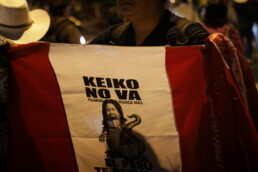
In Peru, a High-Stakes Election for Women
BY LORENA PROCHAZKA
Women’s rights under attack. Hard-won gains rolled back. A political agenda moving steadily backward. Sounds familiar? As Donald Trump’s administration chips away at women’s freedoms in the United States, women inhabit a similar battlefield a few thousand miles to the south in Peru, where I am based as a journalist. Heading into the final stretch of a deeply polarizing presidential election, we find ourselves stuck between a rock and a hard place.
After a chaotic first round, the runoff has come down to an unexpected contender and an infamous veteran, respectively: leftist Roberto Sánchez and right-wing Keiko Fujimori. After initially trailing Sánchez, Fujimori—a woman—has clawed back to a lead of around 30,000 votes. Though the race remains open, with 99% of ballots counted, each update makes it more likely that Fujimori, who has run four times, will finally win.
At first glance, the candidates couldn’t seem more different: Fujimori’s Fuerza Popular (FP) carries a legacy of human rights violations linked to her father, president-turned-dictator Alberto Fujimori. Sánchez’s Juntos por el Perú (JP) promises to defend human rights while positioning the candidate as heir of socialist ex-president Pedro Castillo.
But here’s the rub: Neither party appears to have women’s interests at heart. Peru is following a global trend of setbacks in women’s rights amid rising conservative pressures, but in our case the trend pops up across the political spectrum. As former Minister for Women and Vulnerable Populations Marcela Huaita tells The Meteor, those advocating for human rights are "no longer pursuing a progressive agenda, but one of resistance.”
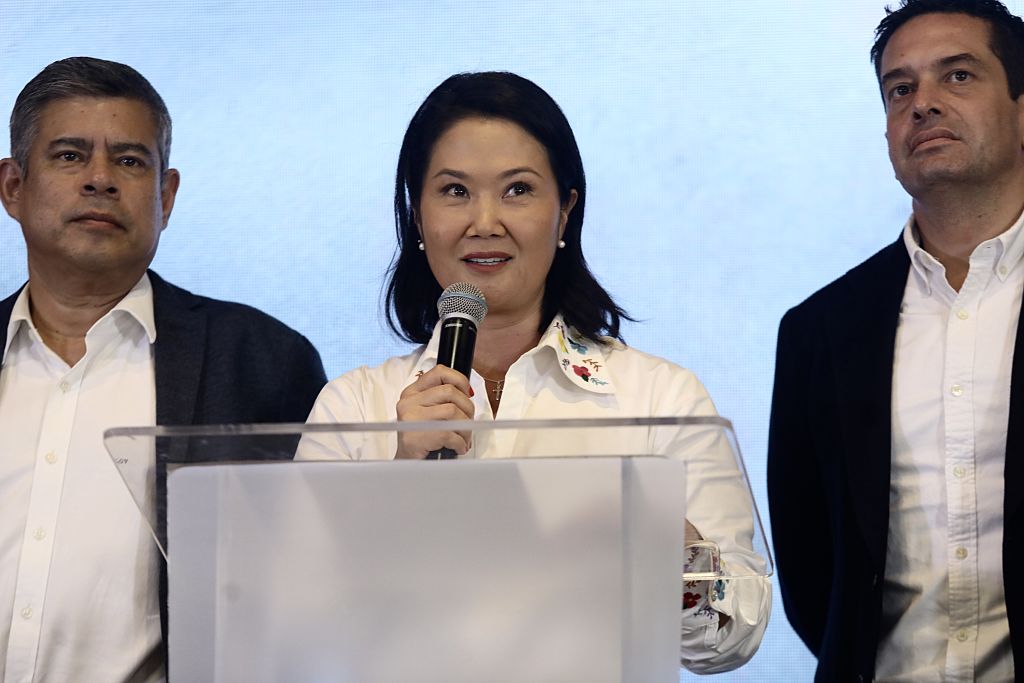
Peru is already at a point where reports of femicide have increased, and thousands of sexual abuse cases have gone unpunished. To make matters worse, current president José María Balcázar has defended child marriage and normalized sexual relationships between teachers and students.
Huaita sees “no ground for optimism.” We already know what FP stands for, she points out: It opposes same-sex marriage, abortion even in the case of rape, and comprehensive sex education, which FP charges will “homosexualize” children. FP has a natural ally in ultra-conservative Renovación Popular (RP). Together, they’re just one vote away from a Senate majority. And RP passed a law that eliminates “gender perspective”—a framework used to address gender inequality, gender-based violence, and sexual and gender diversity.
It's not just a matter of rhetoric: This law removes the concept of gender from all legislation, obscuring how gender-based power dynamics drive violence and discrimination, Huaita explains. It limits access to comprehensive sexual education, health and reproductive rights; it means even more impunity for abusers and less support for survivors. It also sends an important institutional message: Women are not a priority.
The new administration will decide whether to preserve or dismantle the “gender perspective” framework. But it’s not as if a Sánchez presidency would have necessarily saved the project: Both Fujimori’s and leftist Castillo’s party supported the law eliminating it.
And Peru’s left has not always aligned with progressive positions on gender issues. For instance, Pedro Castillo opposed the gender-equality approach in education. Sánchez, who claims to be his political heir, has sent mixed signals on women’s rights. After criticism over the absence of gender-focused policies during his first campaign, he presented a revised government plan expanding on them. But just a day earlier, he had signed a commitment to an evangelical church emphasizing "family, life, and religious freedom.” His political friendships also raise some questions. Ricardo Belmont, president of the OBRAS party, which backed Sánchez ahead of the runoff, stated that “legalizing abortion will allow me to shoot anyone who accesses it.” Meanwhile, Antauro Humala, leader of a radical nationalist-socialist movement—once a close ally whom Sánchez has since distanced himself from—is openly homophobic.
Peru’s women had a bad candidate and a worse candidate to choose for president—and it looks like the worse candidate has won. But no matter what comes next, it’s clear they’ll have to wage a battle for women’s rights on their own terms, regardless of political party.

Lorena Prochazka is a journalist and documentary producer at Pacha Films. She specializes in documentary research, development and production of human-centered stories across Latin America.
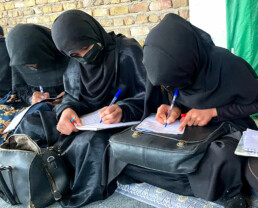
A Secret School for Girls
Inside the clandestine network of classrooms defying the Taliban in Afghanistan
By Jessie Williams
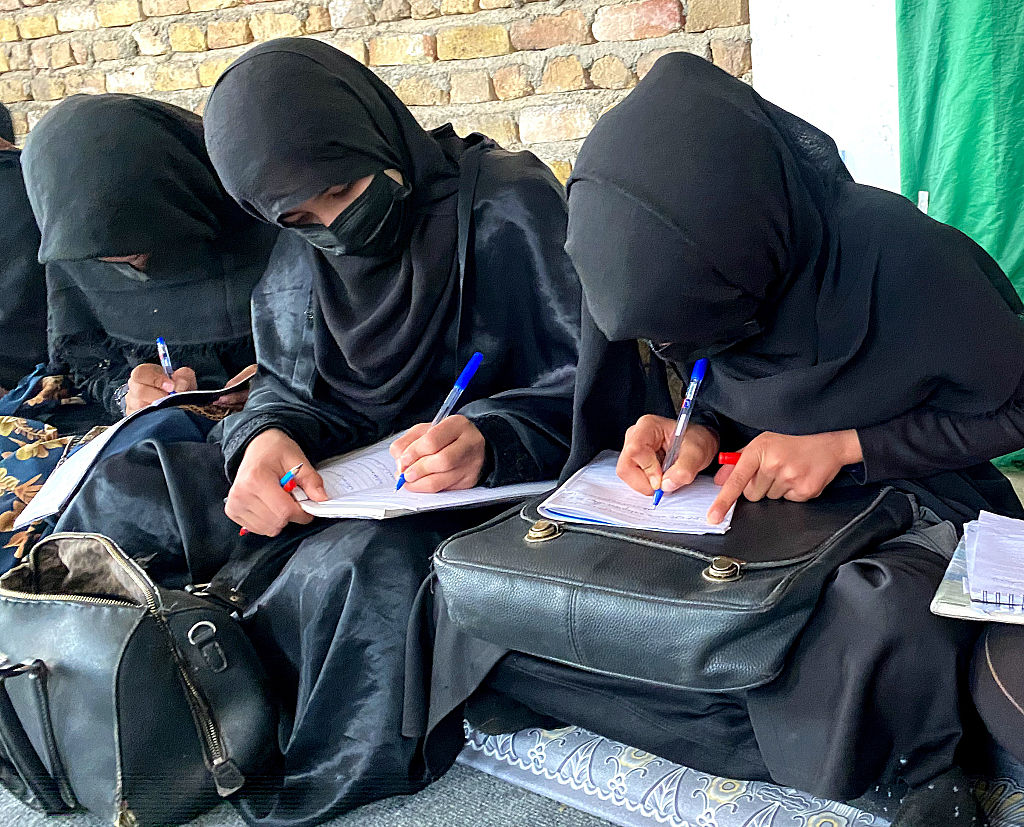
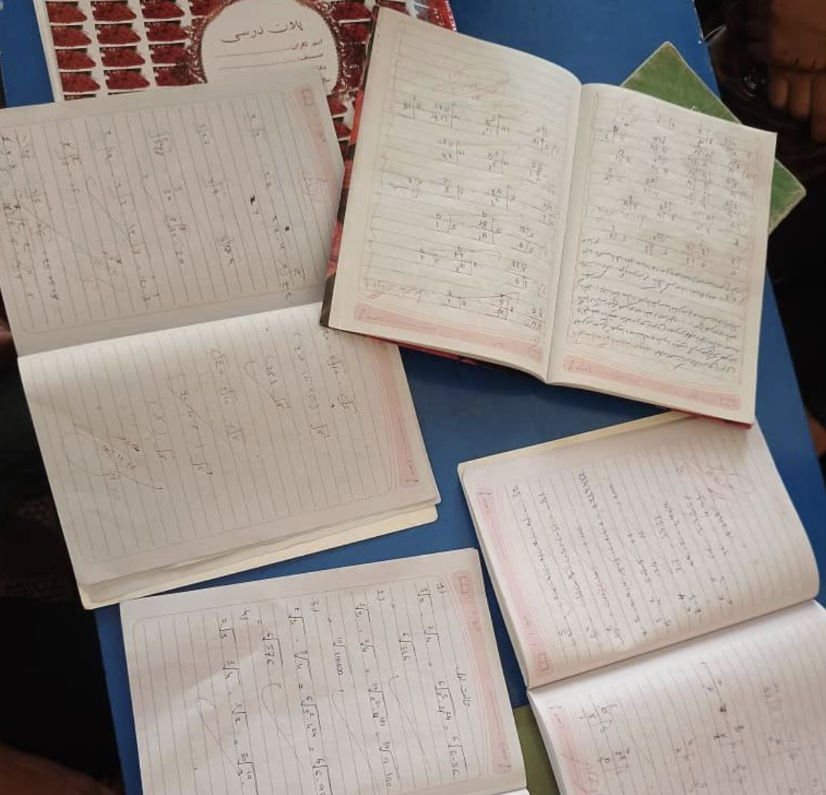
A group of teenage girls and young women gather in a nondescript room with pale walls, chatting and laughing. They have just finished their classes for the week and are about to head home. But they must leave one by one, so as not to draw any attention. If someone asks them where they have been, they say they were visiting the doctor. If they think someone might be on to them, the teachers move their classes to another person’s house. They leave their books at home. They must not be caught.
These girls live in Afghanistan, where education for girls beyond sixth grade is banned by the Taliban. They attend an underground girls’ school – one of five an Afghan NGO quietly runs across the country, with 28 teachers in different provinces providing free education to around 1,000 students, ranging in age from 13 to 45.
“I was very unhappy when the Taliban closed my school,” says Ada*, 15, who was in eighth grade when the Taliban returned to power on a hot summer day in 2021, following the withdrawal of U.S. and coalition forces. “I had depression.” The secret school she attends opened in the months afterward. “I feel better [now],” she says. “When I see the teachers and girls, I have power.”
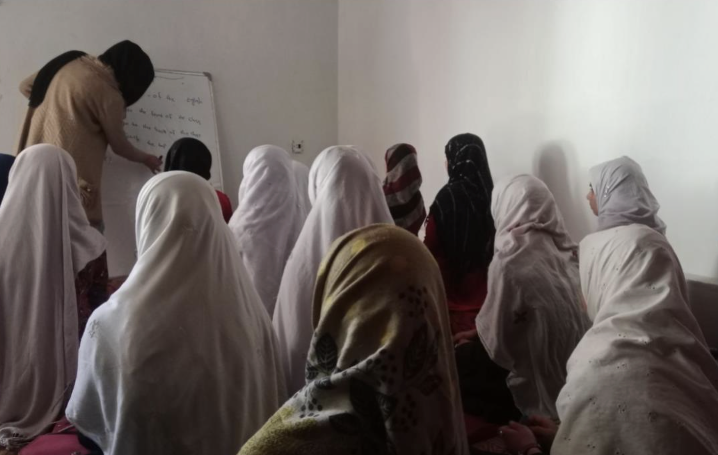
As a new school year begins in Afghanistan, more than 2.2 million girls are currently out of school. But some of them are defying the ban. Over the past few years, classrooms have emerged in the shadows—cropping up in basements, living rooms and bedrooms around the country, away from the prying eyes of the Taliban, who have informants to catch people violating their strict codes. The schools use certain tactics to evade those informants, including staggering the timing of classes, so that some girls attend in the afternoon and some in the evening. If the girls think they’re being followed, they change their route. Madrassas, or religious schools, are still allowed, so if they are caught, they say they were going there.
The schools run by the NGO, which we can’t name for safety reasons, started through a network of trusted people in different communities. They cost about $60,000 to run each year, which a grant from the Frontline Women’s Fund, an initiative that supports women’s rights activists around the world, helps cover. One class was established and then another, and before long the network had blossomed into a web of clandestine schools, turning girls into what the Taliban fears most: educated women. “An educated woman changes the world,” says Laleh, 25, who teaches English at one of the schools. “An educated mother nurtures, trains, educates her kid. The kid changes the society.”
The Meteor spoke to the teachers and students over Zoom on the condition that we hide their identities. The stakes are high; if the Taliban ever found out about the schools, the teachers would be sent to prison, while the girls themselves could also face imprisonment and beatings. Despite the risks, the educators continue to teach. “When I was a girl, I studied chemistry. My father said ‘It's not safe to study.’ But I wanted to have a voice,” says Laleh. “When I teach the girls, they have the vocabulary to talk. It empowers me. When they learn, I think that I have done something in the world, that I didn't live a worthless life.”
Without education, she says, “our people don't even know how they should live and what their rights are…When half of our society is paralyzed, how can our country move forward?”
Since returning to power the Taliban has systematically eroded women’s and girls’ rights. Education for girls over sixth grade was the first to go, followed by barring women from university and nearly all forms of employment, then prohibiting them from playing sports, and even leaving the house without being completely covered and accompanied by a mahram or male guardian. The Taliban’s latest decree permits men to beat their wives as long as they don’t break any bones or leave open wounds.
The UN says that Afghan women are facing the most severe women’s rights crisis in the world, with many activists and human rights organizations calling it “gender apartheid”—a term meaning the systemic oppression, discrimination, and segregation of a specific group based on gender.
In January 2025, the International Criminal Court issued arrest warrants for the supreme leader and chief justice of the Taliban, accusing them of crimes against humanity for the persecution of women and girls. But nothing has been done to enforce the warrants. Even worse, the international community has begun to accept and normalize the Taliban as the de facto government, despite its draconian policies—like establishing embassies in Kabul, welcoming diplomats appointed by the Taliban, and inviting them to international summits.
Meanwhile, cuts to foreign aid budgets have meant dwindling humanitarian support for Afghanistan, and while the UN has continued its operations in the country, it faces major challenges—the main one being the ban on Afghan women entering UN premises, along with a 50 percent funding gap for UN work, which makes it difficult to provide services directly to women at a time when they desperately need it.
"Maybe they will arrest me and I go to jail. But I have to do this.”
Many Afghan women feel like the world has forgotten about them. Mariam, the 30-year-old executive director of the NGO that runs the schools, was a head teacher before the Taliban swept through the country. She says the international community should be doing more. “For five years girls and women can't go to school. It’s terrible. But nobody is doing anything,” she says. “Why aren’t the UN with us?”
Mariam says there are many women who are struggling financially now that they cannot work, and girls are being forced into early marriages. At the same time, recent clashes with Pakistan and war in neighboring Iran are exacerbating the already dire economic crisis.
For these girls, the school offers a glimmer of hope in an increasingly dark world, giving them the chance to forge their own futures. Bahar, a 19-year-old with a wide smile, was in 10th grade when the Taliban closed the schools. “When I come here I feel so excited,” she says, giggling. “I feel complete and confident.” Her favorite subjects are English and math, and one day she hopes to become a psychologist. “Education is very important to me. When girls use education, they can help their family.”
All of the girls’ families are supportive of them attending the classes, despite the dangers. “I feel happy because I improve my skills in this school,” says one student, Lama, 18. She especially loves art because it allows her to express her feelings, but wants to be a doctor when she’s older. “I want to help my people, always.”
Rehan, 21, a math teacher, says when she was her students’ age, “I had these opportunities as a student and I felt great. They should become what they want; I always teach them to become stronger.” Many of her students are vulnerable, she says, and so she makes sure to focus on their mental health. “When I come to class I ask them, ‘How was your day? How are you?’ Sometimes many of them don't have a good situation at home. First, I make sure they are safe, that they don't have any mental problems. Then I start to teach what I planned. I like to make the class a safer place for them.”
As the students and teachers talk, it becomes clear: These are much more than just schools. They also seem to be sanctuaries for women and girls to connect, laugh, and dream with friends. They are like a family, and Mariam, the head of the NGO, is the matriarch. She calls the students “my daughters” and sees supporting them as her responsibility. “It's a very big challenge,” she says. “We are afraid [of the Taliban finding out]. Maybe they will arrest me and I go to jail. But I have to do this.”
Despite the constant fear, they all still try to find joy – even if it’s fleeting. They dance and sing together when no one is looking. These girls are growing hope in the shadows; they’re creating cracks of light streaming through the darkness. “Sometimes we laugh, sometimes we cry,” says Mariam. “Maybe when the Taliban go, we will get our rights [back]. We want a new generation to feel peace.”
*All names in the piece have been changed to protect the subjects’ identity.
Jessie Williams is a freelance journalist focused on international affairs, humanitarian issues, and women’s rights, with work published in The Guardian, TIME Magazine, Foreign Policy, Al Jazeera, and more. She has reported from Syria, Lebanon, Iraq, and Ukraine, among other places.
The Iran War Will Touch Everything
  March 10, 2026 Greetings Meteor readers, International Women’s Day was on Sunday, and I had the great pleasure of celebrating it with my daughter at a New York Sirens game where she got to watch her first hockey fight. Nothing says “girl power” like the feminine urge to strangle your rival. In today’s newsletter, we focus on the war in Iran and its effect on every part of our lives. Plus, bad news for Wyoming and a piping fresh slice of women’s history from Nona Willis Aronowitz. Shannon Melero  WHAT'S GOING ONIt touches everything: The United States is 11 days into the war with Iran and, unlike previous wars, the administration has not quite yet figured out how to brand and promote this invasion of a sovereign nation to the masses. That isn’t for lack of trying—Trump and his ilk are selling this war to the troops as “part of God’s divine plan,” blessed by Jesus to bring about Armageddon. (Tell me you didn’t finish reading the Bible without telling me…) Americans, for their part, have done their best to roll with the punches, joking about the start of WWIII (again) and facing down potential nuclear winter with as much humor as can be managed. This dissociation is somewhat understandable. The moment in front of us is almost too grave to comprehend. We wonder what this war will cost us and worry that, for civilians, it may cost everything. It certainly already has for Iranian women and children. The fact of the matter is, this war will touch every aspect of our world. In this moment, we look to fellow journalists who have begun to unpack the ways how. Women’s rights: “In every war, women and girls are among the first whose security becomes fragile,” one Iranian photographer tells Outlook India. “When a girls’ school is bombed, it is not only a building that is destroyed, it sends a message that the future of girls is once again under threat.” Power vacuums, like the one created by the killing of Iranian Supreme Leader Ayatollah Ali Khamenei, are detrimental to women’s movements—fighting for your rights inevitably takes a backseat to fleeing for your very life from airstrikes and gunfire. The looming influence of AI: Carole Cadwalladr writes about what she calls the “broligarchy’s first war” and how the influence of billionaire tech bros is reshaping warfare. “Was it AI that selected the Iranian school where at least 168 people were killed, mostly children?” she writes. “This is a crucial question. Were those children the collateral damage of an AI hallucination? We can’t let this moment pass. Minab, like Aberfan, is a place that should be burned onto our brains.”  A MASS FUNERAL HELD IN IRAN FOR THE STUDENTS AND FACULTY KILLED BY AN AIRSTRIKE LAST MONTH. (PHOTO BY HANDOUT VIA GETTY IMAGES) Climate disasters: Acid rain fell over Tehran this weekend after the U.S. bombed an oil site in the region. Iranians, who are already enduring a historic drought, must now contend with their water supplies being polluted for years. Journalists Mark Herstgaard and Giles Trendle explain how that impact will not be limited to the Middle East, because “modern warfare is inextricably linked with climate change.” As a number of studies have already shown, it’s women who bear the brunt of a worsening climate. The global economy: We’ve already seen it at the gas pump and in the stock market: This war is hammering the economy. And it’s not just in the United States. Trump promised in a horrendous and lie-riddled speech yesterday that he would initiate attacks from which Iran would “never recover.” Were that to happen, entire nations would be brought to unimaginable levels of economic distress. AND:
 NO TOXIC FANS IN THE COTTAGE!!!! (VIA GETTY IMAGES)  SLICE OF WOMEN’S HISTORY 🍕Johnnie Tillmon, radical welfare rights activistThroughout Women’s History Month, we’ll be featuring women (or women’s movements) that aren’t on the typical media lists we see every March.  TILLMON PHOTOGRAPHED BY BRIAN LANKER, 1988. (VIA NATIONAL PORTRAIT GALLERY, SMITHSONIAN INSTITUTION. COPYRIGHT BRIAN LANKER ARCHIVE) “I’m a woman. I’m a Black woman. I’m a poor woman. I’m a fat woman. I’m a middle-aged woman. And I’m on welfare.” Welfare rights activist Johnnie Tillmon proudly wrote those words in 1972 in Ms. magazine. Born in 1926 in Arkansas as a sharecropper’s daughter, she worked in the cotton fields at age seven and later in laundromats while she struggled as a single mother of six children. But in 1963, after a tonsillectomy landed her in the hospital, she reluctantly applied for welfare so she could better handle the demands of motherhood. She was taken aback by how caseworkers denigrated her and policed her personal life. Welfare officials questioned her purchases, inventoried her fridge, and barred her from, as she put it, “male company.” Tillmon’s experience wasn’t unique: Welfare recipients—especially Black women, who were largely barred from collecting welfare until the 1960s—were routinely persecuted, their homes searched and their sexual histories interrogated. Some were even sterilized as a condition to claim benefits.  MEMBERS OF THE NATIONAL WELFARE RIGHTS ORGANIZATION AT A MARCH IN BOSTON IN 1969. (THE BOSTON GLOBE VIA GETTY IMAGES) Tillmon’s own experience formed the backbone of her life’s work. She started organizing her fellow welfare recipients and formed Aid to Needy Children Mothers Anonymous, a group that assisted people who’d been kicked off welfare. That group later became part of the National Welfare Rights Organization, which grew to 30,000 members by 1968. She argued for a guaranteed minimum income decades before UBI became a standard leftist rallying cry. And while some women were arguing for liberation from domesticity, Tillmon was arguing for liberation from government oversight. In the same 1972 essay, she called welfare “the most prejudiced institution in this country” and “like a super-sexist marriage.” She drew a parallel between men and the Black Power-inflected concept of “The Man”—oppressive, white, patriarchal institutions like the police, the prisons, and bureaucracies like the welfare system. “For Tillmon, economic independence—which meant being untethered from exploitative employers and from the constraints of the market—also ensured freedom,” Premilla Nadasen, a professor of history at Barnard College who has written extensively about Tillmon, told The Meteor. That included freedom for women to raise and choose the size of their families; “nobody realizes more than poor women that all women should have the right to control their own reproduction,” Tillmon wrote. Now, in an age when government assistance has been eviscerated and motherhood has been idealized as a white Christian pursuit, Nadasen says, “it's really powerful to reimagine the world through Johnnie Tillmon's radical vision.” Her work was not only about “the right to a living wage for women’s work,” Tillmon wrote. It was about “the right to life itself.” —Nona Willis Aronowitz  FOLLOW THE METEOR Thank you for reading The Meteor! Got this from a friend? |

"You can't say that. I'm Iranian."
  March 2, 2026 “You can’t say that. I’m Iranian.”An Iranian-American woman on survivor’s guilt and griefBY ROYA SHARIAT  THE AUTHOR AND HER MOTHER AT AN IRANIAN FESTIVAL IN 1999 (COURTESY OF ROYA SHARIAT) This weekend, I watched the U.S. move from threats to strikes against my homeland, Iran. And I was haunted by an old memory that now feels like a warning. In 2017, I ended up at a New Year’s party full of American diplomats in Argentina, invited by a friend of the host who warned me that I might meet some strange characters. As midnight approached, the host raised a toast and asked everyone to share their resolutions for the year ahead. The answers were predictable—more travel, good health, new adventures—until one guest wearing a bloodthirsty grin exclaimed: “Regime change in Iran!” For a moment, I dissociated. Then I did what years of existing as an Iranian in America have trained me to do: I clapped back. “You can’t say that. I’m Iranian.” The room fell silent. Heat rushed to my face, but the only way out was through. With a shaky voice, I told him that American intervention in Iran has never led to anything good, that people’s lives aren’t pawns for someone else’s resolutions. I spent the rest of the night crying while a friend tried to console me, until I learned that the man I’d yelled at was one of America’s highest‑ranking military generals. This was just one of many uncomfortable moments I’ve encountered as an Iranian-American, an identity that raises eyebrows and prompts questions I’m often unqualified to answer. For the past two months, I’ve witnessed the latest regime-led violence unfold from the comfort and safety of my London home, while faced with an entirely new set of questions: What’s the best way to show up for a community you can’t be physically present in? How do you process survivor’s guilt and grief simultaneously? How do you reconcile so many disparate viewpoints, both within Iran and abroad? “Regime change” has re-entered the bloodstream of political discourse, moving from abstraction to reality in a matter of months, and especially this weekend in the wake of the death of Ayatollah Ali Khamenei, Iran’s draconian supreme leader. The phrase itself is staggering: How can toppling a foreign government be made to sound as quick and seamless as changing an outfit? In two words, the nuances of diplomacy, the violence of war, and the brutal mechanics of how regimes actually fall are erased. The phrase becomes so abstracted from its meaning that it’s palatable enough to pass as a New Year’s resolution. Forget a revenge body; how about regime change?  THE AUTHOR AND HER MOTHER, 2023 (COURTESY OF ROYA SHARIAT) But “regime change” doesn’t capture what’s actually needed in Iran. Removing a leader is not the same as dismantling a system, or building what comes next. Destruction is not a shortcut to freedom, and freedom doesn’t get to be declared by people insulated from the consequences. Iranians deserve self‑governance. They deserve a free Iran, liberated from repression and fear, from a government that’s repeatedly used lethal force against its own citizens. Iranians inside the country have risked their lives to say as much: through the historic, women-led “Women, Life, Freedom” movement sparked by Mahsa Jina Amini’s 2023 death, through recent anti-government protests wherein women were front and center, through the simple act of refusing to be silent. But liberation can’t come from bombs, or from the sudden collapse of power without a path forward. Power vacuums are not freedom. They create the same kind of conditions that brought Ayatollah Ruhollah Khomeini to power after the 1979 revolution. This moment requires holding multiple realities at once: relief in the wake of Khamenei’s death, grief for civilians killed in the crossfire—including schoolchildren—and fear and skepticism about what comes next. The governments invoking Iran’s freedom, like the U.S. and the U.K., have not historically delivered it in the region, or in Iran itself. The U.S. backed an undemocratic coup in Iran in the 1950s. That history makes one thing clear: Change imposed from the outside is never neutral. What happens next will not be determined by a single death, but by who holds power, and how. Every New Year, someone raises a glass and makes a resolution about other people’s lives. What people in Iran are demanding is dignity and agency: the right to shape their own futures on their own terms, with solidarity—not agendas imposed from the outside. For Americans watching, the responsibility is not to decide Iran’s future, but to listen to those already risking everything to shape it themselves—people who are asking, simply, for life over destruction. If you want to listen to Iranian voices, start with Nilo Tabrizy, Yara Elmjouie, Sahar Delijani, Gissou Nia, and Vali Nasr.  Roya Shariat is a London-based writer and author of award-winning cookbook Maman and Me: Recipes from Our Iranian American Family. When she's not hunched over her laptop or in the kitchen, Roya writes a newsletter on culture and joy called Consumed.  FOLLOW THE METEOR     Thank you for reading The Meteor! Got this from a friend? |

She Fled Fear—and Found It Here
A woman who escaped danger in Afghanistan reflects on what life is like under ICE.
By Lima Halima-Khalil
I drop my three-year-old daughter off at library classes every morning. The library is two minutes from our home in Ashburn, Virginia. Each time, the same thought crosses my mind: Do I have my ID on me? Will my driver’s license be enough if I am stopped?
It is highly unlikely that I will encounter ICE on a two-minute drive to the library. Ashburn isn’t exactly an ICE hub. And yet my fear is constant, embodied, and real. And by the way, I am an American citizen.
I grew up believing America was a mighty country, one so powerful that the rest of the world stood intimidated by its strength. When I first came to the United States in 2006 for an education program from Afghanistan, a country still at war, the vastness of this place revealed itself not only in its size, but in the generosity of the people I met. After that, America became a place I always returned to. I have been part of the American education system since 2010, returning several times for various degrees. I’ve witnessed multiple presidential elections and participated in the most recent one as an American citizen myself.
But after all these years, one lesson about my new home stands out above the rest: This country is led, shaped, and sustained by fear. Outside this country, nations tremble at the military and economic power of the United States, but inside it, people live as though danger is always lurking.
Fear raises money and sustains campaigns. Fear keeps people glued to screens and locked into cycles of outrage. Fear sells guns, justifies surveillance, expands borders and prisons. Much of this fear is not grounded in lived reality but manufactured and amplified by politicians who rely on it to govern. Fear spills into kitchens, sidewalks, classrooms, and moments meant to be ordinary and human.
One of the most brutal tools in this ecosystem right now is ICE. Raids, detentions, and aggressive enforcement practices operate not simply as immigration policy, but as a mechanism of fear, reminding entire communities that their sense of belonging is fragile and conditional. ICE does not need to be everywhere to be effective. The possibility of its presence is enough.
This pervasive fear turns ordinary routines into sites of anxiety. I remember hesitating before offering to share our Thanksgiving meal with our nosy white neighbor, suddenly gripped by thoughts I never imagined I would carry. What if he calls the police on us and claims I was trying to poison him? What if kindness itself is misread as a threat, or hospitality as danger?
Afghans discovered how quickly they could become the “other,” regardless of their sacrifices, their loyalty, and their love for this country.
I recognize these impulses, because fear is not new to me. I lost my school, my home, my loved ones, and eventually my country because I wanted freedom from fear. Millions of Afghans had believed in democracy when America promised it to us for 20 years, until the United States withdrew from Afghanistan in 2021. We voted, we hoped, we worked alongside our American partners for a shared dream, but that freedom never came. In 2020, when my 24-year-old sister was killed by the Taliban in an IED attack in her car, that truth became undeniable. I understood then that Afghanistan was no longer safe, and that realization is what led me to come to the United States permanently.
When the Taliban returned to power in 2021, many Afghans, including members of my own family, were evacuated and brought into this country by our American allies. They arrived in this country under extremely harsh circumstances, believing they would find dignity, safety, and a chance to contribute. Instead, they discovered how quickly they could become the “other,” regardless of their sacrifices, their loyalty, and their love for this country.
I was reminded of this again in November of last year, after a man from Afghanistan, who had been trained and worked for the CIA in his country, shot two National Guard members in Washington, D.C. Overnight, an entire community began to be seen, once again, as terrorists. Instead of a careful and humane conversation about mental health, trauma, or resettlement failures, the Trump administration halted all immigration from Afghanistan and pledged to re-examine green card holders from 19 countries. Afghans, many of whom fled the very forces America claims to oppose, were once again forced to prove their innocence.
This is how fear functions. It identifies a moment of tragedy, strips it of context, assigns collective guilt, and converts pain into political currency.
For a long time, I believed that fear in this country belonged primarily to people of color, that violence was uneven, predictable, and racialized. Then the killings of Renée Good and later Alex Pretti shattered that belief. They forced a painful realization that in today’s America, no one is safe, not five-year-old Liam Conejo Ramos, not women citizens like Dulce Consuelo Díaz Morales and Nasra Ahmed, not elderly citizens like Scott Thao or longtime residents like Harjit Kaur, not white Americans, either.
Lately, I have felt fear settle into my own body in a way I did not expect. I realized I had been going to sleep holding fear, living with the same quiet dread that so many people here carry without ever naming it. One night, I caught myself thinking, almost with disbelief: Congratulations, Lima, you are an American now.
But it does not have to be this way. Americans deserve more than this constant weight of dread, clinging to them like a second skin. We deserve a country where fear is not the engine that keeps the system running, where safety is not promised to some by threatening others, and where power is not sustained by keeping people afraid.
Lima Halima-Khalil, Ph.D., is the program director of the “I Stand With You” campaign at ArtLords, a collective she co-founded, where she mobilizes global awareness against gender apartheid in Afghanistan. Her research explores youth resilience amid violence and displacement. Her writing has appeared in Foreign Policy, TRT World, and academic publications.
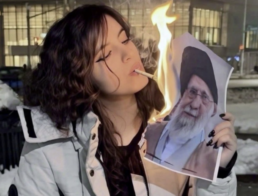
Courage and cigarettes
Women Around the World
  January 15, 2026 Greetings, Meteor readers, My kid is getting her tonsils taken out this week. Any parents out there with tips on how to survive the recovery period, I welcome the guidance. On to bigger things. In today’s newsletter, protests in Iran have already reached a terrifying death count. Plus, the government is investigating Renee Nicole Good’s widow instead of focusing on her killer. Popsicles for the apocalypse, Shannon Melero  WHAT’S GOING ONA history of resilience: At the end of December, shopkeepers and business owners in Tehran shut down their stores and took to the streets in protest. Within hours, a chant at the heart of the protest had spread across the city: “Our money is worth less.” What began as a localized economic complaint has grown into a nationwide anti-government protest that has reportedly claimed the lives of thousands of Iranians. To outside observers—especially those of us caught up in our own country’s headlines—this was a startling escalation. But for those living and working in Tehran, the writing was on the wall for some time. The Iranian economy has been in crisis mode for months: sanctions from the U.S., a 12-day war with Israel, water shortages, and in December—apparently the last straw—Iran’s currency, the rial, hit an all-time low. In an initial response to the protests, the Iranian government offered a monthly stipend to alleviate financial woes that was equivalent to seven U.S. dollars. It was an insulting band-aid. And as protests continue, Iran’s leaders have resorted to suppression and violence, attempting to keep Iranians quiet with internet blackouts, imprisonment, and murder by officials of the regime. And while all Iranians are suffering as a result of economic and political instability, this is yet another situation in which women will suffer the most. A UN Women report from 2024 found that Iranian women are more than twice as likely to be unemployed as men. In times of political upheaval, those numbers—along with sexual and physical violence against women—are expected to worsen.  We have all seen this before. Time after time, the Iranian people have risen up against their leaders despite being met with the cruelest response. In 2022, after the killing of Mahsa Amini, which sparked the Woman, Life, Freedom movement. In 2021, over water shortages. In 2019, over fuel prices. In 2009, over questionable election results. But some Iranians who spoke to the New York Times said that these protests felt more powerful than even those of 2022 because they have captured Iranians from all walks of life. Young women have been front and center; the internet is full of images of Iranian women using burning pictures of Supreme Leader Ayatollah Ali Khamenei to light their cigarettes. Conservative and rural Iranians—who for the most part remained on the sidelines during the Women, Life, Freedom movement—are making themselves heard now. “We can see from the news and from some government reactions that this regime is terrified to its bones,” one protester in Tehran told a Times reporter. Many in the streets, on the other hand, are projecting fearlessness. “We are not afraid,” said Sarira Karimi, a University of Tehran student who was arrested last month, “because we are together.” The Trump administration has been keeping an eye on the situation, and earlier today, the president suggested that he was open to an airstrike, writing on Truth Social that the U.S. was “locked and loaded” and that “help was on the way” for protesters (excuse us?). He added that the military was reviewing “some very strong options.” No mention yet if Trump intends to be the acting president of both Venezuela and Iran, but it wouldn’t surprise anyone. AND:
 PROTESTORS IN MINNEAPOLIS THE DAY AFTER GOOD’S MURDER (VIA GETTY IMAGES)
 OF COURSE THE GAY SHEEP ARE SERVING LOOKS TO THE CAMERA (VIA GETTY IMAGES)
 FOLLOW THE METEOR Thank you for reading The Meteor! Got this from a friend? |

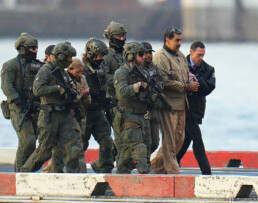
Tears, Joy, and Fear
  January 7, 2026 Salutations, Meteor readers, Happy New Year, friends, it’s good to see you all again. We hope you had a lovely stretch of time off from the real world and are ready to jump back into the massive amounts of everything going on. In today’s newsletter, one of our colleagues shares a personal reflection on what this past week has been like as a Venezuelan living in the United States. Plus, we mourn the loss of a maternal health advocate. Shannon Melero  WHAT'S GOING ON

 I'm Anti-Trump and Venezuelan. This Week Has Been ComplicatedMy heart is celebrating while my brain sees the bigger picture. MADURO AND HIS WIFE ON THEIR WAY TO A FEDERAL COURTHOUSE IN NEW YORK. (VIA GETTY IMAGES) On January 3rd, the U.S. seized Venezuelan President Nicolás Maduro and his wife in a military operation that shocked the world. The reaction from many Americans, who have lived through this playbook before, was outrage. The arrest of Maduro and his arraignment in New York courts has been perceived as an attempted regime change, a violation of international law, and an oil grab—all of which, to be clear, it is. (And there’s probably more madness ahead, given Trump’s comments about how “we need Greenland.”) So what does it all feel like for Venezuelans? After Trump declared that he plans to “run” Venezuela, many are fearing for their safety. At the same time, some Venezuelans in the United States are celebrating the removal of an oppressive dictator from power. For our colleague Bianca—a progressive Venezuelan living in the U.S., who asked that we withhold her last name due to privacy concerns—the moment was quite complex. Here’s what the last few days have been like for her. I'm 100 percent Venezuelan, born in Caracas. I grew up going to El Ávila National Park and the beaches of Margarita Island and just enjoying my country. But when [former president] Hugo Chavez got into power in 1998, the whole country was sort of panicking because of the authoritarian policies. Protests started. Repression and political polarization got gradually worse. Friends and family were put in jail simply for expressing their views. By 2007 or so, media suppression intensified; If The Meteor were in Venezuela, everybody [working here] would be in jail. I was part of the first wave of Venezuelans who left, although much of my family stayed. When I got to Miami in 2001, when I was 21, I totally disconnected from my Venezuelan life. For a decade, I just felt like “I don’t want to deal with this”—kind of what people are doing now in the U.S. It was too much and too painful. Then the 2014 protests happened [sparked by an attempted rape of a student in San Cristobal]. The government was killing students in the streets. That’s when I decided to go to Venezuela with my camera, so I could document the reality of what was happening. Public opinion in the U.S. seemed to frame the student protesters as privileged Republicans. When I started interviewing these students, I discovered that was not true. I met kids from the slums of Venezuela, 15 or 16 years old, narrating their torture incidents in prison. I realized it wasn't a left versus right thing–it was a human rights thing.  VENEZUELANS OUTSIDE OF THE UNITED NATIONS OFFICE IN CARACAS DURING THE 2014 PROTESTS. (PHOTO BY BIANCA) These kids were just begging the UN to come help, and they never did. After that, I came back to the U.S. and dedicated myself to social justice. I am a Democrat who is against authoritarian regimes, unfair elections, media censorship, and political repression. I've lost [Venezuelan] friends and family because I was a Bernie supporter, and they cannot believe how I can support Bernie as a socialist [because Chavez and his successor Nicolás Maduro were socialist]. Which was why it felt weird to see Trump’s tweet about how Maduro had been captured. Trump’s tweets usually have a horrible, disgusting effect on my heart, but this is the one time a Trump tweet made me incredibly happy. I woke up my mom and gave her the biggest hug and we both started crying. It finally felt like a little bit of justice. I can see why other left-leaning people in the U.S. are scared that this is going to become another Iraq–especially coming from Trump. I saw what happened with Afghanistan and Iraq, and I was against all of it. But I am disappointed to see my flag being used to push agendas; I’ve seen non-Venezuelan protesters [in the U.S.] with Venezuelan flags holding signs saying “Free Maduro.” And we have been screaming for help for years. Some of the arguments [point out that] this violates international law. Okay, but where was the international law when we were asking the UN to come, or when [Maduro] stole the election from us last year, or when they were massacring kids? Where was the international law when we were asking for so much?  BIANCA IN 2014 WITH A PROTESTOR WHO WAS IMPRISONED UNDER THE MADURO REGIME. (PHOTO BY BIANCA) We are in a moment where we have to learn how to hold two opposing truths at once. My heart is celebrating while my brain is carefully thinking through the bigger picture. We deserve this joy after so many years. But there is much more to do to re-establish democracy in my country, and I’d be shocked if Trump were the person to do it. —as told to Nona Willis Aronowitz  FOLLOW THE METEOR Thank you for reading The Meteor! Got this from a friend? |

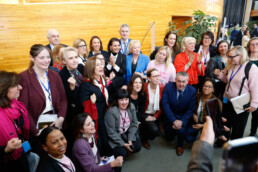
A "Magical Moment" for Abortion Access
  December 18, 2025 Howdy, Meteor readers, After spending portions of this week kneading pizza dough, baking a bajillion cookies, and hand-churning vanilla ice cream—I will NEVER joke about being a one-woman bakeshop again. I’m leaving this to the professionals.  MY VERY PROFESSIONAL BAKING ASSISTANT KNEADING BAGEL DOUGH. AND YES THAT IS A BABY APRON. In today’s newsletter, we hear from the Slovenian activist who helped make history for abortion access in Europe. Plus, Scarlett Harris on the anniversary of that cinematic masterpiece: 9 to 5. Hanging up the apron, Shannon Melero  WHAT'S GOING ONA million voices strong: Yesterday, the European Parliament approved a citizens’ initiative (ECI) that will improve access to abortion care for women across Europe. The initiative, led by a group called My Voice, My Choice, calls for the European Union to fund abortions in any participating member state, even if the person seeking care is from a country with an abortion ban. That means that a pregnant woman in anti-abortion Poland could have a safe, legal procedure in Slovenia–and the EU would foot the bill. This unexpected victory is three full years in the making. “Everyone said it was impossible,” My Voice, My Choice founder Nika Kovač tells The Meteor. The current parliament, consisting of representatives from the member states of the European Union, was extra-conservative, and the group needed to collect one million signatures in a year for the ECI to be brought to the floor.  NOVAČ AND HER COLLEAGUES SHORTLY AFTER THE DECISION ON WEDNESDAY. (PHOTO BY ČRT PIKSI) People told Kovač she’d never get a million signatures. They were right: She didn’t get a million; she got more, 1.12 million. It was the fastest-growing ECI in history. But why would a woman from Slovenia, where abortion is a protected right, take up such a long-shot cause? “I was living in the United States when Roe v. Wade was overturned,” she says. “To me, it was so shocking that the rights of people could go backwards. That’s why I became obsessed with the idea that we need to do something in Europe so it wouldn’t happen to us.” Kovač spent several years collaborating with advocacy groups across Europe to bring this initiative to a vote, a “big-tent coalition” that, in addition to women’s organizations, also included men, religious people, and conservatives. Still, as recently as this week, she expected to lose. “At the debate [the day before the vote], the opponents seemed very organized,” she says. “But when the vote came in, it was one of the most beautiful feelings in the world. They tried to convince us for so long that reproductive rights was a divisive topic. This was a magical moment of maybe there is some hope in a time of darkness.”  SOME OF THE MEMBERS OF PARLIAMENT WHO VOTED ON THE INITIATIVE. (PHOTO BY ČRT PIKSI) The hard work doesn’t stop there. The specifics of the funding and how exactly countries that opt in can receive it now rest in the hands of the European Commission, which has one year to set out any measures it deems necessary. My Voice, My Choice will be part of that fight, as well. But before all that, “we’ve decided to take a break for two weeks,” Kovač says. “Sometimes, the most revolutionary thing you can do is rest.” AND:
 9 to 5 Showed the Struggles of Women in the Workplace. If Only It Felt More Dated!Happy 45th birthday to a classic.BY SCARLETT HARRIS  THE HOLY TRINITY. (VIA GETTY IMAGES) In our post-girlboss landscape—where so much pop culture, from the truly terrible All’s Fair to next year’s The Devil Wears Prada 2, is set in the workplace—it may be hard to imagine, but when 9 to 5 hit theaters 45 years ago this month, people were hungry for media portrayals of working women. There were 25 million women in the workforce by then, one in three of whom were employed in clerical positions like those depicted in 9 to 5, but they didn’t show up much onscreen. 9 to 5 changed that The 1980 film, which still feels modern and vital, follows three women working at the Consolidated Companies: supervisor Violet Newstead (Lily Tomlin), a widow who is angling for a promotion to support her four kids; Doralee Rhodes (Dolly Parton), the beleaguered assistant to nightmare boss Mr. Hart (Dabney Coleman); Judy Bernly (Jane Fonda), a wide-eyed divorcee entering the workforce for the first time; and their colleagues dealing with child care demands, unequal pay, and alcoholism. “For the first time on screen, you saw exactly what was happening in offices,” says Dame Jenni Murray in the 2022 documentary Still Working 9 to 5. And that was unpaid labor beyond the job description, like getting coffee at best and sexual harassment at worst. “I’m not your girl, your wife, or even your mistress,” Violet hisses at Mr. Hart, alluding to the office rumor that he’s been having an affair with Doralee. The characters also take on what Violet calls the “pink collar ghetto” of clerical work; she is continually passed over for a promotion in favor of the men she trained who need it more because they have families to support, and “clients would rather deal with a man.” As far as we like to think we’ve come, Fonda notes in the documentary, “It’s worse now. Where do you go to complain when you’re part of the gig economy?”  FONDA, EARLIER THIS MONTH AT THE DNC WINTER MEETING FOR STAND U FOR A LIVING WAGE. (VIA GETTY IMAGES Audiences ate it up: 9 to 5 was a box-office success, earning over $100 million on a $10 million budget, and was the second-highest-grossing movie of 1980 behind The Empire Strikes Back. A precursor to Bridesmaids and Girls Trip, 9 to 5 proved that the female-ensemble comedy was bankable. Violet, Judy, and Doralee see power in the collective, realizing that they are stronger together. They kidnap their boss, and the changes they enact in Mr. Hart’s absence—flexi-time, job sharing, office daycare, and disability accommodations (equal pay is a bridge too far)—show what a truly egalitarian (excuse me, ruined) workplace can look like. Doralee’s plotline also presages the #MeToo movement in 2017, when sexual harassment in the workplace was revealed to be all too common. (In an ironic turn of events, the 2009 Broadway musical adaptation of 9 to 5 was produced by Harvey Weinstein.) Judy, Doralee, and Violet briefly toy with publicizing Mr. Hart’s sexual harassment, but they ultimately believe no one would care. Forty-five years later, the problems in 9 to 5, as exemplified by the #MeToo movement, are stubbornly around, while other problems have popped up alongside them: the mass exodus of women from the workforce, the DEI backlash, the arrival of AI, and the cost-of-living crisis have all made work even more precarious. “No one should work full time and still have to choose between rent, food, or childcare,” Fonda said at a Stand Up for a Living Wage fundraiser earlier this month. “Low wages are not distributed equally. They fall hardest on women and especially women of color who make our restaurants, hospitals, and service industries function every single day. When we raise wages, we directly address gender inequality, racial injustice, and the economic barriers that have held entire communities back for generations.” As Parton sings in the iconic theme song she wrote for the movie, we’re all just “barely getting by, it’s all takin’ and no givin’.” Unfortunately, 9 to 5’s workplace commentary remains as relevant as ever. Luckily, it remains as enjoyable as ever, too.  WEEKEND READING 📚🎧On the long commute: Turns out getting to work is a lot harder when you’re a woman. (The Atlantic) On love and lust: It was a good year for yearning. (The Cut) On the bots: The online culture wars aren’t what they used to be. (There Are No Girls on the Internet)  FOLLOW THE METEOR Thank you for reading The Meteor! Got this from a friend? |
