
Five Years of the World's Most Repressive Regime
Since the Taliban seized power, Zahra Nader and her fellow journalists have been documenting the violence. This is what she’s seen.
BY CINDI LEIVE
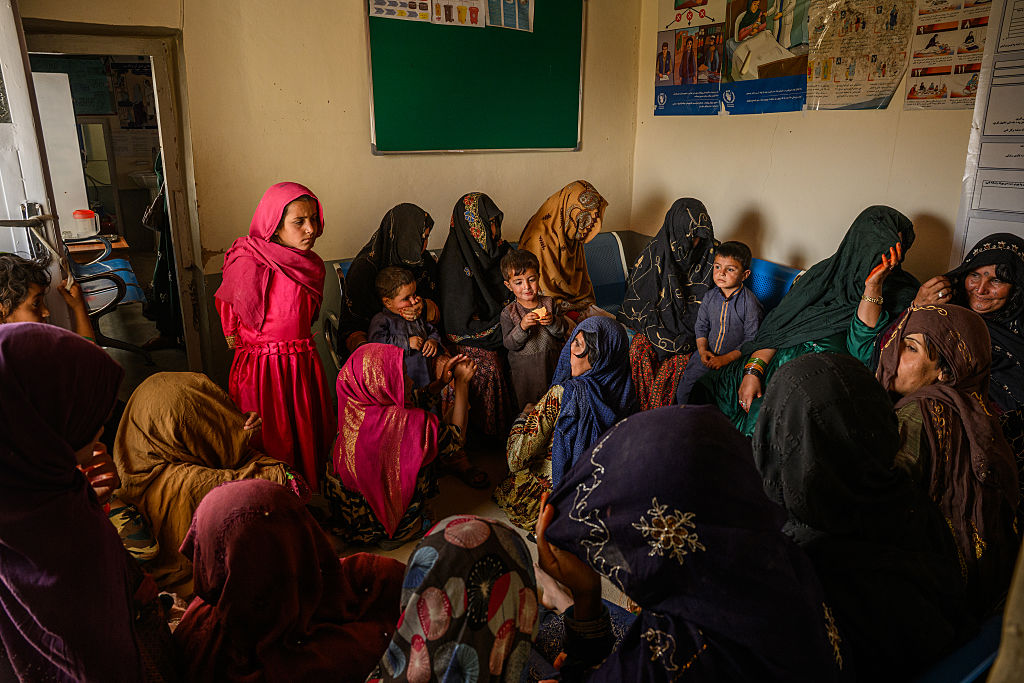
Five years ago today, the Taliban captured Kabul, Afghanistan’s capital city, and launched what the United Nations now calls the most thorough dismantling of women’s rights in modern history. The Taliban have issued more than 100 decrees barring women from going to school after sixth grade, traveling long distances, taking taxis, appearing on TV, speaking on TV, and speaking in public at all.
If you have heard about any of this, it is thanks to journalists like Zahra Nader, the executive director and editor-in-chief of Zan Times, an investigative newsroom led by Afghan women journalists fiercely dedicated to documenting what it’s like to live under gender apartheid. Nader, who once worked in the Kabul bureau of The New York Times, now lives “in exile” in Canada, as do several of her colleagues, and works with an undercover network of reporters inside Afghanistan, who file their stories secretly and at constant risk of discovery.
Their reporting is a series of gut punches: They have documented the country’s femicides; discovered the Taliban’s practice of arresting women for the clothing infractions known as “bad hijab” and then assaulting them; and exposed the heartbreaking spike in suicides among young girls under Taliban rule. But their work is also a series of miracles, each piece a bracing, furious counterpunch to the idea that women’s voices don’t matter.
I’ve marveled from afar at the work Zan Times does, and the courage with which these journalists do it. On this dark anniversary, The Meteor asked Zahra Nader to shine light on what’s happening.
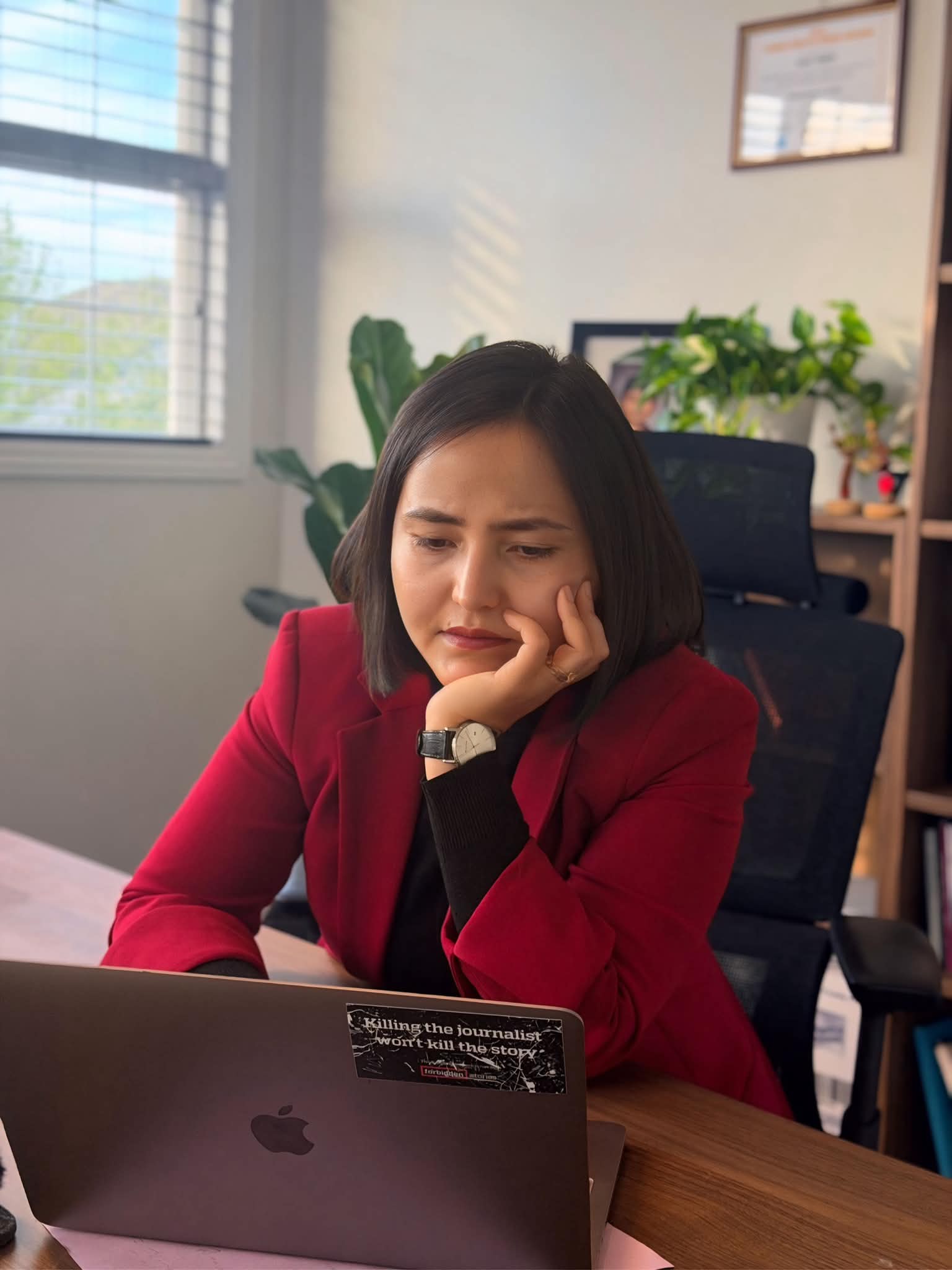
August 15 will mark five years since the Taliban took Kabul, a city you had lived and worked in as a journalist. You later told The Meteor that on that day, “it wasn’t only the fall of a country I was witnessing; it was the death of the hopes of my generation.” How do you feel today, on this anniversary?
It’s a sad day for us, because it's a reminder of what we have lost, and how our losses have become normalized…even by countries who in many ways see themselves as champions of women’s rights. The Taliban can be invited to Europe…Diplomatic relationships [are] opening up. It was hard in 2021 to look away from what was happening to women in Afghanistan. But it has become easier five years later to look away.
Five years ago, a girl of ten or 12 marrying and becoming pregnant was not the norm. And now [the attitude is] yes, it’s sad, women in Afghanistan are imprisoned in their home, but attention is fading...Our job [at Zan Times] is to make the picture so very, so real, that you can't look away. And if anyone does look away, at least we can tell them that you made a choice. It was not that you didn't know.
We want our reporting to be a kind of lived record of what the Taliban are doing, so if any country is willing to engage with them, they have to be able to look at these stories. We want to make it costly for any country that's engaging with the Taliban to do so. That is our hope.
I think there may be a global perception that the Taliban changed Afghan women's lives immediately, and things got bad, and they have remained bad. But your reporting makes clear how much additional violence has been enacted over the last five years. What are some of the milestones of how much worse it has gotten since 2021?
This is the thing: When the Taliban took over, they did not implement all of their policies of gender apartheid [at once]. In their first week, they said that women working in the public sector should stay home. In a month, they closed the schools. After four months, they banned women from traveling. They were slowly testing the water—how would the world react? Would the world play along? And the Taliban has seen that attention fades. That the world condemns the Taliban's policies with rhetoric, with words, but with little real action.
Let me tell you about two laws they implemented this year. One, passed in May, is basically a divorce law that sets no minimum age for a girl to be married off….[it essentially] legalizes child marriage. At the same time, this law defines that no woman can get a divorce without her husband’s consent—even if he’s beating her. Even if a woman's husband is missing for a very long time and she wants a divorce to move on in her life—which is allowed according to Islamic law—she has to wait until [the age at which] he would die! Unless he is missing in war or there is a high chance he was killed, she cannot get a divorce.
Then there is the criminal code, which was passed in January. It says that if a woman is beaten to the point that her bone is broken, and if she can prove in court that her husband [was responsible], the judge may sentence her husband to 15 days in prison. But if that woman goes to her parents' home [for safety] and the parents refuse to return her, the parents and the wife will be in prison for three months. That's six times higher than the punishment for committing violence!
Am I hearing you correctly that there would be no punishment for the man as long as he didn’t break a bone?
No punishment. Also, we found out that for every four women who died, only one man was arrested and that arrest was sometimes for a day and they were released. Meaning that there is complete impunity for the killing of women in Afghanistan.
You alluded before to one of the reasons that your reporting matters, which is that it could increase international outrage toward the Taliban. What are the other reasons you do this?
I was a woman journalist in Afghanistan. I could still be a woman journalist inside Afghanistan if I was not [in exile]. And if I were being held in prison in my own home, what would I want? I would want somebody to make it possible for me to feel that I am still a professional woman. That I am still contributing to my society. That I'm still part of humanity. In a country where the sense of humanity has been taken away from you—when you are not allowed to choose your own clothes, you cannot go out by yourself—what kind of human are you? So it is very important for me personally to give that sense of humanity to women journalists in Afghanistan. Sometimes we talk about the risks they take and the security, and I ask them why they are doing this work. They tell me, partly we need money to survive [only seven percent of women in Afghanistan are employed]. But more than that, we need hope. We need a purpose to live for. And this work gives us a purpose.
We interviewed a woman…[who had been] brutally abused and raped by the Taliban inside prison. My colleague asked her, why are you telling me this story? The Taliban might find you again. And this woman said, I might not survive…but I want somebody to hear my story. That’s the level of misery and helplessness for the women of Afghanistan: Your biggest dream becomes just to be heard. Not, “I want justice.” Not “I want equal rights.” Their only hope is for somebody to care [about] their story.
Initially I was really excited about changing the situation in Afghanistan for women and girls. But from what I’ve seen over the past five years, that's not going to happen. So now—if I can keep one woman journalist inside Afghanistan safe, help her get paid and give her a purpose to live for, I think that's my job.
You clearly care so much for your journalists. How do you help them stay safe while doing a job that is very dangerous to do?
When we have a story we are interested in, the first question is, is it safe to cover it? And if something is high-risk, we might report it from outside the country. We did a story about a female YouTuber who was killed by the Taliban, but who [they said was] a suicide. Two of our colleagues tried to cover it from inside Afghanistan, but received suspicious phone calls [and threats]. So they shared information with us, and my colleague and I outside the country covered the story instead. Sources feel safer talking to us sometimes: I'm in Canada; I'm out of the reach of the Taliban.
But for our journalists inside Afghanistan, we take precautions. Nobody works under their real name. And they are not allowed to contact the Taliban—if we need to get comment, those of us outside the country will call. We hope that all of our collaborators’ immediate families know they work for us, because in case something happens, they can let us know. But one of our colleagues is living [near] her uncle. She says that her uncle is a misogynist and very happy that the Taliban came and kept women from working…Her uncle doesn’t know [that she works as a journalist] and she doesn’t know what he’d do if he found out. He might go to the Taliban.
What do you hope for the women of Afghanistan, five years from now?
I hope that Afghan women will be allowed to choose their own leaders, to be part of social life, to have their rights respected and protected. That hope feels distant—is it even possible? But that’s my hope.
And in five years, I hope that Zan Times has branches all over Afghanistan, run by women journalists who are leading in their own local communities. Because if Afghan women lead, with the understanding and awareness that they are building something for the next generation, I believe we will have peace and prosperity. Because women are less likely to start fighting each other, right? We might occasionally fight on social media, but it will not be disastrous for Afghanistan.
All of this seems very far off for me, but…without hope we cannot move forward.
You can follow Zan Times’s reporting here.
More to read, from The Meteor’s coverage of Afghanistan:
Two journalists on the first few months of panic and despair (February 2022)
Just half a year after Kabul fell to the Taliban, journalist Mariane Pearl speaks with Zahra Joya and Zahra Nader about how much women’s lives had changed.
A soccer captain chronicles her daring rescue mission (August 2023)
The Meteor interviews Farkhunda Muhtaj, who helped a group of teenage girl soccer players, known as Ayenda, flee Afghanistan in 2021.
Why don’t we treat “gender apartheid” as a crime? (August 2024)
With the Taliban’s power now entrenched for three years, we ask Malala Fund’s Afghanistan director, Sahar Halaimzai, about what the world can do about it.
This professor watched her country disappear, and chronicled it (August 2025)
Afghan feminist scholar Lima Halima-Khalil reflects on the last four years of Taliban rule.
An Afghan refugee who fled fear—and found it here (January 2026)
As the second Trump administration begins, Lima Halima-Khalil describes what it’s like to be “the other” in a country she came to for safety
Teen girls on defying the Taliban to get an education (April 2026)
Journalist Jessie Williams speaks with students and teachers at a secret school in Afghanistan, where girls’ education beyond sixth grade is strictly banned.

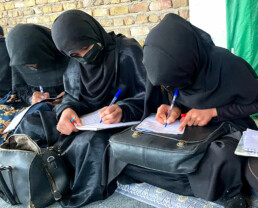
A Secret School for Girls
Inside the clandestine network of classrooms defying the Taliban in Afghanistan
By Jessie Williams
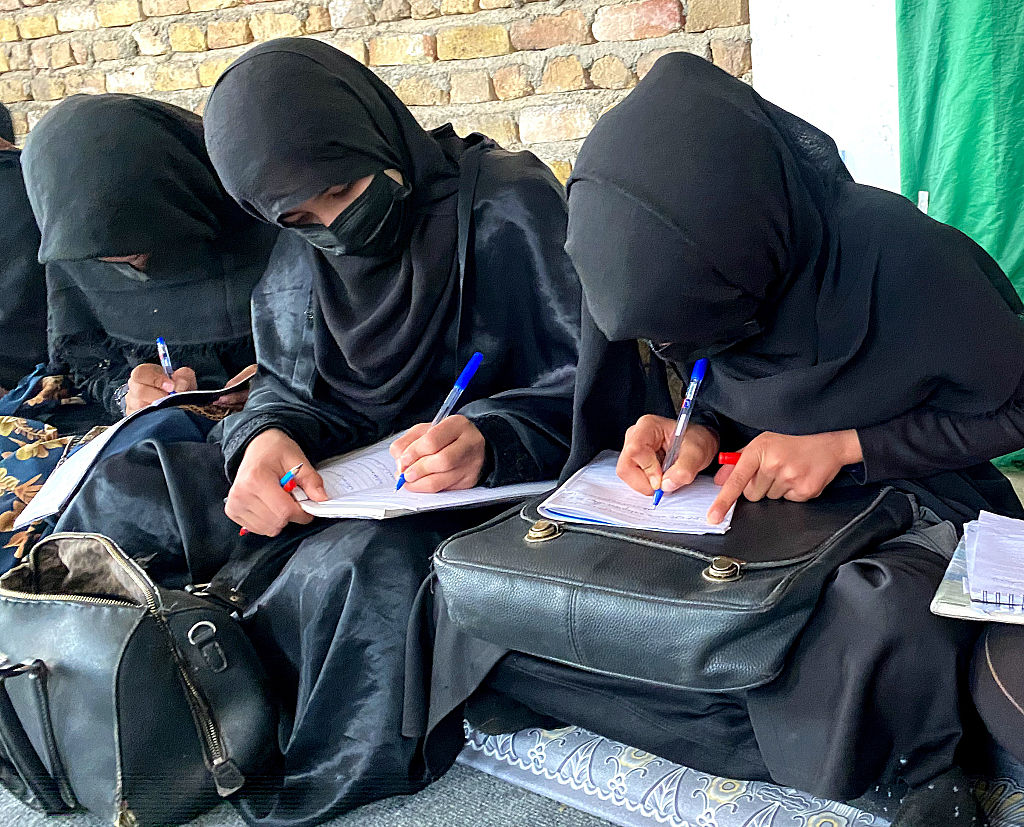
A group of teenage girls and young women gather in a nondescript room with pale walls, chatting and laughing. They have just finished their classes for the week and are about to head home. But they must leave one by one, so as not to draw any attention. If someone asks them where they have been, they say they were visiting the doctor. If they think someone might be on to them, the teachers move their classes to another person’s house. They leave their books at home. They must not be caught.
These girls live in Afghanistan, where education for girls beyond sixth grade is banned by the Taliban. They attend an underground girls’ school – one of five an Afghan NGO quietly runs across the country, with 28 teachers in different provinces providing free education to around 1,000 students, ranging in age from 13 to 45.
“I was very unhappy when the Taliban closed my school,” says Ada*, 15, who was in eighth grade when the Taliban returned to power on a hot summer day in 2021, following the withdrawal of U.S. and coalition forces. “I had depression.” The secret school she attends opened in the months afterward. “I feel better [now],” she says. “When I see the teachers and girls, I have power.”
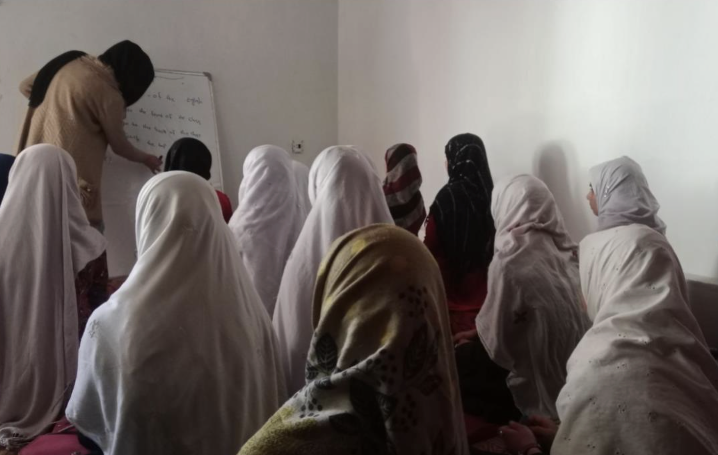
As a new school year begins in Afghanistan, more than 2.2 million girls are currently out of school. But some of them are defying the ban. Over the past few years, classrooms have emerged in the shadows—cropping up in basements, living rooms and bedrooms around the country, away from the prying eyes of the Taliban, who have informants to catch people violating their strict codes. The schools use certain tactics to evade those informants, including staggering the timing of classes, so that some girls attend in the afternoon and some in the evening. If the girls think they’re being followed, they change their route. Madrassas, or religious schools, are still allowed, so if they are caught, they say they were going there.
The schools run by the NGO, which we can’t name for safety reasons, started through a network of trusted people in different communities. They cost about $60,000 to run each year, which a grant from the Frontline Women’s Fund, an initiative that supports women’s rights activists around the world, helps cover. One class was established and then another, and before long the network had blossomed into a web of clandestine schools, turning girls into what the Taliban fears most: educated women. “An educated woman changes the world,” says Laleh, 25, who teaches English at one of the schools. “An educated mother nurtures, trains, educates her kid. The kid changes the society.”
The Meteor spoke to the teachers and students over Zoom on the condition that we hide their identities. The stakes are high; if the Taliban ever found out about the schools, the teachers would be sent to prison, while the girls themselves could also face imprisonment and beatings. Despite the risks, the educators continue to teach. “When I was a girl, I studied chemistry. My father said ‘It's not safe to study.’ But I wanted to have a voice,” says Laleh. “When I teach the girls, they have the vocabulary to talk. It empowers me. When they learn, I think that I have done something in the world, that I didn't live a worthless life.”
Without education, she says, “our people don't even know how they should live and what their rights are…When half of our society is paralyzed, how can our country move forward?”
Since returning to power the Taliban has systematically eroded women’s and girls’ rights. Education for girls over sixth grade was the first to go, followed by barring women from university and nearly all forms of employment, then prohibiting them from playing sports, and even leaving the house without being completely covered and accompanied by a mahram or male guardian. The Taliban’s latest decree permits men to beat their wives as long as they don’t break any bones or leave open wounds.
The UN says that Afghan women are facing the most severe women’s rights crisis in the world, with many activists and human rights organizations calling it “gender apartheid”—a term meaning the systemic oppression, discrimination, and segregation of a specific group based on gender.
In January 2025, the International Criminal Court issued arrest warrants for the supreme leader and chief justice of the Taliban, accusing them of crimes against humanity for the persecution of women and girls. But nothing has been done to enforce the warrants. Even worse, the international community has begun to accept and normalize the Taliban as the de facto government, despite its draconian policies—like establishing embassies in Kabul, welcoming diplomats appointed by the Taliban, and inviting them to international summits.
Meanwhile, cuts to foreign aid budgets have meant dwindling humanitarian support for Afghanistan, and while the UN has continued its operations in the country, it faces major challenges—the main one being the ban on Afghan women entering UN premises, along with a 50 percent funding gap for UN work, which makes it difficult to provide services directly to women at a time when they desperately need it.
"Maybe they will arrest me and I go to jail. But I have to do this.”
Many Afghan women feel like the world has forgotten about them. Mariam, the 30-year-old executive director of the NGO that runs the schools, was a head teacher before the Taliban swept through the country. She says the international community should be doing more. “For five years girls and women can't go to school. It’s terrible. But nobody is doing anything,” she says. “Why aren’t the UN with us?”
Mariam says there are many women who are struggling financially now that they cannot work, and girls are being forced into early marriages. At the same time, recent clashes with Pakistan and war in neighboring Iran are exacerbating the already dire economic crisis.
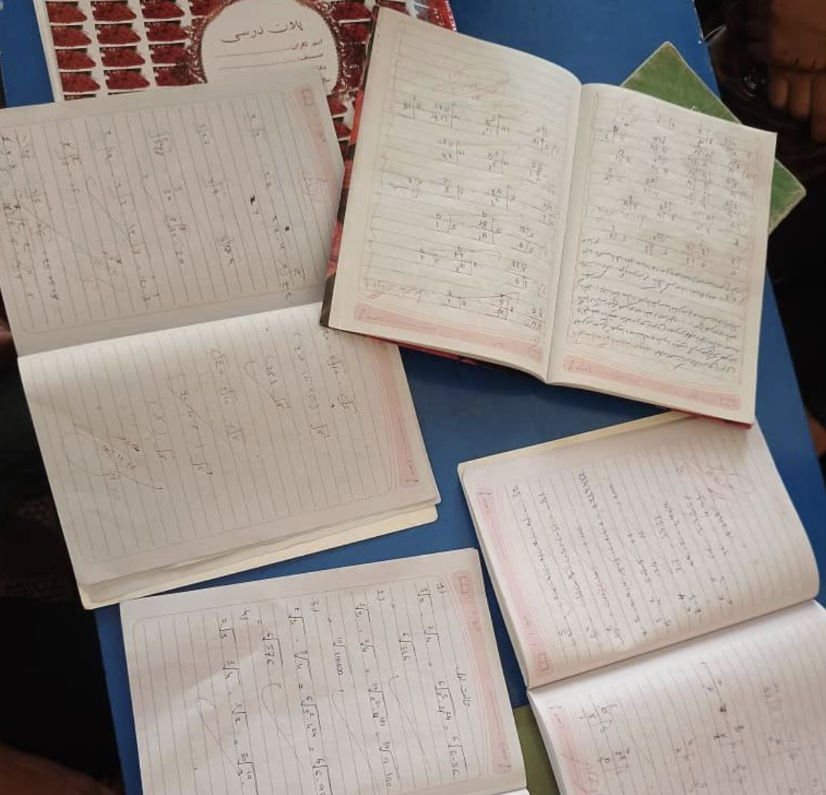
For these girls, the school offers a glimmer of hope in an increasingly dark world, giving them the chance to forge their own futures. Bahar, a 19-year-old with a wide smile, was in 10th grade when the Taliban closed the schools. “When I come here I feel so excited,” she says, giggling. “I feel complete and confident.” Her favorite subjects are English and math, and one day she hopes to become a psychologist. “Education is very important to me. When girls use education, they can help their family.”
All of the girls’ families are supportive of them attending the classes, despite the dangers. “I feel happy because I improve my skills in this school,” says one student, Lama, 18. She especially loves art because it allows her to express her feelings, but wants to be a doctor when she’s older. “I want to help my people, always.”
Rehan, 21, a math teacher, says when she was her students’ age, “I had these opportunities as a student and I felt great. They should become what they want; I always teach them to become stronger.” Many of her students are vulnerable, she says, and so she makes sure to focus on their mental health. “When I come to class I ask them, ‘How was your day? How are you?’ Sometimes many of them don't have a good situation at home. First, I make sure they are safe, that they don't have any mental problems. Then I start to teach what I planned. I like to make the class a safer place for them.”
As the students and teachers talk, it becomes clear: These are much more than just schools. They also seem to be sanctuaries for women and girls to connect, laugh, and dream with friends. They are like a family, and Mariam, the head of the NGO, is the matriarch. She calls the students “my daughters” and sees supporting them as her responsibility. “It's a very big challenge,” she says. “We are afraid [of the Taliban finding out]. Maybe they will arrest me and I go to jail. But I have to do this.”
Despite the constant fear, they all still try to find joy – even if it’s fleeting. They dance and sing together when no one is looking. These girls are growing hope in the shadows; they’re creating cracks of light streaming through the darkness. “Sometimes we laugh, sometimes we cry,” says Mariam. “Maybe when the Taliban go, we will get our rights [back]. We want a new generation to feel peace.”
*All names in the piece have been changed to protect the subjects’ identity.
Jessie Williams is a freelance journalist focused on international affairs, humanitarian issues, and women’s rights, with work published in The Guardian, TIME Magazine, Foreign Policy, Al Jazeera, and more. She has reported from Syria, Lebanon, Iraq, and Ukraine, among other places.

She Fled Fear—and Found It Here
A woman who escaped danger in Afghanistan reflects on what life is like under ICE.
By Lima Halima-Khalil
I drop my three-year-old daughter off at library classes every morning. The library is two minutes from our home in Ashburn, Virginia. Each time, the same thought crosses my mind: Do I have my ID on me? Will my driver’s license be enough if I am stopped?
It is highly unlikely that I will encounter ICE on a two-minute drive to the library. Ashburn isn’t exactly an ICE hub. And yet my fear is constant, embodied, and real. And by the way, I am an American citizen.
I grew up believing America was a mighty country, one so powerful that the rest of the world stood intimidated by its strength. When I first came to the United States in 2006 for an education program from Afghanistan, a country still at war, the vastness of this place revealed itself not only in its size, but in the generosity of the people I met. After that, America became a place I always returned to. I have been part of the American education system since 2010, returning several times for various degrees. I’ve witnessed multiple presidential elections and participated in the most recent one as an American citizen myself.
But after all these years, one lesson about my new home stands out above the rest: This country is led, shaped, and sustained by fear. Outside this country, nations tremble at the military and economic power of the United States, but inside it, people live as though danger is always lurking.
Fear raises money and sustains campaigns. Fear keeps people glued to screens and locked into cycles of outrage. Fear sells guns, justifies surveillance, expands borders and prisons. Much of this fear is not grounded in lived reality but manufactured and amplified by politicians who rely on it to govern. Fear spills into kitchens, sidewalks, classrooms, and moments meant to be ordinary and human.
One of the most brutal tools in this ecosystem right now is ICE. Raids, detentions, and aggressive enforcement practices operate not simply as immigration policy, but as a mechanism of fear, reminding entire communities that their sense of belonging is fragile and conditional. ICE does not need to be everywhere to be effective. The possibility of its presence is enough.
This pervasive fear turns ordinary routines into sites of anxiety. I remember hesitating before offering to share our Thanksgiving meal with our nosy white neighbor, suddenly gripped by thoughts I never imagined I would carry. What if he calls the police on us and claims I was trying to poison him? What if kindness itself is misread as a threat, or hospitality as danger?
Afghans discovered how quickly they could become the “other,” regardless of their sacrifices, their loyalty, and their love for this country.
I recognize these impulses, because fear is not new to me. I lost my school, my home, my loved ones, and eventually my country because I wanted freedom from fear. Millions of Afghans had believed in democracy when America promised it to us for 20 years, until the United States withdrew from Afghanistan in 2021. We voted, we hoped, we worked alongside our American partners for a shared dream, but that freedom never came. In 2020, when my 24-year-old sister was killed by the Taliban in an IED attack in her car, that truth became undeniable. I understood then that Afghanistan was no longer safe, and that realization is what led me to come to the United States permanently.
When the Taliban returned to power in 2021, many Afghans, including members of my own family, were evacuated and brought into this country by our American allies. They arrived in this country under extremely harsh circumstances, believing they would find dignity, safety, and a chance to contribute. Instead, they discovered how quickly they could become the “other,” regardless of their sacrifices, their loyalty, and their love for this country.
I was reminded of this again in November of last year, after a man from Afghanistan, who had been trained and worked for the CIA in his country, shot two National Guard members in Washington, D.C. Overnight, an entire community began to be seen, once again, as terrorists. Instead of a careful and humane conversation about mental health, trauma, or resettlement failures, the Trump administration halted all immigration from Afghanistan and pledged to re-examine green card holders from 19 countries. Afghans, many of whom fled the very forces America claims to oppose, were once again forced to prove their innocence.
This is how fear functions. It identifies a moment of tragedy, strips it of context, assigns collective guilt, and converts pain into political currency.
For a long time, I believed that fear in this country belonged primarily to people of color, that violence was uneven, predictable, and racialized. Then the killings of Renée Good and later Alex Pretti shattered that belief. They forced a painful realization that in today’s America, no one is safe, not five-year-old Liam Conejo Ramos, not women citizens like Dulce Consuelo Díaz Morales and Nasra Ahmed, not elderly citizens like Scott Thao or longtime residents like Harjit Kaur, not white Americans, either.
Lately, I have felt fear settle into my own body in a way I did not expect. I realized I had been going to sleep holding fear, living with the same quiet dread that so many people here carry without ever naming it. One night, I caught myself thinking, almost with disbelief: Congratulations, Lima, you are an American now.
But it does not have to be this way. Americans deserve more than this constant weight of dread, clinging to them like a second skin. We deserve a country where fear is not the engine that keeps the system running, where safety is not promised to some by threatening others, and where power is not sustained by keeping people afraid.
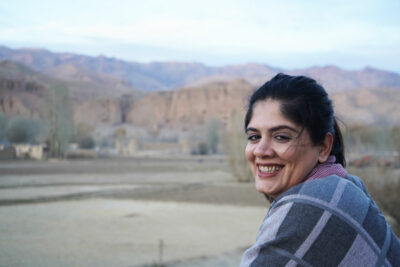
Lima Halima-Khalil, Ph.D., is the program director of the “I Stand With You” campaign at ArtLords, a collective she co-founded, where she mobilizes global awareness against gender apartheid in Afghanistan. Her research explores youth resilience amid violence and displacement. Her writing has appeared in Foreign Policy, TRT World, and academic publications.
"Life Is Still an Open Wound"
Four years after the Taliban seized her country, Lima Halima-Khalil, Ph.D., reflects on the losses, joys, and complexity of life for young Afghans.
On August 15, 2021, time did not just stop; it dissolved. One moment, I was at my desk in Virginia, an Afghan researcher piecing together the life stories of Afghan youth for my doctoral research; the next, I was holding my breath between phone calls I could not miss. My computer screen became my only window to my country slipping away: convoys of cars carrying loved ones I could only follow on Google Maps, the low, frantic hum of evacuation messages on What’s App, and the heavy silence between each update.
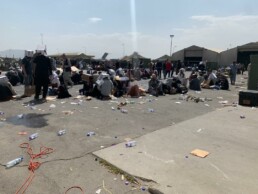
That day marked the beginning of the final withdrawal of American troops from Afghanistan, following a deal signed with the Taliban that effectively handed the country over to them. The elected president fled, and fear settled like smoke across the nation. Thousands rushed to the airport in blind panic, terrified of what the return of Taliban rule would mean. Many of the young people I had interviewed joined the crowds at the gates along with their families (and mine too), desperate for a flight to anywhere. Between August 15 and the final U.S. military departure on the night of August 30, over 200 people died at or near the airport: some trampled in stampedes, some shot, some who fell from planes, and 182 of them killed in a suicide bombing on August 26.
It is hard to explain how, in an instant, everything that anchors your life, your home, family, career, the freedoms you’ve built over a lifetime, can be stripped away. You are left with two choices: walk through the valley of death into a new world naked without any resources, or stay in darkness, losing every human freedom and shred of dignity under the Taliban barbarism. Every year on this day, I try to tell my story and the stories of hundreds of my countrymen and women. I have never quite managed to capture the full weight of what we lived through, or what we are still enduring. But I know who I am: I am Lima Halima-Khalil, and I know that if we do not tell these stories, we risk losing more than a country; we risk losing the truth of who we were and who we still are.
Watching my country disappear
That day, as haunting footage of young men clinging to U.S. military planes, their bodies falling through the sky, was shown over and over on TV, my inbox was flooded in real time:
“Lima, they’ve reached the city gates.”
“My office is closed, they told us not to come.”
“Can you help me get my sister out?”
I typed until my fingers ached—evacuation forms, frantic emails, open tabs of flight lists—while my mind kept circling back to my sister Natasha. She was 24 when the Taliban killed her with an IED in 2020 on her way to work. Every young woman who called me that August day and over the last four years sounded like her: “Please, Lima, don’t leave me here. Save me.” Somewhere in that blur of urgency and grief, I knew I was watching my country disappear in real time.
The words of one young woman—an accomplished artist—still echo: “I wasn’t mourning just a country. I was mourning the version of myself that could only exist in that Afghanistan.”
In the months and years that followed, I carried my interviewees’ stories inside me. I felt the humiliation of the young woman who had to pretend to be the wife of a stranger just to cross a border. I felt the fear of the female journalist who hid in the bathroom each time the Taliban raided her office. I felt the silent cry of the father who arrived in a foreign land with his toddler son and wife and wandered the streets in winter, looking for shelter. I had nightmares over a young man’s account of seven months in a Taliban prison, tortured for the “crime” of encouraging villagers to send girls to school.
Four years later, August 15 is still an open wound. Afghanistan is now the only country in the world where girls are banned from secondary school and university. Women are barred from most jobs, from traveling alone, from their own public spaces. Half the nation is imprisoned; the rest live under constant surveillance.
Believe in change
However, the past four years have not been made up of grief alone. Even in exile, even under occupation, life has found a way in. I have witnessed many Afghan women earning their master’s degrees in exile. I have seen my young participants inside the country opening secret schools for Afghan girls in their homes and enrolling in online degree courses, while those in exile run online book clubs and classes for girls, refusing to let hope die. I have seen families reunited after being separated for four years. I see Afghan identity and tradition celebrated more than ever.
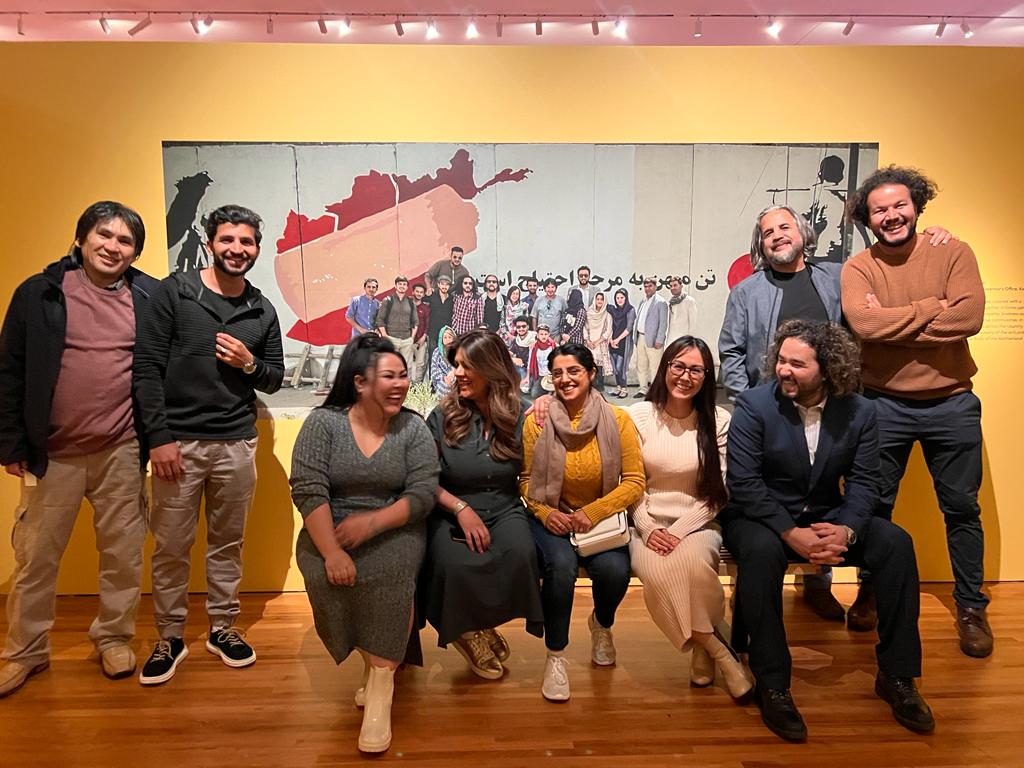
In my own life, some moments reminded me why I still fight: celebrating the birth of my daughter, Hasti; dancing with friends after completing 140 hours of interviews for my PhD; standing on international stages to speak against gender apartheid, carrying my participants’ words across borders; watching my research shape conversations that challenge the erasure of my people.
Like the two sides of yin and yang, these years have been both destructive and generative. One hopeless day, I called a participant still in Jalalabad. Halfway through, I asked, “What is giving you hope today?” She didn’t pause: “The belief in change. I don’t believe things will remain like this, where women are not allowed to live with full potential in our country. I will not stop my part, which is to keep studying and to believe that I will be the first female president of Afghanistan.”
Hope resides in me, too. This year, on this painful anniversary, I ask the world: the war that began in 2001 was never Afghanistan’s war, and today, it is still not the burden of Afghan women and girls to carry alone. So please, don’t turn your face away. Do not accept the narrative that this is simply Afghan tradition, that women are meant to live like this. That lie has been fed to you for too long. The women and girls of Afghanistan are humans. Until we see them and treat them that way, this gender apartheid will not end.

Lima Halima-Khalil, Ph.D., is the program director of the “I Stand With You” campaign at ArtLords, a collective she co-founded, where she mobilizes global awareness against gender apartheid in Afghanistan. Her research explores youth resilience amid violence and displacement. Her writing has appeared in Foreign Policy, TRT World, and academic publications.
Four years of the Taliban
  August 14, 2025 Hi Meteor readers, Popping in for the second time this week with a recommendation so fervent, I had to commandeer the newsletter to make it. Last night, I finally saw the Tony-nominated play John Proctor Is the Villain, and I’m still levitating. I cackled with laughter. I cried! The show is set in a high school in rural Georgia, and it unfurls as a class of students reads Arthur Miller’s The Crucible while the #MeToo movement swirls. There are meditations on trust and friendship, jokes about Glee, an epic interpretive dance, feminism club, and such biting, clever dialogue that of course Tina Fey has signed on to produce the movie adaptation. It’s pitch-perfect and brilliant, and here I was thinking 2018 was not a period of time I wanted to revisit at all. If you are anywhere near New York, you must, must, must see it before it closes on September 7. That concludes The Meteor’s Theater Corner. Meanwhile, a special edition of the newsletter below: Today we have a beautiful and moving reflection from Lima Halima-Khalil, Ph.D., who writes to us on the eve of the fourth anniversary of the U.S. withdrawal from Afghanistan, recalling the tumult and horror of that day and sharing her own perspective as a millennial, mom, and researcher in 2020. But first, the news. Stage whispering, Mattie Kahn  WHAT'S GOING ONTaylor Swift, Taylor Swift, and Taylor Swift, for starters. Also, Trump is headed to his much-heralded summit in Alaska, where he’ll meet with Russian President Vladimir Putin. (There will be no showgirls.) Back at home, historians are rightfully freaked out that the White House has expressed a desire to “review” exhibits at the Smithsonian’s museums and galleries, which is the kind of thing that isn’t supposed to happen in democracies. To be clear: 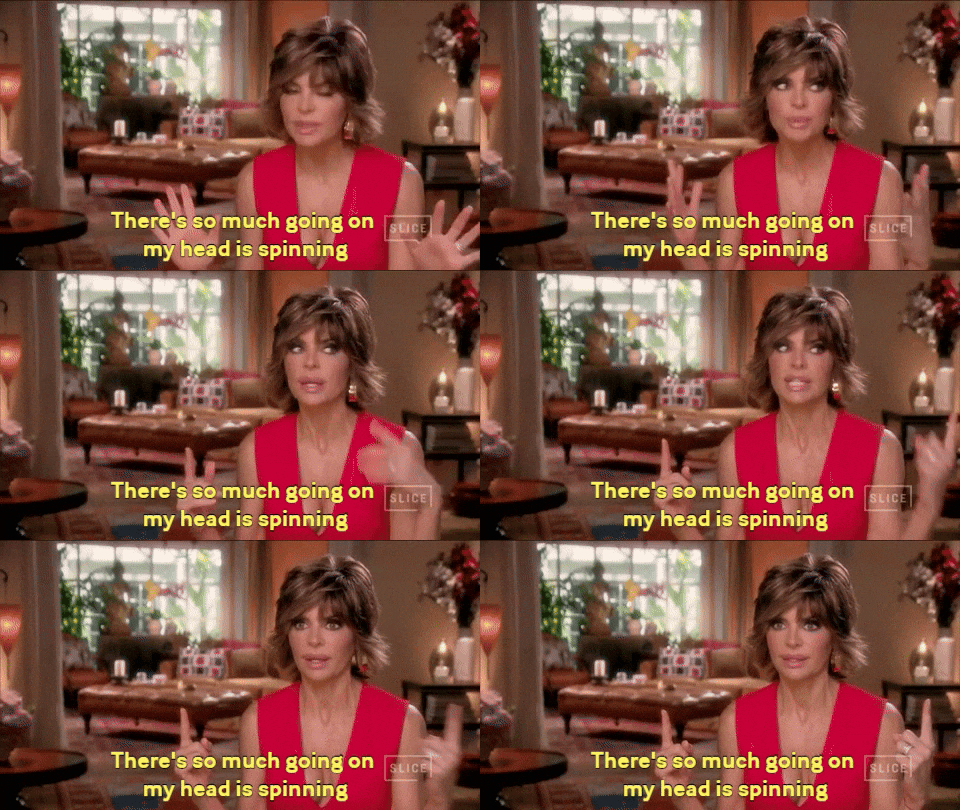 AND:
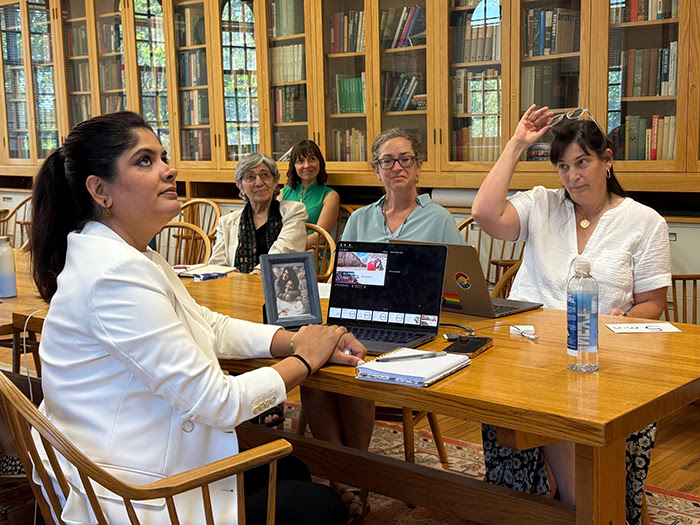
 “Life is Still An Open Wound”Four years after the Taliban seized her country, Lima Halima-Khalil, Ph.D., reflects on the losses, joys, and complexity of life for young Afghans.On August 15, 2021, time did not just stop; it dissolved. One moment, I was at my desk in Virginia, an Afghan researcher piecing together the life stories of Afghan youth for my doctoral research; the next, I was holding my breath between phone calls I could not miss. My computer screen became my only window to my country slipping away: convoys of cars carrying loved ones I could only follow on Google Maps, the low, frantic hum of evacuation messages on WhatsApp, and the heavy silence between each update. That day marked the beginning of the final withdrawal of American troops from Afghanistan, following a deal signed with the Taliban that effectively handed the country over to them. The elected president fled, and fear settled like smoke across the nation. Thousands rushed to the airport in blind panic, terrified of what the return of Taliban rule would mean. Many of the young people I had interviewed joined the crowds at the gates along with their families (and mine too), desperate for a flight to anywhere. Between August 15 and the final U.S. military departure on the night of August 30, over 200 people died at or near the airport: some trampled in stampedes, some shot, some who fell from planes, and 182 of them killed in a suicide bombing on August 26.  THE AUTHOR, LEFT, DEFENDING HER PH.D. ON AFGHAN YOUTH EARLIER THIS SUMMER. It is hard to explain how, in an instant, everything that anchors your life, your home, family, career, the freedoms you’ve built over a lifetime, can be stripped away. You are left with two choices: walk through the valley of death into a new world naked without any resources, or stay in darkness, losing every human freedom and shred of dignity under the Taliban barbarism. Every year on this day, I try to tell my story and the stories of hundreds of my countrymen and women. I have never quite managed to capture the full weight of what we lived through, or what we are still enduring. But I know who I am: I am Lima Halima-Khalil, and I know that if we do not tell these stories, we risk losing more than a country; we risk losing the truth of who we were and who we still are. Watching My Country DisappearThat day, as haunting footage of young men clinging to U.S. military planes, their bodies falling through the sky, was shown over and over on TV, my inbox was flooded in real time: “Lima, they’ve reached the city gates.” “My office is closed, they told us not to come.” “Can you help me get my sister out?” I typed until my fingers ached—evacuation forms, frantic emails, open tabs of flight lists—while my mind kept circling back to my sister Natasha. She was 24 when the Taliban killed her with an IED in 2020 on her way to work. Every young woman who called me that August day and over the last four years sounded like her: “Please, Lima, don’t leave me here. Save me.” Somewhere in that blur of urgency and grief, I knew I was watching my country disappear in real time. The words of one young woman—an accomplished artist—still echo: “I wasn’t mourning just a country. I was mourning the version of myself that could only exist in that Afghanistan.” In the months and years that followed, I carried my interviewees’ stories inside me. I felt the humiliation of the young woman who had to pretend to be the wife of a stranger just to cross a border. I felt the fear of the female journalist who hid in the bathroom each time the Taliban raided her office. I felt the silent cry of the father who arrived in a foreign land with his toddler son and wife and wandered the streets in winter, looking for shelter. I had nightmares over a young man’s account of seven months in a Taliban prison, tortured for the “crime” of encouraging villagers to send girls to school. Four years later, August 15 is still an open wound. Afghanistan is now the only country in the world where girls are banned from secondary school and university. Women are barred from most jobs, from traveling alone, from their own public spaces. Half the nation is imprisoned; the rest live under constant surveillance. Believing in ChangeHowever, the past four years have not been made up of grief alone. Even in exile, even under occupation, life has found a way in. I have witnessed many Afghan women earning their master’s degrees in exile. I have seen my young participants inside the country opening secret schools for Afghan girls in their homes and enrolling in online degree courses, while those in exile run online book clubs and classes for girls, refusing to let hope die. I have seen families reunited after being separated for four years. I see Afghan identity and tradition celebrated more than ever. In my own life, some moments reminded me why I still fight: celebrating the birth of my daughter, Hasti; dancing with friends after completing 140 hours of interviews for my PhD; standing on international stages to speak against gender apartheid, carrying my participants’ words across borders; watching my research shape conversations that challenge the erasure of my people. Like the two sides of yin and yang, these years have been both destructive and generative. One hopeless day, I called a participant still in Jalalabad. Halfway through, I asked, “What is giving you hope today?” She didn’t pause: “The belief in change. I don’t believe things will remain like this, where women are not allowed to live with full potential in our country. I will not stop my part, which is to keep studying and to believe that I will be the first female president of Afghanistan.” Hope resides in me, too. This year, on this painful anniversary, I ask the world: the war that began in 2001 was never Afghanistan’s war, and today, it is still not the burden of Afghan women and girls to carry alone. So please, don’t turn your face away. Do not accept the narrative that this is simply Afghan tradition, that women are meant to live like this. That lie has been fed to you for too long. The women and girls of Afghanistan are humans. Until we see them and treat them that way, this gender apartheid will not end.  Lima Halima-Khalil, Ph.D., is the program director of the “I Stand With You” campaign at ArtLords, a collective she co-founded, where she mobilizes global awareness against gender apartheid in Afghanistan. Her research explores youth resilience amid violence and displacement. Her writing has appeared in Foreign Policy, TRT World, and academic publications.  WEEKEND READING 📚
 FOLLOW THE METEOR     Thank you for reading The Meteor! Got this from a friend? |

Can the Taliban Be Taken to Court?
  September 26, 2024 Greetings, Meteor readers, I’ve never been much of a space gal, (stars are for figuring out your life path, not like, science or whatever), but there is a black hole that is “spitting energy across 23 million light-years of intergalactic space.” And if that doesn’t put whatever’s happening here on Earth in perspective, I’m not sure what will. In today’s newsletter, we look at the big news out of the United Nations General Assembly, a brand-new Emmy winner, and an assault on the Pregnant Workers Fairness Act. Plus, a bit of weekend reading. Just a little speck, Shannon Melero  WHAT'S GOING ON

AND:
 WEEKEND READING 📚On birth: Approximately 20,000 babies have been born in Gaza in the last year. Mothers have been delivering in dangerous conditions, and “four-month-olds understand what airstrikes are.” (Marie Claire) On coming back: One of the most intellectually honest writers of our time, Ta-Nehisi Coates, has a few words for you. (Intelligencer) On selling out: Puerto Rican rappers have been surprising some of their audiences by throwing their support behind a certain orange demon. But considering the protections that proximity to whiteness brings white presenting Latine rappers, is it really all that surprising? (Refinery29)  FOLLOW THE METEOR  Thank you for reading The Meteor! Got this from a friend? Subscribe using their share code or sign up for your own copy, sent Tuesdays and Thursdays. |


Three Years of Taliban Rule
  August 15, 2024 Howdy, Meteor readers, We’re going on a road trip and we’d love it if y'all joined us—specifically, in Chicago at the Democratic National Convention next week! We’ll be hosting the Power Lounge at McCormick Place, in partnership with Emerge—an organization that trains women to run for office— on August 21st-22nd. We’ll be hosting conversations with trailblazers like Rep. Jasmine Crockett, State Rep. Gloria Johnson (of the Tennessee Three), Brittany Packnett Cunningham, Connie Britton and lots more. You can register for this event by clicking the image below. See you in Chicago!  But before we hit the road, let’s hit this newsletter. Today marked the three-year anniversary of the Taliban’s return to power in Afghanistan. We spoke with Sahar Halaimzai, the director for the Afghanistan Initiative at the Malala Fund, about what life has been like for Afghan women ever since. Plus, your weekend reading list. DNCya later, Shannon Melero  WHAT'S GOING ON
 Three Questions About...Gender ApartheidOn the anniversary of the Taliban’s return to power, an advocate explains what life has been like for women in Afghanistan OLYMPIC RUNNER KIMIA YOUSOFI OF TEAM AFGHANISTAN HOLDS A SIGN THAT READS, "EDUCATION" AND "OUR RIGHTS" AFTER RUNNING THE WOMEN'S 100 METER. POLITICAL AND PROTEST SIGNAGE WAS BANNED DURING THE 2024 OLYMPICS IN PARIS. (VIA GETTY IMAGES) Three years ago today, Taliban forces seized Kabul and restored an oppressive theocratic regime to power. You probably remember the images: people attempting to flee, clinging to airplanes, parents handing babies over fences to strangers. And yet, as quickly as those images came across our screens, they vanished. Over the last three years, women in Afghanistan have lost their ability to work, and girls have been barred from higher education, but in the West, their plight has largely been pushed from the front pages. The Malala Fund, founded by Nobel laureate Malala Yousafzi and her father, Ziauddin, is working to change that. We asked the Fund’s Afghanistan director, Sahar Halaimzai, three questions. What has been the most significant change in the everyday lives of Afghan women since 2021? Women and girls have experienced a total rollback of their basic rights. The Taliban have banned girls from attending school beyond the sixth grade and women from most forms of employment. There are also severe restrictions on women’s freedom of movement and access to public spaces. They cannot enjoy a stroll in a park or go to the salon to get a haircut. This oppression is systemic, institutionalized, and a core part of the Taliban’s governance model; it’s a system of gender apartheid. But as of now, the international community does not legally recognize gender apartheid as a crime despite support from Afghan activists and many global experts, including prominent feminists and legal scholars. Daily life is fraught with danger. [But] there are many brave women and girls who continue to protest, run or attend underground schools, and organize advocacy efforts to fight for their rights. If caught, these women have been subjected to violence and harassment, arbitrary detention, torture, and enforced disappearances. The Taliban have also targeted their families, using coercion and violence to suppress any form of resistance. Despite these risks, Afghan women remain resilient. Has the lack of Western media focus on the plight of Afghan women impacted the movement? Absolutely. Without sustained media attention, it is difficult to maintain the pressure needed to hold the Taliban accountable or support Afghan women and girls. Instead, what we are seeing is a creeping normalization of the Taliban’s atrocities, making it easier to sideline women’s and girls’ rights in favor of other interests. If we could get more media outlets to cover what’s happening in Afghanistan as gender apartheid, it could reignite global solidarity for Afghan women and pressure leaders to take action. What needs to happen to protect the rights of women and girls in Afghanistan—and is there anything the average person can do to help? The international community must recognize gender apartheid as a crime under international law. This recognition would open legal avenues to hold the Taliban accountable for their atrocities. There's a real opportunity to do this: the United Nations General Assembly's Sixth Committee is currently debating the draft language of the Crimes against Humanity treaty. In October 2024, the Committee will resume discussions and vote on whether to advance the treaty to the next stage—a pivotal moment that could solidify international legal frameworks to address and prevent such egregious human rights violations. Everyone can contribute to this push by supporting organizations like [ours] that advocate for Afghan women’s rights, amplifying their stories, and by pressuring their governments to take decisive action during this critical period, first by naming what is happening in Afghanistan as gender apartheid. The situation in Afghanistan is not just a localized issue but a global human rights crisis. The Taliban’s gender apartheid…sets a dangerous precedent. If our elected representatives are happy to engage with a governance system that, at its core, is about enforcing gender apartheid, it signals that women’s rights are negotiable and can be easily sacrificed.  WEEKEND READING 📚On boy things: Are big loud podcast voices like Joe Rogan moving more young men to the right? (The Guardian) On lingering questions: Who is this woman and how did she make it to the Olympics? (The Root) On health: Routine pap smears have been unpleasant and uncomfortable since the dawn of time, but a less intrusive new alternative is right on the horizon. (New York Times)  FOLLOW THE METEOR     Thank you for reading The Meteor! Got this from a friend? Subscribe using their share code or sign up for your own copy, sent Tuesdays and Thursdays. |

An "Education Crisis" in Afghanistan
  December 7, 2023 Evening, Meteor readers, Did y’all see who TIME voted person of the year? Not to sound like a hipster, but she has been my person of the year since 2012 when the spirit first moved me to jump up on a coffee table and jam out to a burned copy of RED my friend gave me. (Thank you, Brittany, for showing me the light all those years ago.)  In today’s newsletter, we learn of a new crisis unfolding in Afghanistan. Plus, a little unsportswomanlike gloating, and our weekend reading list and a special feature on an inspiring young activist. Balancing it all, Shannon Melero  WHAT'S GOING ONLost boys: Since the Taliban’s return to power in 2021, the harrowing conditions faced by women and girls in Afghanistan, including their loss of access to education, have been widely shared. But a new report from Human Rights Watch is shedding light on a new group of victims who may have been overlooked: school-age boys. The report has discovered an “alarming deterioration in boys’ access to education” —what HRW describes as an education crisis that could create a “lost generation.” Before the Taliban’s return, most schoolteachers were women; now that they’re barred from teaching, boys are attending classes led by unqualified male teachers, and in some cases, there are no teachers at all. One student who spoke with the researchers said, “The newly hired teachers have highly aggressive behavior toward the students, so the school environment is full of fear.” The report found that many students have stopped going to school altogether to avoid the sharp uptick in corporal punishment. Another student recounted to HRW that he had been whipped on his feet during a morning assembly and had his head shaved in front of his classmates because his hairstyle was “too Western.” A common thread among all the students interviewed is how deeply they feel the absence of the women who once taught them—including those with specialization in subjects like physics and biology, subjects that are no longer being taught in some schools because of a lack of qualified educators. The long-term effects of the education crisis, coupled with Afghanistan’s current economic crisis, will reverberate for generations. When boys and girls are denied access to education, they are more likely to experience heightened rates of discrimination, poverty, and violence. The future of an entire nation is being determined at this very moment, and unless the Taliban can be convinced to function in their country’s best interests, it will be a dark one indeed. AND:
 MORALES (CENTER) SURROUNDED BY FELLOW SURVIVORS AND SUPPORTERS IN HER YOUTH NETWORK. (PHOTO COURTESY OF ABRIANNA MORALES)
 TRINITY RODMAN STRIKING A WINNING POSE AT TRAINING CAMP. (IMAGE BY BRAD SMITH VIA GETTY IMAGES)  WEEKEND READING 📚
 FOLLOW THE METEOR    Thank you for reading The Meteor! Got this from a friend?
|

"The world stopped paying attention"
  August 3, 2023 Hola, Meteor readers, I recently caught up on “And Just Like That,” and finally saw the episode where Steve gives Miranda a piece of his mind regarding their much-stalled divorce. As a SATC fan, one of my biggest issues with AJLT is the mistreatment of Steve’s character, and it really felt like his “This is my house” speech was vindication for the hours of Steve-slander I’ve had to endure. Give that man an Emmy. But more importantly, give the writer who penned that monologue a fair wage. In today’s newsletter, we take a look at Lizzo’s response to the lawsuit against her, offer some good reading for your weekend, and hear from an actual hero, Farkhunda Muhtaj, who helped evacuate teen soccer players from Afghanistan. Typing from Steve’s house, Shannon Melero  WHAT'S GOING ONTruth hurts: As you’ve certainly been made aware of by now, on Tuesday, three of Lizzo’s former dancers filed a lawsuit against the singer, her production company, and her dance captain. The lawsuit painted a picture of a hostile work environment, rife with racist and fat-phobic comments, an “excruciating” 12-hour audition in which one dancer soiled herself, and the now-infamous instance in which a dancer was allegedly pressured to eat a banana out of a nude performer’s genitals. Lizzo posted her response this morning, and the messaging was…well, pretty much exactly what we’ve come to expect from celebrities called out on their behavior. In fact, there’s already a term for it, coined by Dr. Jennifer J. Freyd—DARVO: Deny, Attack, and Reverse Victim and Offender. Here are some examples straight from Lizzo’s post:
This is a well-worn roadmap. But seeing it used by this person, this time, stings. Lizzo represented so many things that felt new: self-celebration, body positivity, sexual liberation—wonderful qualities that people on the right have tried to “cancel” her for time and time again. She had a chance to do something different and new in her response, too—like address the charges with empathy and humility, rather than taking a page from the DARVO playbook and putting her hurt feelings first. But as a singer once sang, people are only great until they’ve gotta be great. AND:

 FLEEING AFGHANISTAN“The World Has Stopped Paying Attention”The soccer captain behind We Are Ayenda is still working to free the women of her home country.BY THE METEOR TEAM  FARKHUNDA MUHTAJ SPEAKING TO PRESS AFTER MEMBERS OF THE AFGHANISTAN YOUTH TEAM WERE GRANTED ASYLUM IN PORTUGAL. (IMAGE BY HORACIO VILLALOBOS VIA GETTY IMAGES) In August 2021, with the world’s eyes on Afghanistan, the teenage soccer players on that country’s Under-18 Women’s National Team left their homes and began a weeks-long journey to evacuate from their country. The experience of these players—many of whom now live in Portugal and compete as Ayenda, which means “future” in Farsi—is the subject of not one but two films this month, the first of which, We Are Ayenda, is out now on Amazon Prime. The second, Ayenda, will be available on Peacock later this summer. We talked to the extraordinary person who led the girls through the rescue process—not an intelligence officer, but a then-23-year-old Afghan-Canadian soccer player, Farkhunda Muhtaj, the captain of the Afghan Women’s National Team. The Meteor: The film shows your day-by-day work evacuating the youth team from Afghanistan. How did you come to be the person entrusted with the job to begin with? Farkhunda Muhtaj: Because I was the captain [of the women’s national team] and I also lived abroad…I was very much trusted from individuals within Afghanistan. And so I think immediately when they needed help, they turned to me. The women's department secretary...reached out and said to me that Canada was supporting 20,000 Afghans and could I help get the families to either Canada or any other kind of safe nation. What impressed you the most about the girls as they navigated the process of trying to leave the country? I would say their courage and determination and resilience for sure. The girls really went through hell. They were trusting me blindly—they didn't know what the next move was, where they were headed, why they were headed [to] a certain location, who they were waiting for, and how they were going to get into the airport and out of the country. But they risked everything and…whether it took them ten tries, 20 tries, traveling all over the region in order to [find a safe way out], they were doing that. And it's not easy for a 15- or 16-year-old girl to…convince their family that this is the best way out. At the time there was a lot of fraud; it was hard to trust anyone. And what really impressed me was their sisterhood as well, the fact that they recognized that they weren't the only ones trying to leave Afghanistan.  MEMBERS OF THE YOUTH TEAM ALONG WITH THEIR FAMILY MEMBERS IN PORTUGAL. (IMAGE BY HORACIO VILLALOBOS VIA GETTY IMAGES) You’re now living in Europe, and because the Taliban has banned women from playing sports, you’re not allowed to play for your home country. What are your hopes for your own future, and for the future of other Afghan women athletes? Just to quickly give you some context: I was a student-athlete in university. I was the captain of the women's soccer team there. And afterward I wanted to continue my education, so I completed my Bachelor of Education [at] a teacher's college in Canada, and became a science and high school teacher. Now I’ve decided to go pro [and play for Fortuna Sittard in the Netherlands]—it's something I've wanted to do since I was younger, but I realized that the girls saw me as a role model. And so I [went pro] just to show the girls that, you know, it doesn't matter that we're from Afghanistan, a war-torn country; we're just as capable as any other European, any other American or Canadian. And what I want for other Afghan women athletes is the same journey that I took: They deserve to be educated. They deserve to have the right to play football, and we deserve to represent our country. I want us to be able to represent and officially compete in FIFA competitions once again. Of course, since the Taliban took over, they have banned that. Beyond sport, I hope that Afghan women can be educated again. But we're kind of out of time. It's been two years already. The situation in Afghanistan is only getting worse, not better. Yes—there's a moment in We Are Ayenda when you say that you knew [in 2021] that you had to get the girls out quickly because the world was paying attention—and that it might stop. Two years later, has the world stopped paying attention? Absolutely. The world has stopped watching. Right when the Taliban had taken over Afghanistan, people cared—partly because the U.S.’s reputation was on the line as well. People cared and were very anxious about what the future of Afghanistan might look like. But after the war in Ukraine happened—and nothing against Ukraine, they deserve all the attention and care—everyone forgot about Afghanistan. And you really saw how Afghans were treated compared to Ukrainians…When I was trying to help [evacuate] Afghans and vulnerable communities [after evacuating the players], no country seemed to have space. But as soon as other issues around the world happened, they had the budget; they had the space; they had the time. It was really disheartening for me. It was something I didn't expect from the global community. And so the world has stopped paying attention. In Afghanistan, women are just there trying to [gain access to] education. I think the most powerful tool is education. Once you're educated, you're aware of your rights and responsibilities, and the fact that women cannot be educated shows that they're trying to silence them. And if our mothers, our sisters, our daughters are not being educated, then what can we expect for the future generations of Afghanistan? I don't think it's going to turn out well at all. But Afghanistan has been in a desperate situation for decades. And regardless of that, our generations continue to thrive. So although we want the global community to act and be a part of the change and help us, we are also very much trying to do our best to help from within.  WEEKEND READS 📚On the NFL: “It’s not every day a group of women defeat a white billionaire man.” But for the women who sued former Commanders’ owner Dan Snyder, that day is here. (The Athletic) On cool kids: A 10-year-old girl threw a water balloon at a local politician from 100 feet away. She got him right in the back of the head and he was so impressed, he suggested she should be playing for the Yankees. So the Yankees invited her for a game. (The Washington Post) On BookTok: Smutty. Hockey. Drama. Need we say more? (The Cut) On climate: The heat isn’t only on land. Unda the sea, an “astonishing” heat wave has been lethal for marine life. (The New York Times)  This newsletter was written by Shannon Melero and Bailey Wayne Hundl. FOLLOW THE METEOR    Thank you for reading The Meteor! Got this from a friend? Sign up for your own copy, sent Tuesdays and Thursdays.
|


The deadly act of telling the truth
|
No images? Click here  February 11, 2022 This week, it was reported that the Taliban is currently detaining at least nine foreigners in Afghanistan, including two UK journalists who were in Kabul to report for the UN. But we’ve long known about the Taliban’s hostilities toward journalists, especially women journalists—and of course toward women in general. That’s why today’s newsletter feels so urgent. First, Mariane Pearl sits down with the incredible Afghan women behind Rukhshana Media, a news organization that reports on women in Afghanistan and the Taliban government from the ground, at great personal risk. After that, Shannon Melero writes about France’s shameful new ban on hijab in sport and her own experiences as a hijabi athlete. In a week of headlines questioning whether foreign policy can truly be feminist, this edition will convince you that it’s more important than ever. As ever, if you’ve got thoughts—on what you’re reading, or what you’d like to read—we’re all ears: [email protected]. —Julianne Escobedo Shepherd  THE COST OF AN UNTOLD STORYSix Months of the TalibanWhat life is like for women in Afghanistan now—from two journalists fighting to get their stories out BY MARIANE PEARL  A WOMAN AND HER CHILD ON THE ROAD IN KABUL, JANUARY 2022. (PHOTO BY SCOTT PETERSON VIA GETTY IMAGES) Six months ago next Tuesday, Kabul fell to the Taliban, plunging Afghanistan’s citizens, but especially girls and women, into panic and despair. Rukhshana Media is one of the very few woman-run media outlets in the country; its two founders, Zahra Joya and Zahra Nader, now live in exile, working 18 hours a day to ensure coverage of the systematic oppression of women at the hands of the Taliban. I spoke with these extraordinary journalists in late January over Zoom. MP: Rukhshana Media, the news agency you created, is named after a victim of Taliban oppression. Can you tell us about her, and why you started the agency? Zahra Joya: For nine years, prior to creating Rukhshana, I sat in newsrooms, most often the only female to be seen, and saw how much women and girls’ lives were ignored by the media. We had no space, no opportunities to show our worth. Men genuinely believed we couldn’t do the job. So, I founded Rukhshana in 2020 with my own savings to tell our stories, drive change and foster a national dialogue about and with all women in Afghanistan, regardless of ethnicity or religious beliefs. Rukhshana herself was a 19-year-old girl from central Afghanistan who, in 2015, tried to flee an arranged marriage to be with the boy she loved. The Taliban accused her of adultery, dug a hole in the ground, leaving her upper body out, and stoned her to death. I chose her name so that each time we pronounce it we honor her—and fight against the risk of oblivion. Zahra Nader: My biggest fear is that young women who are taught history in the future will say, “I can’t believe there were once female journalists in our country.” There are only 100 female journalists left in Afghanistan (out of 700 before last August). You have reporters working inside Afghanistan and rely on volunteers. Can you explain how people bring stories to you? And are they in danger? ZN: They are not quite volunteers because we insist on paying our collaborators. Women have lost their jobs [since the Taliban took over], so this is also a way of encouraging them to join us and speak out. Some of the women now working with us are not journalists; they were students or teachers, so we train them on the job. ZJ: Right now, we have four female journalists and two men inside Afghanistan. We are looking for someone to cover the Eastern region, but the situation there is beyond control. Despite the danger, our reporters are doing remarkable work. In February alone, they wrote about two abducted women’s rights activists, the ban on women’s voices and music, and how former security forces fear being hunted down when applying for passports, among other critical reporting. We are constantly tracking our collaborators, making sure they are okay, but we don’t want them to take risks. Journalists themselves need to decide. No story is worth a human life, but the cost of an untold story is also very high. ZN: If we need to contact Taliban officials for comment, we do it exclusively from abroad. One time, I made such a call, and the next day, two women contacted me, pretending they needed help; these calls came from the Taliban trying to measure my vulnerabilities.
Afghanistan has one of the youngest populations on earth, with 63% of its people under the age of 25, meaning most Afghans don’t remember what life was like under the Taliban, which held power over roughly three-quarters of the country from 1996 to 2001. Do you have any memories of life under Taliban rule? ZJ: I was nine when the Taliban left. In order to go to school, I had been dressing up as a boy and called myself Mohammad. The ’90s were particularly harrowing for women. Now at least we have platforms, social media, and networks. They didn’t have any of that then. My mother told me there was no bread on the table. They didn’t even know that there were doctors and clinics that could save their lives. ZN: When the Taliban came the first time around, I moved to Iran, where I wasn’t allowed to go to school [because I was a refugee]. The concept of home became a very big deal. The day my parents told me we were going back was the best of my life. I went to school and held my head high. To me, school meant change—the Taliban were in history books, a mere nightmare from the past. We were a generation that was going to change this country for the best. Where were you last August, when the Taliban took Kabul? ZJ: That first day, I went to the office as usual, but my colleagues told me to leave immediately, so I went back home. The only thing I was able to grab was my diary. I was evacuated to London three days after the takeover. I lost everything. ZN: I was working on a story about women’s reactions to the Taliban. Suddenly on television, I saw one entering the presidential palace in Kabul. I knew they were coming, but that image brought it home. I didn’t think it would happen so fast. I sat there just crying. It wasn’t only the fall of a country I was witnessing; it was the death of the hopes of my generation. The Hazara community to which you both belong is being specifically persecuted by the Taliban. What do we know about Hazara women and what is happening to them? ZJ: We have always been discriminated against. Many Afghans believe that we don’t belong there as we are mostly Shia Muslims, and the majority [of Afghans are] from the Sunni sect of Islam. And if you are a Hazara woman, you are buried under several more layers of discrimination between your ethnicity and your gender. Yet, as journalists, we are very conscious about not letting labels and nationalism prevent us from representing all women.  RUKHSHANA CO-FOUNDER ZAHRA JOYA. (PHOTO COURTESY OF ZAHRA JOYA) The Taliban promised to respect women’s rights “according to Islam.” But “according to Islam” is a vague, and in this case threatening, formulation, as the interpretation of the Quran is complex and varies widely depending on the individual. ZN: In May 2021, I asked the Taliban to define what they considered women’s rights. Every Muslim country has its own interpretation of how women should live. Pakistan, Saudi Arabia, Iran—they are all different. The Taliban never answered the question or defined anything. But they are slowly pursuing their agenda and imposing a very narrow interpretation of Islam. The word “misogyny” lacks the power to represent their ideology towards women. One of the first Taliban decrees stated that “women are human beings.” They actually had to wonder about that. How at-risk are the women who were most visible during the last 20 years? Journalists, of course, but also women working in the armed forces, as lawyers or activists? ZN: Rukhshana is doing everything we can to answer that question. We hear about so many stories of women being killed but often we can’t run them because we can’t reach anybody to confirm the facts. When we can talk to the family, friends or relatives, we reach out to the Taliban and they simply deny responsibility: They say these women have died because of family feuds. How is it possible that so many public, visible women are suddenly all dying from family feuds? It’s so easy for Talibans to find and execute these targeted women. All the public data, fingerprints, census and personal information are in their hands now.
In January 2022, a delegation of Taliban was hosted in Oslo to speak with world representatives. Officially, the meeting was to address the economic crisis, but activists see that meeting as a first step towards legitimizing the Taliban government. What do you think? ZN: When we challenge the fact that the Taliban should not be invited to the world table, we are told that Afghanistan has too many problems. That we should resolve the economic crisis first, then we can talk about women. But how do you resolve starvation if half of the country is under house arrest? I was saddened by the lack of protests from the Norwegian people, who ultimately paid for the expenses of that meeting. How can the international community help Afghan women? ZJ: The best way is to put pressure on your governments, to tell the world that you disagree with what is happening. Ultimately, this is about all women and the way we can be treated when men are at their worst. Show what you stand for, challenge inertia. Another way is to support Afghan women who are now outside the country. You can help them help us.  PHOTO BY JUAN LEMUS Mariane Pearl is an award-winning journalist and writer who works in English, French, and Spanish. She is the author of the books A Mighty Heart and In Search of Hope.  WHAT ELSE IS GOING ON
AND:
—JES  HATERS GONNA HATEThe French government makes another move in its battle against hijab BY SHANNON MELERO  FRENCH WOMEN'S SOCCER TEAM, LES HIJABEUSES, PROTESTING THE HIJAB BAN AT JARDIN DU LUXEMBOURG (SCREEN GRAB VIA LE PARISIEN) “How are you going to do all of that with that,” a doctor once asked me during a visit. The that she was referring to was my hijab, and the all of that was a Spartan race I was participating in that fall. In my short life as a hijabi, it was the first time I had considered whether my choice would hinder my athletic pursuits. I shrugged and said, “I think they have sports hijabs online.” It seemed like a simple enough solution, and my appointment carried on as usual, with my doctor telling me to bring my medal to our next visit. As I soon discovered, the intersection of hijab and activewear was a hotbed of debate—not just from consumers who found fault in nearly every product but from entire governments who sought to legislate against hijab in sport, all in the name of women’s liberation. It turned out that it wouldn’t be my hijab hindering me, but global ignorance, manifesting itself in an obsession with a small piece of fabric that some women choose to place or not place over their hair. That ignorance has steadily grown since my days of obstacle course racing. Just three weeks ago, the French government voted to ban hijab wearing in sports competitions to assert “neutrality” on the field. Technically, “all conspicuous religious symbols” like yarmulkes or turbans would fall under this ban, but given France’s history of hostility toward Muslims, the rule was clearly targeted. Just last year, the government limited the religious freedoms of over 5 million Muslim and immigrant citizens by placing strict regulations on homeschooling, the finances of religious organizations, and strengthening France’s “neutrality principle,” which “prohibits civil servants from wearing religious symbols like the Muslim hijab and voicing political views.”  THE AUTHOR, IN HER PRIME, TWO SECONDS BEFORE SHE FELL INTO A MUD PUDDLE. (IMAGE COURTESY OF SHANNON MELERO) This latest affront to hijab in sport is particularly unsettling considering the political climate of the Olympics. This year, an Uyghur athlete, Dinigeer Yilamujiang, lit the Olympic flame in Beijing, despite the Chinese government being accused of carrying out human rights violations against the Uyghur Muslim population, equivalent to “a campaign of genocide.” The 2024 Summer Olympics, to be held in Paris, will have its own issues, as sporting authorities decide how the country’s ban will affect international competitors. But even without an Olympics looming, the ban is symptomatic of the lingering mistrust of Islam in predominantly Judeo-Christian nations that believe themselves too superior to fall into the trap of theocracy. It’s all infuriating. The choice to do anything in hijab–go to work, play a sport, draw breath–opens the wearer up to an endless stream of vitriol. Hardened athletes like English boxer Safiyyah Syeed and Olympic bronze medalist Ibtihaj Muhammad manage to soldier on with fearlessness and hijabs that don’t slip. (How!?) But when I think of these laws, I think of the millions of women who will have to consider leaving their club or school teams—women who just want to play the game. I never bought that sport hijab. Partly for personal reasons pertaining to where I was with my faith at the time and because I was experiencing some hearing loss. The sport hijabs available at the time would have covered my ears, making it harder to be aware of any fellow racers trying to pass me on uneven terrain. I finished that Spartan race in what my friends jokingly called hijab-lite–everything covered but my hair. By the end of it, I felt like I had climbed a mountain (I had) and didn’t give a second thought to what wasn’t on my head. As for the hijabis I met up with later in the week, they didn’t care either; they wanted to see the medal.  A previous version of this newsletter stated the Taliban held power in Afghanistan from 1986-2001. In fact, it was 1996-2001. We regret the error.
FOLLOW THE METEOR Thank you for reading The Meteor! Got this from a friend? Sign up for your own copy, sent Wednesdays and Saturdays. |

