
Let’s Take This Outside
The never-ending work to diversify the great outdoors
By Shannon Melero
Rockland State Park, nestled in Upper Nyack, New York, was a summertime staple of my youth. Every year, my family would pile into a car with coolers, chairs, bags of charcoal, and enough groceries to feed a small army and make the hourlong sojourn from the Bronx first thing in the morning to secure a spot on the grass. Location was everything. We needed a flat surface to set up games and blankets, but also had to be close to one of the grills the park provided, and most importantly, we needed to be a reasonable walking distance from the park’s massive pool.
I didn’t realize it at the time, but those trips to Rockland were my first introduction to the great outdoors, a relationship which years later would blossom into a love of hiking and staring at trees.
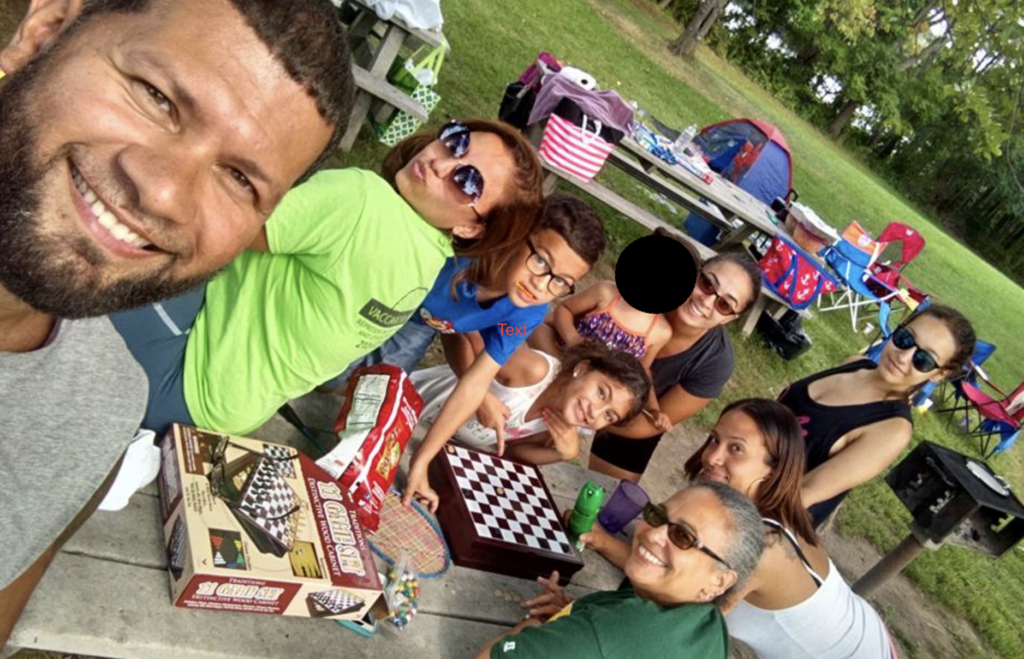
What made Rockland such a comfort was that everywhere I looked, I saw families that mirrored my own. Huge groups of Latine and Black people gathered around decaying wooden picnic tables, laying out tubs of familiar foods our matriarchs had cooked the night before—potato salads; three different preparations of rice; pork; and pasteles, all of which would be handed out at dinnertime. Rockland was a full-day experience from sunup to dusk.
But like many outdoor locales that attracted urbanites of color, Rockland State Park was segregated up until the late 1950s, so the fact that I saw so many families of color in one area wasn’t mere happenstance. It was, historically speaking, where we had been gathering all along.
The idea of “public lands” goes back as far as the 1780s, when states began ceding land rights to the newly formed federal government. Since that time, the idea of who gets to be outside, where, and when has been racially inflected. While the restrictions have now changed—anyone can travel or pay a fee and go to any national or state park—their impact lingers. In 2025, outdoor publication The Trek found that 96% of long-distance hikers on the Appalachian Trail were white. Meanwhile, the Trump administration has enacted its own efforts to make the outdoors white again.
“I always say that white people were really onto something when they invented the great outdoors and then gatekept it,” Chevon Linear, co-founder of Black People Outside, tells me. Chevon, who goes by Chevy, is warm and inviting, even through the computer screen that separates us. Chevy was a Girl Scout as a child but notes that, “The outdoors were really deemed as ‘white people shit.’” It’s a common term we use when referring to the outdoors, and while it’s often said in a joking manner, it’s a genuine phenomenon. For much of American history, going outside for leisure was a privilege—a prohibitively expensive one that has now become a trillion-dollar industry by catering mostly to white, affluent outdoor enthusiasts.
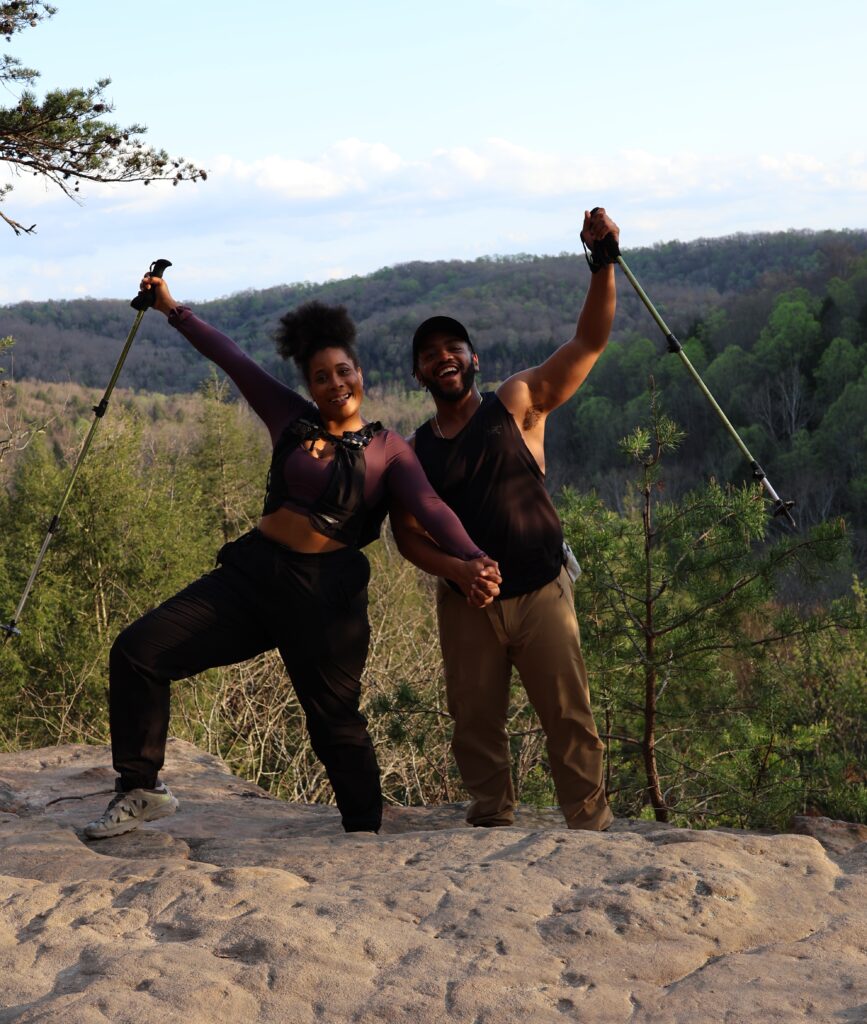
Chevy founded Black People Outside with her fiancé, Kameron Stanton, after an impromptu trip to Grand Teton, a national park in Wyoming, six years ago. The couple, who had never camped before, traveled with one of Chevy’s friends, who loaned them all of the gear they needed. Kameron called the experience “spectacular.”
“The true dark night sky, the energy from everyone around you…everyone was just so nice,” he recalls. “And it’s like, dang, outdoors got everyone acting friendly.”
For Chevy, who had traveled all over the world before the pandemic, that night in Grand Teton sparked a calling. “Just seeing the stars, I was crying,” she recalls. “I had never seen the sky like that. It was truly quiet and I’d never heard it so quiet before.” But what she didn’t see were many other Black people. “I’m from Chicago, so I’m used to seeing Black people everywhere I turn,” she says. Witnessing the beauty of nature and the profound silence that brought her peace. She knew she had to share the experience with more people.
“I just feel like we have these irrational fears about the outdoors because of our past,” Chevy says. “As Black people, we were outside because we were escaping, running through the woods for survival. It wasn’t for joy.”
As Chevy and Kameron embarked on their mission, forming what would eventually become Black People Outside, they came across the same barriers that many communities of color face: limited access to green spaces, high costs, and that age-old idea that going outside was just more white people shit. Then, as with so many things, there’s the barrier of representation. In 2018, a writer at the University of Toronto described advertising around the outdoors as “visual apartheid.” Chevy, at least, had the Girl Scouts when she was young, but Kameron says he had no sense of Black people in the outdoors at all until he reached adulthood. “I remember growing up watching TV, the only people that was on there hiking and being outside and skiing…was white people and Dora [the Explorer],” he says. “She was in the streets with the backpack, and I was there with her. But the reality is Black people [not seeing themselves represented] contributes to the disconnect that we sometimes have with nature.”
Chevy and Kameron refer to all of these as invisible barriers, most of which they’ve been able to overcome through educational programming, community outreach, and working with brands to provide gear to those without. But one additional extremely visible barrier has many outdoors people reconsidering their plans for the summer: the Trump administration.
In his second term, Trump rolled out massive budget cuts to the National Park Service, changed admission costs for non-U.S. citizens, and relaxed hunting regulations, which puts both forest animals and backcountry hikers in more danger. Then there are the non-park-related factors that have made it more difficult than usual to just go outside as a person of color—ICE, emboldened white supremacists, and most recently, gas prices. Outside isn’t just reverting to white people shit; it’s turning into wealthy white people shit.
The founders of Black People Outside, though, refuse to flinch.
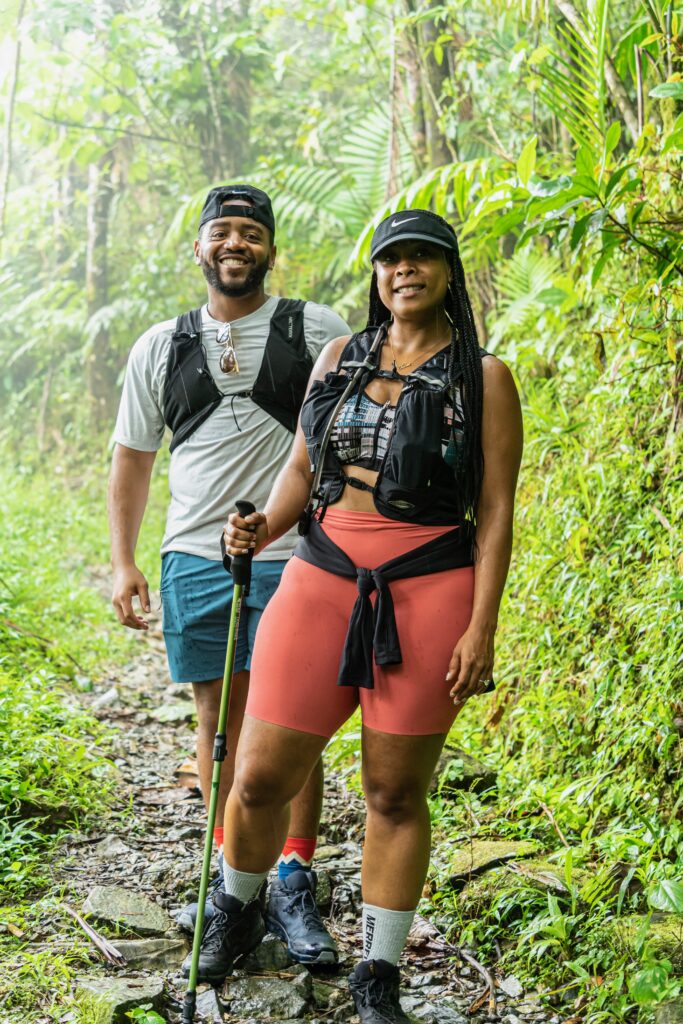
“I’m gonna do what I wanna do and go where I wanna go, and I want our people to have that same energy,” Linear says. “National parks are not the only place to recreate. We still have state parks, we have county parks. We are going to be outside.” For Linear, it’s not a euphemism or a business slogan; it’s a fact. She will not be pushed back indoors, and she is adamant that no other outdoorsperson feels alone or unsafe.
Although Chevy, Kameron, and I are speaking with each other for an interview and are complete strangers, our mutual love of the outdoors creates a level of comfort. I share with them stories of hiking with my daughter. We laugh about the time I misread a map and had to scramble down an enormous rock with a one-year-old on my back and my mother —who vows she will never do that trail with me again—yelling at me for dragging her out to the wilderness. I relay my fears and discomfort over what this summer may hold as I try to go outside with my daughter, to create the same kinds of core memories my mother made for me all those years ago at Rockland State Park, before I ever had to wonder if the hiker next to me questioned if I belonged on a trail.
“You have to attack ignorance with your presence,” Kameron says. “Ain’t nothing going to change if you end up hiding.”