
We're Getting In on the In/Out Trend Too
 January 3, 2023 Felicitous new year, Meteor readers, Wow, we’re back at it again in 2023. I, for one, have been in a time freeze since the last time we chatted. The Meteor is coming off of a seven-day vacation during which I chose to live my best life—and by that, I mean I reorganized my closet and played several hours of God of War: Ragnarok. (She’s a gam3rgrl.) I hope your end-of-year was just as exciting. 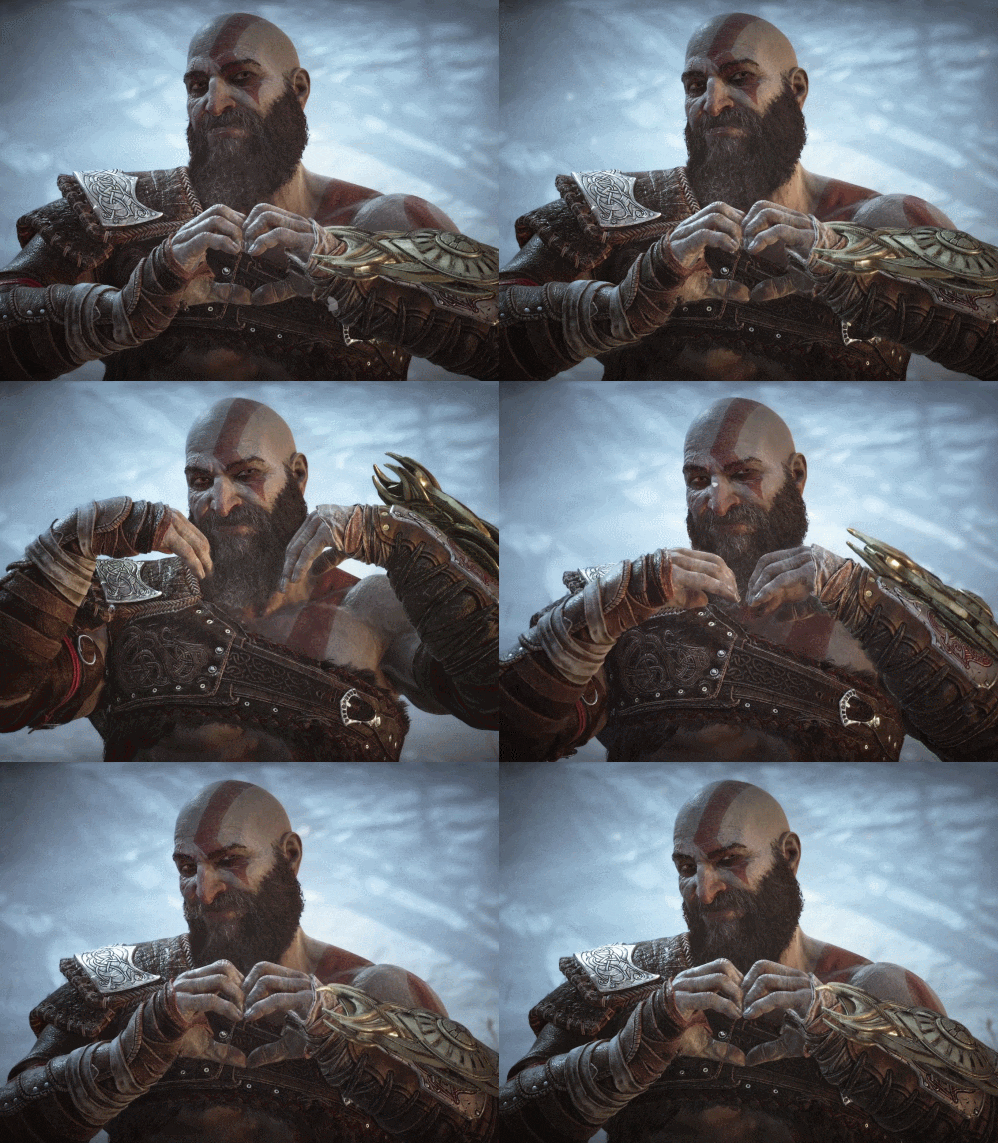 In today’s newsletter, we’re easing ourselves into 2023 with our own version of what’s in and what is absolutely out (*cough* low-rise jeans *cough*). But first, let’s take a look at the news. Typing from the floor of my extremely clean closet, Shannon Melero  WHAT'S GOING ONBirth behind bars: According to the Arizona Republic, Perryville prison induced three incarcerated women before their due dates without their consent. While induction is safe in most cases, doing so before a due date is a decision between a patient and a care provider—and the women told reporters that they were not given the choice to refuse induction, and would have preferred to give birth without it. They’ve also claimed that prison medical providers insisted that the inductions were part of Arizona Department of Corrections policy—most likely as a way to decrease the prison’s liability—rather than a medical necessity, bringing an entirely new and frightening meaning to forced birth. (The ADOC did not comment on the situation, but NaphCare, the medical contractor working with the prison, denied the existence of any such policy.) One of the women, Stephanie Pearson, told the Republic, “They just told me that someone on a different yard a few years ago went into labor in their cell, and had their baby in the cell, and that's why they induce everyone now.” Desiree Romero, who was also induced, said she wasn’t surprised that she wasn’t being given any choices: “I’m quite used to the prison making all these decisions for us because we are still state property.” AND:
 MARTINA PRESENTING THE WOMEN'S SINGLES CHAMPIONSHIP TROPHY AT LAST YEAR'S US OPEN. (IMAGE BY DIEGO SUOTO VIA GETTY IMAGES)
 THE LAST IN/OUT LIST YOU'LL NEED THIS YEAR   You know what's always in? Winning free stuff. We're giving away tote bags to the first 10 people to click on the image below just as a thank you for sticking with us into the new year.   FOLLOW THE METEOR    Thank you for reading The Meteor! Got this from a friend? Sign up for your own copy, sent Tuesdays and Thursdays. Ideas? Feedback? Requests? Tell us what you think at [email protected]
|


Your Favorite Meteor Stories of 2022
Happy (almost) New Year, dear Meteor reader,
It’s almost our anniversary—yours and ours. In January, Meteor founding member Jennifer Finney Boylan wrote the first feature essay of the Meteornewsletter—and it’s been a thrilling journey ever since. So much has happened this year, and who better to celebrate with than you?
First, a round of applause to Meteor collective members who had astounding years. There were books: Supreme Court commentator Dahlia Lithwick released her much-anticipated Lady Justice; Amber Tamblyn’s Listening in the Dark taught us to trust our intuition; and Julissa Natzely Arce Raya’s latest, You Sound Like a White Girl, acted like medicine unto the bones.
And there were prizes: Rebecca Carroll snagged three Webbys for her show “Billie Was a Black Woman,” Salamishah Tillet won a Pulitzer for distinguished criticism, Dawn Porter showcased the heroes of Title IX, and our podcast “Because of Anita” got a Gracie. It’s giving…

Meanwhile, in a year that came with some challenges, it meant a lot to us to tell stories that resonated with you on the issues that matter. Projects like the “My Abortion Story” series, the viral Josh and Amanda Zurawski interview, Talia Kantor Lieber’s student investigation into colleges paying (or not paying) for abortion travel, and live events like 22 For ‘22 and Meet the Moment where we got to meet some of you, in the flesh, for the first time.
It was also an emotional year on our podcast “UNDISTRACTED” with some amazing episodes: the most important conversation about RENAISSANCEever, an analysis of the Great Resignation with Elaine Welteroth, and who could forget the touching dialogue between host Brittany Packnett Cunningham and her husband, Reginald, about the birth of their son, who was delivered at just 24 weeks. Some of us are still crying about that one. (It’s me, I’m us.)

Of course, I would be remiss if I didn’t shout out the highlights of my favorite part of The Meteorverse: this newsletter right here, powered by all of you. Thank you, readers, for every open, every click, and every time you’ve forwarded our stories to someone you know. It means the world to us. And if you are so inclined to continue sharing The Meteor with your friends, family, enemies, exes—anyone you want, we don’t judge!—here’s a list of our top 10 newsletters this year as decided by you, the all-powerful arbiters of interesting.
10. Muslims Are Not a Monolith
9. “If they could kill her, they could kill anyone.”
8. Queen Elizabeth’s Complicated Legacy
7. How Our Data Is Used Against Us in the Post-Roe World
6. The Best (and worst) Parts of the KBJ Hearings So Far
5. The Supposed Death of #MeToo
4. When “Feminists” Spout Hate
2. Puerto Rico’s Dimming Future
The entire Meteor team wishes you a gentle and restful new year. We’ll see you here, in your inbox, in 2023. And we’ll keep bringing you the news and stories you want to know about with a full serving of feminist perspective—and a splash of dry wit—to keep things interesting.

For auld lang syne,
Shannon Melero

"They Chose to Make History."
"THEY CHOSE TO MAKE HISTORY"
For Iranian American journalist Neda Semnani, 2022 belongs to the women and girls of Iran.
BY NEDA TOLOUI-SEMNANI
December 20, 2022
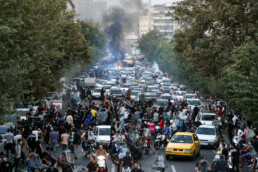
Mahsa ‘Jina’ Amini, a Kurdish-Iranian woman, was on her way to the rest of her life when she was profiled, detained, and allegedly beaten to death in Tehran, Iran in September.
Amini’s fate, like so many other women’s, was decided in a split second by a man who looked at her and saw only what he wanted to see: her hijab askew. Both she and he knew that the systems and institutions of the country were created to benefit one of them over the other.
Perhaps if Amini had died at another moment in time, no one but her family would have known her story. But on this particular day, the young women and girls of Iran decided to reclaim her agency and their own.
They chose to make history.
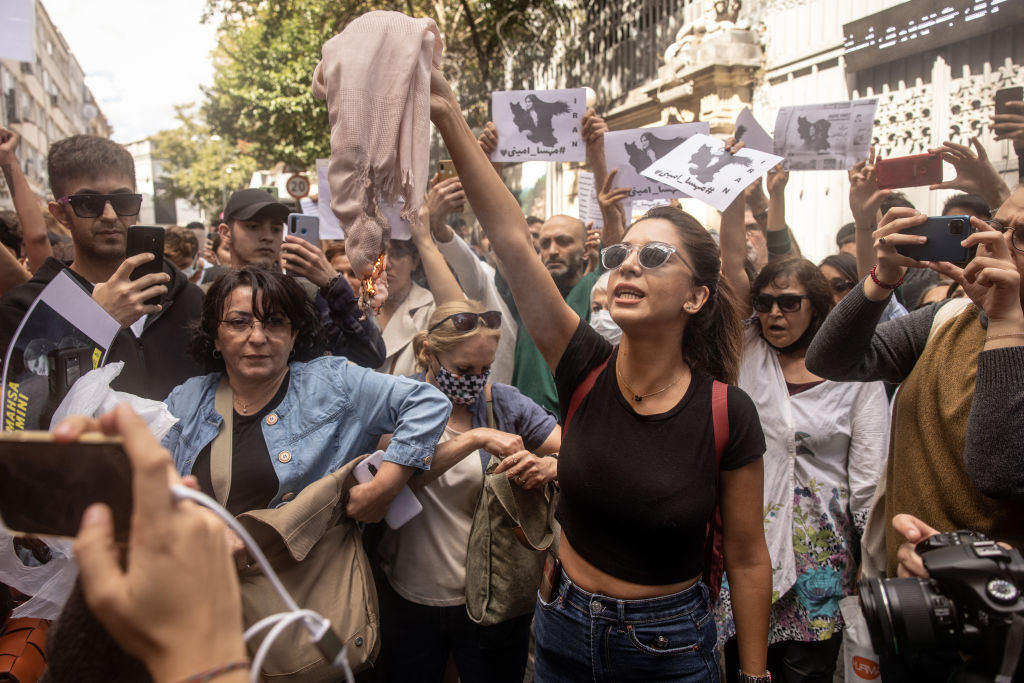
They flooded the streets and social media en masse to mourn Amini—but not only Amini. They mourned all the others who had died, who were imprisoned, who were held down by hopelessness. Iran’s women wept in public, many pulling off their state-sanctioned hijabs and cutting off their hair. And they weren’t alone. Every other marginalized group in the country joined them: Kurds and Baluchs, Black and queer, Ba’hai and Jewish, and so many others. Each person demanding equal rights for women. Each person taking up space and screaming for their history—our history—to be acknowledged, to be heard, to be integrated into the story of their country and the world at large.
As an Iranian American and a journalist, I have watched all of this from the safety of my New York apartment. Never have I felt as connected to my ancestral homeland and its people as I have during these long weeks, and never have I felt the distance between us so acutely.
Since the uprising began, Iranians—women, men, and non-binary people—have burned their hijabs and the Iranian flag; they’ve come together in public; they’ve made music and theater, harnessed spray paint and brushes; they’ve danced and kissed in the streets. Each nonviolent action like a ballistic missile aimed at the core of the ruthless regime and its sophisticated surveillance state.
And after the women and girls of Iran decided to stand together, the men who rule the country fell apart. They began clutching at power through blunt force and unimaginable brutality. Since September, the Islamic Republic has killed more than 500 people, including at least 57 children, and arrested more than 1800. They have made freedom fighters of school girls and martyrs of teenagers. They’ve rounded up and jailed more than 58 journalists, most of whom are women. They’ve set fire to a prison which was filled past capacity with dissidents. They’ve used buckshot to shoot at women’s faces and genitals; hundreds of protestors have lost their eyesight. The security forces have used ambulances to pick up demonstrators and monitored hospitals to find those who had gotten away. They’ve raped and sexually assaulted protesters, many of whom are in their teens and early 20s. Security forces have allegedly tried to stop people from witnessing atrocities by shooting into homes where people were looking out of their windows.
Then last month, the parliament went further. It voted to make protest punishable by death, dissolving whatever trust was left in the Islamic Republic and officially pitting the government against its people.
Sham trials followed. Last week, in the city of Mashhad, cranes were erected, stretching high into the air. Steel trees bearing strange fruit: two young men dead, their bodies hanging above the heads of the people.
Their names are Mohsen Shekari and Majidreza Rahnavard. They may have been the first and second official execution, but they are not the first or second to die at the hands of the Islamic Republic.
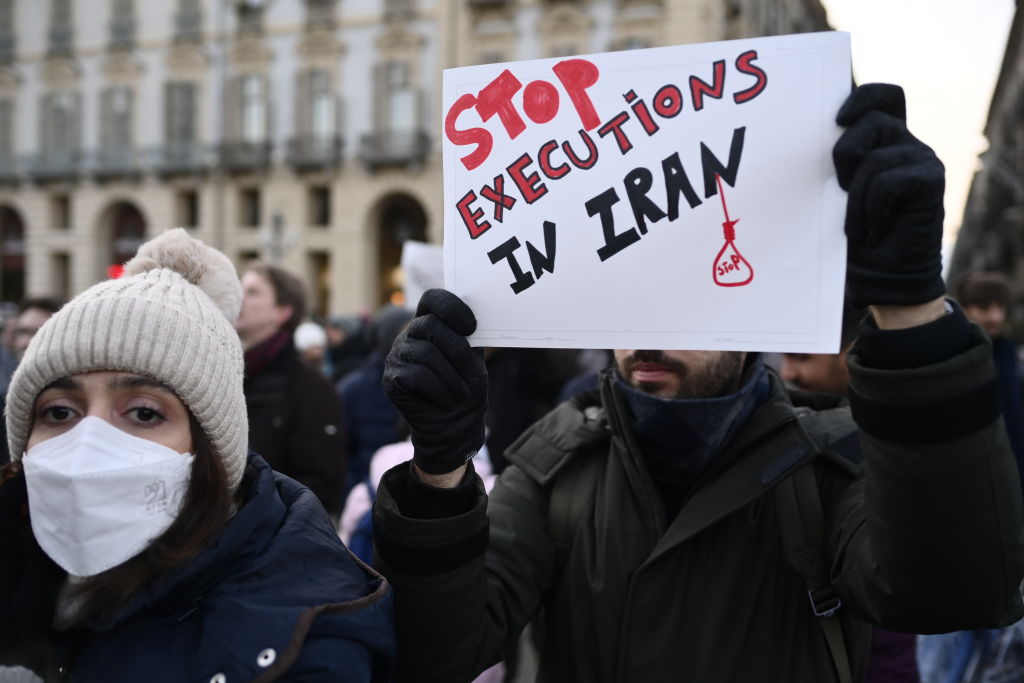
The point of these killings isn’t to punish individuals or to protect the regime or warn off protesters; it is an attempt to obliterate hope. Yet they can’t extinguish what doesn’t exist. Because the simple truth is that as long as this regime is in power, the people say there is no hope in their future; their hope will be reborn when this regime is gone. So the revolution marches on and the people chant, “Thousands stand behind each one killed.” In other words: “You can’t kill us all.”
***
This Iranian uprising, this revolution, keeps falling in and out of the headlines, a fact that belies its global importance. Iran at this moment contains the intersection of so many issues: economics, foreign policy, technology, health, religion, sectarianism, race, and class—underpinned, at least for now, by feminist values. It is like nothing we’ve seen before, making it arguably the most important story in the world, the most important story of our time.
We’re watching one generation rise up where others have cowered. We’re watching the people come together to champion the rights of women. We’re watching them reach for democratic values and ideals, not with resources or institutional support, but with their weapons of choice: speech, assembly, art, music, literature, poetry, fashion, and movement.
As an Iranian, an American, and a woman, I’m devastated that for many outside Iran, this moment is, at most, a hashtag and a chance for people to push their political agendas. Women, minorities, and their allies are being attacked by their government and fighting for their very survival. It isn’t on the front page of every country’s newspapers, but it should be.
So what can we do, you and I, to show up and engage with this moment? We have to support these women, children, men, boys, and non-binary Iranians by going out of our way to report their stories and amplify their voices. As we see more Iranians flee their country, we must open our own borders and provide refuge.
Finally, we must acknowledge that in order for this revolution to succeed, many brilliant, beautiful, and brave human beings will give up their futures for someone else’s. We must acknowledge their suffering, their fears, and most of all, the lives they won’t get to live. We must also acknowledge the people they leave behind and the pain those who will survive will carry with them. This is what it means to resist and to revolt. It means that one group will sacrifice their plans, their potential, and all their normal mornings so that perhaps, one day soon, the rest of us might revel in freedom.

Neda Toloui-Semnani is an Emmy-winning journalist and the author of They Said They Wanted Revolution: A Memoir of My Parents.
Photo by Nilo Tabrizy
There's Another Report on the Widespread Abuses in Women's Soccer
  December 15, 2022 Hey Meteor readers, I’m peeved this evening. I’ve been peeved all day, really. This morning, a new report detailing ongoing abuse in women’s soccer was released and I’ve been muttering obscenities under my breath about it all day. So as you can guess, we spend some time with what’s in it and what’s being done about it. We’ve also got a quick cruise through today’s news. Let’s get into it. Staring out the window, Shannon Melero  WHAT'S GOING ONContinued abuse in women’s soccer: A new joint investigation conducted by the National Women’s Soccer League (NWSL) and the NWSL Player’s Association confirmed widespread “sexual abuse, unwanted sexual advances…emotional abuse, cronyism, racist remarks” and retaliation against players who reported this behavior. If you’re wondering why this sounds so familiar, it’s because the Yates report, released in October of this year, arrived at a similar conclusion. The new report examines the league as a whole and provides more detail on specific misconduct allegations, including those levied against former Gotham FC general manager Alyse LaHue, who was fired in 2021 to the surprise of team supporters. (LaHue was presented as the woman who would turn Gotham, the New Jersey area team, around.) According to the unnamed player who made the allegations, not only did LaHue engage in sexual harassment, but she also practiced religious discrimination. LaHue’s lawyers deny the allegations. The report also detailed the fallout from an incident that took place last year involving the Houston Dash’s Sarah Gorden. After a match in Chicago, Gorden had shared on Twitter that she and her boyfriend had been racially profiled by security staff. No disciplinary action was taken—but even more alarmingly, this latest report reveals that head coach James Clarkson asked Gorden’s teammates to apologize to the security staff for publicly supporting her claim. Clarkson even went so far as to hand out the phone numbers of the accused so that players could easily contact them. But even with these two bombshell reports, there might be more to uncover. Both U.S. Soccer and some NWSL teams “delayed providing key evidence,” citing legal privilege due to “confidentiality or non-disparagement agreements with coaches fired for misconduct.” Additionally, both reports make it a point to get at the larger issues at play: The NWSL didn’t have an anti-fraternization policy until 2018, which could have curbed the number of coaches who felt emboldened to pursue players romantically—nor was there an anti-harassment policy until 2021. (If you’re keeping track, that’s 30 years after Anita Hill and four years after #MeToo!) That means there was no structure for players on reporting or handling unwanted advances from coaches or other team staff. Instead, most accused coaches were quietly fired or transferred to different teams within the league to continue their careers undisturbed, as was explained both in the Yates report and this one. While the entire report is infuriating, one section, in particular, made me want to yeet my computer into the Passaic. On top of having to deal with harassment, job insecurity, and retaliation, many players reported being treated like “charity cases” rather than professional athletes. Imagine for a moment spending your entire adolescent life training for a job, getting scholarships for your talent, eventually being signed to a professional team, being harassed and silenced in an effort to keep your job only to have the owner of that team act as if they’re doing you a favor. One unnamed player explained, “[The owner] made it seem like his players were his kids which, if you had the owner of the Knicks saying that to one of his players, that’s weird.” Two investigations into rampant, widespread abuse, and all anyone has to show for it are some lukewarm apologies and belated recommendations on strengthening a one-year-old anti-harassment policy and adding in sensitivity training? We need to do better.  AND:

 FOLLOW THE METEOR Thank you for reading The Meteor! Got this from a friend? Sign up for your own copy, sent Tuesdays and Thursdays. Ideas? Feedback? Requests? Tell us what you think at [email protected]
|


There Have Been 948 Gun Violence Incidents on K-12 Campuses Since Sandy Hook
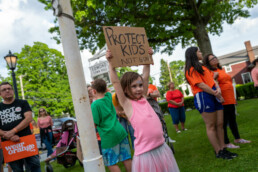
  December 13, 2022 Dear Meteor readers, Today we reflect on the 10-year anniversary of Sandy Hook, which takes place December 14. What have we learned since then, and where do we go from here? We also have some news. Let’s dive right in. Praying for a different way, Samhita Mukhopadhyay  WHAT'S GOING ONTen years ago: On December 14, 2012, an armed gunman entered Sandy Hook Elementary School in Newtown, Connecticut and killed 26 people—a majority of whom were children under the age of 10. It was the deadliest mass shooting in an elementary school in U.S. history. Afterward, Americans seemed to agree: Sandy Hook needed to be a turning point. Kids should not be gunned down in their own classrooms. Yet in just a four-year span after Sandy Hook, there was Taft Union High School in California. There was Ronald E. McNair Discovery Learning Academy in Georgia. Sparks Middle School in Nevada. Arapahoe High School in Colorado. Berrendo Middle School in New Mexico. North Thurston High School in Washington. South Macon Elementary in North Carolina. Harrisburg High School in South Dakota. Madison High School in Ohio. Antigo High School in Wisconsin. Mueller Park Junior High School in Utah. All incidents in which teenagers were either wounded or killed. And these incidents aren’t flukes. Over the ten years since Sandy Hook, incidents of school-based gun violence have increased at an alarming rate. According to the Center for Homeland Defense and Security K-12 Shooting Database, 948 gun violence incidents have taken place on K-12 campuses since December 2012. “Gun violence incidents” include any incident where a gun is “brandished, fired, [or] a bullet hits school property for any reason regardless of the number of victims, time of day, or day of week.” As a result, 273 people have been killed, 722 have been wounded, and thousands have been traumatized by witnessing gun violence at school.  For the parents of Sandy Hook, the trauma of their loss was compounded by a new 21st-century ordeal: a mass disinformation campaign that sought to invalidate their experience. Alt-right radio host and conspiracy theorist Alex Jones relentlessly spread lies claiming the shooting was a hoax. He called the parents “actors” and told his audience (who believed him) that Sandy Hook was a staged event intended to remove guns from the hands of law-abiding citizens. Courts ultimately found Jones guilty of defamation and ordered him to pay $965 million in damages to eight of the families. This reckoning wouldn’t have happened without the efforts of Sandy Hook families who, in the wake of this tragedy, refused to be silent about the twin plagues of gun violence and disinformation. As for the direction we’re headed with gun violence: This year saw another series of incomprehensible mass shootings, including the murder of 19 children and two adults at Robb Elementary School in Uvalde, Texas. Like Sandy Hook, Uvalde was heralded as a turning point—and many gun reform advocates believe the turning is actually beginning to happen. In June, the Senate was able to reach a deal on gun reform that, while not banning assault rifles outright, did begin to limit who can access them. But as National Youth Poet Laureate Amanda Gorman said, “It takes a monster to kill children. But to watch monsters kill children again and again and do nothing isn’t just insanity—it’s inhumanity.” For the sake of the families of Sandy Hook, let’s not allow this anniversary to be an occasion where we simply mourn the murder of children as an inevitable part of American life. If you take one small action today to protect children from gun violence, consider a donation to Sandy Hook Promise, which works to end violence nationwide through education, gun reform, and (most crucially) a “Know the Signs” program geared toward caring for students who exhibit violent inclinations. Let’s fight for a better future—together.  AND:
 FOLLOW THE METEOR Thank you for reading The Meteor! Got this from a friend? Sign up for your own copy, sent Tuesdays and Thursdays. Ideas? Feedback? Requests? Tell us what you think at [email protected]
|

Brittney Griner Is Coming Home
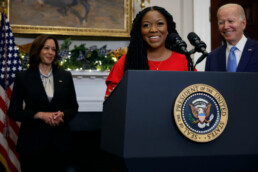
 December 8, 2022 Hey! Meteor readers! *bursts through your inbox like the Kool-Aid Man* SO MUCH IS HAPPENING! No time for banter. Let’s dive straight into it. Typing like the wind, Shannon Melero  WHAT'S GOING ONLong overdue homecoming: After 294 days, Brittney Griner has been released from prison and will soon be reunited with her loving wife, Cherelle. A rundown of how we got here: In February, Griner was detained in Russia after officials found vape cartridges containing cannabis oil in her luggage. Like most WNBA players of her caliber, Griner travels overseas to play for other leagues as a way to make more money during the U.S. off-season. In May, the U.S. government officially acknowledged that Griner had been wrongfully detained—but that move didn’t do her much good. The Russian government kept her in custody and proceeded with a drug trial in July. Griner, who maintained that she had had no intent to break the law, pleaded guilty and was handed the maximum sentence of nine years in a Russian penal colony.  Early this morning, President Biden announced that Griner was being safely returned home as a result of a prisoner swap. In exchange for her freedom, the U.S. returned convicted arms dealer Viktor Bout to Russia. Unfortunately, the news is not all good: Griner’s fellow detainee, Paul Whelan, was not included in the swap and remains imprisoned in Russia on suspicion of espionage. Whelan, a former Marine, has been in Russia since 2018. Both he and the U.S. government deny any allegations of espionage. For those of us not directly connected to the Griner family, this ordeal has opened our eyes to so many things that I hope we don’t soon forget—for one thing, that professional women athletes deserve a level of pay that would allow them to do what their male peers do during their sports’ off-seasons: recover.  It’s also Latina Equal Pay Day: a day where I, a working Latina who loves to write about equal pay in sports, and all of my sistren are reminded of the astonishing wage gap that still exists for many of us. This day marks the length of time a Latina would need to work to make as much money as a white guy doing the same job in the previous year. Women on average need to work an additional three months, till March, but Black women until September, Native women until the end of November, and Latina women till today. (But hey the gap for Latinas is closing and we’ll be on par with white men by *counts on fingers* the year 2206.) But as Rebekah Barber and Jasmine Mithani of The 19th point out, Latinas face many other barriers which have contributed to the pay disparity. Latinas are “overrepresented in lower-paid industries such as service and domestic work.” But those of us with undergraduate degrees are “the most underpaid—taking home 31 percent less than White men,” they write. Suffice it to say my student loan lender will get their money when I get mine. (Which, I repeat, could be in 2206.) Are there solutions to close the pay gap? Plenty, like passing the Pregnant Workers Fairness Act and the Paycheck Fairness Act. But any long-term solutions also require systemic change in how we view Latina women’s labor, childcare, and sick leave. Did you know that 51 percent of working Latinas don’t even have access to paid sick leave? And studies about gender-based pay gaps don’t often include undocumented workers or those who exist outside of the gender binary, leaving those populations’ needs largely unknown and unaddressed. I guess you could say there’s a lot of work ahead if we want to feel better about…work.  AND:
 FOLLOW THE METEOR    Thank you for reading The Meteor! Got this from a friend? Sign up for your own copy, sent Tuesdays and Thursdays. Ideas? Feedback? Requests? Tell us what you think at [email protected]
|

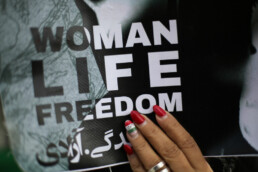
Three Days of Strikes In Iran
 December 6, 2022 Evenin’ Meteor readers, Today we’re anxiously awaiting the results of the Georgia Senate run-off election which will decide if Herschel “what even is a pronoun” Walker or incumbent Democratic Senator Raphael Warnock will win the seat. We have reason to be optimistic—but there have already been documented instances of voter suppression and people struggling to get their absentee ballots, changing deadlines and more. In today’s newsletter, we are sifting through the confusion of the recent headlines about the morality police in Iran, applauding some brave Swifties, and checking in on what else is going on in our world. Watching the results come in, Shannon Melero & Samhita Mukhopadhyay  WHAT'S GOING ONSeriously, what is going on in Iran: Over the weekend, The New York Times sent out a breaking news alert announcing that Iran’s “Gasht-e Irshad,” commonly referred to as the “morality police,” had been abolished. The Wall Street Journal and CBS News repeated the headline as well. But that’s not exactly what happened. It didn’t take long for Iranian journalists and those familiar with the situation to chime in with much-needed clarifications.  “This is at best a very unclear and inconclusive remark uttered in the middle of a presser,” wrote Arash Aziz on Twitter. Aziz, an author and NYU PhD candidate, explains what he saw in the press conference: Iran’s Attorney General Mohammad Jafar Montazeri made an off-hand comment that was widely reported as fact. As it turns out, Montazeri has no authority to make such a sweeping declaration. Iranian state media eventually confirmed that Gasht-e Irshad has not been abolished, although citizens have reported a diminished presence of the force on the streets. It’s not about a single misleading headline. The reality is that oppressive governments thrive on sowing seeds of confusion—and they have a strong incentive to do so, since their efforts to quiet the protests have failed. And given how fast stories spread on social media (and how much we desire good news), a misinterpreted quote or slightly inaccurate headline can quickly spiral into viral misinformation for Iranian officials to use to obscure what is happening in Iran. In this particular case, Iran’s state media can easily point to an error made by Western media and spin it into a narrative that outsiders are the ones really stoking the fires of revolution and pretend everything in Tehran is peachy. In discussing the response to the Times article, Gissou Nia, an Iranian-American human rights lawyer, told CBC News, “I think it simply underscores that the global community wants a neat resolution to this story and is not realizing that the Iranian people want a full overhaul of the system—not just the morality police.” But here’s what we know to be true: All of this is distracting from the bigger story. The sweeping movement in Iran continues against great odds with strikes, protests, and rallies planned for the majority of this week. The Iranian government is doing its utmost to brutally suppress these actions as well as any reporting on them. And while there may not be a ton of ways to help the women in Iran directly, we can continue to amplify the voices of the activists, agitators, and people on the ground risking their lives to fight theocratic rule and demand equal rights for all citizens. AND:
 FOLLOW THE METEOR Thank you for reading The Meteor! Got this from a friend? Sign up for your own copy, sent Tuesdays and Thursdays. Ideas? Feedback? Requests? Tell us what you think at [email protected]
|

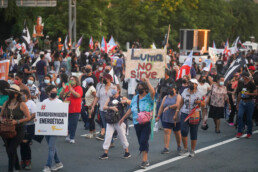
Puerto Rico's Dimming Future
  December 1, 2022 Hola, Meteor readers, Anyone else feel like time is moving at lightning speed and a snail’s pace all at the same time? Anyone? Just me? We are somehow approaching the end of this year, which I could have sworn just started three weeks ago. Either I've discovered time travel or Thanos has re-acquired the infinity stones again. Who knows! In today’s newsletter: a disastrous contract extension in Puerto Rico, positive news out of Jackson, Mississippi, and a little time spent with the Harry and Meghan trailer. Screaming “HOW IS IT DECEMBER?!”, Shannon Melero  WHAT'S GOING ONSe fue la luz: After Puerto Rico was devastated by Hurricane Fiona in September, we wrote about Luma, the private power distributor behind the crumbling energy grid leaving thousands of islanders without electricity. And now, despite massive outcries from the public, the board of Puerto Rico’s Electric Power Authority (PREPA) has chosen to extend Luma’s private contract with the island, giving the company control of the power system for an indefinite amount of time. According to AP, “Luma’s contract is expected to remain in place until the bankruptcy of Puerto Rico’s power company, which holds some $9 billion in debt, is resolved.” What does this mean for all the American citizens living in Puerto Rico with no or unreliable access to electricity? I’ll put it as frankly as I possibly can: The PREPA board and Governor Pedro Pierluisi basically looked Puerto Ricans right in the eye and said, “Se pueden joder,” which loosely translates to they can go fuck themselves. During a news conference, Pierluisi said “canceling the contract makes no sense right now” due to how much it would cost to do so. And yet maintaining the contract, which ensures a payment of over $100 million to Luma, is the sensible option? There needs to be a plan C. For an in-depth and comprehensive explanation of what’s happening and how it’s affecting citizens, consider watching the latest report on the power outages from independent reporter Bianca Graulau:  AND:


 FOLLOW THE METEOR Thank you for reading The Meteor! Got this from a friend? Sign up for your own copy, sent Tuesdays and Thursdays. Ideas? Feedback? Requests? Tell us what you think at [email protected]
|

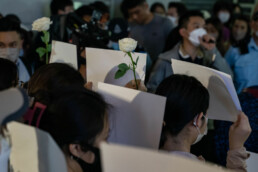
Inside China's Historic Protests
NEWS
November 29, 2022
Hey there, Meteor readers,
Did ya miss us? We missed you! We hope that you and yours had a pleasant Thanksgiving/Native American Heritage Day/Black Friday/Small Business Saturday/Cyber Monday and that your credit card statements do not runneth over. I, for one, spent [REDACTED] dollars on yarn/knitting patterns over the weekend and will be eating wool until the next fiscal quarter. (Worth it.)
In today’s newsletter, we’ve got a breakdown of what’s happening in China, plus a quick tour around the World (Cup). Let’s get into it!
Squishing yarn balls,
Shannon Melero

WHAT’S GOING ON
The People’s Republic: This week, images of protests in China have flooded the internet as citizens take a stand against their government’s “zero COVID” policy. The policy aims to bring the number of COVID cases as close to zero as possible by implementing what some feel are extreme measures, especially in contrast to the rest of the world. China has closed its borders to tourists, forced citizens reentering the country to quarantine, and sent government drones with loudspeakers circling overhead, reminding folks to wear masks or stay indoors. While this policy kept deaths down during the start of the pandemic, it also made it more difficult for those who have never been exposed to the virus to build any sort of immunity to the Omicron variant now hitting the country. Non-COVID deaths have also spiked in the country, since the strict lockdowns prevent citizens from receiving prompt emergency medical care.
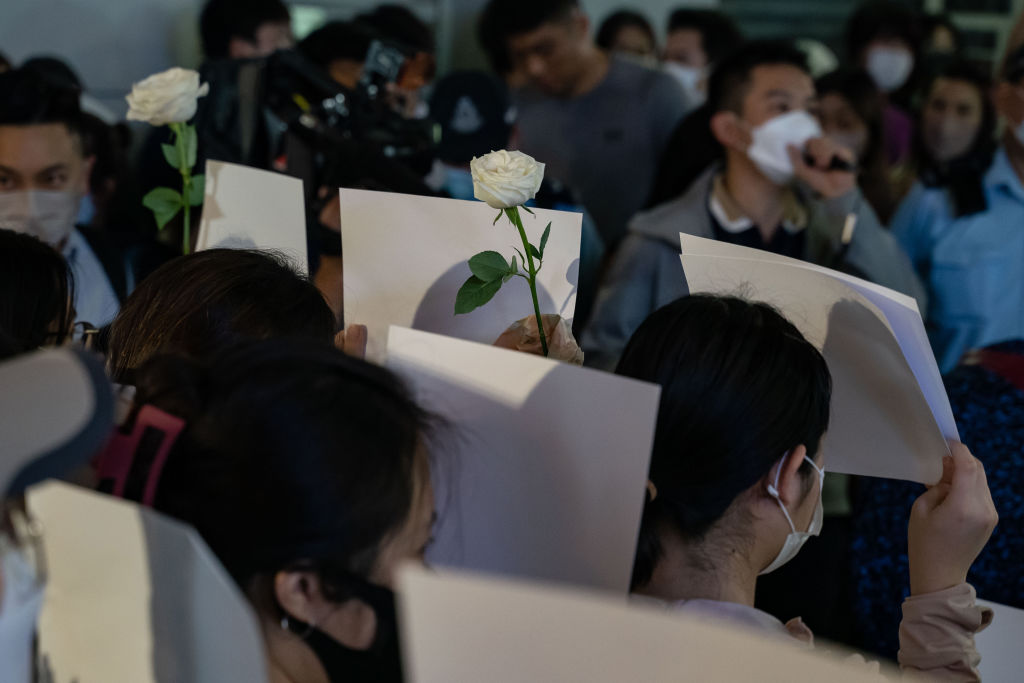
So why protests now? They began last week after 10 people died by fire in an apartment building where strict lockdown measures were in place. (In response, government officials said those who died were simply “too weak” to escape the flames.) But what started out as a protest about a fire in a heavily surveilled area of China quickly evolved into what the Washington Post calls “a larger rebuke of China’s zero COVID policies, government restrictions and surveillance, and, in some cases, explicit criticism of Chinese leader Xi Jinping.”
These incredibly creative protests are unlike any we’ve seen in China in decades. Due to censorship laws, Chinese citizens cannot simply walk into the street and speak out against their government. To get around this, some are using blank sheets of paper which represent “everything we want to say but cannot say,” a protestor told Reuters. One group of university students opted to use a specific physics formula—the Friedmann equation—as their protest sign. As activist Nathan Law explained on Twitter, “It’s the pronunciation: it’s similar to “free的man” (free man)—a spectacular and creative way to express, with intelligence.” Other Twitter users familiar with the equation, which calculates the expansion of the universe, view it as a demand to reopen the country. Meanwhile, the BBC reports that Chinese officials are actively seeking out citizens who they believe attended protests over the weekend, even though “it is unclear how police might have discovered their identities.”
AND:
- In just a few days, SCOTUS is set to hear a case that has been described by former Attorney General Eric Holder as “an existential threat to our democracy.” The Atlantic breaks down everything we need to know about Moore v. Harper.
- An investigation by The Times and Sunday Times has found “slave-like” conditions for workers at fashion retailer Boohoo.
- The expanded child tax credit ended last year; newly released figures show that child poverty rates have gone back up, leaving millions of families facing food insecurity.
- Early voting for the Senate run-off race between Herschel Walker and Rev. Raphael Warnock in Georgia began on Monday and over 239,000 votes were cast–a new record for single-day votes collected in the state. This is the only time I’ll ever be happy to see ridiculously long lines. Keep voting, Georgia! We’re all rooting for you.
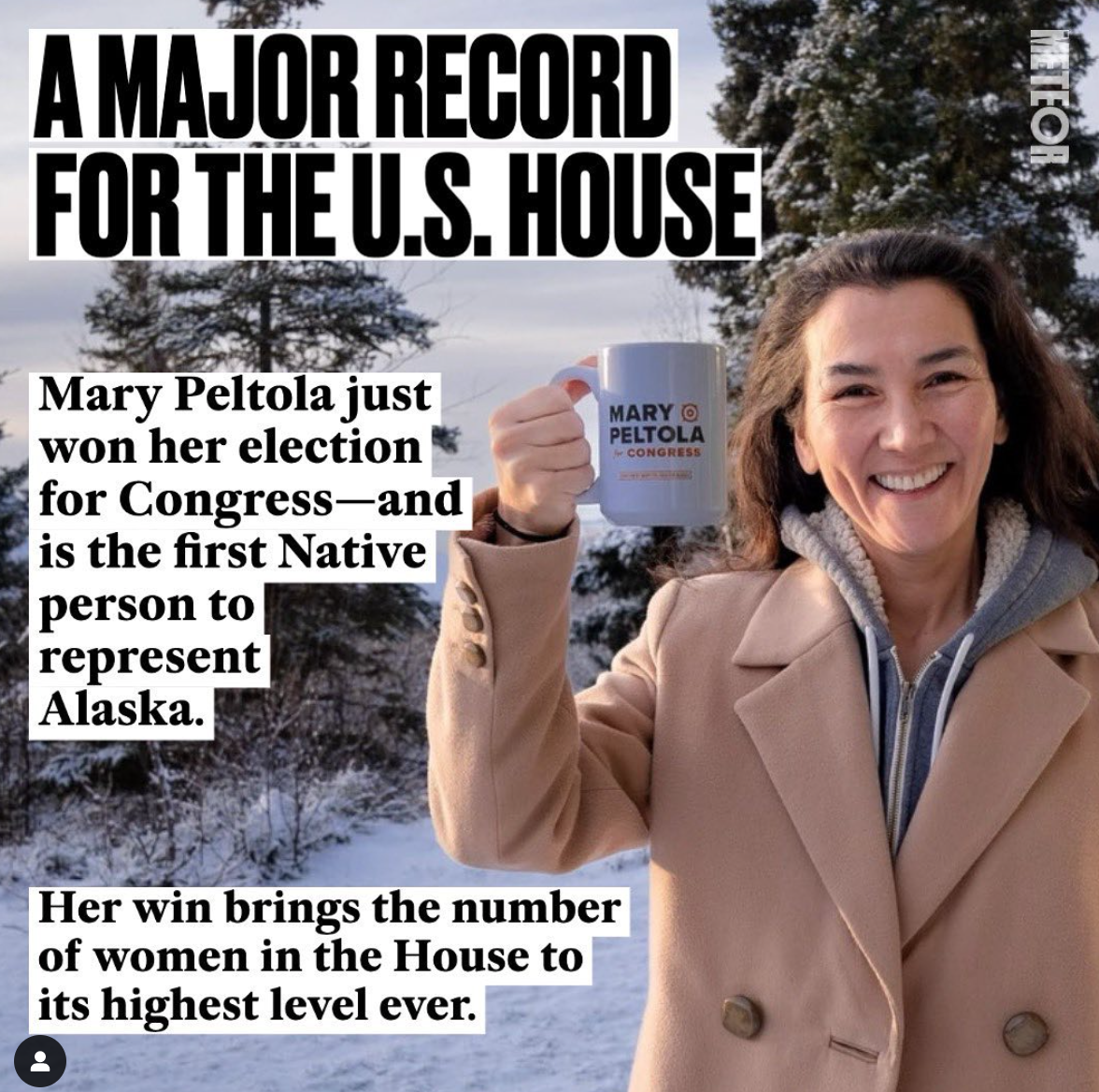
- And over in Alaska, Mary Peltola, of Yup’ik descent, became her state’s first Native member of the house bringing the total of women U.S. Representatives to a record 124.
AROUND THE WORLD (CUP) IN 60 SECONDS
The Rhetoric That Led to the Club Q Violence
NEWS
November 22, 2022
Greetings, Meteor readers,
We are in the midst of that very weird week at the end of November where there’s too much to do and not enough time to get it done. Folks are traveling, seasoning their birds, decorating their homes, or mentally preparing for the obligatory interaction with that one uncle you’re almost certain was there on January 6th even though you can’t quite prove it. Or perhaps you’re doing none of this and simply reflecting on the real history of this holiday. (If that’s you, here’s some extended listening to get you through the week.)
Wherever you fall on the Thanksgiving celebration spectrum, we just want to say we’re grateful for each minute you’ve spent with us in your inbox. The greatest gift is community, and we’re honored to have you in ours.
In today’s newsletter, we mourn the loss of five lives in the Colorado Springs shooting and catch up on a few other things going on in the world.
Writing from the land owned by the Lenni Lenape,
Shannon Melero

WHAT’S GOING ON
Grieving Club Q: The country is still reeling from the shooting in Colorado Springs, where a gunman opened fire inside an LGBTQ+ nightclub, killing five and injuring 18. The victims have been identified as Raymond Green Vance, Kelly Loving, Daniel Aston, Derrick Rump, and Ashley Paugh. This tragedy shines an ugly spotlight on the many ways our culture says “never again” after each horrific incident while continuing to act in ways that ensure that there will be another.
Like many queer gathering spots, Club Q was described as a haven for the community—and an especially necessary one after a year of anti-trans legislation, harmful queer-phobic rhetoric from politicians, and a targeted attack on drag shows by the right wing. (In 2022 alone, according to the Counting Crowds Consortium, there were more than 40 right-wing actions targeting drag shows and Drag Queen Story Hours—like the brunch Club Q was planning for the day after the shooting occurred.) Now the same politicians who so adamantly charged their constituents to rally against drag queens, transgender people, and LGBTQ+ folks in general are now sending thoughts and prayers to those affected by the shooting.
And then there’s the second issue at hand: inadequate gun laws. Colorado’s “red flag” laws require civilians to report incidents of violence involving gun owners so that a red flag can be triggered and their firearms can potentially be seized. But this case shows those laws are of little use. Last June, Anderson Aldrich, the suspected Club Q shooter, was arrested for issuing a bomb threat—but because he was not charged, and no one who knew Aldrich filed a report, he was allowed to keep (and allegedly use) his firearm. Colorado State Rep Tom Sullivan told AP, “We need heroes beforehand—parents, co-workers, friends who are seeing someone go down this path.” But we need politicians to be heroes here and pass stronger gun laws. The firearms used at Club Q (one of which was an AR-style weapon) were legally purchased by a man who had already proven himself capable of violence; this is not a problem we should be turning to good Samaritan citizens to solve.
AND:
- Election denier and Arizona gubernatorial election loser Kari Lake has suddenly become very concerned about voter suppression. The extremely convenient tonal shift comes amid (debunked) GOP claims that voting machines used at the polls were not up to code. The situation has become so dire that some election officials have actually gone into hiding after receiving death threats.
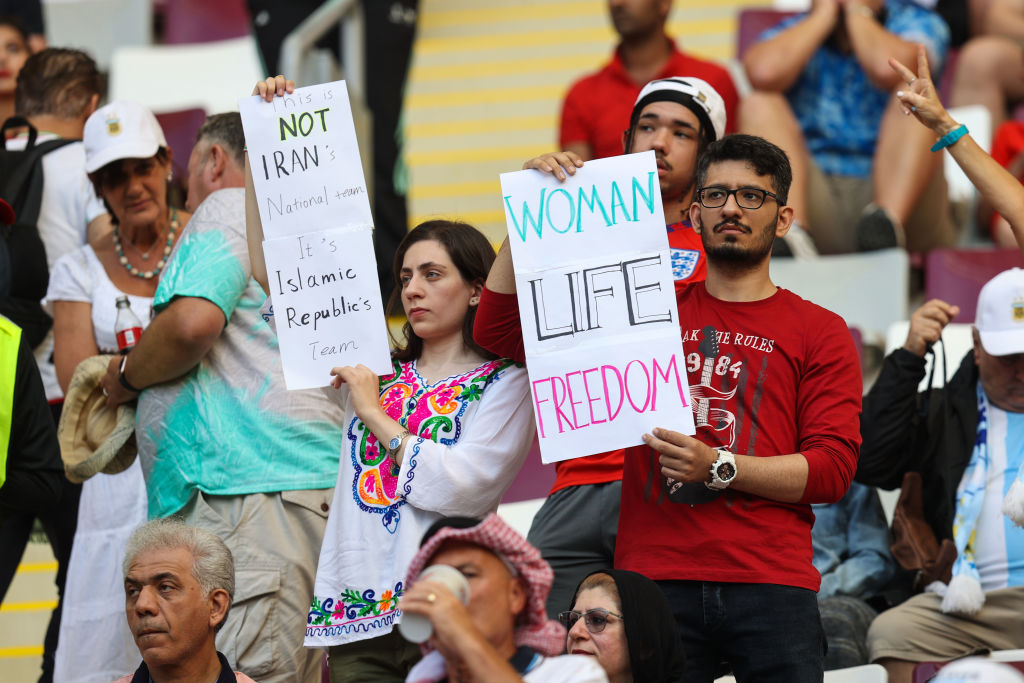
- Even if you’re not watching, it’s nearly impossible to get away from all the goings-on at the World Cup in Qatar. One of the few positives coming out of the tournaments (other than Messi being humbled by Saudi Arabia in a historic upset) is the act of solidarity from the Iranian national team, who refused to sing their country’s national anthem during their opening match. One fan told Reuters, “All of us are sad because our people are being killed in Iran, but all of us are proud of our team because they did not sing the national anthem—because it’s not our national (anthem), it’s only for the regime.”
- GATHER ROUND, ELDER DISNEY MILLENNIALS! I HAVE NEWS! Brandy, one of the best ever to play Cinderella on screen, will be reprising her iconic role in Disney’s next installment of its Descendants film franchise. Make sure your pitch pipes are ready; rehearsals for the “Impossible” sing-a-long begin at dawn.
IN CASE YOU GET LONELY
Normally we’d see you again on Thursday but The Meteor will be closed until next Tuesday. So just in case you miss us, here are a few pieces from our archive to get you through the long days.
For anyone who has to figure out where they’re going to college: I Asked 61 Colleges If They Would Pay for Students to Travel for an Abortion. Only Five Hinted That They Might. by Talia Kantor Lieber
If you need a reminder on the importance of shopping small: The Unsung Heroes of the Labor Movement by Esther Wang
For anyone using their downtime to binge The Crown: Princess Diana’s Death Is Personal for Me by Susanne Ramírez De Arellano
To keep up with your friends who read a lot: Why “Men are Trash” Is Not Enough by Samhita Mukhopadhyay
Looking to relax your mind? Try: The Radical Act of Rest from UNDISTRACTED with Brittany Packnett Cunningham and guest Tricia Hersey or The Key to *Actually* Unplugging by Megan Reynolds
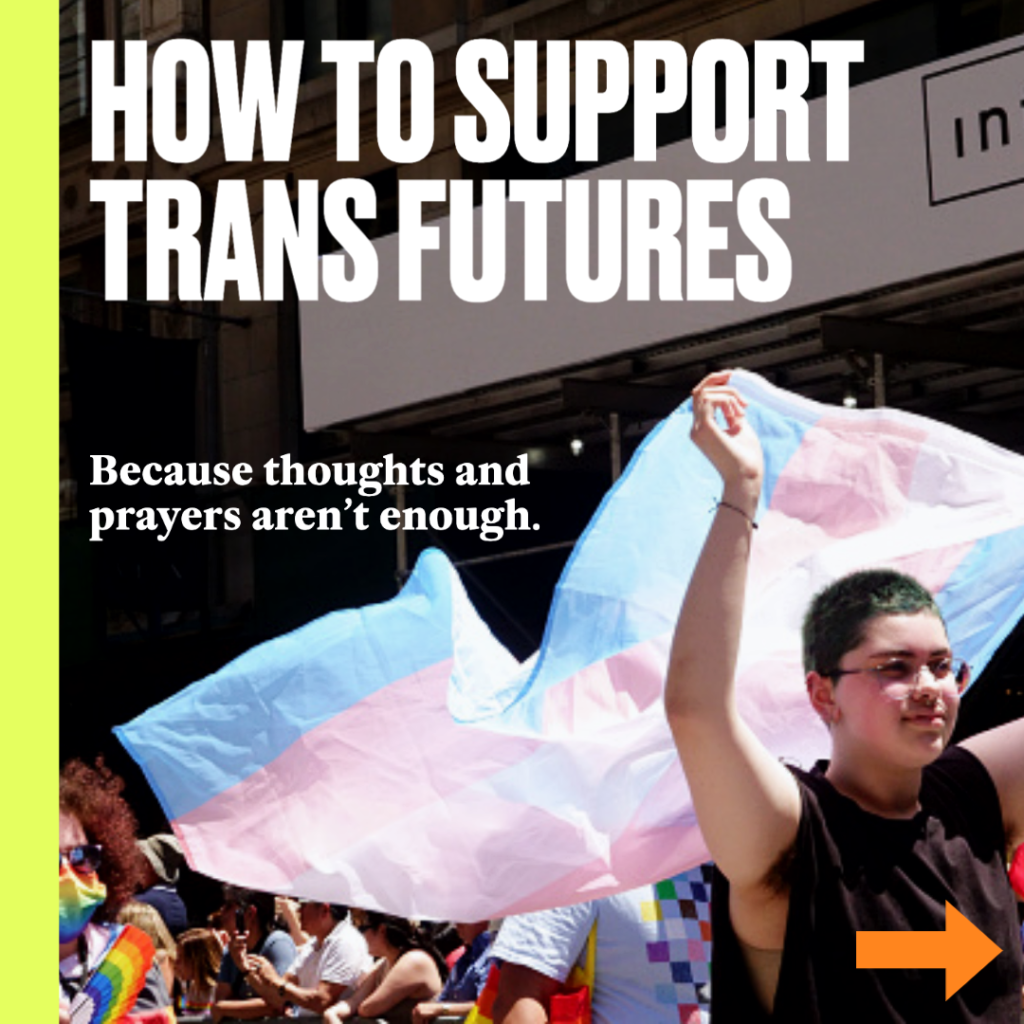
To support more LGBTQ+ stories: The Transgender Tripping Point by Jennifer Finney Boylan and How to Celebrate Pride in the Middle of Anti-Trans Backlash by Phillip Picardi and Raquel Willis