
JD Vance's beautiful dark twisted fantasy
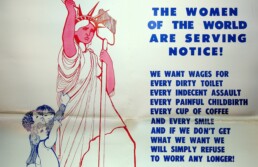
  September 8, 2026 Dearest Meteor readers, Today my older kid finally went to Official, Legit, Free School, also known as universal pre-k (and yes, my obsessive ass snagged a spot at aftercare). What should I do with the extra thousand dollars in my bank account each month?! Wrong answers only.  Speaking of government-funded childcare, today we’re examining a JD Vance-backed plan that could be good but…isn’t. Plus, a Lindsay Clancy reading list, and another reason to love Dolly Parton. Lunch is free, too!!! Nona Willis Aronowitz  WHAT'S GOING ONLabor of love: Over the weekend, The New York Times reported that the White House was preparing a rule that’d give parents money to stay at home with their kids. For families under a certain income level, a stay-at-home parent could receive about $9,000 per child per year. Sounds great, right? Anyone who’s cared for a kid fulltime knows it’s no joke; the six weeks I was the sole caregiver for my older daughter were eye-opening. That sweet and satisfying but also isolating and exhausting period made it crystal-clear that the vaunted concept of “parental love” obscures the fact that the labor of raising a kid is, well, still labor. But the proposed draft, which may not need the approval of Congress, is decidedly not in this spirit. For one thing, the subsidy would only be available for married couples. And the Trump administration—specifically J.D. Vance, who has long denigrated daycare as “crap” and “a disaster” and praised stay-at-home parents (read: moms)—isn’t providing additional funding for this program. Rather, the plan is to steal from an existing, already underfunded federal program called the Child Care and Development Fund, which subsidizes childcare for low-income parents so they can work or go to school. Right now, four out of five families receiving these subsidies are helmed by single working parents, most of them mothers. If this proposal is enacted, many of those families would lose benefits to the ones that Vance openly favors: married, 1950s-style families (unlike the Times, I will not be saying “traditional” because, well, they’re not!). The change could deepen the poverty of individual families and worsen the ongoing childcare crisis by depriving centers of money they depend on. The tragedy of this proposal is that it’s a twisted and extremely dark interpretation of a concept that feminists have been demanding for decades. The Wages for Housework movement—launched by Silvia Federici, Selma James, and Mariarosa Dalla Costa in 1972—argued that wives’ domestic work, including caring for children, was an unconscionable system of mass exploitation. “They say it is love,” Federici famously declared. “We say it is unwaged work.”  I FEEL THE ROBE-TUGS OF THOSE CHILDREN SO VISCERALLY. (VIA WIKIMEDIA COMMONS) Despite its name, the movement was not necessarily about calling for literal pay as much as demanding an awareness of how profoundly capitalism depends on the unpaid work of women. But WFH intersected with another movement in the ‘70s and ‘80s that was very much about dollars and cents: the welfare rights movement. Activists like Johnnie Tillmon, a Black single mother on welfare and a founder of the National Welfare Rights Organization (NWRO), spoke out against the invasive, “super-sexist” welfare system and reframed government support for caregivers as a guaranteed right—no strings attached. Notably, neither of these movements pitted stay-at-home moms against women who wanted to or had to work. Instead, they were about expanding all women’s ability to shape their own destinies; Tillmon called the women of the NWRO “the frontline troops of women’s freedom.” These women understood that mothers who worked inside and outside the home have a lot in common. And as for Vance’s policy: There are plenty of ways to support stay-at-home parents without screwing over working ones. By creating a government incentive for women to stay home with their children while penalizing working mothers at the same time, the Trump administration is trying to make us into enemies. One of the goals of Wages for Housework was precisely to undercut this artificial rivalry. They were “reconstructing a real solidarity among women,” Mariarosa Dalla Costa wrote in 1971. “A common solidarity against a common form of labor.” Or, if you prefer, Silvia Federici’s pithier rallying cry from 1974: “We are all housewives.” P.S. Dr. Federici spoke with Reshma Saujani for The Meteor back in 2021 about the care crisis and women’s “labor of love.” Check out the conversation here. AND:

ONE MORE THINGThe Lindsay Clancy case ended in a mistrial, but I can’t stop thinking about these devastating deaths and the mushroom cloud of cultural commentary around them. Here are some reads that have helped put this case in perspective for me:
 FOLLOW THE METEOR     Thank you for reading The Meteor! Got this from a friend? |


The magic of Gloria’s living room
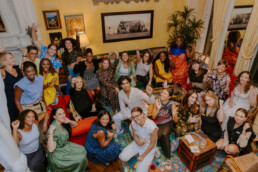
  September 3, 2026 Dearest Meteor readers, I’ve spent all day thinking about feminist icon and beloved Meteor fairy godmother Gloria Steinem, who died yesterday at the age of 92. I must admit that unlike my colleagues here, I was slow to get acquainted with her brilliance: As the daughter of a radical feminist who wrote a scathing resignation letter to Ms. in 1975, I never felt a natural connection. And I figured Steinem had gotten enough shine for a lifetime. But I later realized that her larger-than-life status had prevented me from appreciating the far more complex—and radical—woman she actually was, a journalist who changed with the times and genuinely made space for the next generation (as evidenced by my social media feed today, which is filled with sweet pictures of her with my feminist contemporaries). I’ll always regret not meeting her. Today, Cindi Leive remembers her friend, whose living room was the site of The Meteor’s first editorial meeting. And we point you toward Gloria’s own writing—worth reading, because it’s never too late. Basking in Gloria’s shine, Nona Willis Aronowitz  THE ROOM WHERE IT HAPPENS (FOR SIX DECADES): A GATHERING WITH THE METEOR AND FRIENDS IN GLORIA’S LIVING ROOM, AUGUST 2024. GLORIA’S FOUNDATION WILL CONTINUE THE WORK.  G-L-O-R-I-AShe was a rockstar and a backup singerBY CINDI LEIVE The first time I met Gloria Steinem was in her living room—yes, that living room, the same one you’ve seen all over Instagram, with its wild pillows and Indian artwork and marigold walls; the living room that Gloria for six decades has invited “talking circles” of women into, convinced that the best ideas happen when people are in a room together. This was the mid-1990s. I’d been a fan of Ms., the legendary magazine Gloria co-founded, as a kid—my mom had a subscription which I regularly stole, and, fun fact, I ordered my first fake ID from its back pages. Then, as a baby editor at Glamour, I read Gloria’s “Sex, Lies and Advertising” essay in Ms. and began to understand why there were so many pages in most women’s titles about makeup and so few about the kinds of things my friends and I talked about over dinner: money, and birth control, and the books we were reading. My fandom grew. So my friend Amy Richards, who worked with Gloria, invited me to a dinner party at her boss’s house. I brought a notebook, ready to scribble down the feminist nuggets of wisdom I was sure Gloria would spend the evening dispensing as we, her disciples, gathered round. But my main memory of the night is that she did not hold court—instead, she went around the room and asked us to. As she later put it, “I don’t learn while I’m talking. I learn while I’m listening.” And that was always true: As the years passed and I got to know her, she always, unfailingly, listened. It made her an excellent journalist and an even better human. During my time as editor-in-chief of Glamour, we honored her as a Woman of the Year—and she wanted most to meet the young activists in the audience and hear what they were working on. She also listened differently: Once she was speaking on a panel I was organizing and a baby was wailing in the audience. I was growing frantic and uncharitable at the noise. Then Gloria took the mic. “Is there any better sound than a baby crying?” she asked. “That’s hope.” There are so many things to say about her today: That before anything, she was a gifted writer; for every zinger of hers you may know (“The truth will set you free, but first it will piss you off”) there is also a beautifully crafted essay (see below). That she believed firmly that humans are social animals (I remember her once rolling her eyes when I used the common phrase “We have to have hard conversations”—“No!” she exclaimed. “We learn from joy.”). That she was a prolific reader and could make connections between foreign policy, Greek mythology and Native culture. That she was funny, with a knack for grand gestures (when The New York Times finally and very belatedly adopted “Ms.” as a term for women, replacing “Miss” and “Mrs.”, she delivered flowers to the publisher in the newsroom). That she could swear: “fanfuckingtastic” was a high compliment. And that she was brilliant: When the group of us who would become The Meteor had our first editorial ideas meeting in her living room just before the pandemic—her idea, because “I love an editorial meeting”—she brought up the fact that Bill Cosby and Jeffrey Epstein lived on the same block in her neighborhood. “We should go protest!” she said. (I still regret that we didn’t do this.)  LIFELONG FRIENDS GLORIA STEINEM AND DOROTHY PITMAN HUGHES. YOU MAY KNOW THE EARLIER VERSION OF THIS PHOTOGRAPH, BUT THE 2013 RECREATION IS *CHEF’S KISS*. CREDIT: DANIEL BAGAN, VIA CITY OF THE MUSEUM OF NEW YORK In August 2024, just as Kamala Harris began her race for president, The Meteor gathered a group of women journalists, media types and advocates in Gloria’s living room. There was an cautiously exuberant vibe, especially as Gloria remembered Shirley Chisholm’s epic 1972 run for president. Our next gathering was three months later, in late November, but it felt like a century. Guests hugged Gloria tentatively, as if she might be fragile or despondent, the rights she worked so hard and so long crumbling around us. But she was determined: furious, but determined. “The role of the older generation is to be hopeful,” she said, “because we know how bad things used to be,” and that change is possible, if not linear. Her mood was contagious. This morning, Katie Couric asked Amy Richards—who remained Gloria’s close collaborator for decades—how women would react to Gloria’s death at a time when it feels like we need her more than ever. Actually, “people were too dependent on Gloria” as a singular figure, Amy said. “People would say, Tell us, What would Gloria do? And she would say: Well, what would you do?” So: What will you do? What will we do? We’ll gather, like the social animals we are, and we’ll listen, and we’ll keep going. It’ll be fanfuckingtastic. —Cindi Leive, co-founder, The Meteor, and executive producer, Dear Ms. (HBO)  STEINEM BECAME A FEMINIST AFTER COVERING AN ABORTION SPEAKOUT. “HOW MUCH POWER COULD WE EVER HAVE IF WE HAD NO POWER OVER OUR OWN BODIES?" SHE WONDERED AFTERWARD. (VIA GETTY)  GLORIA STEINEM, THE WRITER: OUR SELECTED LIST
 FOLLOW THE METEOR     Thank you for reading The Meteor! Got this from a friend? |


Following the Parton Playbook
  August 20, 2026 Greetings, Meteor readers, It’s been a long, sad week with the deaths of actor Tim Curry, queen of everything Dolly Parton, and, heartbreakingly, the voice of Eeyore. But, as always, we’re grateful to be working through all of it with you. In today’s newsletter, we’ve got Dolly’s legacy, Meta’s settlement, and injustice on a Navy vessel.  WHAT'S GOING ONWWDD (what would Dolly do): The death of Dolly Parton this week has left a gaping hole in the hearts of millions, but it’s also ensured that the breadth of her philanthropic work is understood, which is no small thing. Parton’s Imagination Library donated three hundred million books; she helped fund a COVID-19 vaccine; and she once gave $12.5 million over just a few months to families who lost their homes after a fire. The New York Times notes that Parton was so good at giving her own money away that other rich people, including Jeff Bezos, asked her to give away some of theirs. Dolly Parton was, in so many ways, the blueprint. “Dolly was not kind and generous despite growing up somewhere that was ransacked and impoverished,” writes author Mandy Len Catron, who, like Parton, was raised in an Appalachian community. “She was kind and generous because she grew up in a place where people knew how to care for one another because there wasn’t much to go around.” Community care was at the center of Dolly’s work. So: How well will the next generation of stars follow the Parton Playbook of humanitarian commitment? That’s an open question—but this weekend holds a hopeful preview.  MOTHER PARTON PERFORMING DURING THE LAUNCH OF IMAGINATION LIBRARY. (VIA GETTY IMAGES) In Irvine, California, singer Olivia Rodrigo is hosting the Daisy Chain Fields Festival, a show that will benefit organizations serving women and girls, among them Black Mamas Matter Alliance, FreeFrom, and the Center for Reproductive Rights. This is not Rodrigo’s first rodeo when it comes to supporting reproductive freedom. In 2024, when she was touring for her album “Guts,” Rodrigo partnered with local groups to distribute condoms and emergency contraception at her shows; a portion of her tour’s proceeds went to the National Network of Abortion Funds. The backlash (“promiscuous!”) was brutal, and eventually the distribution had to stop. Against that backdrop—and the general rightward swing of Trump 2—many artists might have backed away from embracing issues at all. But in aligning herself with 13 other acts, Rodrigo is not just showing up; she’s helping create safety in numbers and a model that other young artists can point to when their publicists tell them their words are too controversial, risky, or otherwise dangerous to the bottom line.  Against a backdrop of global funding for women’s rights organizations dropping catastrophically this year, the festival's exposure feels meaningful. “We live in a world where most people just accept gender-based violence as normal and to be expected,” Sonya Passi, the founder of FreeFrom, tells The Meteor. “Daisy Chain Fields is giving a global stage to our message - we can end gender-based violence if we invest in survivors and…we each have a part in making it happen.” And as a wise woman once said, “If you don’t like the road you’re walking on, start paving another.” AND:
 Love The Meteor? Think independent media that unapologetically centers women, girls and nonbinary people is more important now than ever? Us too! That’s why we hope you’ll consider supporting The Meteor Fund, The Meteor’s nonprofit initiative that backs our journalism and community-building work. Your tax-deductible donation (little or large—your wallet, your choice) to our summer impact campaign will help The Meteor Fund expand our work this fall, with educational briefings, live events on gender justice and human rights, and more. If you’re inclined to give, please do so! We love doing this, and we love you.  FOLLOW THE METEOR Thank you for reading The Meteor! Got this from a friend? |


Two "Calamitous" Weeks in Gary, Indiana
  August 18, 2026 Greetings, Meteor readers, The world has a little less love in it tonight with the passing of country music star and exemplary human Dolly Parton. She was a singer, a trailblazer, and a philanthropist. Her music touched millions, and her signature hair was high enough to brush the toes of the gods. Everyone has their favorite Dolly moment—there are no bad ones—but allow me to share the clip I love the most: Dolly Parton expertly strumming a guitar on the Johnny Carson show with acrylic nails, big old hoops, and a “$13 wig.” Rest well, Mother Parton.  In today’s newsletter, what the two-week power outage in Gary, Indiana, has really been like. Plus, Trump’s war on mail-in voting reaches a new level. xoxo, Shannon Melero  WHAT'S GOING ONA calamity in Indiana: On August 11, journalist and editor Javonte Anderson lost power in his home in Gary, Indiana. Having grown up in the area, he’d lived through a number of outages and wasn’t immediately alarmed. “My first instinct was to find a coffee shop so I can get some power and finish working,” he tells The Meteor. But as Anderson drove from one neighborhood to the next to the next, he began to realize just how widespread the blackout was. A few hours later, the local gas and electric company, NIPSCO, confirmed that power was out for almost all of northwest Indiana. That was two weeks ago. As of this morning, roughly 8,000 people in Gary are still without power. Anderson describes the ordeal as “calamitous.” The outage in Indiana was caused by an historic storm in which winds reached 99 MPH. Power lines came down, and the electric grid, operated by NIPSCO and suffering from years of structural neglect, failed. As the area has struggled to recover from the blackout, NIPSCO’s lack of preparedness for the storm has fueled a growing discussion. “If I know, as a reporter, that Tornado Alley is shifting and we're starting to have more aggressive storms in the last few years,” says Anderson, “I would expect a million-dollar company to know that as well.” As we’ve seen in other places, like Puerto Rico, companies often do know the risks, but choose to focus on profit over people. And that can be an easier choice to make when you’ve got a monopoly on the grid: In Gary, NIPSCO is the only power provider available. The governor has called for an investigation.  POWER LINE REPAIRS UNDERWAY IN GARY, INDIANA, ABOUT NINE DAYS AFTER THE STORM HIT. (VIA GETTY IMAGES) Despite the severity of the storm and the resulting power outage, it wasn’t until the blackout passed the one-week mark that national newsrooms started really paying attention. By then, Anderson’s team at Capital B News Gary and social media posts from other residents had been sounding the alarm for days. “It’s been interesting to watch the process in real time,” Anderson says. “After nine days, we start getting a little bit more national media attention…resources [for the city] became a lot more abundant in the last four days. There’s been a real positive windstorm because of the national attention. It feels like there’s some support behind the city.” Still, it’s notable that the residents of Gary are among the last in the region to have their power restored. “Gary is the second most populated and Blackest city in Lake County,” Anderson explains. Within three days of the power outages, NIPSCO got the power back on in other parts of Lake County, “but then we go into day six, and people are like, wait, what about Gary? We can see the work isn’t being done.” Meanwhile, the White House hasn't even managed to muster up a thought or a prayer. (You know the situation is dire when Ms. Rachel has to step in.) And for some residents of Gary, the crisis continues. “It really disrupts daily life when you start going 10 days without power,” Anderson explains. “You have no gas stations, no gas, no hot water—your food is spoiled. Gary has a very high poverty rate. Missing one day of work is life-altering for people. You think they can go three, four days without their paychecks because they can’t even afford to get to work?” For now, Anderson is hopeful that NIPSCO will deliver on its promise to fully restore power this week thanks in part to pressure from residents, the governor, and the media. “The one thing that media attention does do is draw attention to an issue and help bring money and resources into the community,” he says. “[Gary] is defined by crime, blight, disaster. But within all of that are real people and families working and living to try and make this a better place…and we need to tell that whole story.” For a list of how to help Gary residents impacted by the blackouts, click here. AND:
 RESIDENTS IN BRUSSELS ENDURE AN EXTREME HEAT WAVE EARLIER THIS MONTH. (VIA GETTY IMAGES)
 IT JUST FEELS WRONG. (VIA GETTY IMAGES)  FOLLOW THE METEOR Thank you for reading The Meteor! Got this from a friend? |

Dr. Jekyll and Ms. Heidi
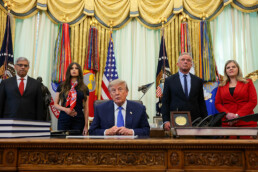
  August 20, 2026 Greetings Meteor readers, This week, my heart and thoughts are with Mychal Threets, aka Mychal the Librarian, who recently shared that he was admitting himself to a hospital for the sake of his mental health. Threets, who spreads the message that everyone is welcome at the library, has been a bright light for millions, and I hope someone is telling him that we’re all in his corner.  THE BEST GUY WITH THE BEST SMILE. (VIA GETTY IMAGES) In today’s newsletter, we get to know Heidi Overton, the current nominee for commissioner of the Food and Drug Administration. Plus three women poised to make history, and a very important Rihanna update. From the Newark Public Library, Shannon Melero  WHAT'S GOING ONThe latex gloves are off: As you may have heard, Donald Trump has nominated Dr. Heidi Overton to be the new head of the FDA following Dr. Marty Makary’s tense departure from the position. Could this be some kind of improvement? LOL, no. The people Trump has tapped for powerful positions in his second administration are uniformly troublesome. But exactly how troublesome is Overton? Well, in 2023, she wrote a brief for the America First Policy Institute where she referred to the use of abortion pills as “effectively starving the child” to death. By “child,” this medical professional meant "fetus." And that’s just scratching the surface. Overton may have an “MD” behind her name, but her clinical career was short; while she was still a resident, she shifted quickly into health policy, and joined the White House in 2019. She’s supported changing the childhood vaccine schedule and was an advisor on Trump’s recent executive order calling for fewer immunizations for children. At the announcement of that EO, Trump repeated his demonstrably false claims about vaccines contributing to rising autism rates, and Overton was right by his side for the signing. Senator Bill Cassidy (R-LA), who had criticized RFK, Jr.’s anti-vaccine views before casting the deciding vote in the Senate to confirm him, wrote on X, “Dr. Overton’s active role in last week’s nonsensical vaccine executive order calls into question her commitment to standing up for sound science and protecting children’s health.”  THE FIVE HORSEMEN OF THE MAGAPOCALYPSE? MAGAVENGERS ASSEMBLE? IT'S TOO MANY JOKES I CAN'T DO IT! (VIA GETTY IMAGES) But all of that—Overton’s anti-abortion views, her vaccine denialism—is just par for the Trump course. What’s notable about her is just how politically vocal she has been throughout her career. As the chief policy officer of the conservative group America First Policy Institute, Overton penned a number of misleading articles about abortion pills, claiming they are a danger to women. (Reminder: They’re safe and effective!) In 2024, she wrote an op-ed for Newsweek urging readers to vote against Kamala Harris because of Harris’s support for gender-affirming care and abortion rights. This blatant politicization puts her at odds with past FDA leaders, who have made an effort to at least appear to separate their work from the agenda du jour. Marty Makary was not exactly a beacon of goodness—he also pandered to the anti-vaxx movement, endorsed peptides, and blocked a melanoma treatment—but he was ultimately pushed out of his position because he was unwilling to bend to the president’s every whim. The sign of a good FDA leader is arguably that you don’t remember their names, even if you live with the benefits; you may not recall Dr. David Kessler, for instance, but you do know the nutrition labels he gave us. And there’s another thing particularly stuck in my craw about Overton. In her AFPI bio, she includes a Bible verse: “Whatever you do, do your work heartily, as for the Lord and not for people.” There are many ways to interpret that verse, but were I to put myself in the mind of a conservative white woman—a frightening place, indeed—I see a woman who does not want to serve actual people because their needs may be at odds with her idea of the Lord’s work. Never mind that Jesus clarified that we must serve the people in order to be good servants of the Lord. (That which you do for the least of me? Ever heard of it??) The FDA has its hands in lots of pots, including ongoing efforts to curtail the use of mifepristone—so this confirmation is a consequential decision. Experts say that Overton faces an “uphill battle” in the Senate, but given the way things have been going, we’re probably not talking about an Everest-size climb. Still, it is a hill nonetheless, and we can do our best to make it a little better by calling every Senator on the Senate Health, Education, Labor and Pensions (HELP) Committee. Oh wow, who left this list of all the members here? AND:
 THIS IS WHAT AN 11-TIME ALL-STAR LOOKS LIKE. SOAK IT IN. (VIA GETTY IMAGES)
 MOOD BOOSTEREvery Thursday, one of our editors shares a small thing that’s getting them through. If you’ve got something brightening your week, we want to know—reply to this email and share!  If I had to share my red flag as a human being, it would probably be my allegiance to Disney princesses (the OFFICIAL ones, none of this TV show princess nonsense…special exception for the “Descendants” trilogy). Alan Menken is God’s favorite child and is responsible for so many princess bangers; his work brings tears to my eyes, and I still enjoy blasting “Part of Your World” in the car when I’m alone. So this week, when Disney dropped the video for its Ultimate Concert Celebration special featuring the original voices of the most beloved princesses—Jodi Benson, Lea Salonga, Susan Egan—friends, to say I was sat would be an understatement. These women voiced the soundtrack to my youth, and it was nice to be reminded of sweeter times. —Shannon  FOLLOW THE METEOR Thank you for reading The Meteor! Got this from a friend? |


"They Want Us to Leave the Jobs for the Men"
  August 18, 2026 Salutations, Meteor readers, I am feeling particularly bubbly and obnoxious after reading this Nielsen report on just how big the women’s sports fanbase has grown in the last three years. Sending kisses to the 122.5 million women’s sports fans out there making it all happen.  In today’s newsletter, some disturbing findings from last month’s jobs report. Plus, mifepristone has a new enemy on the scene. xoxo, Shannon Melero  WHAT'S GOING ONThe exodus continues: Everywhere we turn, people are fretting about men’s economic opportunities. Young men, we’re told, are demoralized and in a recession; America has abandoned its unremarkable dudes. But the numbers tell a different story. Six years after COVID, women and especially mothers are the ones leaving the workforce at an alarming rate. According to a National Women’s Law Center analysis, fully 100 percent of the economy’s 23,000 job losses in July can be attributed to women’s jobs: Women lost 32,000 jobs in July, while men overall gained 9,000 jobs. And 165,000 women ages 20 and over exited the labor force that month (meaning they’re neither working nor looking for work), while men’s labor force participation stayed level. Usually, “I try not to read too much into these one-month changes,” says Jasmine Tucker, vice president of research at NWLC, which analyzes the jobs numbers every month. But July’s report was “glaring.” In fact, those statistics put a bleak exclamation mark on a broader trend of women being pushed out of the workforce. Women’s workforce participation still hasn’t fully rebounded back from its all-time high of 59.3% in February 2020. It took a nosedive during COVID, then had an encouraging rebound but, in August 2024, began a modest but sustained downturn. The reasons for the exodus of women from the workplace have been well-covered, like rising costs of childcare and a decline in remote work. But there are more surprising takeaways too. Here are three, from our conversation with Tucker. Black women are the ones in a recessionWhile women’s workforce participation overall is dropping, the numbers for Black women remain even higher than the average—especially among Black mothers with young children, whose participation has plunged to a 31-year low. “If the overall unemployment rate were where Black women's unemployment rate was in 2025”—7.3%—“we would've declared the recession,” Tucker says. That percentage has come down to 5.4%, but is still “above the tolerable maximum” of 5%, and well above the unemployment rate overall. “Black workers tend to be last hired, first fired,” Tucker explains. “Their unemployment spells tend to be several weeks longer than white workers and even other workers of color. Black women were overrepresented in the government job losses [spurred by] DOGE” last year. The DEI backlash is hurting women’s employmentAs many companies sunset their diversity, equity, and inclusion programs, Tucker says that leads to fewer women employees—and not just because some of the people working in those departments were women. Maybe that DEI office was “making it possible for you to have a flexible schedule or for childcare to be on the premises,” Tucker says. Or maybe it created “a very clear way to file a complaint against a coworker who was harassing you.” If those policies are no longer in place, workplaces can become “more hostile for women, and especially women of color,” she says. The Trump administration does not see these job numbers as a problemThe trend of women leaving the workforce, most of which has happened under both Trump presidencies, is “not a sign of a healthy economy,” Tucker says. And yet it has gone unacknowledged by the administration. Perhaps that’s because their fingerprints are all over this shift: The White House has gone out of its way to push women out of the labor force, not only with anti-DEI efforts but also by attacking Head Start and sabotaging women’s higher education. “They want us to go and be homemakers and to leave the jobs for the men,” Tucker says. The reality, however, is that American women “can't afford to become tradwives” even if they wanted to. Most women, and especially women of color, are primary or co-breadwinners. “Their families cannot afford for them to be out of work,” Tucker says. “They just can't.” —Nona Willis Aronowitz AND:

 STOP ME IF YOU'VE HEARD THIS ONE. TEN GOLD MEDALISTS WALK INTO A ROOM...(VIA GETTY IMAGES)
 FAREWELL TO A MUCH-BELOVED STAR AND A MOTHER WHO DID WHAT SHE COULD. (VIA GETTY IMAGES)  FOLLOW THE METEOR Thank you for reading The Meteor! Got this from a friend? |


AOC's eggs, and mine
  June 26, 2026 Dearest Meteor readers, For reasons that are still unclear to me, I rewatched the entirety of “The Handmaid’s Tale” this summer, then belatedly just finished Margaret Atwood’s 2019 follow-up to the novel, The Testaments. Not exactly a beach read, but! It did cause me to rethink one of the pet names I use for my daughter Pearl. Whoops.  Speaking of babies and obsessions with uterus-related content, we’re taking a closer look at AOC’s egg-freezing journey—and mine, too. Plus, some blunt words for the Kamala haters, and your Thursday mood booster. Blessed be the fruit, Nona Willis Aronowitz  WHAT'S GOING ONEggs in many baskets: Over the weekend Rep. Alexandria Ocasio Cortez shared, first on Instagram and then on ABC’s “This Week,” that she was freezing her eggs and would be documenting the experience on social media. Since then, the speculation has been deafening: She’s doing it because she’s running for president! Or wait, maybe it’s because she broke up with her fiancé and wants to wait until she finds a suitable partner! Whatever the reason, it’s “selfish” and “baffling.” No, it’s “bold and ethical.” Plus it helps her sidestep the “leftist single woman who hates men” stereotype. People can theorize all they want about AOC’s reasons, but she’s pointedly not giving them in her Q&As on Instagram, so we don’t know them, and we don’t need to know them. In fact, they are often, on some level, unknowable. I speak from experience: I’m another one of the hundreds of thousands of women who have frozen their eggs, and I didn’t even know what my eventual reason would be when I did it.  OHHH GOOD OL' GONAL F. DON'T FORGET THE 90-DEGREE ANGLE! (VIA INSTAGRAM) It was 2020, knee-deep in COVID. My partner Dom and I knew we eventually wanted two kids, but we didn’t feel ready yet—especially Dom, who was barely 30 and had no close peers with children. Like AOC, I was 36 and nervous that I’d struggle by the time we tried for that second kid. So, to give ourselves options, we pooled our cash and went through the process of egg-freezing, which had spiked during the pandemic. All in all, it cost about $11,000—none of that covered by insurance—and then about $800 a year in storage fees. Unlike AOC, I wasn’t public about the process. I felt ambivalent and sheepish as Dom gave me shots and I trudged to “morning monitoring” appointments. I had my own real concerns about the industry: I’d noticed the predatory marketing of egg-freezing companies, and thought it was dystopian that big corporations like Facebook and Apple had started to cover egg-freezing for their employees instead of, you know, improving a workaholic office culture that’s inhospitable to parenthood. I also had my own prejudices about what “kind” of woman freezes their eggs (not me!), no doubt influenced by the frankly sexist media framing of egg-freezing as a naive, girlbossy move. Dom and I maintained an ironic distance from the process, and gently mocked ourselves when I easily got pregnant (the old-fashioned way) with my first daughter less than a year after freezing my eggs. We started to refer to my oocytes as “the panic eggs.” But you know what? The “panic eggs” came in handy—although not for the reasons I thought they would. When my first daughter was two and I was 39, I got pregnant again fairly quickly. But 14 weeks in, we got some devastating news from a genetic test and decided to have an abortion. The trauma of that loss caused me to reconsider my little eggs on ice; if I used them, I realized, we could test the embryos before I got pregnant so I’d have reassurance that the baby was genetically normal. I was so grateful to have had that option, and doubly grateful that New York law required insurance companies to cover IVF (unlike the initial egg freezing, the fertilization and embryo transfer was considered IVF and thus completely paid for). And it worked. My second daughter turns one year old tomorrow. I tell this story now not to endorse egg-freezing as a magic bullet—people should absolutely pore over the data before deciding whether it’s worth it—but to emphasize how personal and complicated these choices are, and how fruitless second-guessing anyone’s motives is. The bottom line: The more reproductive choices we have, the better. That includes access to abortion and birth control, but also more ways of having babies. Anything that demystifies the process of egg-freezing will ultimately help make it as accessible and affordable as possible, and dispel the kinds of weird value judgments I initially put on it. No one needs to know anyone else’s reasons, but we all need, as AOC put it, “more depictions of women having full lives in every context and every choice.”  ME CELEBRATING THE END OF THE EGG-FREEZING PROCESS, WHEN I COULD FINALLY HAVE A DAMN DRINK. (PHOTO VIA JESSICA TAYLOR) AND:
 MOOD BOOSTEREvery Thursday, one of our editors shares a small thing that’s getting them through. If you’ve got something brightening your week, we want to know—reply to this email and share! This week I had a two-hour creative brainstorm with a woman I’ve known for several years. During that time, we worked together on one big, meaningful, and personal project, and remained friendly after that—but it wasn’t until this meeting that we realized how much we liked each other. The reasons we like each other tumbled out of our mouths, via ideas about our work, the media and entertainment industries, being Black women surviving being Black women, navigating adult mean girls, and choosing ourselves. In this era of doomscrolling and AI anarchy, it was a revelation to discover that we can still make meaningful connections, simply by sitting across from someone. —Rebecca Carroll  FOLLOW THE METEOR Thank you for reading The Meteor! Got this from a friend? |


The WNBA's Biggest Test
  August 11, 2026 Salutations, Meteor readers, When the great poet said “August slipped away like a bottle of wine,” she really wasn’t kidding. The month just started, and yet I already feel like it’s ending as I prepare for my daughter’s first school season 😭. I’m not crying because I’m wistful; I’m crying because I saw the price of uniforms.  In today’s newsletter, we’re talking about the foul heard round the world. Plus, some good news for abortion seekers. Backpacks and bellinis, Shannon Melero  WHAT'S GOING ONWho’s “protecting” whom?: On Saturday, in a game between the WNBA’s Indiana Fever and the Chicago Sky, the Sky’s DiJonai Carrington committed a flagrant foul that has reverberated beyond the court for one very specific reason: She elbowed the vocal anti-trans player Sophie Cunningham. Carrington was ejected from the game after some jawjacking between the two teams. Afterward, she said the contact was unintentional (Cunningham is skeptical) and called for the league’s refereeing “to be consistent across the board regardless of the name on your jersey or your skin color or the score of the game.” As with all things pertaining to sport, none of this is just about basketball. Over the last few weeks, there have been a number of “fan incidents” at WNBA games where said fans hurled racist comments at players and held courtside anti-trans demonstrations. Owners have been suspended. Fans have been ejected. This behavior at games is not necessarily new, but the incidents have become frequent enough that in July the WNBA Players’ Association met with the league to discuss safety concerns. At the center of this maelstrom is the anti-trans movement, which has hitched its wagon to Cunningham, a white, attractive, middle-of-the-pack player—the right does love to make stars out of the unimpressive—and much of the attention and support around her is being drummed up by a conservative clothing brand XX-XY, which is capitalizing on Cunningham’s stance of “protecting” women and girls in sports from “biological men.”  IT'S KIND OF GIVING RENAISSANCE PAINTING. (VIA GETTY IMAGES) Cunningham, her new bestie Riley Gaines, and XX-XY are all playing up (and monetizing) the manufactured fear of some trans boogeyman infiltrating the WNBA to steal all the jobs of the women in the league. Truly, I dare anyone to try and come for A’ja Wilson’s job! The reality is that in the history of the WNBA there has been one (1!) active player who came out as trans: Layshia Clarendon, who played for eleven seasons. And yet, women like Sophie Cunningham are still positioning themselves as victims of trans women and allies. In fact, Cunningham is so committed to this victim bit that she recently stated that she just “wants to get back to basketball” and not continue discussing an issue that she herself brought up. It’s not a coincidence that the war against trans women is boiling over to this degree at the WNBA just a few months ahead of the midterms. Why else would a man running for a Senate seat announce mid-campaign that he’s declaring for the WNBA draft? The W, for all its woes, has created a standard for inclusivity and has shown on a national scale the power of Black women and queer people who organize around a cause. This league is the right’s nightmare, and now this white woman being accosted is a sneaky way to spread the message that Black women must be silenced and trans women eliminated. In the immediate aftermath of the flagrant foul, attention-starved anti-trans “activists” jumped to Cunningham’s defense and the so-called defense of women’s sports overall. The WNBA’s front office also announced that it would be reviewing eligibility requirements. No matter how this unfolds, the battle lines have been drawn. The W will either have to full-throatedly condemn the anti-trans movement and enshrine its stance in the eligibility requirements, or it will have to bend to the will of bigots. There’s no more room to hide behind Pride nights and vague slogans; the moment to truly walk about what it talks about is here. The ball is quite literally in their court, and the privilege of silence no longer exists. AND:
 FOLLOW THE METEOR Thank you for reading The Meteor! Got this from a friend? |


Abortion Pills in Every Medicine Cabinet
  June 26, 2026 Salutations, Meteor readers, Happy MAFS Thursday to all who observe. While this season has been quite enjoyable, I am ready for Shawn and Nikki to shake hands and exit stage left. It’s getting painful. In today’s newsletter, Nona Willis Aronowitz digs into the game plan if Todd Blanche makes good on his anti-abortion threats. Plus, the small pleasure giving us a mood boost this week. Locked in, Shannon Melero  WHAT'S GOING ONPlan A(bortion): You may have heard the terrifying recent audio of Attorney General hopeful Todd Blanche buttering up anti-abortion faith leaders by telling them he planned to make “the Dobbs decision…permanent in every single state.” Since the Department of Justice can’t pass national abortion bans, what he actually meant was that under his leadership, the DOJ would enforce the long-ignored Comstock Act. The infamous 19th-century law prohibits (among other “obscene, lewd, lascivious, indecent, filthy or vile” things) the shipping of abortion medication, a now-widespread practice that Supreme Court Justice Samuel Alito has called “a scheme to undermine” Dobbs. This incident got me thinking, as I do every time a Republican issues a new threat against the medication responsible for two out of three U.S. abortions: Should we all be stocking up on abortion pills? You know, just in case Blanche keeps his promise. Or just in case the FDA restricts mifepristone. Just in case we find ourselves pregnant and don’t want to wait days or weeks remaining that way. Just in case someone we love is unhappily pregnant and can’t afford the pills’ approximately $150 price tag. Abortion-rights advocates have actually been urging us to advance-order abortion pills for years, especially since Dobbs. But how often is it happening, really? And what would it take to make it a common practice? It was just a few years ago that only a sliver of the population knew that you could get abortion pills in the mail, much less get them before you were pregnant. Then COVID happened, followed by Dobbs. Now, one in three abortions are done through mailed pills, with nearly all abortions happening this way in abortion-ban states. Experts say “advanced provision” became more common after Roe v. Wade fell in 2022. (One study found that between August 2021 and March 2023, around 13% of patients who ordered abortion medication through telehealth were doing so in advance.) Many telehealth services across the country explicitly offer this option and, in most cases, you don’t even need to talk directly to a provider. The idea has gone so mainstream that Planned Parenthood in Washington and Hawai’i began offering “just in case” abortion pills recently. So…how’s it going? “Really well,” Rebecca Gibron, the CEO of Planned Parenthood Great Northwest, Hawai‘i, Alaska, Indiana, Kentucky, tells The Meteor. She says that since Dobbs, the organization has felt “a responsibility to work double-time” and advanced provision “was just the logical next step in advancing access to abortion care.” Providers at Planned Parenthood clinics in Washington and Hawai’i have been suggesting the just-in-case option at patients’ annual appointments and advertising it on their social media. “We know that timing matters in accessing abortion care,” Gibron says. “And when someone decides that they don't want to be pregnant, every day of delay is an extra day of anxiety.”  A PACKAGE OF ABORTION PILLS FROM MASSACHUSETTS-BASED TELEHEALTH SERVICE THE MAP. THE "WE WISH YOU THE BEST!" NOTE IS SO SWEET! (VIA GETTY) So why hasn’t everyone stocked up on pills by now, the same way they might buy a fire extinguisher or, as Abortion Every Day’s Jessica Valenti pointed out, keep some Narcan on deck? Amy Merrill, co-founder of the abortion resource organization Plan C, tells me it’s simple: stigma. “The medication itself has been so charged in our culture,” she says. Even for people in blue parts of the country, there “may be confusion around, ‘Is it okay for me to have this medication in my house?’” I think she’s right. When I surveyed my (very pro-choice, politically active) friends and followers, only a few people said they had ordered pills in advance. I am not one of them. Merrill asked me why not, and it’s a good question. Part of it is cost—$150 is a lot of money for something I may never use (although many services do offer a sliding scale). I also, perhaps naively, believe an abortion would be pretty easy to get in my home state of New York, even if something were to happen to mifepristone access. But as I began to fill out these telehealth organizations’ online forms as research for this piece, I realized maybe I do have some instinctual fear that I’ll get in trouble somehow. This fear is not entirely irrational, especially for people who live under abortion bans–law enforcement will sometimes go after people who self-manage their abortions, even though doing so is not a crime in any state except Nevada. And while I know the risks are much higher for providers than for patients, I still felt nervous reading all the legal warnings in the FAQs. I flinched a little every time I was asked for my name. The form that felt the easiest and safest was the one on Aid Access, a service that prominently advertises in-advance pills and uses reassuring language like “We do not judge you.” It may be no coincidence that its founder is not American. All this is to say, if someone like me feels skittish, we have a long way to go before the average person keeps abortion pills on hand. But cultural norms can change quickly. While Merrill appreciates the Narcan comparison—it’s “harm reduction for the circumstances we're living in”—she thinks a better analogy is the fight in the early aughts to get emergency contraception over the counter. It seems normal now, but having the “morning-after” medication Plan B hanging next to the condoms in the sexual wellness aisle was a hard-fought, piecemeal victory in which Merrill’s Plan C cofounders, Elisa Wells and Francine Coeytaux, were instrumental. As someone who vividly remembers when you needed a prescription for Plan B, and all the bipartisan pearl-clutching surrounding its access, it still strikes me as remarkable how unremarkable it’s become in my lifetime. As of 2021, a quarter of 22-to-49-year-old women had used emergency contraception. Maybe it’s time for us to take the same approach to stocking abortion pills. Recent research shows that over-the-counter abortion pills are safe, and Merrill thinks there’s a real opportunity to recast the medication as a “public health tool that allows people to reclaim agency in the face of unjust and unmedical bans.” But before that can ever happen, we all need to get more comfortable having those pills sent to our homes, with our names on them. Plan C has detailed information on how people are ordering pills in advance and staying digitally safe. The normalizing part is up to us. —Nona Willis Aronowitz AND:

 ADD TO CART. (VIA GETTY IMAGES)
 MOOD BOOSTEREvery Thursday, one of our editors shares a small thing that’s getting them through. If you’ve got something brightening your week, we want to know—reply to this email and share! Few things feel better than successfully executing a well-laid plan, especially when that plan involves one of my favorite things: day dates. My husband and I began our decade-plus relationship in the darkness of a crowded bar, but we learned very quickly that dates in the day are a far better use of our limited time. So when we first saw the trailer for “The Odyssey” months ago, we knew we would be catching it midday—as Nolan and our three-year-old’s schedule intended. We mapped out childcare weeks in advance and, with the same level of tactical planning involved in scaling a Trojan wall, arranged the time, snacks, seating arrangement, and bathroom timing. Everything went off without a hitch and our bladders held up during the loudest three-hour adventure I’ve ever endured. And the movie lived up to the hype. —Shannon Melero  FOLLOW THE METEOR Thank you for reading The Meteor! Got this from a friend? |


122 Days Living Without Water
  June 26, 2026 Greetings, Meteor readers, My kid demands to listen to the K-Pop Demon Hunters soundtrack every night before bed, and I’ve started turning it into an opportunity for aerobics. Last night she looked at me and said, “Why you dancin’ like that, mama?” Rude.  Today we bring you an update on a state of emergency that hits uncomfortably close to home. Plus, it’s primary day for Michigan, Kansas, Missouri, Virginia, and Washington. Go get your stickers! With love, Shannon Melero  WHAT'S GOING ONEmpty faucets: For the last 122 days, Puerto Rico has been experiencing a severe water crisis. An estimated 180,000 households have lost running water for days at a time, and while the situation has slightly improved, many homes and businesses are still experiencing hours of either total water loss or potable water loss. The National Guard has been delivering potable water to affected areas in repurposed milk trucks. On Monday, conditions had reached such crisis levels that the government announced a plan for water rationing across the island. How did we get here? In June, power failures, which have become a near-daily occurrence over the nine years since Hurricane Maria, caused service disruptions at a water filtration plant. Then, a few days later, massive ruptures were found in the Superacueducto, a major pipeline that carries water from treatment centers into cities like San Juan, Carolina, and Loíza. Residents there were left without service while the Puerto Rico Aqueduct and Sewer Authority (PRASA) attempted repairs. But the work has been slow, and as water spills from the Superacueducto and electricity becomes spottier at filtration centers, another problem compounds this horrific situation: There’s a drought. More than 82% of the island—which is home to a rainforest—was under abnormally dry conditions as of the end of July. Officials have been confounded. At one point, Governor Jeniffer González Colón “even invoked God, begging him for rain,” Susanne Ramirez de Arellano, a journalist living in Old San Juan, tells The Meteor. “We’re left wondering what kind of a plan she actually has to face this water crisis besides asking for divine intervention.”  WATER TRUCKS PREPARING FOR DISTRIBUTION IN MID-JULY. (VIA GETTY IMAGES) Meanwhile, “abuelas are hauling five-gallon buckets up three flights of stairs to flush a toilet and wash a plate,” writes activist and movement strategist Luis Jonathan Hernandez. “Mothers are heating bottled water on a stove to bathe their kids.” Ramirez de Arellano says although residents are “furious to say the least,” they’re also “resilient. Life must go on. But this water crisis has brought many, including myself, to the end of their tether.” These problems are not new; they are the result of decades of neglect, fiscal mismanagement, and, as always, colonialism. Aqueducts don’t break overnight. Infrastructure does not erode in a weekend. These things are guided to failure by malicious hands. And a coarse salt in the wound is that, as Hernandez puts it, “This is the same summer everybody decided they were Puerto Rican.” It was only a few short months ago we bore witness to Bad Bunny’s Super Bowl halftime show and the internet was awash in praise and cultural dissection of Benito’s message. Everyone seemed to understand that they were witnessing something powerful, something bigger than a singular event. And yet, as Hernandez reminds us: “At that Super Bowl, in front of the whole world, he climbed an electrical pole to point straight at the island’s power crisis, and the crowd cheered the spectacle and let the meaning slide right off them.” It is a cruel irony that a small island surrounded by ocean, known for some of the most beautiful waters on the earth and besieged by rain on a semi-reliable schedule, is experiencing such a massive drought. It is perhaps even more cruel that they are enduring this completely alone. When I talk to people about the crisis they have one of two responses: I thought that ended or I didn’t know that was happening. In his writings, Hernandez gives marching orders to Puerto Ricans living in the diaspora: Don’t just carry the flag, carry the water. So to you, my dear Meteor reader, I step out of my journalist chair for a moment to deliver a personal plea. Do not forget about my people. Help us carry the water. AND:
 IS THE SCHIAPARELLI IN THE ROOM WITH US? (SCREENSHOT VIA YOUTUBE)
 FOLLOW THE METEOR Thank you for reading The Meteor! Got this from a friend? |
