
The Power of "I deserve this"
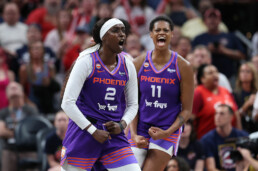
  June 26, 2026 Greetings, Meteor readers, I cannot get enough of the national drama unfolding over our jacked-up Reflecting Pool. PoolTok has been simply impeccable. Today, sports journalist Jemele Hill explains the beauty of the World Cup and the boldness of the WNBA. Plus, is Hot Socialist Summer coming to a city near you?  Please let the vandals be real, Nona Willis Aronowitz  WHAT'S GOING ON“You gonna learn to like it”: It’s been an amazing year in sports—and no, we don’t mean the Knicks in what we refer to around here as the MNBA. Over in the WNBA, the women are having a superstar season. And that’s to say nothing of how even non-soccer fans are getting into the World Cup spirit this year. So this week, Brittany Packnett Cunningham invited her friend, sports journalist Jemele Hill, onto UNDISTRACTED to unpack it all. Some highlights: Brittany Packet Cunningham: The Men’s World Cup—the MWC, we’ll call it—is taking over America. The fever is rich. But when we talk about this intersection of sports and politics, ICE has refused to stay away from the World Cup host cities. What do we know about what's actually happening? Jemele Hill: I'm gonna say this. Despite the shadow [cast by] our current administration…what I have been inspired by this World Cup is that the visitors that are here are seeing that there's a big difference between the government and the people, in terms of how these fans are being accepted in American cities. Frankly it's been tickling me—I would love to know what their cholesterol gonna be when they leave here, ‘cause it's gonna be bad. Waffle House, Cracker Barrel, they been all up in Golden Corral. [Laughs.] That to me has cleaned up the stench of how this administration feels about visitors. I think this World Cup overall has been beautiful because of how these visitors are experiencing America, and understanding we are not defined by the ugliness of Donald Trump. BPC: [In March] the WNBA negotiated a huge new deal for themselves. They got a massive pay increase for this season, and increased their overall earnings fivefold. It was a victory that splashed into the popular zeitgeist. Talk a little bit about why this is a big deal. JH: This is huge. [The WNBA] was my first professional beat, and I think about where they were in 1997. It was a 28-game season…and as part of the new CBA they will be playing 50 games next season, which is incredible. The pay and salary increases are staggering and gigantic. And I know that it's really easy to compare to the MNBA, but the comparison that should be made is where the MNBA was after [just] 30 years…Like, they were in serious financial trouble. The WNBA has certainly gone through some ups and downs. That's normal for a league as it's trying to build its foundation. But let me tell you—the WNBA has lapped the field to where the men were after 30 years.  OLIVIA MILES BEING HER AUTHENTIC SELF AGAINST THE WASHINGTON MYSTICS. (VIA GETTY)BPC: Now you tune into an WNBA game and you see Sephora seat covers. Angel Reese has a gajillion endorsements. It's clear that the women of the league have been very creative in building their own lanes, but I'm curious: Do you think the CBA helped the brands get clear on just how bankable these players are? JH: With the WNBA, it was already growing. But then the explosion happened because you had Caitlin Clark and Angel Reese in the league at the same time. Sometimes you need a lightning strike, and the lightning strike happened. Where the league used to try to capitulate to a certain image of what they wanted these women to be, now it’s not that way anymore. You got your Barbies, you got your studs, you got every manner of women. You even look at the promising amazing rookie right now, Olivia Miles, she out there, full-blown Afro, serving buckets and being her authentic self as she does it. These women were like, “You gonna learn to like it.” That was their approach, and the brands have followed…[The players] had to force themselves to be seen. That's not easy to do, especially if you're talking about a league that is dominated by Black women and queer women. BPC: The WNBA has also been one of the few places in society where really visible women, especially Black and queer women, have been vocally against Trump's agenda. You got Liberty players wearing Kamala Harris shirts. You got Dream players who endorsed Raphael Warnock, even though his opponent, Kelly Loeffler, was a co-owner of the team. Why do you think that boldness exists [in the WNBA] so uniquely? JH: The boldness exists because most of the women that are in the league have constantly had to fight for dignity and respect…I'm sure a lot of them remember the indignities they had to suffer…[having to] prove over and over again, I'm just as good as you, or I belong just like you belong. So when you're in that mode, it's natural for you to fight. It's natural for you to say, “I deserve this.” When they put themselves on the line for Raphael Warnock against another WNBA owner [in 2020], they weren't making any money. If anything, they should be the ones trying to protect their little crumbs. It kind of shamed the men because it's like you sitting on millions of dollars and you ain't doing nothing. What’s your excuse? This interview has been condensed and edited. Listen to the whole episode here. AND:
 D.C. MAYORAL CANDIDATE JANEESE LEWIS GEORGE BROUGHT HER SON WITH HER TO VOTE THIS MONTH. (VIA GETTY)
 FOLLOW THE METEOR     Thank you for reading The Meteor! Got this from a friend? |



Is your landlord a robot?
  June 23, 2026 Salutations, Meteor readers, Mmmyyyyy president is a Love Island: USA fan. I don’t know about y'all's president. In today’s newsletter, we’ve got your first look at a new study about race, wealth, and AI. Plus, it’s been four years since the Dobbs decision, and we’re writing a love letter to the people who deserve it (not Samuel Alito). P.S. New York readers! You still have time to get to the polls and do your thing.  From the villa, Shannon Melero  WHAT'S GOING ONIs your landlord a robot: In the short time that generative AI has been the center of national conversation, it’s been cast as one of two things: the harbinger of the end of the human race, or the greatest thing to happen to us since the Industrial Revolution. However, there is a third, less dramatic path that AI has been quietly taking: maintaining the status quo. Today, The Leadership Conference on Civil and Human Rights released a new qualitative report revealing that the use of generative AI, specifically in housing and employment, has been compounding existing biases against people of color. If left unchecked, the researchers posit, the use of AI will widen the existing racial wealth gap in the United States. (The report focuses primarily on the gap between white and Black Americans because it is “the most measurable and well-documented.”) The most concerning findings address the increasing use of AI in the housing market—aka “proptech,” short for property technology—to do everything from screen tenant applications to determine mortgage access. These tools “systemically reproduce racial disparities” because the algorithms are relying on existing biased data (like redlining and other kinds of de jure segregation), the report explains. The algorithms also lack an understanding of nuance: “Screening tools fail to consider mitigating factors such as job loss, medical hardship, domestic violence, or the actual outcomes of prior eviction cases.” And the group bearing the brunt of proptech’s algorithmic discrimination is Black women, who were already overrepresented in the growing eviction crisis; AI bias, the research shows, will only worsen the problem. “It’s not because Black women aren’t paying rent,” explains Yvette N. A. Pappoe, a litigator and equity scholar who is one of the authors of the report. “Evictions happen for all kinds of reasons that have nothing to do with paying rent. But that doesn’t matter to the algorithm.” Pappoe explains that unlike a human reviewing an application, AI is not “checking to see if an eviction was dismissed. It’s not checking to see if paperwork was misfiled.” It’s simply pulling an eviction record and disqualifying candidates based on a singular negative metric. The report points to the example of a woman named Mary Louis, who was denied an apartment after a program called SafeRent rated her poorly due to bad credit. The program did not take into account other mitigating factors such as Louis’ housing voucher, a high-credit co-signer, and a letter of recommendation from her previous landlord. Louis and 400 other Black and Latino applicants filed a lawsuit against SafeRent last year. “People have talked about AI as this equalizing force…that can be used to help democratize access,” Alejandra Montoya-Boyer, senior director of the Center for Civil Rights and Technology, tells The Meteor. And some of that is true: “It's increasing information. It's making our lives easier in all of these ways.” But these good things will only happen, Montoya-Boyer says, “if we have the guardrails in place to…make sure that this technology is developed [in a way that recognizes] the vast history of racism and sexism, and discrimination that is built into our society. Without guardrails, AI is just going to replicate all of that.” “One of the key guardrails we suggest is a requirement on having a human in the loop,” says Montoya-Boyer. “Companies absolutely should not be using AI tools for consequential decision-making without human oversight.” While much of the study highlights the failings of AI in housing and employment, it’s not anti-AI, per se–especially for women or people of color. From an AI literacy standpoint, it “makes sense for us as people from marginalized communities…to be engaging” with these tools, Montoya-Boyer says. “But the onus of responsibility should not be [solely on consumers].” Overall, the researchers are operating with a sensibility that almost resembles optimism. “One thing the report tries to do is point to a world where we flip what’s happening…where AI is incorporated in such a way that it helps to shrink the wealth gap,” Pappoe explains. In that world, AI could help expand access to wealth accumulation and affordable housing, as well as democratize banking and credit for historically excluded communities. As Pappoe puts it: “We’re not totally doomed.” AND:
 LILY SHANNON (L) CELEBRATES WITH LILY YOVETICH (R) AFTER THEIR NORTHERN HUSKIES CAME OUT ON TOP AT THE 2025 WOMEN'S BEANPOT TOURNAMENT CHAMPIONSHIP IN BOSTON. (VIA GETTY IMAGES)
 ONE MORE THINGTomorrow, it will have been exactly four years since the Supreme Court ruled that American women had no constitutional right to abortion. That decision ushered in a bloody era of violence, of women dying in bed, in the ER, while their mothers screamed, while their children screamed. It has been an era of mounting shamelessness on the part of extremist lawmakers who have stopped even feigning concern and instead hired bounty hunters, gone after doctors, spread outlandish lies, and suggested executing abortion patients. It has been as bad as abortion-rights advocates said it would be, and they said it would be very, very bad. So it would be easy to end this newsletter thinking about all the outrages, about all the self-important men (most of them white) making decisions about the lives and deaths of women (many of them Black). But we’ve been doing that, and you’ve been doing that, for years now. This, instead, is a love letter. To the volunteers who have spent the last four years doing midnight shifts at abortion funds, answering terrified calls from Florida or Texas. To the medical personnel who ship abortion pills to people in ban states; who are nimble with their regimens as mifepristone is under threat; who refer their clients to out-of-state providers in hushed tones; who protect their patients from ceaseless harassment; who train students and open clinics on the borders of abortion-hostile states. To the advocates who make it easier to get abortion pills. To the lawyers who file suit after suit. To the organizers who knock on thousands of doors to get abortion referendums on the ballot, where they matter. To the journalists who tell the truth even when state officials won’t. To the pilots, to the drivers, to the parents. And to the women who have told their stories, over and over and over and over. The news cycle has somewhat moved on from abortion bans. These people never did. They have taken care of you, and of each other, and they’re only getting stronger. Tomorrow isn’t about the assholes. It’s about them, and us. Tomorrow is also a great day to give to an abortion fund. Find one near you here. – Cindi Leive  FOLLOW THE METEOR  Thank you for reading The Meteor! Got this from a friend? |

The Perfect Juneteenth Party
Six Black women describe what freedom feels like
By Rebecca Carroll
Juneteenth belongs to Blackness. Whatever we might know about it as a newly declared national holiday, commemorating the date when enslaved people were free to become citizens and keep their families intact, it is the Blackness of this day in history that reverberates most. And at its core, Blackness will always be about imagining life and joy into existence.
We asked a handful of Black women we admire to describe what a perfect Juneteenth celebration would look like.
My ideal Juneteenth is…
“Fully experiencing pure joy”
My beautiful grandmother, Caressa, was part of the Great Migration. She moved up north around 1924, and built a life for herself on Long Island. After church on Sundays, she’d drive into Harlem just to people-watch. She loved the sharp outfits, the fancy cars, the laughs and greetings exchanged on crowded sidewalks— a “Good day!” here, an "Alright now!" there.
My perfect Juneteenth would bring her, my great-aunt Carrie-Bell, my sister, and generations of maternal ancestors to New Orleans. We’d spend the day on the porch of a grand old Esplanade Avenue home in rocking chairs, nestled among lush plants, iced tea in hand, watching the world go by just as my grandmother once did in Harlem.
The streets would be alive with music, color, laughter and possibility. We’d watch people in what I like to call their “gadabout season”—talking, eating, dancing, joyful in every step. At some point, Aunt Carrie-Bell would remind us to “keep the doors open,” and we’d do just that: remain open to one another, open to joy, open to possibility. A reminder, or perhaps a demand, to move through the world with a softness and freedom.
Finally, generations of Black women with nothing to carry. That’s my ideal Juneteenth.
—Brandee Younger, harpist, composer and educator
My ideal Juneteenth is…
An atmosphere pulsing with hope and possibility
The year before Juneteenth became a national holiday, I celebrated June 19th in Oakland, California, where I moved from San Francisco in 2020. My husband, an attorney for more than 25 years at that point, was getting restless. He took the same bus to and from work every day, ate at the same lunch spots, saw the same people. “I want to do something different,” he said. “I need to switch things up.” At the same time, we’d both noticed how much San Francisco had changed. Too many tech bros. Too much traffic. So many creative people had been priced out of the city. But worst of all, San Francisco’s Black population had dwindled to less than five percent. The place felt sterile and homogenous, void of culture and flavor.
For years, we’d heard folks rave about Oakland. “Oakland is cool,” they’d say. “Oakland is creative.” Our last child had gone off to college and we were empty nesters, suddenly free to move wherever we chose. So when my husband pitched the idea of moving across the bridge, I agreed.
Oakland pulled out all the stops when Juneteenth became a federal holiday in 2021. Thousands of people came out to celebrate, gathering around Lake Merritt, the Oakland’s version of Central Park, to picnic and barbecue in the grass. From the tents set up along the sidewalk, merchants peddled Louisiana hot links and vegan soul food, roasted coffee, handmade jewelry and bolts of African mud cloth.
People roller-skated and line-danced. A Black equestrian club paraded their horses down the middle of the street. The air was spiced with incense and weed. The atmosphere pulsed with hope and possibility. The vibe was relaxed and easy. The mood, one of unbridled joy, Black pride, love and community.
Everyone was your cousin. Everyone was family. I don’t have to imagine my perfect Juneteenth because that day, I experienced it.
—Natalie Baszile, Author of Queen Sugar, and Friends and Family
My ideal Juneteenth is…
Drinking red Kool-Aid on sacred ground
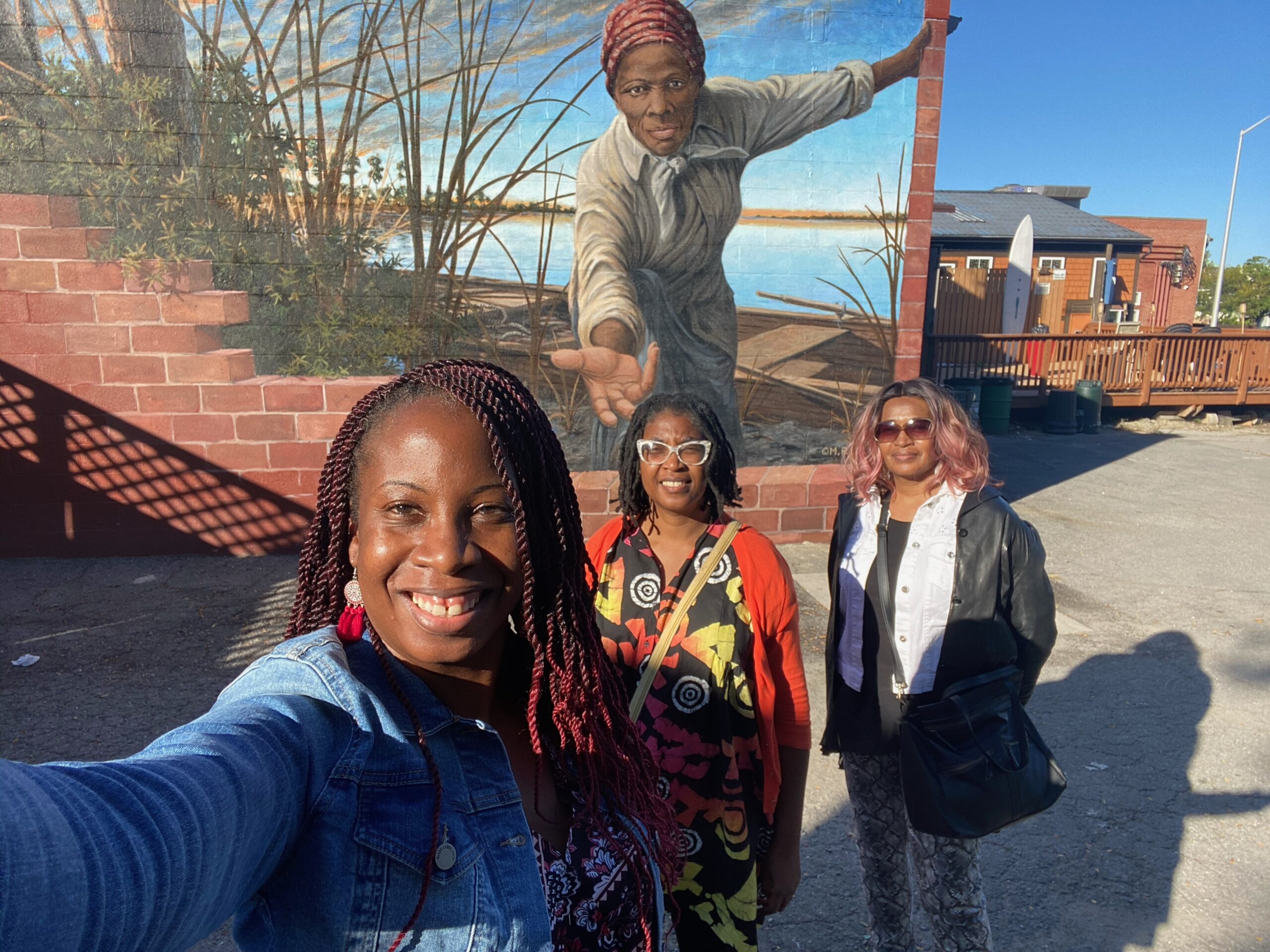
I imagine my perfect Juneteenth celebration taking place in eastern Maryland, my home state. I’m in Dorchester County to be exact, Harriet Tubman’s place of birth and where she first imagined freedom—stubbornly, prophetically, and communally. This is sacred ground. On the side of the Harriet Tubman Museum and Educational Center in Cambridge, Maryland, there is a beautiful and periodically-viral mural that depicts Ms. Harriet with her hand outstretched to catch us, hold us, and guide us across time and tribulations. I can see a joyous group of Black people gathered there to honor her vision for us all to be free and whole. We are dancing, singing, laughing, and playing as we drink red Kool-Aid on sacred ground. Because trouble don’t last always. Ashe.
—Kemi Ilesanmi, diaspora arts builder
My ideal Juneteenth is…
A day filled with flowers, rich history, and loved ones
My ideal Juneteenth celebration is centered on food and fellowship. I’m welcoming friends and family, and we’ve chosen a theme for the day (because no Black family gathering is complete without a theme!) We’d select a vibrant color that would reflect both pride and celebration. Our favorite songs are playing all day, and I’ve decorated the house with fresh flowers inspired by the incredible flower wagons that were once part of historic Juneteenth parades.
I love to cook, so I’d have fun prepping the recipes passed down through generations: the meat for barbecue and fried fish, then getting to work carefully washing fresh collards, frying cabbage, and peeling potatoes for my homemade potato salad, and prepping my secret recipe candied yams. I’d make my whipped cream pound cake and peach pie, praying that the texture and consistency of both are just right, fretting over perfection just like my mother and grandmothers once did. During the celebration, our meal would be loud and boisterous; food, laughter, music, and conversations would become imprinted on the hearts of my guests because food fuels connection and memory.
For me, the perfect Juneteenth is a celebration of heritage, resilience, and the bonds that unite generations. Juneteenth always makes me grateful and leaves me feeling deeply connected to the legacy we carry forward.
—Dr. Blair E. Kelley, scholar and author of Black Freedom: A Visual History of Juneteenth and Emancipation Days
My ideal Juneteenth is…
A party in the park where “we just keep dancing”
The most perfect Juneteenth happens in Fort Greene Park. House music pumps through the speakers as a sea of bodies sway in sync. Just as the day becomes almost too hot, the sky opens up and rain pours down. It smells of wet pavement, sweat, and incense. Nobody runs. We just keep dancing. The music continues, the crowd cheers. And then the sun comes out again. There is nothing more powerful than a collective intention, and when the intention is joy and pride and celebration and veneration, nothing can go wrong.
—Satchel Lee, photographer and filmmaker
My ideal Juneteenth is…
Getting a signal that family is freedom
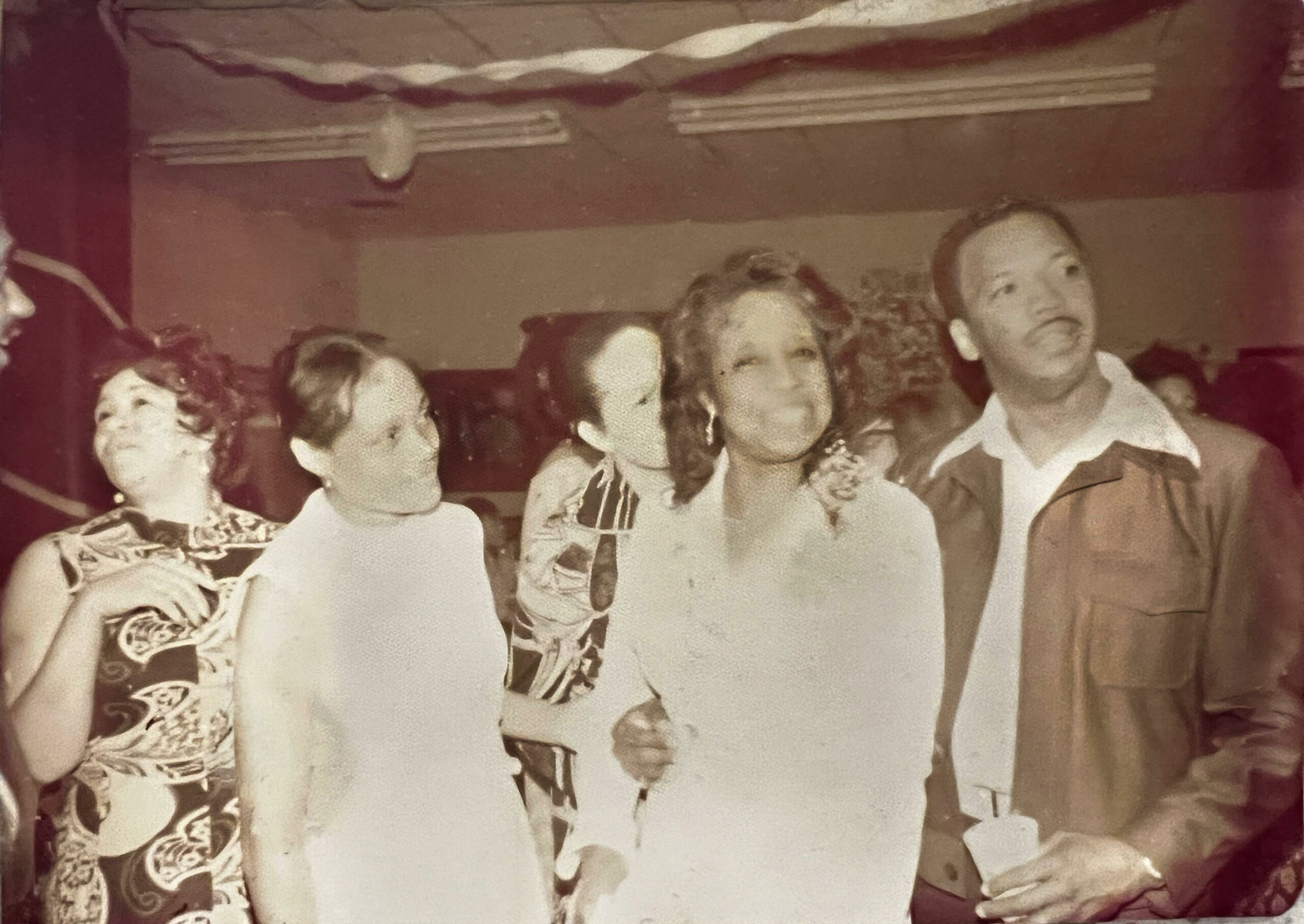
I know little to nothing about my Black birthfather beyond what the white people who cast him out of my life told me. None of it was good, and most of it was racist. He died before I could fully see him separate from the way whiteness had described him to me, but I think about him all the time. I have just two pictures of him, both from when he was in his late twenties. I did meet him, finally, at an Au Bon Pain in Cambridge, Massachusetts, 23 years after those photos were taken. He looked nothing like the man in the pictures. Time, loneliness, being unhoused, out of steady work, health issues, and just being a Black man in America had all visibly aged him.
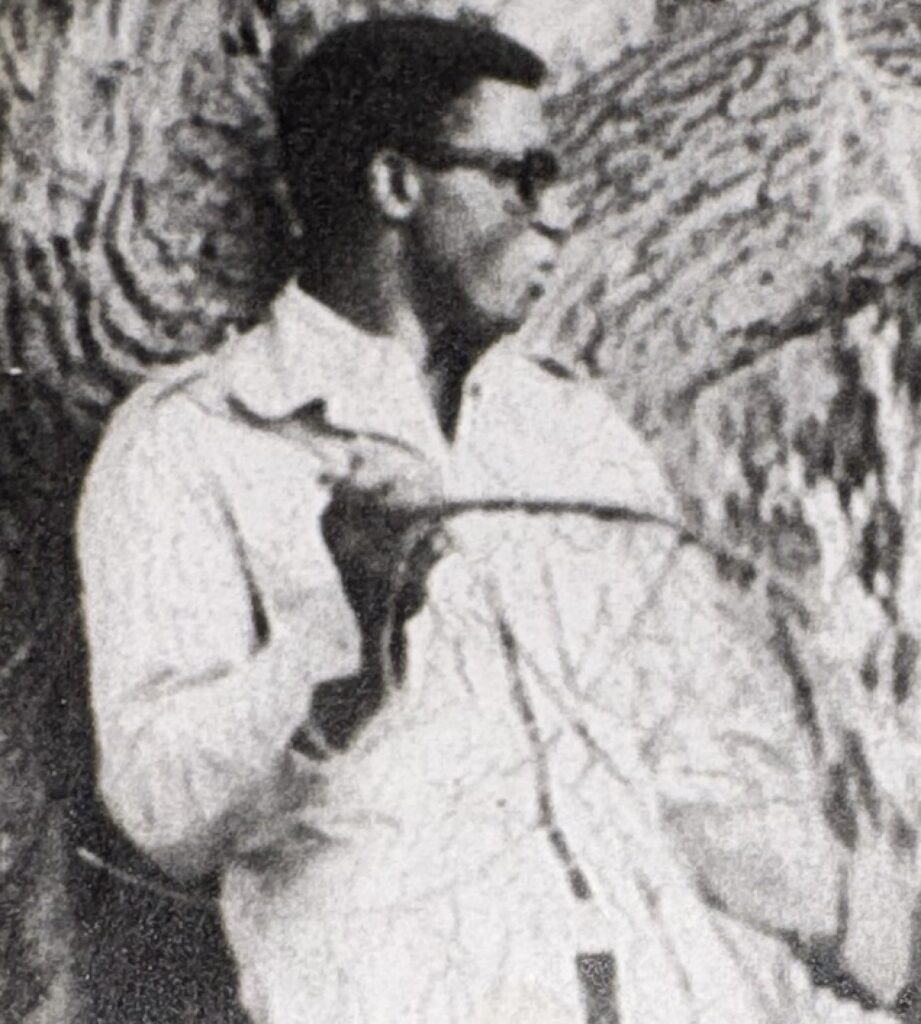
I saw him two more times after that, before moving to New York to start my life and career. Memorably, the second of the two, and the last time I saw him alive, we met at a restaurant in Cambridge that played jazz and afro-funk music at night. This time my then-boyfriend came with me. It was around Christmastime, and my birthfather had come with gifts he almost certainly could not have afforded. But the sheer joy in his face as he gave them to us was like a beacon in the dark crowd.
And I realized that his generosity made him feel free. Free from the way he had been mischaracterized by whiteness. Free from the shame of being banished from his infant daughter’s life without comment or question. Free from the constant, dull ache he described from growing up in foster care and government housing, without any family at all. Now he had family. And family was freedom.
In the program from my birthfather’s memorial service, it was written that “he cherished the memory of a daughter.” My most perfect Juneteenth celebration would be to get some sort of signal, on June 19th, that his memory of me is wrapped in the freedom he felt when he bestowed those Christmas gifts, and knew that he had finally found family.
—Rebecca Carroll, editor-at-large, The Meteor


A Bipartisan Attack on Women
  June 16, 2026 Greetings, Meteor readers, I am still recovering from the emotional hangover that was this weekend—the Knicks win, New York City’s Puerto Rican Day Parade, and a kid’s birthday party. I’ve never been so desperate for silence. In today’s newsletter, a dispatch from Peru, where women’s rights are on the ballot. Plus, what we can learn from lesbian seals and amorous lionesses. Hydrating, Shannon Melero  WHAT'S GOING ONA high-stakes election: Women’s rights under attack. Hard-won gains rolled back. A political agenda moving steadily backward. Sounds familiar? As Donald Trump’s administration chips away at women’s freedoms in the United States, women inhabit a similar battlefield a few thousand miles to the south in Peru, where I am based as a journalist. Heading into the final stretch of a deeply polarizing presidential election, we find ourselves stuck between a rock and a hard place. After a chaotic first round, the runoff has come down to an unexpected contender and an infamous veteran, respectively: leftist Roberto Sánchez and right-wing Keiko Fujimori. After initially trailing Sánchez, Fujimori—a woman—has clawed back to a lead of around 30,000 votes. Though the race remains open, with 99% of ballots counted, each update makes it more likely that Fujimori, who has run four times, will finally win. At first glance, the candidates couldn’t seem more different: Fujimori’s Fuerza Popular (FP) carries a legacy of human rights violations linked to her father, president-turned-dictator Alberto Fujimori. Sánchez’s Juntos por el Perú (JP) promises to defend human rights while positioning the candidate as heir of socialist ex-president Pedro Castillo. But here’s the rub: Neither party appears to have women’s interests at heart. Peru is following a global trend of setbacks in women’s rights amid rising conservative pressures, but in our case the trend pops up across the political spectrum. As former Minister for Women and Vulnerable Populations Marcela Huaita tells The Meteor, those advocating for human rights are "no longer pursuing a progressive agenda, but one of resistance.” AND:
 KARLA TOLEDO, A DACA RECIPIENT IN ARIZONA, WAS TAKEN INTO ICE CUSTODY LAST MONTH. HER FIRST DEPORTATION CASE WAS DISMISSED, BUT NOW, DESPITE THE PROTECTIONS PROMISED UNDER DACA, ICE IS RELAUNCHING ITS CASE AGAINST HER. (VIA GETTY IMAGES)
 Three Questions About...Animal SexPerrin Roosevelt Ireland’s new book about nature’s “horndogs” is a wild, and feminist, ride.By Dr. Ayana Elizabeth Johnson  THE AUTHOR AND HER HORNY MASTERPIECE (COURTESY OF PERRIN ROOSEVELT IRELAND) Did you know that climate change is causing the albatross divorce rate to spike? Or that lionesses have sex 100 times when in heat? Perrin Roosevelt Ireland’s new illustrated book, Poking the Squid: What We Can Learn From Animal Sex, will teach you everything you had no idea you didn’t know about how non-humans do it. Ireland is an artist and environmentalist whose book is an utterly delightful journey through the animal kingdom, brought to life with her effusive watercolor drawings. We asked Ireland about animals’ pleasure, sexual orientation, and gender behavior—and how these things intertwine with feminist and queer theory. (They do!)
We could do more rigorous reassessing of evolutionary theories, specifically sexual selection theory. For example, Kaya Tombak, an evolutionary biologist, said to me that we've never actually studied whether egg cells are more energetically intensive to make in the body than sperm cells. We assume the animal that makes eggs is more invested in the fate of the offspring, wants to have sex less frequently, and is going to energetically protect her body. Victorians were the ones generating the initial theory that, like Darwin, sets up these gender roles that we repeat and replicate and project onto animals: female animals that are coy, less interested in sex, and want to take care of babies. And you have males that want to wander the globe and shoot their shot because sperm's easy to make. This set of assumptions comes up over and over again in the way we talk about animals. So I started asking each of the researchers whether [those assumptions] had been assessed in [the species they study]. And often they would say, "No, and I don't even know how you would design that experiment."  MONKEY THROUPLE, ANYONE? (ILLUSTRATION COURTESY OF PERRIN ROOSEVELT IRELAND) One theme of the book is that earlier researchers were also blinded by their own heteronormativity. Then, over time we’ve learned that actually there is incredible sexual diversity across the animal kingdom. So what can humans learn from animal sex? More specifically, what can we learn from animals about how to have better sex? I think we can learn that sexual diversity is biodiversity, that “all God's critters got a place in the choir.” Animals don't kill each other when they change sex countless times across a lifetime [as some fish and amphibians do]. They don't harm each other or remove each other from communities if they're carrying a multiplicity of sexes in one body [as banana slugs and earthworms do]. They are partaking of pleasure without judgment. And they are sexual geniuses. Life has come up with astoundingly inspiring ways to keep making more of itself. And I love the “better” question, because better for who? What works for me, what is better for me, might not be for another animal, given what they need in their evolutionary history and for their species to thrive. Like, dolphins can teach us better oral sex because they are echolocating on each other's genitalia. And dolphins can access frequencies far beyond the scope of human hearing. So we can't even imagine how pleasurable that might be. And then you pair that with more recent developments of understanding how innervated and complex the dolphin clitoris is and how large it is, and that's quite a compelling combination. My first exposure to your work was being charmed by your deadpan Instagram videos where you hula hoop while explaining the sexual behaviors of various species. But before that, you worked at the Natural Resource Defense Council for a decade, and the majority of what you post on social media is about habitat conservation. Help us connect these dots, between animal sexual diversity and conservation. It's pretty hard to be an animal lover during a sixth mass extinction. Part of why I talk a lot about animals to people is to not be alone with that. It's so excruciating to me, every day. And I can't talk about my joy in finding out how much sex a lioness has when she’s in heat, which is so fun, without talking about habitat loss and climate change. We are currently making impossible the kinkery we celebrate in this book. I can't talk about albatross monogamy without talking about how much plastic they're living in. I can't talk about a 50-pound elephant dick without talking about how the savanna's gone. I can't talk about seal lesbian relationships without talking about how fur seals got listed as endangered after this book went to the printer. The environmental movement's communication for my whole lifetime has been about loss, about despair, about stemming tides of harm, and not as much focused on the beautiful world we want. How do I invite people in, in a planetary crisis, to this sense of resilience and ability to act from a place of love? I just want to provide people an opportunity to get a giggle and then take an action on behalf of the horndogs that they most admire in the book.  Dr. Ayana Elizabeth Johnson is a marine biologist, teacher, and author of What If We Get It Right?: Visions of Climate Futures.  FOLLOW THE METEOR     Thank you for reading The Meteor! Got this from a friend? |

You can't win with a man who hates you
  June 11, 2026 Greetings, Meteor readers, So we’re all in agreement that any infants born in New York after this week will be named OG, right?  VIA ESPN In today’s newsletter, we are reminded once again that the real path to power can never go through a man. Plus, a special giveaway for fans of UNDISTRACTED. Your second favorite bodega baddie, Shannon Melero  WHAT'S GOING ONWas it worth it? This week, far-right Republican and former Trump acolyte Nancy Mace lost her bid for governor of South Carolina in what has been described as a thrashing. Now, to be clear, Mace is a self-described anti-transgender warrior who bullied her colleagues, and her downfall was entirely earned. But what’s interesting about Mace is the fact that she actually could have gone pretty far in MAGA-world with her anti-trans rhetoric had she not made one fatal error: breaking ranks with Donald Trump. In between bouts of bigotry, Mace accused four men of sexual assault in a speech on the House floor, counting herself as one of their survivors and sharing her experiences of being raped as a teenager. She has taken aim at several members of Congress accused of sexual abuse, including Republicans like former Texas representative Tony Gonzalez and Florida Rep. Cory Mills. She was also one of the few Republican women to call for a full release of the Epstein files. The latter position and Trump's subsequent rejection of her, she believes, is what cost her the gubernatorial election. Political analysts are inclined to agree—CNN found that three of the four Republicans who supported the release of the Epstein files no longer hold elected office. “Their demise has happened much faster than that of other Trump apostates in the GOP,” Aaron Blake writes.  MACE PROBABLY HAVING THE REALIZATION THAT THIS AINT IT. (VIA GETTY IMAGES) Two of those three Republicans also happen to be women: Mace and former Rep. Marjorie Taylor Greene of Georgia, another onetime Trump loyalist. Then there are the women who, for a moment, were part of the Cabinet only to be either fired or forced to bow out. Every single one of them was replaced by a man. Are we throwing a pity party for these women who lost their position? No. But there’s a bigger picture to behold. Mace’s loss isn’t just a lesson in politicking. It’s a reminder that no matter how much women align themselves with misogynist white men in power, they will never actually get to use that power. They may hold our attention for a moment, as we saw with Greene; they may see some benefits, like recognition; they may even be perceived as powerful for a fleeting moment. But what the white man giveth, the white man taketh away, and no one has taketh away more from women who dishonor him than Donald Trump. AND:
 MS. RACHEL WITH SENATOR ANDY KIM OF NEW JERSEY. AFTER HER VISIT TO CAPITOL HILL, MS. RACHEL SPENT TIME IN NEWARK, NEW JERSEY, WITH CHILDREN WHOSE PARENTS ARE BEING DETAINED IN DELANEY HALL. (VIA INSTAGRAM)
 WANT TO HANG OUT IN D.C.?Ever wanted to listen to an episode of UNDISTRACTED with Brittany Packnett Cunningham before anyone else? Well, you can! The Meteor is giving away two tickets for you and a guest to a live podcast recording of UNDISTRACTED in Washington, D.C. at 6 PM on June 23. Spend the evening with your favorite host and a few of her friends, like Preston Mitchum and Pulitzer Prize-winning journalist Nikole Hannah-Jones. Talk about rarified air. To enter the giveaway, just click the button below. One lucky winner will be chosen at random no later than Wednesday, June 17. Good luck, and hope to see you in D.C.!  FOLLOW THE METEOR Thank you for reading The Meteor! Got this from a friend? |

This "stupid" journalist did some math
  June 9, 2026 Greetings, Meteor readers, We’re not even going to discuss what happened at Madison Square Garden last night because this city and this team need all of our positive energy right now.  In today’s newsletter, we get nerdy with numbers for the benefit of women journalists. Plus, a horrific man is running for governor in Georgia. In nomine patris, et filii, et spiritu Brunson, Shannon Melero  WHAT'S GOING ONKeeping track: Earlier this week, Donald Trump stormed out of an interview with Meet the Press after accusing journalist Kristen Welker of being “either crooked or stupid.” Welker, the first Black journalist to host Meet the Press, was just doing her job, asking follow-up questions after Trump made an unsubstantiated claim about elections in the U.S. being rigged. As he walked out, Trump also called Welker “darling”; her skin, somehow, did not melt off her body. This, of course, is not the first time that Trump has insulted a journalist for asking questions. I know because this episode made me so curious that I did something that normally sends a chill up my husband’s spine: I made a spreadsheet. A search of Trump’s insults toward journalists going back to 2015—when he attacked then-Fox News anchor Megyn Kelly for having "blood coming out of her wherever”—reveals at least 30 reported instances. This research is non-exhaustive; it surfaced only the best-reported cases, and there are surely more. But here’s what the numbers show: Of those 30 instances, two-thirds were directed at women. Given that women make up less than half of political reporters, it’s safe to say the president has a special fondness for insulting women more than men. The nature of those insults also tells us something. In his known tirades against women journalists, he’s called a quarter of them “dumb” or “stupid.” How many men are dumb and stupid? None. He’s called their coverage stupid, as we’ve seen with CNN’s Jim Acosta, who has been in Trump’s crosshairs since his first term. But it is incredibly rare for the president to refer to a man journalist as stupid, especially to his face.  EMMY, MATRIX, AND NATIONAL PRESS CLUB'S FOURTH ESTATE AWARD-WINNING JOURNALIST KRISTEN WELKER. (VIA GETTY IMAGES) Trump, of course, also enjoys going after women for their looks. He called Katie Rogers of The New York Times ugly. CNN’s Kaitlan Collins has “hatred in her eyes.” Bloomberg’s Catherine Lucey is a “piggy.” And when you take a closer look at the data, an even more disturbing pattern emerges: Trump seems especially comfortable insulting Black women journalists. According to data from the Pew Research Center, just five percent of government and politics reporters in the United States are Black. But roughly 36 percent of the incidents we found target Black women reporters. Consider Akayla Gardner of MS Now, who was called “not a smart person” for asking about the rising costs of Trump’s ballroom, and ABC’s Rachel Scott (“one of the worst reporters”), who pressed Trump about his focus on construction projects around DC in the midst of a war with Iran. So when we say Trump hates Black women, that’s not vibes. That’s data. We’ll be continuing to track these instances for the remainder of Trump’s term. Because the collective memory on how this man treats the fourth estate may be short, but spreadsheets are forever. AND:
 THIS IS WHAT $259 WILL GET YOU. A BIG OL' SLAB OF SCALLOPED WOOD. (VIA BALLERINA FARM)
 FOLLOW THE METEOR  Thank you for reading The Meteor! Got this from a friend? |

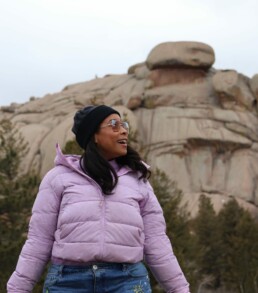
Let's Take This Outside
The never-ending work to diversify the great outdoors
By Shannon Melero
Rockland State Park, nestled in Upper Nyack, New York, was a summertime staple of my youth. Every year, my family would pile into a car with coolers, chairs, bags of charcoal, and enough groceries to feed a small army and make the hourlong sojourn from the Bronx first thing in the morning to secure a spot on the grass. Location was everything. We needed a flat surface to set up games and blankets, but also had to be close to one of the grills the park provided, and most importantly, we needed to be a reasonable walking distance from the park’s massive pool.
I didn’t realize it at the time, but those trips to Rockland were my first introduction to the great outdoors, a relationship which years later would blossom into a love of hiking and staring at trees.
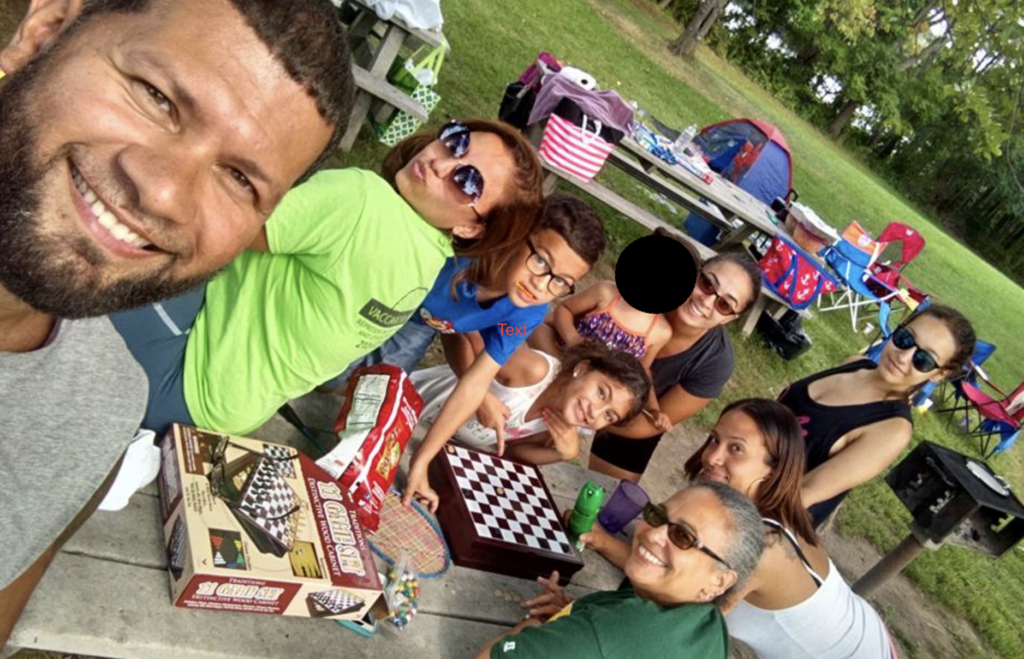
What made Rockland such a comfort was that everywhere I looked, I saw families that mirrored my own. Huge groups of Latine and Black people gathered around decaying wooden picnic tables, laying out tubs of familiar foods our matriarchs had cooked the night before—potato salads; three different preparations of rice; pork; and pasteles, all of which would be handed out at dinnertime. Rockland was a full-day experience from sunup to dusk.
But like many outdoor locales that attracted urbanites of color, Rockland State Park was segregated up until the late 1950s, so the fact that I saw so many families of color in one area wasn’t mere happenstance. It was, historically speaking, where we had been gathering all along.
The idea of “public lands” goes back as far as the 1780s, when states began ceding land rights to the newly formed federal government. Since that time, the idea of who gets to be outside, where, and when has been racially inflected. While the restrictions have now changed—anyone can travel or pay a fee and go to any national or state park—their impact lingers. In 2025, outdoor publication The Trek found that 96% of long-distance hikers on the Appalachian Trail were white. Meanwhile, the Trump administration has enacted its own efforts to make the outdoors white again.
“I always say that white people were really onto something when they invented the great outdoors and then gatekept it,” Chevon Linear, co-founder of Black People Outside, tells me. Chevon, who goes by Chevy, is warm and inviting, even through the computer screen that separates us. Chevy was a Girl Scout as a child but notes that, “The outdoors were really deemed as ‘white people shit.’” It’s a common term we use when referring to the outdoors, and while it’s often said in a joking manner, it’s a genuine phenomenon. For much of American history, going outside for leisure was a privilege—a prohibitively expensive one that has now become a trillion-dollar industry by catering mostly to white, affluent outdoor enthusiasts.
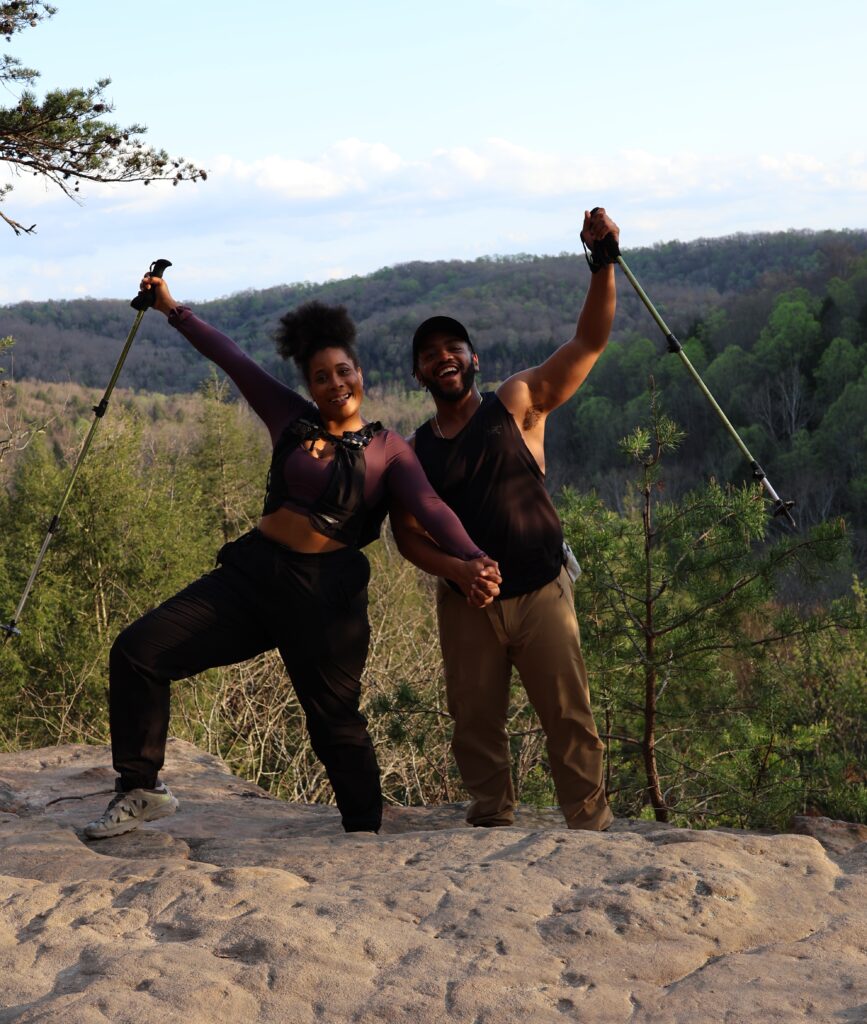
Chevy founded Black People Outside with her fiancé, Kameron Stanton, after an impromptu trip to Grand Teton, a national park in Wyoming, six years ago. The couple, who had never camped before, traveled with one of Chevy’s friends, who loaned them all of the gear they needed. Kameron called the experience “spectacular.”
“The true dark night sky, the energy from everyone around you…everyone was just so nice,” he recalls. “And it's like, dang, outdoors got everyone acting friendly.”
For Chevy, who had traveled all over the world before the pandemic, that night in Grand Teton sparked a calling. “Just seeing the stars, I was crying,” she recalls. “I had never seen the sky like that. It was truly quiet and I’d never heard it so quiet before.” But what she didn’t see were many other Black people. “I’m from Chicago, so I’m used to seeing Black people everywhere I turn,” she says. Witnessing the beauty of nature and the profound silence that brought her peace. She knew she had to share the experience with more people.
“I just feel like we have these irrational fears about the outdoors because of our past,” Chevy says. “As Black people, we were outside because we were escaping, running through the woods for survival. It wasn’t for joy.”
As Chevy and Kameron embarked on their mission, forming what would eventually become Black People Outside, they came across the same barriers that many communities of color face: limited access to green spaces, high costs, and that age-old idea that going outside was just more white people shit. Then, as with so many things, there’s the barrier of representation. In 2018, a writer at the University of Toronto described advertising around the outdoors as “visual apartheid.” Chevy, at least, had the Girl Scouts when she was young, but Kameron says he had no sense of Black people in the outdoors at all until he reached adulthood. “I remember growing up watching TV, the only people that was on there hiking and being outside and skiing…was white people and Dora [the Explorer],” he says. “She was in the streets with the backpack, and I was there with her. But the reality is Black people [not seeing themselves represented] contributes to the disconnect that we sometimes have with nature.”
Chevy and Kameron refer to all of these as invisible barriers, most of which they’ve been able to overcome through educational programming, community outreach, and working with brands to provide gear to those without. But one additional extremely visible barrier has many outdoors people reconsidering their plans for the summer: the Trump administration.
In his second term, Trump rolled out massive budget cuts to the National Park Service, changed admission costs for non-U.S. citizens, and relaxed hunting regulations, which puts both forest animals and backcountry hikers in more danger. Then there are the non-park-related factors that have made it more difficult than usual to just go outside as a person of color—ICE, emboldened white supremacists, and most recently, gas prices. Outside isn’t just reverting to white people shit; it’s turning into wealthy white people shit.
The founders of Black People Outside, though, refuse to flinch.
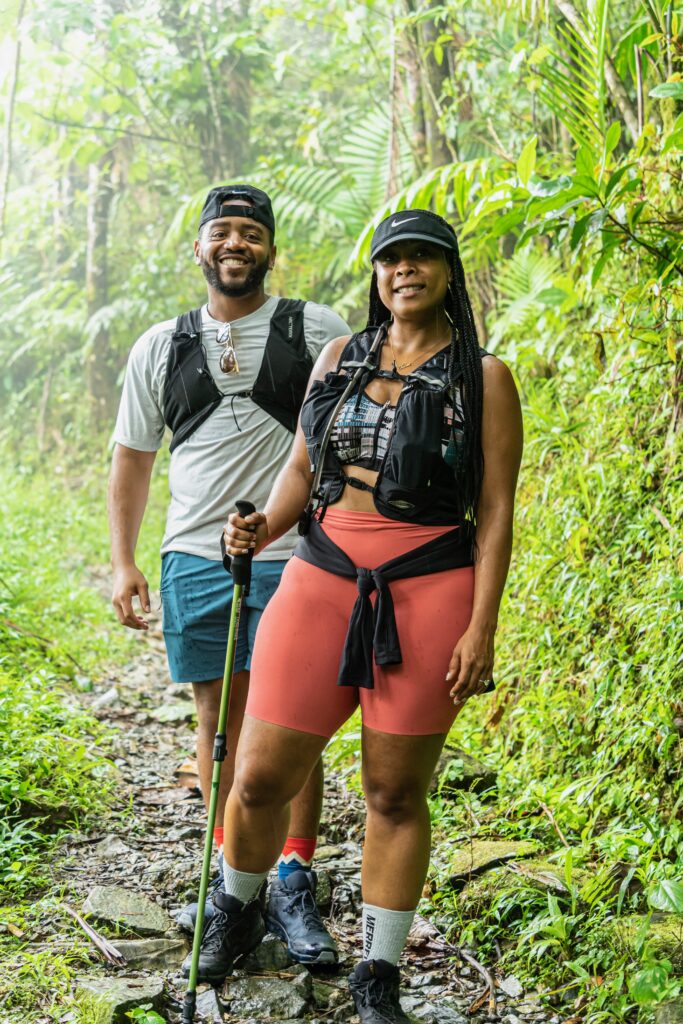
“I’m gonna do what I wanna do and go where I wanna go, and I want our people to have that same energy,” Linear says. “National parks are not the only place to recreate. We still have state parks, we have county parks. We are going to be outside.” For Linear, it’s not a euphemism or a business slogan; it’s a fact. She will not be pushed back indoors, and she is adamant that no other outdoorsperson feels alone or unsafe.
Although Chevy, Kameron, and I are speaking with each other for an interview and are complete strangers, our mutual love of the outdoors creates a level of comfort. I share with them stories of hiking with my daughter. We laugh about the time I misread a map and had to scramble down an enormous rock with a one-year-old on my back and my mother —who vows she will never do that trail with me again—yelling at me for dragging her out to the wilderness. I relay my fears and discomfort over what this summer may hold as I try to go outside with my daughter, to create the same kinds of core memories my mother made for me all those years ago at Rockland State Park, before I ever had to wonder if the hiker next to me questioned if I belonged on a trail.
“You have to attack ignorance with your presence,” Kameron says. “Ain’t nothing going to change if you end up hiding.”

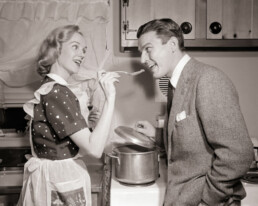
The Make America Married Again Era
  June 4, 2026 Greetings, Meteor readers, This Sunday, the most powerful bicon to ever gyrate on screen is returning. Life is looking up.  In today’s newsletter, we take a look at the field of battle (including, yes, Graham Platner's odds) five months out from the midterms. Plus, THE expert on marriage answers our questions. 🧛🏼♀️, Shannon Melero  WHAT'S GOING ONRunning up that (Capitol) hill: This year’s midterms will be upon us sooner than we think and while the experts say Democrats are poised to take back the House, the Senate is an entirely different beast. To survive the remainder of the Trump administration, we’ll need all the political firepower available, and that includes a majority in the Senate. Plus maybe a voodoo doll or two, who knows. This week’s elections brought some morale boosts for Democrats: In Iowa, a Trump endorsee lost his primary, exposing the slow fade of the president’s pull; Deb Haaland is on her way to making history in New Mexico; and Montana’s Alani Bankhead is leading what appears to be a successful charge to flip a Senate seat. Is that hope we’re smelling? Yes. But there’s still a long road ahead. The state that could make all the difference in the Senate is (🥁) Alaska. Both parties are pouring millions into the state’s top candidates, Democrat Mary Peltola and incumbent Republican Senator Dan Sullivan. (There are actually two Republican Dan Sullivans running; the GOP favors the one from Anchorage.) Alaska hasn’t sent a Democrat to the Senate since 2015 but experts say Peltola, a former tribal judge who served in Congress for three years, has made the race competitive. “You're likely to see an election that, just by historical standards, is a little bit tougher for Republicans,” a senior political advisor told Alaska Public Media. On the opposite side of the country, another contentious battle is brewing in Maine—particularly for women voters. The race will most likely come down to Graham Platner—who is still in the lead for the Democratic nomination despite being embroiled in a sexting scandal, and who last year had to have a Nazi tattoo covered up on his chest—and longtime Senator Susan Collins, a Republican who famously claims to be pro-choice but acts otherwise on the daily. Before Platner’s spicy texts went public, he was considered a strong candidate to make a real run at Collins. But now, he’s given voters (and every woman who might find “he kept an AR-15 in his apartment” a red flag) pause. And if Platner or any of these Democratic hopefuls want to turn the tide in November, it is women voters they’ll have to convince. Women now vote significantly more than men in this country and, in fact, the number of women who vote in midterms has been on a steady rise for decades—roughly 10 million more women voted in the 2022 midterms than did in 2006. No wonder the right is suddenly hyper-focused on suppressing women’s votes. In other words: It seems clear that massive turnout this November by women is the simplest way to put the brakes on Trump’s runaway train (and maybe even impeach him in January). It worked in Hungary. It can work here. AND:
 A VISION AND A VISIONARY (VIA GETTY IMAGES)
 Three Questions About...MarriageIs there any hope for hetero couples? Historian Stephanie Coontz’s new book has surprising answers.BY NONA WILLIS ARONOWITZ  THE MARRIAGE EXPERT HERSELF. (COURTESY OF STEPHANIE COONTZ) As someone who’s obsessed with both feminist history and equitable marriage, I’ve long considered the work of family historian Stephanie Coontz a north star. Throughout her 50-year career, she has closely examined the evolution of marriage, gender roles, and the nuclear family, most famously in her bestselling 1992 book debunking midcentury nostalgia, The Way We Never Were, and in her 2005 book Marriage, a History, which was cited in the 2015 Supreme Court decision granting marriage equality. Amid the rise of the manosphere and tradwives, or what Coontz dubs the MAMA (Make America Married Again) era, I’d already been itching to get some historical context from her—and then she dropped a new book, For Better and Worse: The Complicated Past and Challenging Future of Marriage. I spoke with Coontz about why 1950s nostalgia is roaring back, how gender roles are inseparable from the legacy of democracy, and how history can save our marriages. I was pleasantly surprised when I heard about your new book because, as far as I’m concerned, you wrote the definitive history of marriage. What made you want to tackle this subject again? In the last few years, a lot of people have asked me about heteropessimism and the idea of toxic masculinity, and do we have to give up on heterosexual relationships and marriage? In this book, I don’t deny the problems, but also suggest that people take a little historical perspective. For me, if I know a certain behavior is how people were trained to behave, it’s easier for me to confront the change I want without concluding that the person [exhibiting the behavior] is bad or uncooperative. I call these gendered behaviors “historical earworms”—messages that have been passed down to us from children's stories, lullabies, books, politicians, all of which tell us the way men and women supposedly “are” and the way they need to act or can't help but act. Boys get a lot of those very early: Don't be a baby, don't cry, toughen up. Women get them, too: [We’re supposedly] more moral and better at caregiving and domestic tasks, which leads us to gatekeep those tasks. These historical earworms echo in people's heads long after they have decided they want to change the ways they're relating to people. History gives us the self-knowledge to see how these earworms are intertwined in us, and therefore how we can dismantle them. One of the most fascinating chapters in this book was about how the legacy of democracy created unique forms of “earworms”—particular gender stereotypes that are relatively new. Can you explain that? I'm not saying that the older, aristocratic patriarchy was better. It was very, very brutal. But it operated on a different set of beliefs. Men were the ones claiming to be the idealistic ones who sacrificed for the greater good, while women were too selfish and ambitious and therefore had to be dominated. There wasn’t this idea that men couldn’t be emotional: If you go back to the 12th-century epic poem, The Song of Roland, 10,000 soldiers faint and fall off their horses and weep bitter tears when Roland dies. Men from the 18th century would write to a fellow man who’d gone away, "I cried when you left. I will be so lonely until you come back." This changed, ironically, when societies began to espouse equality during the democratic revolutions [of the late 18th century]. We developed the idea of political and social equality and yet continued to enslave Black people, dispossess [Native people], and oppress women. So if they believed that all human beings were created equal, how did they explain keeping these other groups down? That's when you really get the invention of the most horrible biological explanations. For Black people, [the white men in charge claimed] they were less than human. For women, it was that they’re wonderful and virtuous but they're weak, so we need to protect them. By the mid-19th century, we expected women to be moral and to take care of people and stay at home. Masculinity became defined as the opposite of femininity, so men started taking pride in being aggressive and not being altruistic. You now think you were too dismissive of people who are nostalgic for midcentury America in your book The Way We Never Were. Why? [The height of marriage in this country] was embedded in a time when social and economic conditions were improving. There were rising wages and social access for people who were not ever going to become millionaires, but who could see themselves making what people during the early [American] Republic used to call a “competency”—something that made you competent to be on your own. I was surprised to learn that not just white people are nostalgic for the 1950s: 53% of Black people and 57% of Latinos believe our country’s culture and way of life have “mostly changed for the worse” since the 1950s [compared to 55% of white people], according to the Public Religion Research Institute’s 2025 American Values Survey. Even for people living under segregation and oppression, there were civil rights movements going on, there was hope that things were getting better. Of course, because of feminism, we now have higher standards for what our marital relationships should look like; households in the 1950s had much higher rates of domestic violence and abuse. For my book, A Strange Stirring, I interviewed more than a hundred women who had read Betty Friedan’s The Feminine Mystique [when it was published in 1963], and it was clear that even the women who were not getting abused were very deeply unhappy with… the lack of interest in them as human beings. So maybe what all these people are looking back at fondly is not the kinds of homes that people actually lived in, but how much easier it was to get a home in the first place.  FOLLOW THE METEOR Thank you for reading The Meteor! Got this from a friend? |


Welcome to the Childcare Thunderdome
  June 2, 2026 Salutations, Meteor readers, Wishing everyone a joyful Pride, except for Sam Levinson. I hope that man gets a series of really bad paper cuts that never fully heal because his skin keeps coming into contact with painful and stinging irritants.  In today’s newsletter, Nona tries to understand why it is so incredibly difficult to navigate American childcare. Plus, Rebecca Carroll on which movie you absolutely need to see next. Shannon Melero  WHAT'S GOING ONDispatch from a childcare desert: I am a working mother of two, not at all a stranger to the red tape and wheel-squeaking required to secure affordable childcare. I learned the hard way that, at least in the small upstate New York city where I live, you often have to sign up your first-trimester fetus for daycare if you hope to have a spot by the time your baby is crawling. Yet I recently had a day that would make even the most psychotically organized parent’s blood pressure rise to unsustainable levels. Here’s what went down: I had long looked forward to the financial relief that would come when my four-year-old was eligible for my district’s Universal Pre-K program, which is free and has enough spots for every kid who wants one. But there’s an infuriating catch: The school only goes until 2 pm, so securing an aftercare spot (which does cost money, but less than the alternatives) is absolutely essential. I’d heard horror stories about how the aftercare’s capacity is woefully insufficient due to “staffing difficulties,” and gotten warnings that it’s first come, first served and your finger better be on the trigger come enrollment day. There are 40 aftercare spots available this fall for an estimated 120 children in UPK—an improvement, I was told, from last year. So I marked the date and time of signup on my calendar. And at the appointed hour, I hurried a venerated historian I happened to be interviewing off the phone so I could be available to hit that button. I made triply sure I had a pdf of my daughter’s vaccination form; the week before, I’d made a special in-person trip to my pediatrician’s office, heeding the warnings on the pre-registration materials that, without the correct form, my application would “BE CONSIDERED INCOMPLETE AND UNPROCESSED.” All-caps mine (technically; it felt like they were yelling).  A SNIPPET OF MONDAY'S GROUP CHAT And when the clock struck noon, my husband and I refreshed the registration portal until the link appeared, then filled out a seven-page form as quickly as humanly possible. Then came the texts from moms (and only moms) who were scrambling: “I didn’t even get the Brightwheel message” or “I don’t have that stupid fucking form they’re asking for” or “I have the right form, but it’s from 2024” or “Is it this form or the other one?” Some moms blamed themselves—“Eh, it’s my own lack of foresight!!”—but my boiled blood was directed at the system: Why was securing childcare during working hours harder than scoring Beyoncé tickets? Why did we need to all be Type-A Virgos for the privilege of PAID aftercare? What was enrollment like for people even busier than me, or parents who don’t work from home, or for the 12% of my city who are immigrants, who have to navigate this process in their second language? Should we move back to the city just because of the Mamdanicare?? (Haha, just kidding, I am not paying $4,500 a month for a two-bedroom apartment!) I tell this extremely detailed story not just to vent, but because it so painfully illustrates just how many ways our childcare system is broken. It is broken in the way that, even in a blue state that has made preschool a budgetary priority, the limited hours for UPK programs do not nearly reflect the obligations of working parents. It is broken in the way that the aftercare program, meant to fill this gap, is having trouble hiring staff because jobs at places like Target and Starbucks pay more than those offered by early childhood education. It is broken because, like nearly half of young children in the United States, my kids live in a childcare desert, where parents need to be ruthless ninjas in order to finagle care, or even find it. It is broken because, according to numerous studies, in the vast majority of cases it’s the mother who handles childcare logistics, taking time out of their workdays to put out fires such as these. It is broken because despite all these problems, and despite what they cost us, the question of how to fix childcare is still too rarely asked in political campaigns and debates. While I wait to find out whether my enrollment has been approved, I will say this again for the cheap seats in the back, and the moms in my group chats: It does not have to be this way, and we deserve far better than a series of small heart attacks on random workdays. —Nona Willis Aronowitz AND:

A Film Made Straight From the Gut of a Black Woman ArtistWhy you absolutely must go see “Is God Is”BY REBECCA CARROLL  DIRECTOR ALESHEA HARRIS WITH TWO OF THE FILM'S STARS, ERIKA ALEXANDER AND VIVICA A. FOX. (VIA GETTY IMAGES) Aleshea Harris did not come to play. With her utterly dauntless directorial debut, “Is God Is,” she dares the film’s audience, along with all of Hollywood, to fuck around and find out what would happen if God really was a Black woman. The film, which Harris adapted from her own same-titled play after a successful off-Broadway run in 2017, follows twin sisters Racine (Kara Young) and Anaia (Mallori Johnson) as they embark on a very Black Homeric journey through the American South. The mission is to carry out the dying wish of their estranged mother (Vivica A. Fox): “Make your daddy dead. Real dead.” The twins, now 21, grew up in the foster care system thinking their mother had died in a tub full of flames, where their father, called “Man” (a brilliantly against-type Sterling K. Brown), left her after he knocked her out, poured alcohol over her body, and then, with an eerie nonchalance that we see in sepia-toned flashbacks, lit a match and dropped it onto her body. But somehow she survived, if you can call the life she has since lived in a body maimed beyond recognition “survival.” Outside the small care center where the sisters have now been summoned, Racine, the take-no-prisoners twin, anoints their mother, whose real name is Ruby, as “God” because, “She made us, didn’t she?” We first meet Ruby laid up in bed, draped with a lime-green satin counterpane, as several young Black women stand on either side braiding her long micro braids. Through the holes of a compression mask worn to cover her burns, Ruby’s eyes conjure a deep and etheric beauty. Like, that might actually be God sitting up in that bed. Anaia, the we’re-not-killers twin, was also badly disfigured in the fire: Ruby tells her after they meet that it’s because Anaia had tried the hardest to save her. She has spent her whole life being called ugly, which Racine, her protector, has avenged on Anaia’s behalf without hesitation. The dynamic between Anaia and Racine, who often speak through telepathy conveyed with typed-out words on the screen, is in turns magnetic, tender, and unnerving. On its face, “Is God Is” is a revenge film, with clear nods to Southern Gothic and spaghetti western genres. There are also several moments that pay tribute to the canon of Black women filmmakers, like “Daughters of the Dust” by Julie Dash and “Eve’s Bayou” by Kasi Lemmons. It’s also extremely gruesome and violent at parts (although I would refrain from the Tarantino comparisons, because I think Harris has more vision). But at its core, this is a film that was made straight from the gut of a Black woman artist. Somewhere between a fever dreamscape, an ancestor’s love letter to Black girls everywhere, and a Salt-n-Pepa video from the ‘90s, “Is God Is” is a miraculously pure piece of art, and a welcome antidote in a moment when technology is bullying creatives, exploiting Black women and our likeness, and pushing an agenda of inevitability. AI, you could never.  FOLLOW THE METEOR Thank you for reading The Meteor! Got this from a friend? |

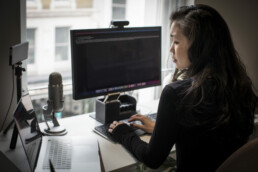
Did Trump Ruin the Workplace?
  May 29, 2026 Did Trump Ruin the Workplace?Three women reflect on the evolution of misogynyBY MARIN COGAN Earlier this year, 2016 nostalgia took over social media, with our friends posting wistfully about their more naive selves. The trend quickly ran its course, but that decade, from 2016 to 2026, has seen huge change—for politics, culture, the world. And it made us wonder: What’s different from then to now, particularly when it comes to women’s lives? What have we lost, and maybe gained? We'll be exploring this topic this summer, and we're starting here, with a deep dive on how work and the professional sphere have changed—or not—for women. A lot can happen in a decade. Around this time ten years ago, Americans were still debating whether to take the new Republican presidential nominee, Donald Trump, seriously. Global pandemics seemed like old-timey problems; artificial intelligence was still mostly in the realm of science fiction. The culture back then was different, too. In various industries, women were starting to speak out about workplace harassment and abuse. Others made noise about the chronic lack of representation of women and minorities. The discussions pressed both big companies and individual actors to acknowledge wrongdoing and work towards more just and equitable workplaces. And then came the backlash: the comebacks, the anti-woke movement, the defamation lawsuits, the assault accusations ignored, the startling rise of the manosphere. Ten years later, we are living in the aftershocks of that era, both the progress made and the retaliation it inspired. The Meteor spoke with three women–leaders in government, tech, and Hollywood–about what’s changed in their workplaces for women in the last decade, for better and for worse.  CLAIRE TRICKLER-MCNULTY IN 2022, WHEN SHE CAME TO GENEVA TO PRESENT AT THE COMMITTEE ON THE ELIMINATION OF RACIAL DISCRIMINATION. (COURTESY OF CLAIRE TRICKLER-MCNULTY) Used to ICE’s Old Boys’ Club, She Became the Target of a Sexist AttackClaire Trickler-McNulty, a lawyer, served as a Deputy Assistant Director at Immigration and Customs Enforcement (ICE) under Obama and during Trump’s first term, then as an Assistant Director there during the Biden administration. She witnessed dramatic swings in rhetoric and policy between administrations, and ultimately became the target of a deeply partisan investigation by House Republicans, who accused her of trying to push a “woke agenda” inside the agency—claims she says were baseless. Trickler-McNulty is now a policy fellow at Hyphen and co-hosts a podcast called The Melting Pod about immigration. There were some efforts under Obama, and then under Biden, to encourage the hiring of more female officers. But the whole time I was there, law enforcement was still predominantly male. If I hadn’t been a lawyer, I would never have been in those rooms. There were definitely parts of ICE that felt like old boys’ clubs—cliques of men where you had no hope of getting into their inner circle of leadership. When I took maternity leave the second time in 2015, my boss told me…that the real burden of maternity leave is on men, because they have to pick up for women who are taking leave. Which is not what you want to hear from your boss as you're taking maternity leave. I befriended a lot of female law enforcement officers during my time there. I wanted to support women moving into leadership positions because I knew it was a gendered environment. I saw a number of women–really good, dedicated law enforcement officers–repeatedly passed over for promotions in favor of men. The women would tell me, “The guys who get promoted are the ones who go drinking with the boys, who go to strip clubs together.” I absolutely saw women get passed over while less qualified men moved up through these networks. That was happening during the Biden administration. It’s recent history. [But] under the first Trump administration, things changed significantly…It definitely felt like more men were being elevated into leadership positions. A certain clique became more ascendant. That said, the [changes of the] first Trump administration felt slower to me. It was more like watching sandcastles slowly get washed away. That’s part of why I wanted to go back into government later. There was still so much detention reform work to do, like trying to implement the Prison Rape Elimination Act. I felt like so much of what we had tried to fix had been washed away, and I still had this fire in me to try to fix some of it. And then, in 2023, I got heavily attacked by the far right. Part of it absolutely felt gendered. I think I was an easier target because I was a woman on the West Coast with a hyphenated last name. When I look at younger women coming up now, I do see progress in how they interact with men and set boundaries. That makes me happy. But then I look at what’s happening at the senior levels, and it doesn’t feel like there’s been nearly as much progress there. I still think about the moments where…women reported harassment and leadership just shrugged. Those are the things I feel guilty about, especially because I was a supervisor. Looking back, I wish I had been less afraid. Less worried about making men angry. Less worried about what they thought about me. More secure in myself and in what I was doing.  TRACY CHOU AT WORK. (COURTESY OF TRACY CHOU) She’s a Tech Worker Who Started at Google—and Became an Anti-Harassment AdvocateTracy Chou started her tech career with internships at Google and Facebook before becoming a software engineer at Quora and Pinterest. In 2013, Chou posted a viral Medium post about the lack of publicly available data about women in engineering roles at tech companies. Chou earned media recognition and awards–but also backlash from male colleagues and internet trolls. Later, she founded Block Party, a digital anti-harassment tool. Quora was this new question-and-answer platform when I was there in 2010-2011, and we needed content for the site. So all of us who worked there were trying to generate content. I found my little niche answering questions about being a woman in engineering. I had colleagues who really didn't like it and would act out. Sometimes they would try to undermine me, or complain about me [advocating for representation of women.] I had one Asian engineer say to me, “Engineering is the one thing that Asian guys have. Why can't you just let us have it?” And other people who complained to me about how we already lowered the bar so much for women and minorities, do we have to lower it even more? I felt like I had to overperform as an engineer. I remember getting in super early to the office, working really late, and trying to create that extra space for diversity work on the weekends, so that it wouldn't feel like it was taking away from my main job. Probably around 2018, my platform had gotten a bit bigger. I started experiencing more pile-ons, but there was still also targeted harassment from individual people who would go pretty deep–I had instances with thousands of trolls on Reddit, and then some of that spilled over onto 4chan, and those people started coming after me too. Then I also had to deal with people who became obsessed with me. There was one guy who was stalking me. He lived internationally but showed up in San Francisco multiple times. Block Party came directly from the experience of dealing with harassment myself and from having seen it on platforms I had previously helped build. I was frustrated by companies saying, “Abuse and harassment are really hard problems to solve.” I thought: It’s not that hard. I’m sure you can do better than what you’re doing now. I had literally worked on some of these platforms [so I knew it was possible]. And I had also been the target of abuse and harassment myself. The silver lining is that I was able to take that firsthand experience and turn it into better solutions—not just for myself, but hopefully for other people too. All the diversity efforts and the MeToo movement impacted the tech industry in similar ways. If you look at computer science enrollment numbers, many more girls are enrolling and graduating with computer science degrees. There are also many more female founders now. The whole ecosystem seems to have improved, and there are many more efforts supporting women in tech, women in VC, women in engineering, and underrepresented minorities more broadly. I also think the general cultural awareness around these issues has increased dramatically. Ten or 15 years ago, most people didn’t know what intersectionality meant. Now, many people are at least familiar with the concept. That’s all positive. What’s worse is the recent backlash and demonization of DEI—the fact that people feel so emboldened to be loudly and proudly anti-DEI. I expected progress to be slow. I didn’t expect this level of aggressive backlash. Still, the work will continue in some way. So overall, I’m still mildly optimistic. But I also feel tired of fighting.  AMY ADRION, RIGHT, ON SET DURING HALF THE PICTURE. (PHOTO BY ASHLY COVINGTON) She’s a Director For Whom “MeToo Absolutely Mattered”Amy Adrion is an Emmy-nominated writer and director. Her 2018 film, “Half the Picture,” examined the experiences with systemic discrimination faced by women directors in Hollywood. She has also directed episodes of Storyline Online, and teaches filmmaking at Rochester Institute of Technology. I never had any particular instance of sexual harassment or overt discrimination. I worked as a production assistant, as an assistant director, and as a low-level crew member on tons of independent films. I worked for a distribution company in New York at the time when [Harvey Weinstein’s] Miramax was the big player in town. I went to Sundance and all the film festivals. I never personally had a negative experience in my early career in film. But I do think the issue was less about individual moments of discrimination and more about the fact that the people in power tended to be white men from a certain cohort, and they responded to the stories that connected with them. And so you would have these breakout films by women directors at festivals [and then] you would see them kind of drop out of the cultural conversation after 10 years. I think that is discrimination in a broader sense. The stories that make women, nonbinary, or gender-expansive people feel better about being themselves just haven’t had as many people in positions of power supporting them. As frustrated as I am by the current state of things, it would be totally disingenuous to say nothing has changed. A lot has changed. You look at the stories that are being made now, and they’re very different from what was in theaters or on television 20 years ago. There is more diversity of voices and stories being told. Is it enough? No. And it’s frustrating because there was this energy around diversity and hiring different voices–especially around 2020–and it definitely feels like there’s been a backslide. A lot of women directors I know who finally got their first TV episode, or maybe their second, aren’t really getting hired anymore because the business is contracting. MeToo absolutely mattered. It was an important movement that had a real impact. Harvey Weinstein is in jail. You can’t say it came and went without consequences. It was necessary and important, and it’s had lasting repercussions. That said, I think MeToo also created a lot of discomfort among people in power, and that discomfort led to backlash. When I started making “Half the Picture,” I interviewed some women who had been part of a group inside the Directors Guild back in the early ’80s who were looking at the numbers of women working as directors and agitating for change. They were probably in their sixties when I interviewed them, and while they were grateful there was renewed attention on discrimination against women directors, they also had this very world-weary attitude of, “Oh, this again.” At the time, I was very much like, “No, this is different. Things are changing. The ACLU is investigating. Women are speaking out. We’re finally making progress.” And now, 10 years later, I find myself with a much more cautious optimism. I think human beings naturally assume things just evolve and get better over time—that progress is inevitable. But it’s not. If the last 10 years have taught us anything…it’s that you have to keep fighting for these rights constantly, or they will be threatened or taken away. That was a hard lesson for me to learn in my forties. The interviews have been edited for clarity and length.  ABOUT MARIN COGANMarin Cogan is an independent journalist. She was most recently a senior correspondent at Vox and has worked as a writer for New York magazine, GQ, ESPN the Magazine, and other publications.  ENJOY MORE OF THE METEOR Thanks for reading the Saturday Send. Got this from a friend? Don’t forget to sign up for The Meteor’s flagship newsletter, sent on Tuesdays and Thursdays. |
