
Five Years of the World’s Most Repressive Regime
Since the Taliban seized power, Zahra Nader and her fellow journalists have been documenting the violence. This is what she’s seen.
BY CINDI LEIVE
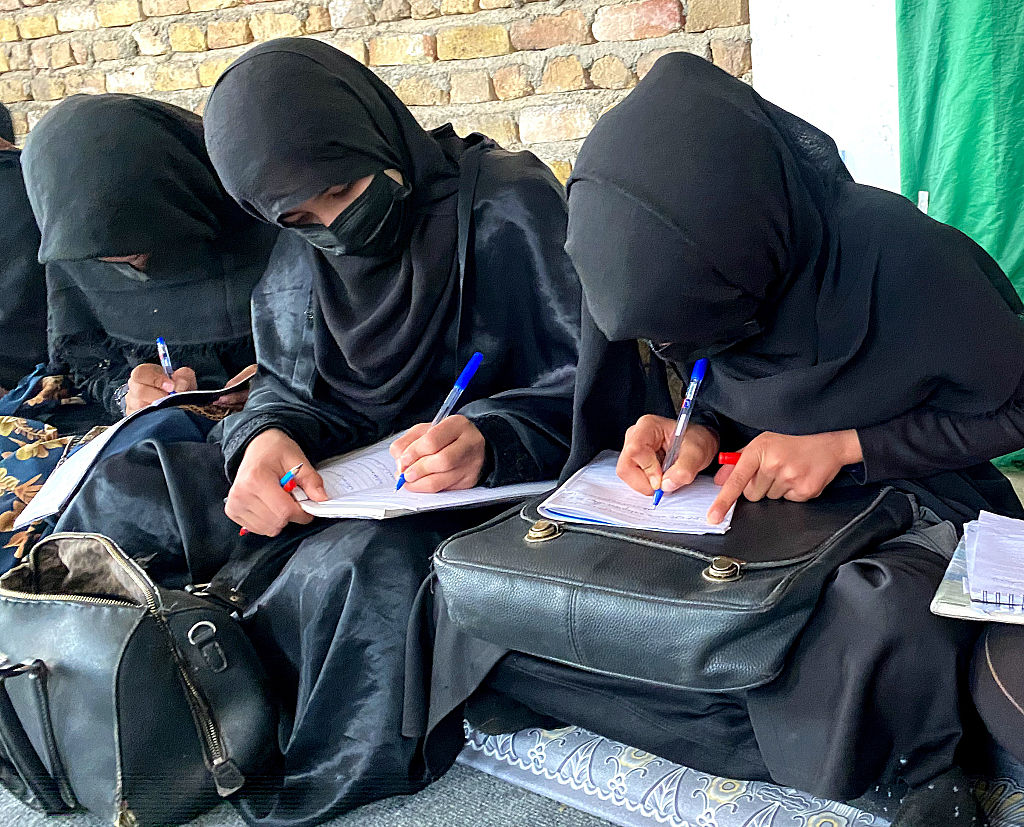
Five years ago today, the Taliban captured Kabul, Afghanistan’s capital city, and launched what the United Nations now calls the most thorough dismantling of women’s rights in modern history. The Taliban have issued more than 100 decrees barring women from going to school after sixth grade, traveling long distances, taking taxis, appearing on TV, speaking on TV, and speaking in public at all.
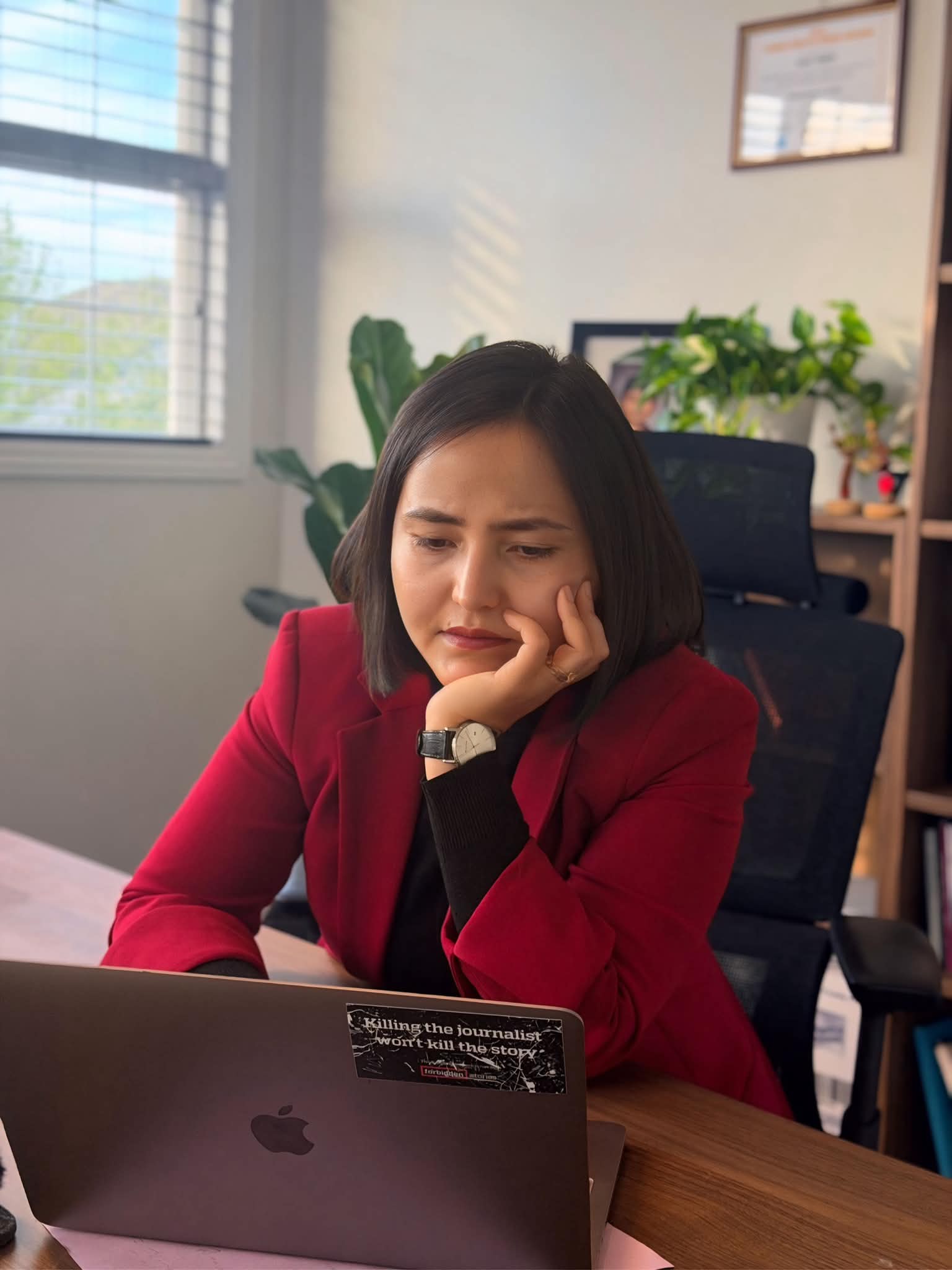
If you have heard about any of this, it is thanks to journalists like Zahra Nader, the executive director and editor-in-chief of Zan Times, an investigative newsroom led by Afghan women journalists fiercely dedicated to documenting what it’s like to live under gender apartheid. Nader, who once worked in the Kabul bureau of The New York Times, now lives “in exile” in Canada, as do several of her colleagues, and works with an undercover network of reporters inside Afghanistan, who file their stories secretly and at constant risk of discovery.
Their reporting is a series of gut punches: They have documented the country’s femicides; discovered the Taliban’s practice of arresting women for the clothing infractions known as “bad hijab” and then assaulting them; and exposed the heartbreaking spike in suicides among young girls under Taliban rule. But their work is also a series of miracles, each piece a bracing, furious counterpunch to the idea that women’s voices don’t matter.
I’ve marveled from afar at the work Zan Times does, and the courage with which these journalists do it. On this dark anniversary, The Meteor asked Zahra Nader to shine light on what’s happening.
August 15 will mark five years since the Taliban took Kabul, a city you had lived and worked in as a journalist. You later told The Meteor that on that day, “it wasn’t only the fall of a country I was witnessing; it was the death of the hopes of my generation.” How do you feel today, on this anniversary?
It’s a sad day for us, because it’s a reminder of what we have lost, and how our losses have become normalized…even by countries who in many ways see themselves as champions of women’s rights. The Taliban can be invited to Europe…Diplomatic relationships [are] opening up. It was hard in 2021 to look away from what was happening to women in Afghanistan. But it has become easier five years later to look away.
Five years ago, a girl of ten or 12 marrying and becoming pregnant was not the norm. And now [the attitude is] yes, it’s sad, women in Afghanistan are imprisoned in their home, but attention is fading…Our job [at Zan Times] is to make the picture so very, so real, that you can’t look away. And if anyone does look away, at least we can tell them that you made a choice. It was not that you didn’t know.
We want our reporting to be a kind of lived record of what the Taliban are doing, so if any country is willing to engage with them, they have to be able to look at these stories. We want to make it costly for any country that’s engaging with the Taliban to do so. That is our hope.
I think there may be a global perception that the Taliban changed Afghan women’s lives immediately, and things got bad, and they have remained bad. But your reporting makes clear how much additional violence has been enacted over the last five years. What are some of the milestones of how much worse it has gotten since 2021?
This is the thing: When the Taliban took over, they did not implement all of their policies of gender apartheid [at once]. In their first week, they said that women working in the public sector should stay home. In a month, they closed the schools. After four months, they banned women from traveling. They were slowly testing the water—how would the world react? Would the world play along? And the Taliban has seen that attention fades. That the world condemns the Taliban’s policies with rhetoric, with words, but with little real action.
Let me tell you about two laws they implemented this year. One, passed in May, is basically a divorce law that sets no minimum age for a girl to be married off….[it essentially] legalizes child marriage. At the same time, this law defines that no woman can get a divorce without her husband’s consent—even if he’s beating her. Even if a woman’s husband is missing for a very long time and she wants a divorce to move on in her life—which is allowed according to Islamic law—she has to wait until [the age at which] he would die! Unless he is missing in war or there is a high chance he was killed, she cannot get a divorce.
Then there is the criminal code, which was passed in January. It says that if a woman is beaten to the point that her bone is broken, and if she can prove in court that her husband [was responsible], the judge may sentence her husband to 15 days in prison. But if that woman goes to her parents’ home [for safety] and the parents refuse to return her, the parents and the wife will be in prison for three months. That’s six times higher than the punishment for committing violence!
Am I hearing you correctly that there would be no punishment for the man as long as he didn’t break a bone?
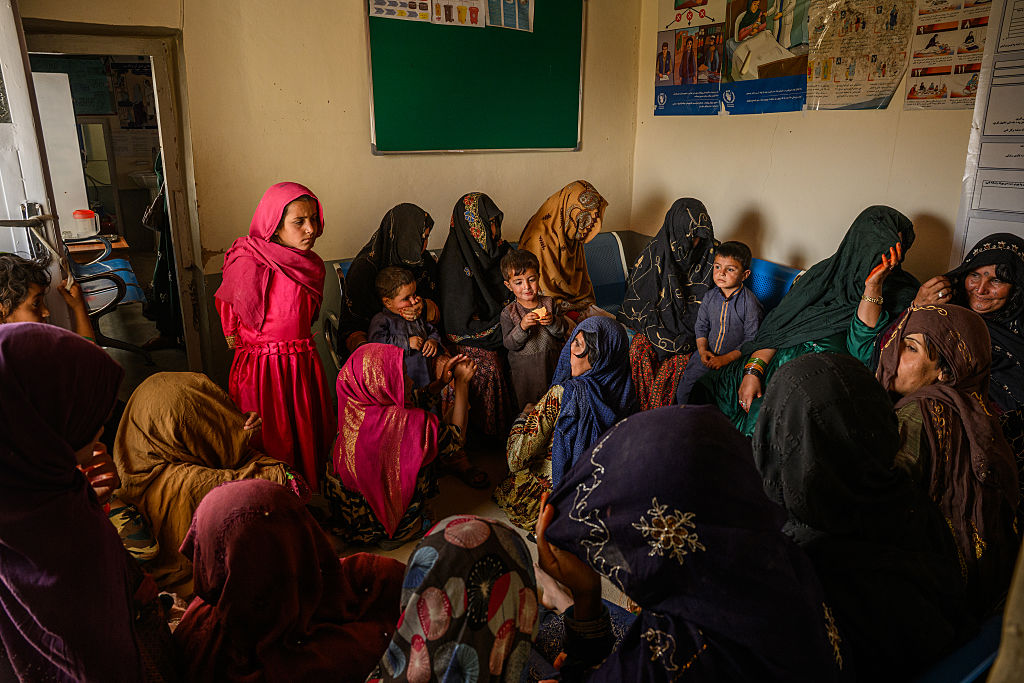
No punishment. Also, we found out that for every four women who died, only one man was arrested and that arrest was sometimes for a day and they were released. Meaning that there is complete impunity for the killing of women in Afghanistan.
You alluded before to one of the reasons that your reporting matters, which is that it could increase international outrage toward the Taliban. What are the other reasons you do this?
I was a woman journalist in Afghanistan. I could still be a woman journalist inside Afghanistan if I was not [in exile]. And if I were being held in prison in my own home, what would I want? I would want somebody to make it possible for me to feel that I am still a professional woman. That I am still contributing to my society. That I’m still part of humanity. In a country where the sense of humanity has been taken away from you—when you are not allowed to choose your own clothes, you cannot go out by yourself—what kind of human are you? So it is very important for me personally to give that sense of humanity to women journalists in Afghanistan. Sometimes we talk about the risks they take and the security, and I ask them why they are doing this work. They tell me, partly we need money to survive [only seven percent of women in Afghanistan are employed]. But more than that, we need hope. We need a purpose to live for. And this work gives us a purpose.
We interviewed a woman…[who had been] brutally abused and raped by the Taliban inside prison. My colleague asked her, why are you telling me this story? The Taliban might find you again. And this woman said, I might not survive…but I want somebody to hear my story. That’s the level of misery and helplessness for the women of Afghanistan: Your biggest dream becomes just to be heard. Not, “I want justice.” Not “I want equal rights.” Their only hope is for somebody to care [about] their story.
Initially I was really excited about changing the situation in Afghanistan for women and girls. But from what I’ve seen over the past five years, that’s not going to happen. So now—if I can keep one woman journalist inside Afghanistan safe, help her get paid and give her a purpose to live for, I think that’s my job.
You clearly care so much for your journalists. How do you help them stay safe while doing a job that is very dangerous to do?
When we have a story we are interested in, the first question is, is it safe to cover it? And if something is high-risk, we might report it from outside the country. We did a story about a female YouTuber who was killed by the Taliban, but who [they said was] a suicide. Two of our colleagues tried to cover it from inside Afghanistan, but received suspicious phone calls [and threats]. So they shared information with us, and my colleague and I outside the country covered the story instead. Sources feel safer talking to us sometimes: I’m in Canada; I’m out of the reach of the Taliban.
But for our journalists inside Afghanistan, we take precautions. Nobody works under their real name. And they are not allowed to contact the Taliban—if we need to get comment, those of us outside the country will call. We hope that all of our collaborators’ immediate families know they work for us, because in case something happens, they can let us know. But one of our colleagues is living [near] her uncle. She says that her uncle is a misogynist and very happy that the Taliban came and kept women from working…Her uncle doesn’t know [that she works as a journalist] and she doesn’t know what he’d do if he found out. He might go to the Taliban.
What do you hope for the women of Afghanistan, five years from now?
I hope that Afghan women will be allowed to choose their own leaders, to be part of social life, to have their rights respected and protected. That hope feels distant—is it even possible? But that’s my hope.
And in five years, I hope that Zan Times has branches all over Afghanistan, run by women journalists who are leading in their own local communities. Because if Afghan women lead, with the understanding and awareness that they are building something for the next generation, I believe we will have peace and prosperity. Because women are less likely to start fighting each other, right? We might occasionally fight on social media, but it will not be disastrous for Afghanistan.
All of this seems very far off for me, but…without hope we cannot move forward.
You can follow Zan Times’s reporting here.
More to read, from The Meteor’s coverage of Afghanistan:
Two journalists on the first few months of panic and despair (February 2022)
Just half a year after Kabul fell to the Taliban, journalist Mariane Pearl speaks with Zahra Joya and Zahra Nader about how much women’s lives had changed.
A soccer captain chronicles her daring rescue mission (August 2023)
The Meteor interviews Farkhunda Muhtaj, who helped a group of teenage girl soccer players, known as Ayenda, flee Afghanistan in 2021.
Why don’t we treat “gender apartheid” as a crime? (August 2024)
With the Taliban’s power now entrenched for three years, we ask Malala Fund’s Afghanistan director, Sahar Halaimzai, about what the world can do about it.
This professor watched her country disappear, and chronicled it (August 2025)
Afghan feminist scholar Lima Halima-Khalil reflects on the last four years of Taliban rule.
An Afghan refugee who fled fear—and found it here (January 2026)
As the second Trump administration begins, Lima Halima-Khalil describes what it’s like to be “the other” in a country she came to for safety
Teen girls on defying the Taliban to get an education (April 2026)
Journalist Jessie Williams speaks with students and teachers at a secret school in Afghanistan, where girls’ education beyond sixth grade is strictly banned.