
“The system is not set up for men to live their truth.”
Heated Rivalry showed us what could be—but for gay men at the top levels of pro sports, that’s still just romantasy
When Heated Rivalry star Connor Storrie performed a portion of his Saturday Night Live opening monologue flanked by players from the men’s and women’s U.S national hockey teams, they formed a perfect pop culture panoptic. All at once, we had queer joy, the resolution of national sports beef, comedy, political commentary, and just a dash of pettiness for seasoning. While the moment bore the weight of so many things, that weight was shouldered entirely by sport, and where we as fans stand in our relationship to it.
For all the good that sports has given us, historically, it’s also been used as a tool of exclusion, with women, LGBTQ+ people, and athletes of color having to fight to exist in the courts, fields, and pitches they now enjoy. While there has been progress, it’s been slow and uneven. Over the last five years, 27 states have passed laws banning trans students from sports, and last summer, World Athletics mandated sex testing for women’s sporting categories—all in the name of “protecting” athletes from an amorphous queer menace.
At the same time, women’s sports have never been bigger, and incredible trans athletes, lesbians, non-binary Olympians, and bisexual baddies are all over our television screens.
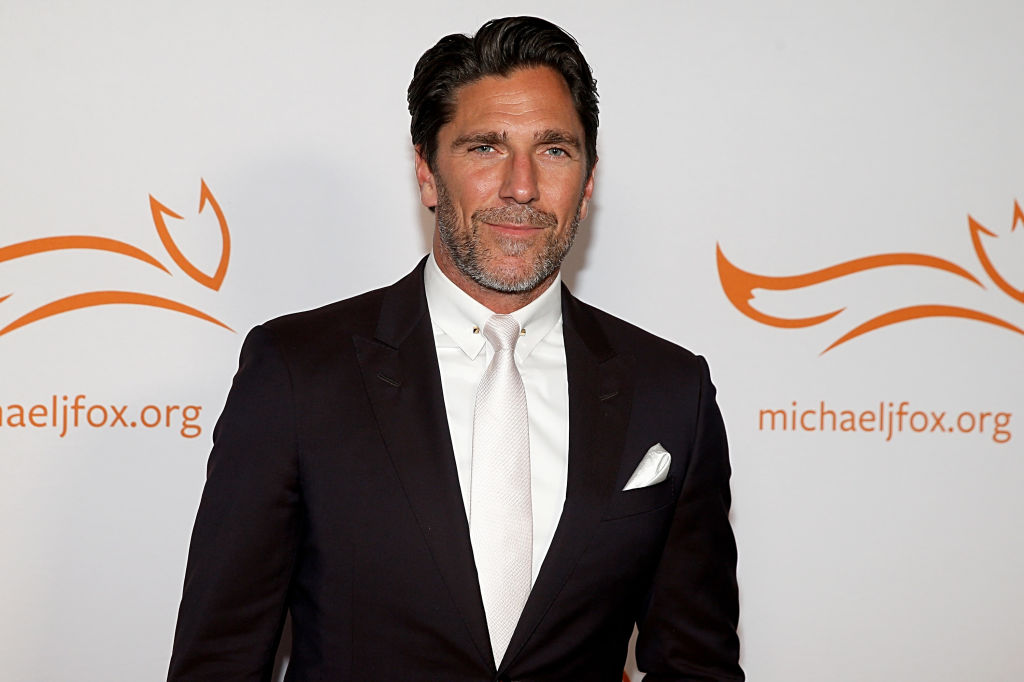
But what about queer men? As Uncloseted Media wrote last year, there are “zero” gay or bisexual men actively competing at the highest professional levels of U.S. baseball, basketball, football, and hockey. That stat remains unchanged, but the success of Heated Rivalry and the current generation of queer athletes has many revisiting the age-old question: Why aren’t men coming out while active? When will we see hot hockey players kiss each other IRL? (I must note here that there have only ever been two hot men in hockey, Henrik Lundqvist and Martin St. Louis. They are both retired and, sadly, straight.)
“There’s so much performed masculinity that’s tied to men athletes,” explains Steve Granelli, Ph.D., a teaching professor of communications studies at Northeastern University. “It’s all rooted in this really toxic, very old understanding of gender roles.” That understanding is at the core of America’s Big Four—the MLB, NBA, NFL, and NHL—which have long played a major role in shaping our collective idea of what it means to be a man.
In the 150-year history of American professional sports leagues, only two men have come out while still actively playing. The first was the NBA’s Jason Collins in 2013, who announced he was gay in an article for Sports Illustrated, while signed to the Washington Wizards, and was widely supported by the league and the fans. (The loudest voice of dissent came from sports broadcaster Chris Broussard, who called homosexuality a sin on air.) Eight years later, the NFL defensive end Carl Nassib shared that he was gay in a social media post. In an interview with Good Morning America, Nassib said he was met with “nothing but love and support” by his teammates and his organization. He continued in the NFL until 2023, retiring as a Tampa Bay Buccaneer.
Since Collins, gay and bi men have slowly begun to take up space, just not while playing in the Big Four. Athletes across different sports have come out in retirement or after career-ending injuries, and it’s slightly more common to see queer men in a solo sport like tennis. Luke Prokop, an active player in the development league, the AHL, came out last summer. Earlier this year, inspired by Heated Rivalry, hockey player Jesse Korteum announced that he was gay and walked away from the sport when he was 17 because he didn’t think he would be accepted. In Japan’s B.League last year, Joshua Scott, an American basketball player who was a darling of the NCAA during his time at the University of Colorado, Boulder, came out publicly as bisexual.
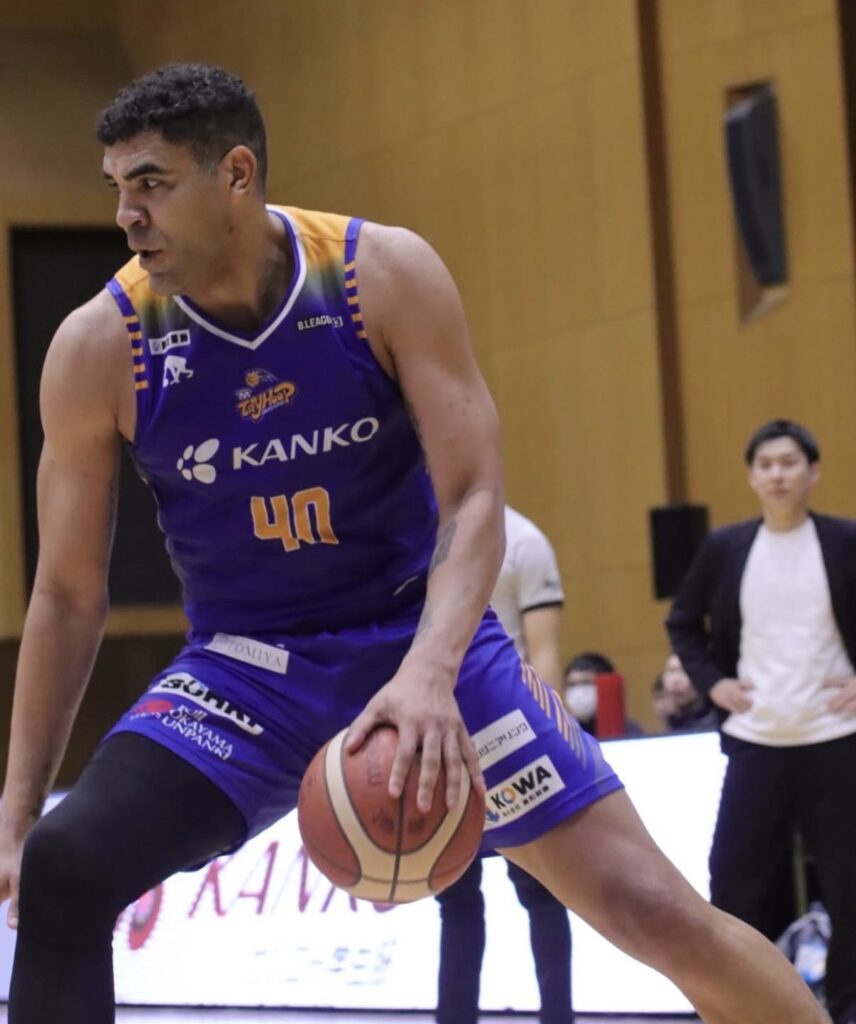
Scott tells me that although he would “hear some off-putting stuff about what it was to be LGBTQ” in “a lot of locker rooms,” he never felt biphobia directed at him back in Colorado. That wasn’t entirely the case when he transitioned to the pros in Japan. “There was a season where, because there were different rumors tied to my sexuality, I received zero offers to play for a team,” he says. Not yet out of the closet, Scott felt he couldn’t combat the rumors publicly without doing more damage to his career. “The system is just not set up to help men be able to live their truth, and that starts at the youth level.”
Still, “being out and playing has been one of the most rewarding experiences,” he says. Scott announced that he was bisexual on social media, intentionally choosing to skirt Japanese media, which leans conservative. Since then, “I’ve gotten to almost have it all in a way I didn’t even think was possible four or five years ago.” Part of “having it all” has been success on the court, with Scott being one of his league’s top five players in rebounds and averaging a 62.4% field goal percentage. He also learned he “wasn’t alone,” he says. “There are a lot of people within the industry that are searching for a way to have both their truth and to be able to just do their sport.”
So far, that search has not borne fruit within the Big Four, where even straight players feel a pressure to hew to traditional roles. Granelli, who specializes in the study of sports culture and fandom, cites NFL player Caleb Williams, who is straight, as an example of just how little room men are given to express themselves outside the “acceptable” constraints of masculinity. “Williams comes into the NFL, and there’s such a focus on him painting his nails,” Granelli says. Williams, who is now a quarterback for the Bears, received a lot of negative feedback and questions for his personal style, which included themed nail sets; rapper Lil Wayne commented, “We just lost a playoff game to a [expletive] w purple nails we fkn suck” after the Packers lost to the Bears in January. “When men challenge the expected presentation of an athlete in any way, there is immediate backlash,” Granelli says. Fans eventually came around to Williams and his nails, but only after he’d put on a winning display of masculinity on the field.
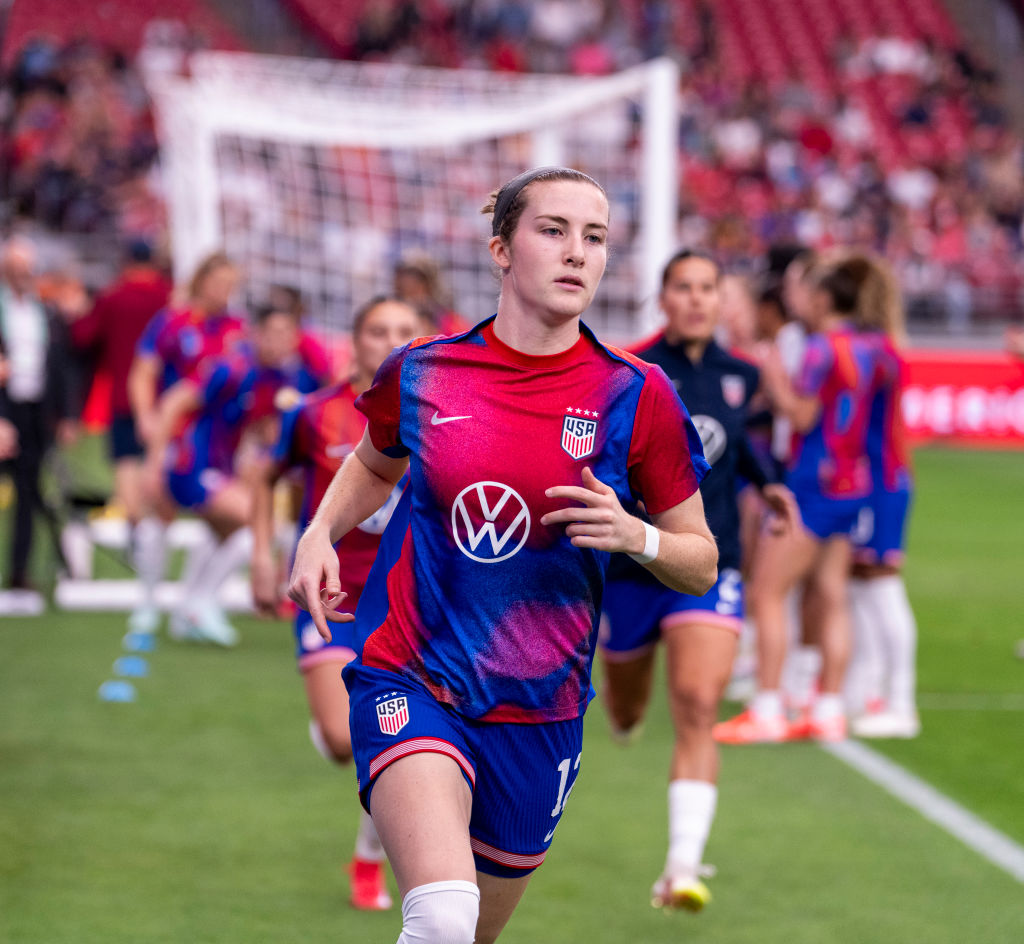
Conversely, women athletes have created an entirely different space. “There’s a strong understanding [in women’s sports] that there’s a huge spectrum in terms of player sexuality,” says professional soccer player Tierna Davidson. A center back for Gotham FC, Davidson has been an out lesbian for her entire career and married her former teammate Alison Jahansouz in 2024. She says that women’s soccer specifically “has fostered a safe and welcoming environment for queer people”; sexual orientation was “never something I was worried about.” Davidson also gives some of the credit for this openness to fans. “If you look at the birth and nurturing of women’s soccer in the U.S., there were so many strong, queer characters in that story,” she says. Women’s soccer “attracts fans that feel seen and represented, and it helps make our environment more open and welcoming. We don’t always get it right, but fans definitely see it and want to be part of it.”
On the men’s sports side, that fan-player relationship is just as key in determining how an athlete is received. “It only takes one moment, one small thing, for fans to feel a certain disconnect with a player and turn against him,” Granelli explains. “I mean, look at Josh Allen.” Allen, the beloved (straight) quarterback of the Buffalo Bills, had long been considered by fans as “one of us,” but upon his marriage to actress Hailee Steinfeld, a small subset of the Bills Mafia started calling him a sellout. “Dating someone from Hollywood is what makes him not like us?” Granelli, a lifelong Bills fan, groans. “He’s never been one of us! He’s 6’5” and has more talent than we’ll ever understand. But that’s all it takes for some people: One moment of not being able to identify with a player.”
Reimagining men’s sports to be more inclusive then becomes a chicken-and-egg quandary. Whose openness—an athlete’s, a fandom’s, or an organization’s—must come first to secure the openness of the other in a system that is built to be symbiotic? We are meant to see our most aspirational selves in athletes, and they, in turn, are made to feel secure and valued by our love. But too often the love of a fan does not extend to the fullness of an athlete’s persona, and if an athlete knows he cannot be fully himself and still receive that love, then why should he risk it? Women and trans athletes have more room to negotiate that risk because it is ever-present—they open their eyes in the morning, and that risk looms over them. But for men, who are shielded from bias by their athleticism and an assumed idea of masculinity, coming out means asking them to give up the one shred of safety they may feel they have.
Scott is hopeful that, eventually, that will all change. “There’s that adage that real men don’t cry,” he says. “But the beautiful part about sports is the passion, the anger, the disappointment, the tears and, yes, sometimes crying…[when I was closeted] I didn’t want to be exposed or have others think I was weak. But since coming out, I find myself stronger for walking in my truth.”