
New Abortion Chaos in the ER
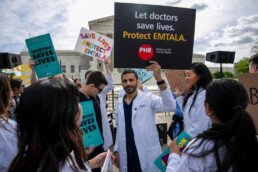
  June 5, 2025 Greetings, Meteor readers, My two loves, Aryna Sabalenka and Coco Gauff, will be facing off at the French Open this weekend. While I cannot decide who to root for, Gauff taking the trophy would be historic, as an American has not won the French Open in a decade. I’m willing to be pro-America this one time.  In today’s newsletter, we try to wrap our heads around the Trump administration’s latest anti-abortion move. Plus, your weekend reading. Bonne nuit, Shannon Melero  WHAT'S GOING ONThe chaos is the point: On Tuesday, the Trump administration rescinded guidance the Biden administration had issued in 2022 explicitly stating that hospitals are to provide abortion care to patients in emergency medical situations, even if the hospital is located in a state with an abortion ban. The guidance came just as news of desperately ill pregnant women being turned away from hospitals was beginning to emerge, and it clarified the Emergency Medical Treatment and Active Labor Act (EMTALA), a 1986 law that requires hospitals receiving federal funding to provide stabilizing care for any individual experiencing a medical emergency. This week, the Center for Medicare and Medicaid Services said in a statement that the 2022 guidance did “not reflect the policy of this administration” and that it would “work to rectify any perceived legal confusion and instability created by the former administration’s actions.” Which is ironic, because the thing currently creating massive confusion among providers, patients, and the media is the rescission of the guidance, not the guidance itself. Allow us to clarify: EMTALA has not been repealed; it is still the law of the land and, should you need care in an emergency, your nearest hospital is obligated to provide it or to transfer you to a facility that can—yes, even if that care includes an abortion. “I want patients to know that nobody should be denying you care because of this memo,” Dr. Dara Kass, a former regional director at the Department of Health and Human Services and an emergency physician in New York, tells The Meteor. And if you do think your providers violated EMTALA, she notes, you can still issue a complaint. So what’s the purpose of the memo, if it doesn’t change the law? Trump may just be looking for a way to pay lip service to the anti-abortion movement. And the memo’s specific language may also be strategic, as Jessica Valenti points out in her newsletter: The CMS memo says EMTALA still requires treatment of “emergency medical conditions that place the health of a pregnant woman or her unborn child in serious jeopardy.” The phrase “unborn child” (which also appears in EMTALA) hints at fetal personhood and sets up a showdown between a woman who has a life-threatening condition, like an ectopic pregnancy, and her fetus. It’s all very chaotic. And chaos is the point. “This action doesn’t change hospitals' legal obligations,” Fatima Goss Graves, president of the National Women’s Law Center, said in a statement, “but it does add to the fear, confusion, and dangerous delays patients and providers have faced since the fall of Roe v. Wade.” Dr. Kass adds that while the 2022 guidance “signaled to doctors that the government had their back,” the rescission tells doctors, “You’re on your own” and erodes their confidence that the government will protect them. There will inevitably be more “physicians who are not sure what they’re allowed to do,” she says, “and therefore they might do less.” Meanwhile, more pregnant patients will suffer as doctors are forced to contend with legal quandaries under pressure. We’ve already seen what happens when emergency rooms are slow to act; Amanda Zurowski, Kaitlyn Joshua, and Amber Nicole Thurman have each paid the price for a hospital’s confusion over what doctors are allowed to do—Thurman with her life. For better or worse, Dr. Kass doesn’t see this latest move as dramatically changing “the care on the ground.” (Indeed, even with the 2022 guidance in place, there have been dozens of documented cases of pregnant women being denied emergency care or treated negligently.) Rather, she sees this as “a distraction from what we need to do—which is to reinstate access to abortion services in every state.” —Shannon Melero and Nona Willis Aronowitz AND:
 IT'S BACONEGGANDCHEESE YOU CRETIN.
 WEEKEND READING 📚On mothers and daughters: Molly Jong-Fast unflinchingly traces the mental decline of her mother, iconic feminist novelist Erica Jong, in this excerpt from Jong-Fast’s memoir How to Lose Your Mother, which came out last week. (Vanity Fair) On always being here: It’s time to learn about the key trans figures in history that get cut out from school lessons. (Erin Reed in the Morning) On Dyke Day: How a beloved Pride tradition stays alive without being beholden to flipflopping corporate sponsors. (LA Public Press) On beauty: Meteor collective member Raquel Willis reminds us that, against all odds, trans people are here to stay and will still be “seen in all of our glory.” (Atmos)  FOLLOW THE METEOR     Thank you for reading The Meteor! Got this from a friend? |



Is the Last Abortion Haven in the Caribbean Closing?
How U.S. influence has been quietly reshaping access in Puerto Rico
By Susanne Ramirez de Arellano
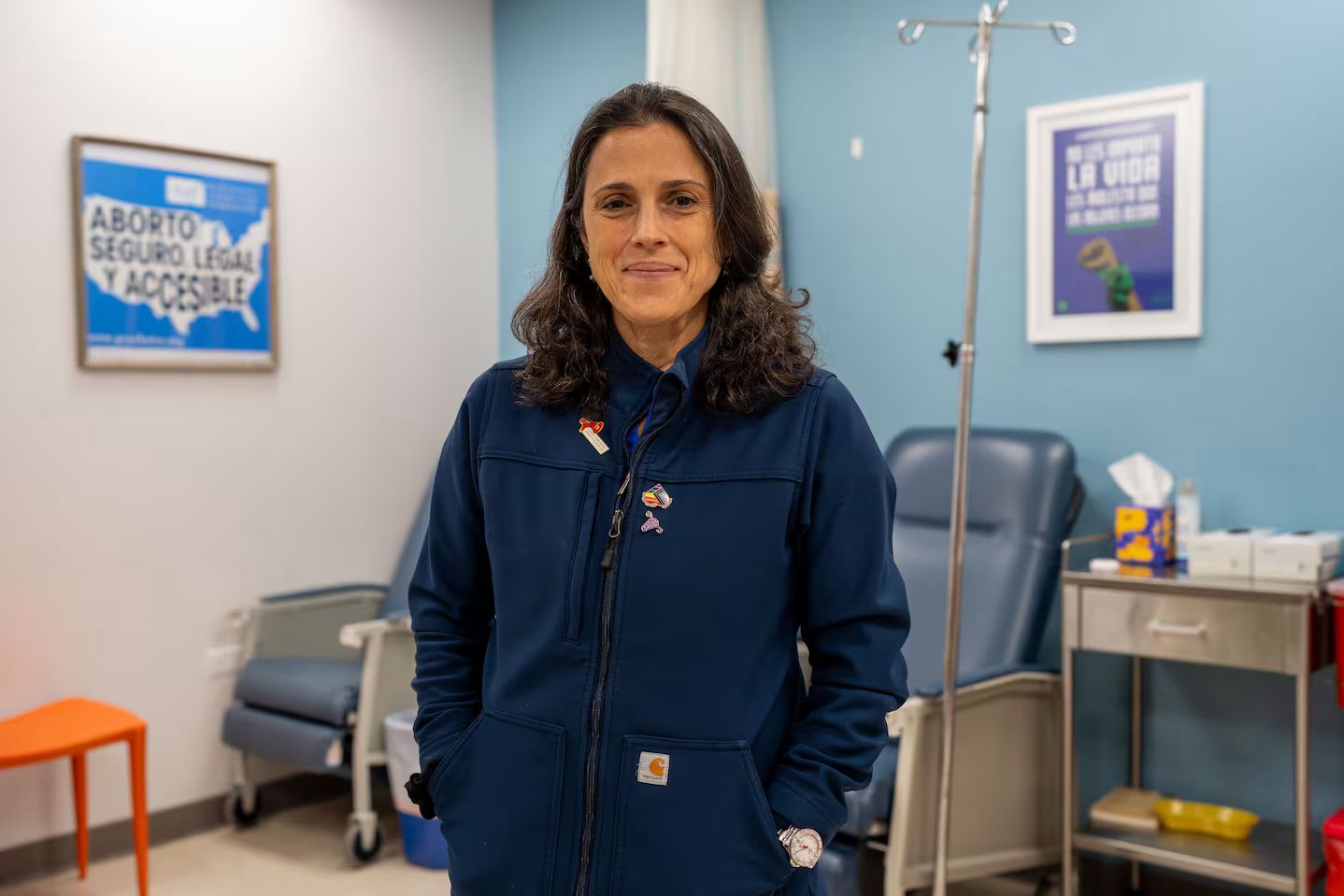
Dr. Yari Vale's petite frame is no longer weighed down by the nine-pound bulletproof vest she wore when anti-abortion threats increased after the end of Roe v. Wade, but she hasn't gotten rid of it. The security guard at Dr. Vale's Darlington Medical Associates clinic in Río Piedras is no longer at the door; still, she has him on standby. With the return of Donald Trump to the White House and Jenniffer González, a Trump devotee, in the governor’s seat, Dr. Vale is bracing for an escalation in the fight to safeguard reproductive rights in Puerto Rico.
The predominantly Catholic island is “on paper one of the most accessible places in the Western Hemisphere” to obtain an abortion, NPR reported just after Roe was overturned. But with the U.S.'s shift toward right-wing Christian nationalism, that could be changing.
Dr. Vale, an OB/GYN at the Darlington clinic—the only one of the island's four that does late-term abortions—is on the frontline of the fight to keep what’s happening in the United States from happening in Puerto Rico, euphemistically called an unincorporated territory (it's a colony, really). It's a battle that, she says, feels like “throwing a firecracker up in the air, and it's just smoke and no one hears you.” But she persists, knowing that the first line of defense is the clinics.
The Legacy of Pueblo v. Duarte
For years, Puerto Rico has been known for its liberal abortion laws: The right is enshrined in the island’s constitution (which exists separately from the U.S. Constitution) and is protected by the right to intimacy under Puerto Rico’s penal code. Abortion is legal on request if it is performed (or prescribed) by a physician to protect the pregnant woman’s life or health—and health includes mental health. There are no limits (abortion may not be banned before viability; post-viability abortions are permitted for the preservation of the pregnant person), and the procedure doesn't require the consent of partners, ex-partners, or, in the case of minors, parents.
However, these laws have their roots in a dark colonial history. In 1902, four years after invading the island, the U.S. enacted policies to control the population, although abortion was still prohibited without exception. Then, in 1937, colonialists who wanted to further limit the Puerto Rican population passed legislation based on racist neo-Malthusian and eugenic theories, virtually legalizing abortion on the island if it was to protect the life and health of the patient. These changes later facilitated clinical trials of the contraceptive pill and mass coerced sterilizations—a procedure that became so common that it was known among Puerto Rican women as “la operacion.”
In 1980, a case involving a minor and her doctor went even further, and set up modern abortion law in Puerto Rico. In the landmark Pueblo v. Duarte, Dr. Pablo Duarte Mendoza, who had performed an abortion on a 16-year-old girl in her first trimester, was sentenced to four years in prison. He appealed, and the Puerto Rican Supreme Court agreed with him, stating that through the island’s penal code, abortion is legal if it is performed to save the woman's life or health, including mental well-being.
Like many things on an island impacted by colonialism, abortion access is still limited for everyday Puerto Ricans. A surgical abortion costs $250, and a medication abortion between $300 and $350; meanwhile, about 43% of Puerto Ricans live below the poverty line, and insurance plans on the island do not cover abortion. And in addition to cost, religion and social stigma—the “what-will-my-family-say” factor—serve as deterrents for many women.
The Dobbs Effect
When 2022’s Dobbs v. Jackson Women’s Health Organization decision removed the constitutional right to an abortion in the U.S., it didn’t automatically affect rights in Puerto Rico (unlike on the mainland, where “trigger bans” were in place). In fact, some U.S. women began to travel to Puerto Rico from states with restrictive abortion laws, such as Florida. It was the return of the “San Juan holiday.”
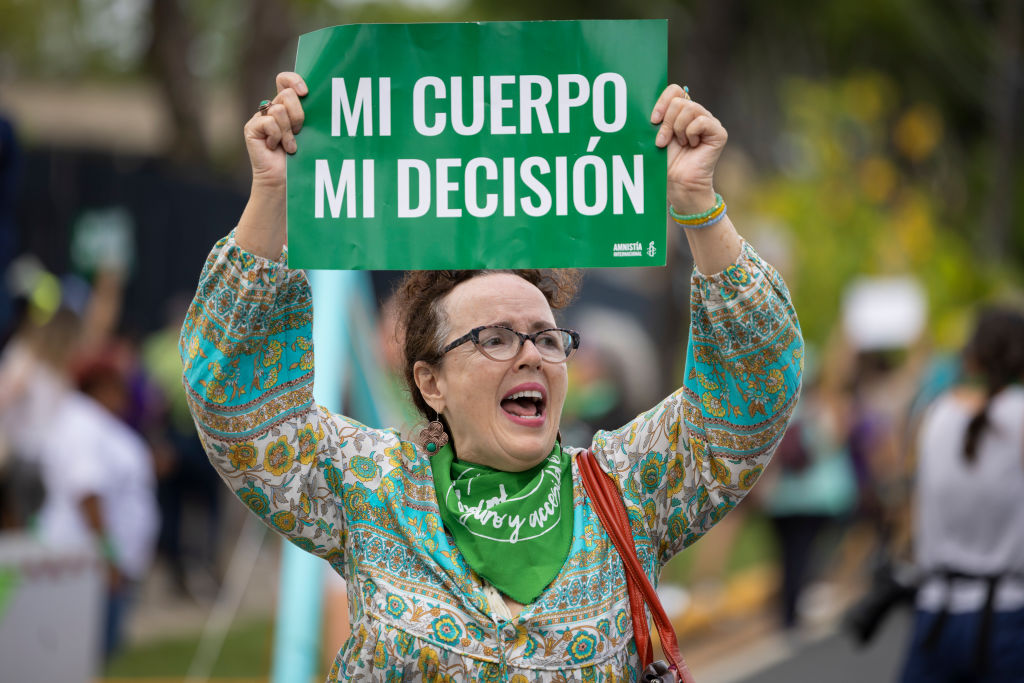
But Dobbs did embolden conservative Puerto Rican politicians and pro-life groups, who saw a window of opportunity and seized it. Shortly after the decision, the right-wing religious party Proyecto Dignidad (PD) adopted the U.S. anti-abortion lobby's blueprint and tried to push through several bills to curtail access to abortion, and even criminalize it. They argued that the end of Roe implicitly negated Pueblo v. Duarte. The Senate ultimately defeated the bills; according to many Puerto Rican legal experts, Pueblo v. Duarte rests on the Puerto Rican penal code, which has no analogy in the U.S. Constitution—and should, therefore, not be affected by Dobbs.
An Ascendant Right-Wing Movement
Abortion-rights advocates warn that efforts to criminalize abortion in Puerto Rico are not over. Traditionally, “the issue of abortion in Puerto Rico has not been the overriding controversy that the anti-abortion and ultra-religious politicians want to make it out to be now,” says Senator Maria de Lourdes Santiago, a lawyer and Senator for the Puerto Rican Independence Party (PIP). But, she says, the anti-abortion campaign orchestrated by Proyecto Dignidad now "magnifies the issue to demonize it."
Founded in 2019, PD has capitalized on its nexus of Catholic and Evangelical churches; the erosion of the traditional duopoly of the pro-statehood New Progressive Party (PNP) and the Popular Democratic Party (PPD); and an increasingly ultra-conservative sector of the population urging a return to traditional values. Even though the party got only seven percent of the vote in the 2024 elections, its influence is strong island-wide, with a campaign that now hinges on the abortion issue.
Proyecto Dignidad Senator Joan Rodriguez Veve, a canon lawyer and face of the populist religious right, has vowed to continue fighting to restrict access to abortion. She recently introduced legislation, PS 297, restricting access to abortion for adolescents under the age of 15. The bill is a carbon copy of one that the Puerto Rican House rejected a year ago. It calls for jail time for any doctor or person who assists a minor in getting an abortion, and a slew of other measures, including forensic interviews of minors seeking an abortion.
The Senate approved the bill in February, and almost everyone I spoke to—politicians, legal experts, and abortion doctors—told me they believe it will pass, even though both pro-abortion and some anti-abortion groups have, for different reasons, voiced their opposition to the measure.
A New Generation Stands Up
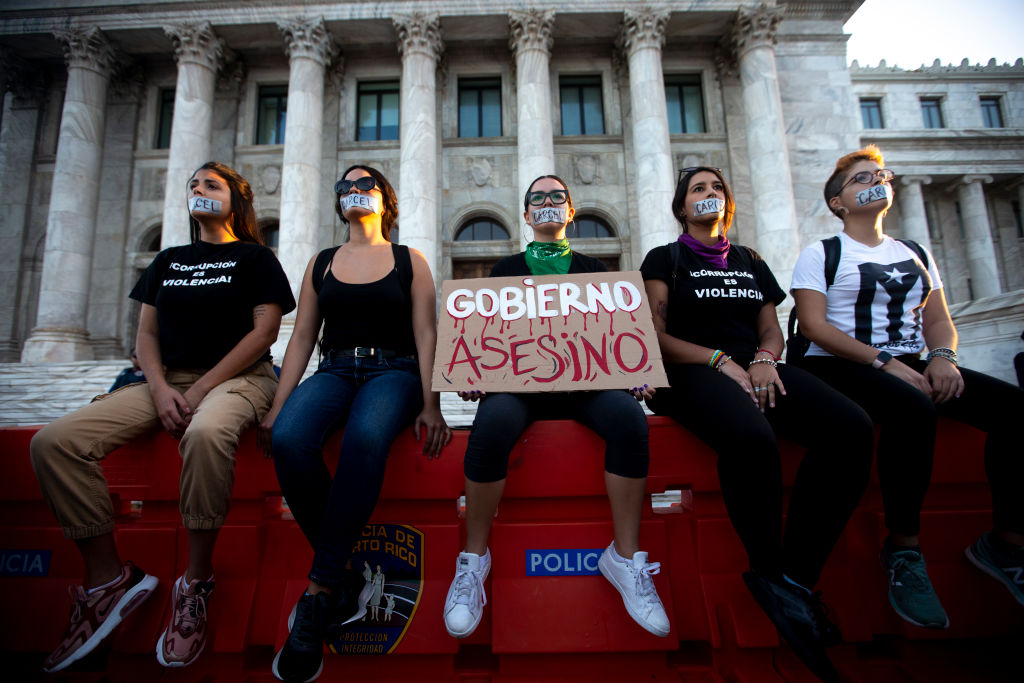
At the same time that PD is gaining influence, attitudes about abortion are shifting with the younger generation. Rising numbers of people support abortion rights, and young people have galvanized around the issue, taking to the streets in protest and amplifying groups like Aborto Libre Puerto Rico, Profamilias, and Proyecto Matria, among others. It’s a generation that, unlike its mainland counterpart, grew up without a sense of abortion as a wedge issue.
Most recently, health professionals and activists have spoken out against PS 297, warning that the bill puts women and girls in danger. “What's going to happen here is that young women and those most vulnerable will seek out illegal abortions and go to the places where illegal drugs are sold to purchase abortion pills, many cut with fentanyl, in doses that are not recommended,” says Puerto Rican feminist activist Alondra Hernández Quiñones.
As religious and conservative groups gain traction in Puerto Rico, Dr. Vale worries that a girl of 15, whose parents are ultra-conservative and refuse to consent to her abortion (as the new legislation would require), would be forced into motherhood. Clinics like Darlington have stopped seeing patients younger than 15 at all, and Dr. Vale fears a future where abortion, currently a safe and regulated procedure, “will once again be a public health problem…where we don't know how many women end up in emergency rooms due to an [unregulated] abortion gone wrong.”
“This worries me a lot,” says Isharedmie Vazquez, a 17-year-old Puerto Rican student. “It seems incredibly wild to me that instead of guaranteeing secure options [for an abortion], what they are looking for is to criminalize it and force women to assume a responsibility for which they are not prepared. It's unfair that they want to take away the right to decide about our lives.”
 Susanne Ramírez de Arellano is an author on race and diversity, opinion writer, and cultural critic. The former news director of Univision, she writes for NBC News Think, Latino Rebels, and Nuestros Stories, among other outlets.

UK Cops Take an Interest in Miscarriages
  May 22, 2025 Greetings, Meteor readers, Today’s date is a numeric palindrome, and something about that is just so utterly satisfying. I hope writing out 5/22/25 multiple times today was as good for you as it was for me. In today’s newsletter, we take a trip across the pond and examine the UK’s guidance on how police officers should investigate women after pregnancy loss. Plus, your weekend reading list. 52225, Shannon Melero  WHAT'S GOING ONABCAN (All British cops are nosy): Earlier this week, the UK’s National Police Chiefs’ Council (NPCC) released new guidance on how officers should investigate stillbirths, “unlawful termination,” and infant deaths immediately after birth. Part of the guidance–which, according to the Observer, was apparently issued without consulting any legal experts or doctors–states that if officers suspect an illegal abortion has taken place, they should seize devices and look through women’s internet histories, including their fertility trackers and Google searches. In other words: Even if you have a spontaneous miscarriage in the UK, police can search your belongings and phone for evidence of abortion. “The new guidance is shocking,” Dr. Ranee Thakar, president of the Royal College of Obstetricians and Gynaecologists (RCOG), told the Observer. “Women in these circumstances have a right to compassionate care and to have their dignity and privacy respected, not to have their homes, phones, computers, and health apps searched, or be arrested and interrogated.” This is all the more startling when you consider that abortion is legal in the UK—up to 24 weeks, with some allowances for later-term abortions if the life of the mother is at risk. The term limits for taking abortion medication at home are much shorter, and that is only legal up to 10 weeks, leaving any women who self-manage an abortion beyond that period subject to investigation. The NPCC is defending the new guidance, claiming that searches will only be conducted if there is a credible belief that a crime has taken place and that it’s not routine to launch an investigation after pregnancy loss. Still, investigations like these are on the rise. Last year, the BBC found “an unprecedented number of women” were being investigated on suspicion of unlawful abortion; six women in the UK have been prosecuted for abortion-related charges in the last couple of years, compared to only three reported convictions in the previous century and a half. Recent cases include that of Carla Foster, who was jailed after taking abortion pills after the legal timeline, and of Nicola Parker, who was unanimously acquitted of unlawfully inducing a miscarriage just weeks ago. So why this renewed interest in policing pregnancy loss in the UK? Blame us, or to be clearer, the U.S. These investigations have neatly coincided with the fall of Roe, and in January, the international charity MSI Reproductive Choices outlined how Trump’s re-election would further embolden anti-abortion politicians to push more misinformation and spend more on anti-abortion messaging. That prophecy was fulfilled a few weeks ago when conservative MPs in the UK started delaying and picking apart a bill introduced by the Labour Party to decriminalize abortion throughout the UK, all while a teenager, Sophie Harvey, was on trial for an illegal abortion. One Labour MP, Tonia Antoniazzi, thinks that even with the U.S.’s bad influence, the UK is poised to protect abortion. “I am confident that…my colleagues will agree that never again should a woman be prosecuted for ending her own pregnancy in England and Wales,” she told the BBC. (Another point in her favor: Nearly 90 percent of people in the UK are pro-choice.) A vote on two decriminalization amendments is expected to be held this summer. AND:
  WEEKEND READING 📚On unsolved mysteries: Roanoke College in Virginia has seen a surge in cancer cases over the last 17 years—disproportionately affecting women. What the heck is going on over there? (Airmail) On a water war: Climate change has disturbed rainfall patterns in the West Bank, which wouldn’t be such a problem if Israel weren’t also weaponizing water. (Atmos) On eternal youth: Sofia Coppola revisits The Virgin Suicides. (i-D)  FOLLOW THE METEOR Thank you for reading The Meteor! Got this from a friend? |


Doctors Finally Admit IUDs Hurt
  May 21, 2025 Greetings, Meteor readers, Last Friday, I had the immense pleasure of seeing Real Women Have Curves on Broadway. In a world where people are being violently rounded up and inhumanely detained, it was reinvigorating to watch a story so steeped in Latinx culture and the resilience of immigrant women. I laughed, I cried, I developed a crush on Claudia Mulet, and I vowed to be louder about the injustices of our anti-immigrant regime.  IF ALL THESE WOMEN DON'T GET TONYS, I WILL RIOT IN THE STREETS. (VIA GETTY IMAGES) In today’s non-musical-theater news, we explain the latest “discovery” about IUD insertion. Plus, a new law banning revenge porn is finally on the books. No soy de aquí, pero tu tampoco, Shannon Melero  WHAT'S GOING ONBetter late than never: The American College of Obstetricians and Gynecologists (ACOG) has released new recommendations around cervical and uterine procedures, most notably IUD insertion. On the heels of similar guidance released by the CDC last year, ACOG has discovered not only that IUD insertion can be excruciatingly painful to patients, but that there is an “urgent need” for clinicians to offer pain management. Sorta like when Columbus discovered America. And by that, I mean many of us were already here. Women have been complaining about the pain caused by IUD insertions for years, and the people doing the inserting famously underestimate it; one study from 2014 found that while doctors were rating the pain of IUD insertion a 35 out of 100, patients ranked it at more like 65. This probably comes as no surprise to anyone who has either visited a gynecologist or been on the internet: Women’s pain, particularly around reproductive health, is often dismissed as either exaggerated or simply part and parcel of ✨being a woman✨. Think Serena Williams nearly dying in childbirth after her pain was ignored, or the women at the Yale fertility clinic who were unwittingly undergoing egg retrievals without pain relief and told their agony was normal. Unlike the CDC recommendation, ACOG also recommends pain management for a variety of procedures like endometrial biopsy, polypectomy, hysteroscopy, and certain kinds of imaging. And ACOG acknowledges structural inequities: “The way pain is understood and managed by health-care professionals is also affected by systemic racism and bias of how pain is experienced,” its findings note. “Historically, Black patients have received less analgesics than white patients, and women have received less attention to their pain than men undergoing similar procedures.” This change, of course, does not guarantee painless IUD insertions; there’s only so much lidocaine can do. But the guidance is important because it encourages doctors to have conversations they might have once deemed unnecessary, including ones around anxiety that patients might feel about undergoing some procedures (anxiety which ACOG suggests can be addressed with medication). As someone who was prescribed Xanax to make it through a dental procedure, I think it’s wild that stronger medications aren’t regularly offered when someone burrows a medical device up your cervix. So if you’ve got an appointment coming up, be vocal! We’ve already suffered enough–we deserve the good drugs. AND:
 REGINA VENTURA OUTSIDE OF THE COURTHOUSE. (GETTY IMAGES)
 CLARK AND REESE MEETING AT MID-COURT AHEAD OF THE GAME AND THE FOUL HEARD ROUND THE WORLD. (VIA GETTY IMAGES)
 FOLLOW THE METEOR     Thank you for reading The Meteor! Got this from a friend? |


Is “Divine Intuition” a Health Fix?
  May 8, 2025
Greetings, Meteor readers, It’s my daughter’s third birthday this weekend, and she has requested–in her exact words—“a pink beautiful sparkly glittery jewel-y dress” so she can look “extra-princess-y!!!” It really does start this young, y’all. Time for me to revisit Peggy Orenstein’s Cinderella Ate My Daughter. Today we’re digging into Trump’s new and disconcerting pick for Surgeon General. Plus, a new (American!) pope, and an interview with author Amanda Hess about how technology mediates our experience of pregnancy and motherhood. Happy sparkly Mother’s Day to me, Nona Willis Aronowitz  WHAT'S GOING ONThe wellness-to-MAGA pipeline: Did you think the stream of horrifying Trump nominees was over? Not quite. Yesterday, President Trump announced that he was withdrawing his pick for Surgeon General, Dr. Janette Nesheiwat, and replacing her with far-right wellness influencer Dr. Casey Means. In his announcement, Trump praised Dr. Means by touting her “impeccable ‘MAHA’ credentials,” and he isn’t wrong: The nominee and her brother, former lobbyist Calley Means, are vocal allies of Health and Human Services secretary Robert F. Kennedy, Jr. and were close advisors during his 2024 presidential bid. But here’s the real issue: Dr. Means–who has an inactive medical license and dropped out of her surgical residency program–regularly expresses skepticism of mainstream medicine, including vaccines, fluoride, raw milk bans, and birth control, which she has called a “disrespect for life.” (In fact, she’s become the nominee because her predecessor, Nesheiwat, had been targeted by Trump confidant Laura Loomer and other far-right activists for praising the COVID vaccines.) She frequently casts doubt on the value of science itself: “Of COURSE we should trust our heart intelligence and divine intuition instead of BLINDLY trusting ‘the science,’” Dr. Means wrote in an Instagram post last year. Putting “science” in scare quotes…not exactly a reassuring sign.  It remains to be seen whether Dr. Means will be confirmed by the Senate; Trump’s nomination of Dave Weldon for CDC head was jettisoned after concerns over Weldon’s claims that vaccines cause autism. (They don’t.) But assuming she does get the job, the question becomes: What do Surgeon Generals actually do? They aren’t directly involved in implementing health policy, but they can often set the government’s priorities. C. Everett Coop, Ronald Reagan’s Surgeon General, was famously influential in changing the public’s view on smoking and, according to the New York Times, “single-handedly pushed the government into taking a more aggressive stand against AIDS.” Some have tried pushing the limits: When Surgeon General Joycelyn Elders gave the thumbs up to masturbation and encouraged Americans to “get over their love affair of the fetus and start worrying about children,” President Bill Clinton fired her. More recently, President Joe Biden’s Surgeon General, Vivek Murthy, made waves when he called for a warning label on social media. In other words: Surgeon Generals don’t make laws, but they are a major source of information and influence, which makes Dr. Means’ nomination all the more worrying. Will she further legitimize vaccine skepticism and accelerate measles outbreaks? Will she give a boost to raw milk amid a bird flu epidemic? Will she stigmatize birth control at a time when it’s already under attack? Time to once again call your senators; here’s a useful script from 5Calls. AND:
 POPE LEO AT HIS PREDECESSOR’S FUNERAL LAST MONTH. VIA GETTY IMAGES
  Three Questions About….Modern MotherhoodAmanda Hess’s new memoir interrogates how technology changes the experience of early parenting and pregnancy.From the moment her period app detected she was pregnant, journalist Amanda Hess experienced motherhood through the prism of her phone, from chirpy pregnancy apps to momfluencers on Instagram. Then, at 29 weeks pregnant, her son was diagnosed with a rare genetic condition called Beckwith-Wiedmann Syndrome, and everything changed. In her new memoir, Second Life, she grapples with deeply held assumptions–both society’s and her own–about normalcy, public performance, and disability. Let’s talk about that pivotal moment when your son is diagnosed with BWS. Can you describe some ways the diagnosis changed you? I did not realize to what extent I had absorbed all of these cultural messages about what pregnancy, motherhood, and babies are supposed to be like. For such a long time, I didn’t even care about whether or not I became a mom. But when I became pregnant, I wanted to make sure I wasn’t messing it up. I internalized this idea that it’s a woman’s job to reproduce healthy, normal, productive citizens–although I never would have put it that way. I was going to these sites and apps not even for advice–I didn’t do most of the stuff they suggested–but more to understand the role I was expected to play, even if I wasn’t necessarily complying. And then when my child was diagnosed late in my pregnancy, it struck me as a tragic thing to happen, as a crisis. Most pregnancy technology is geared toward a “normal” pregnancy, so the moment there was the slightest deviation in my pregnancy, I was out of the “normal” zone and initially felt very abandoned. It was only after my son was put in this human context, after he was born, that I could see him as my son and not a medical idea. And ironically, the internet helped with this: I found some other, helpful online communities–ones that were comprised of real human beings who were convening around BWS (as opposed to some app that only knew my due date and nothing else about me). As you mention in the book, pregnancy has long been a site of state surveillance, but that fact feels even more true lately. Does your research take on a more sinister cast in an era when pregnancy is increasingly criminalized? Yes, there is this ramping up on pregnancy surveillance and also surveillance of people with disabilities. Our medical information is seemingly being seized by government workers we don’t even know. What’s clarifying is that even as it’s changing technological shape, the ideologies are really similar to eugenic [and pro-natalist] thinking that were in vogue 100 years ago. I think we need to balance the new threats–the way all of our data can be scraped by young programmers who are working for Elon Musk–with the knowledge that [throughout American history] our doctors and hospitals have been giving up pregnant people’s information and long been using it to criminalize pregnancy and remove their children. Still, I do have more specific fears for my actual family than I did before. My book talks about how protective wealth and status and whiteness can be in these situations, but the intensity of surveillance now on anyone who has any kind of difference is at a new level, and it really implicates my family. One of the most absorbing parts of the book is when you talk about your obsession with the free-birthing movement, where women give birth without any medical intervention or prenatal care. What was so intriguing to you about them? On the one hand, our experiences of pregnancy could not be more different. My pregnancy ended up being intensely medically monitored: I gave birth in a specific hospital so we could have access to this higher-level NICU–which I came to see as such a blessing. This group of women were on the opposite extreme; many of them don’t get traditional prenatal care. But there were places where our two experiences overlapped. I had this overwhelming need to try to control the uncontrollable by deep-Googling medical information. With them, it was much more about these holistic practices like sunbathing or whatever, but we were both practicing these different modes of control. And those two practices and ideologies both have this tenuous relationship to disability. In this highly technological space I was in, I saw a lot of erasure of the reality of disability, and the assumption that you’d want to avoid it at all costs…[but] then there was this idea in the natural-birth communities that any medical care was unacceptably unnatural, and that some children are fated to die in the womb or at birth because it’s what God intended. Both are eugenic ideas, in their own ways.  WEEKEND READING 📚On the new normal: Everyone is cheating their way through college with ChatGPT, and professors have no idea what to do about it. (New York Magazine) On realism: Writer and illustrator Mona Chalabi explains how she created the hijabi mom character in the animated TV show #1 Happy Family USA. (The Guardian) On mifepristone: You may have been pleasantly surprised to hear that the Trump administration recently defended the abortion pill against a lawsuit. Don’t get too excited, warns law professor Mary Ziegler. (Slate) An earlier version of the headline contained an error; Dr. Means wrote of “divine intuition,” not “divine intervention.”  FOLLOW THE METEOR Thank you for reading The Meteor! Got this from a friend? |


There's No "Fetus Debris" In Your Vaccine
  May 1, 2025 Howdy Meteor readers, A reminder that as of next Wednesday, you will need a REAL ID for air travel within the U.S. Why am I bothering with this PSA? Because it’s a pain in the ass: I wasted several hours of my own life at the motor vehicle commission, only to be told that the stacks of paperwork I brought were not enough to confirm my identity. Apparently, that’s a pretty common problem, especially for married women, so…best of luck out there. In today’s newsletter, we parse through the most dangerous medical lies of the week. Plus, a long overdue honor is bestowed, and your weekend reading list. Standard ID girlie, Shannon Melero  WHAT'S GOING ONPure malarkey: 👏🏼Stop 👏🏼spreading 👏🏼misinformation 👏🏼about 👏🏼 our 👏🏼health. This week, two major instances of misinformation made the rounds. First up is Secretary of Health and Human Services Robert F. Kennedy, Jr.’s claim that MMR (measles, mumps, and rubella) vaccines contain “aborted fetus debris.” To be clear: These vaccines do not, at all, contain parts of fetuses or fetal cells. What he is referring to is the widely accepted and longstanding use of fetal cells to develop vaccines, which involves introducing a virus or bacterium to human cells and then inactivating or killing the virus. The original fetal cells used to develop the vaccines we now rely on were harvested in the 1960s from two elective abortions. Like all cells, they’ve continued to multiply over the years, and scientists have been using the same line of cells for generations. But as the vaccine education center at the Children’s Hospital of Philadelphia explains, no vaccine injected into a person contains fetal cells. After the vaccine viruses are grown, the manufacturers “purify the vaccine viruses away from the cells.”  So why peddle this falsehood at all? RFK Jr. is a notorious flip-flopper on vaccines. One week, he supports them, the next he doesn't, but no matter what, he casts baseless doubt on their efficacy at every turn—even in the middle of a measles outbreak in Texas. What better way for a vaccine skeptic to dog-whistle conservative-leaning parents than to say there are dead babies floating in the vaccine liquid? (So far, two children have died in Texas as a result of the outbreak, which is two too many.) On to the next big lie of the week. A new “study” titled “The Abortion Pill Harms Women” was released by the conservative think tank Ethics and Public Policy Center, which advertises itself as “working to apply the riches of the Jewish and Christian traditions to contemporary questions of law.” I will not provide the link to the actual study because, as we’ve written before, we should not share links to false or misleading information for any reason. But that didn’t stop Fox News from doing this tomfoolery. Deep breath. Here are the facts: This “study” was not conducted by doctors, whereas the rigorous clinical testing for mifepristone’s FDA approval was conducted by multiple doctors over years. (We spoke to two of them last year.) Instead, it was compiled by data analysts reviewing health insurance claims. What they say they found by reviewing claims’ procedure codes is that nearly 11 percent of women who used mifepristone had at least “one serious adverse event” in the 45 days after taking the pill. But as journalist Jessica Valenti points out, the study does not provide evidence that the “serious adverse events” are directly caused by or even related to the use of mifepristone—they simply happened within 45 days of use. And these “serious adverse events” are loosely defined; for instance, according to Valenti, they include “hemorrhaging,” which could include the heavy bleeding that can be normal after a medication abortion. So why even talk about this “fart” of a study, as Valenti hilariously characterized it? Because it calls on the FDA to “further investigate the harm mifepristone causes to women,” on the grounds that the pill is “considerably more dangerous to women than is represented” on the label. Politicians have already started to parrot that narrative. The new FDA head, meanwhile, is anti-abortion. For the kabillionth time: Abortion pills are safe! AND:
 MAHDAWI AT A CAMPUS PROTEST IN 2023. (VIA GETTY IMAGES)
 LT. COLONEL ADAMS (FRONT LEFT), A MAJOR AT THIS TIME, WITH CAPTAIN MARY KEARNEY BEHIND HER AS THEY INSPECT THE FIRST RECRUITS TO THE 6888 IN 1945. (VIA GETTY IMAGES)  WEEKEND READING 📚On bad buys: Women are still learning about the dangers of multi-level marketing schemes the hard way. (The Cut) On childhood fame: Piper Rockelle, the kid-fluencer at the center of the Netflix documentary Bad Influence, finally breaks her silence. (Rolling Stone) On something you may have missed: This heartwarming, tear-inducing excerpt from Tina Knowles’ memoir, Matriarch. (Vogue)  FOLLOW THE METEOR Thank you for reading The Meteor! Got this from a friend? |


The New Binge Drinkers
  April 17, 2025 Dearest Meteor readers, I’m feeling tender this week and I’m gonna blame Dying For Sex, the new FX miniseries about actual death, the little death, and ride-or-die friendship. The final episode had me in a puddle the other day. Highly rec’d if you’re a fan of Michelle Williams and/or catharsis. 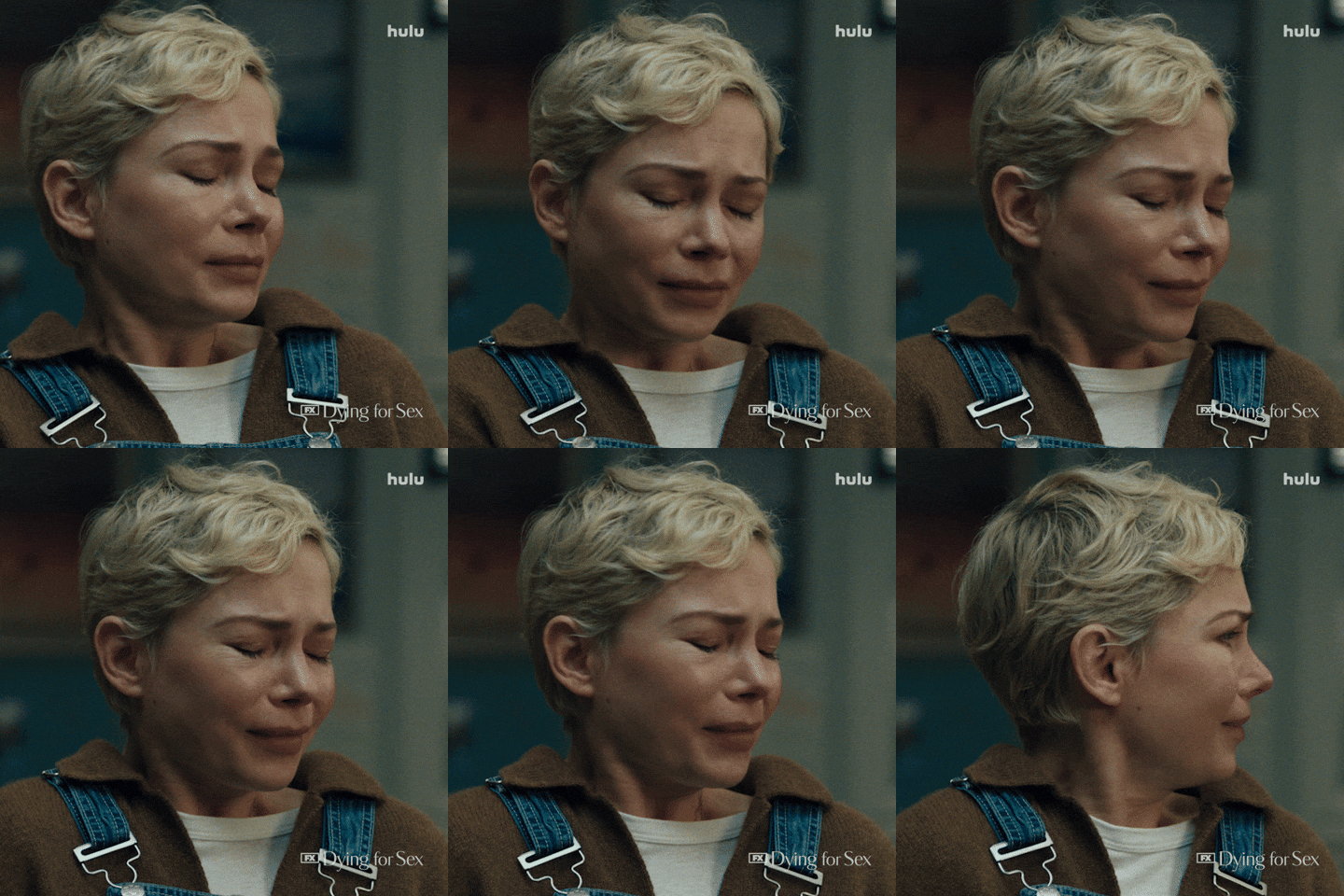 Today, we dig into a surprising new statistic about young women and drinking. Plus, affirmative action for white men and justice for Black mothers. Still sniffling, Nona Willis Aronowitz  WHAT'S GOING ONA sobering new study: If your image of a young binge-drinker is a frat boy doing keg stands, you’re out of date, according to a new analysis in the Journal of the American Medical Association. While drinking among young people is declining overall and older women still drink less than older men, women ages 18 to 25 now binge-drink slightly more than their male counterparts. (Binge-drinking is defined as regularly having more than four drinks in one sitting for women and more than five drinks for men; the study compared data from the National Survey on Drug Use and Health between 2017-2019 and 2021-2023.) Women’s drinking habits have been catching up to men’s for decades, and scholars, journalists, and public health advocates have been noting the results: Women are increasingly dying, getting sick, and going to the ER from drinking. And why are we drinking more? It’s partly because of stress. (Research indeed shows that women are more likely to drink in order to cope than men. See also: “Mommy wine culture.”) The pandemic seems to have compounded the problem; articles and studies have abounded since 2020 showing how much more women were drinking to get through their days. Women, some have concluded, “need an intervention.” (Others, as one Meteor commenter put it a few months back, are “tired of being targeted for all the things.”)  But what accounts for younger women binge-drinking more than younger men? The study was careful not to draw conclusions; the authors say that because the groups analyzed in each time period are not the same people, they don’t know whether we’re seeing an actual rise among young women or, perhaps, a decline among men. But Susan Stewart, a professor of sociology at Iowa State University who studies alcohol use among women, has an initial hypothesis: “I think it has to do with women’s independence,” she says. “Young people are dating and having sex at lower rates, and less interested in serious relationships. Women are doing their own thing, which includes partying.” Stewart also points out that young women have higher rates of college completion than men, and college students binge-drink more than their non-college peers. It’s too early to tell whether this will be a longterm trend, Stewart says, but it could just be a side effect of an otherwise encouraging phenomenon: “women exercising a greater latitude of freedom.” In any case, it doesn’t hurt to familiarize yourself with the most recent health guidelines on drinking. And yes, alcohol can be a source of great pleasure—but in case you are struggling, there’s help to be had. AND:
 THE TRANS RIGHTS MOVEMENT IN SCOTLAND HAS BEEN FIGHTING FOR YEARS. VIA GETTY IMAGES
 WEEKEND READING 📚On the bigger picture: The CEO of the Society for Women’s Health Research breaks down exactly how Trump-era NIH cuts will affect women’s health. (XX Factor) On the man at the center of a crisis: Here’s what to know about Kilmar Ábrego García, the Maryland man unjustly trapped in a notorious prison in El Salvador. (The Guardian) On playing the game: Fox Sports host Joy Taylor talks to Irin Carmon about work, beauty, and those sexual harassment lawsuits. (The Cut)  FOLLOW THE METEOR Thank you for reading The Meteor! Got this from a friend? |

What's the Right Way to Miscarry?
  March 27, 2025 Greetings, Meteor readers, You may not have noticed, but today was the worst day of the year: Opening Day. If those words mean nothing to you, then congratulations on having peace in your life. But if, like me, you happen to live with or tolerate an unbearable Yankees fan, then my heart goes out to you. Be strong. In today’s newsletter, another woman’s pregnancy is being criminalized in the state of Georgia. Plus, Rebecca Carroll writes about the unspoken lessons of the new Netflix hit Adolescence, and your weekend reading list. Do NOT take me out to the ball game, Shannon Melero  WHAT'S GOING ONThe “right” way to miscarry: Last week, a young woman in Georgia named Selena Chandler-Scott was arrested and charged with “concealing the death of another person” and “abandonment of a dead body.” A cold-blooded murderer? No—a woman who had suffered a miscarriage and disposed of the remains in the dumpster outside her apartment complex. Journalist Jessica Valenti, who has been tracking this story, asks the right question here “Was she supposed to call the police after her miscarriage? A funeral home? At what point in pregnancy are women supposed to start reporting their pregnancy losses to law enforcement?” Chandler-Scott is not the first woman to be punished for miscarrying outside of a hospital where fetal remains can be “properly” disposed of. Last summer, also in Georgia, a young woman was placed under investigation after miscarrying in a public bathroom and placing her fetal remains in a trash can (no formal charges were filed; however, the fetus was sent for an autopsy, which is also what’s happening in the Chandler-Scott case). Just a few months later, Brittany Watts of Ohio was charged with felony abuse of a corpse after she miscarried at home and flushed the remains. A court declined to indict her, but Watts should never have been arrested in the first place. Prosecutors in these cases are banking on the fact that when people hear “fetal remains in a trash can,” they’ll react with disgust or disdain. But let’s back up: What should you do if you miscarry? The general advice is to seek medical care. But that’s exactly what Brittany Watts did, and the hospital declined to treat her because of Ohio’s abortion laws. She was sent back home where she miscarried, and later returned to that hospital for help with persistent bleeding. A nurse called the police, who went to Watts’ house and destroyed her bathroom searching for remains. It’s not hard to imagine Chandler-Scott’s case following the same trajectory had she gone to a hospital—and it’s easy to imagine why she, or any other woman, might currently decide not to do so. So if in a post-Dobbs America, home is not safe and hospitals are not safe, what is the “right” way to miscarry? Unfortunately, women like Selena Chandler-Scott will have to learn the answer to that from a jail cell. If you need help navigating a miscarriage or abortion, you can call or text the M+A Hotline for more information. AND:

 Netflix’s Adolescence Isn’t About Race, Except Maybe it IsThe hit show provokes an empathy that Black boys seldom getBY REBECCA CARROLL  (VIA GETTY IMAGES) Everyone is talking about Adolescence, the new Netflix drama that tells the harrowing story of a 13-year-old boy who is accused of killing his classmate, a girl named Katie. As a mother, I watched it as a cautionary tale about the perils of violent incel culture on the still-developing brains of young boys. But as a Black cultural critic who is also the mother of a Black boy, it also made me think about who we feel empathy for, and who we do not. To be clear, I loved Adolescence. Each episode is shot in one remarkable take, every scene strung together like a grievous aria. The effect is gutting. At the center of the show is 13-year-old Jamie Miller (Owen Cooper), a baby-faced schoolboy with alabaster skin, brooding eyes, and a sullen British lilt. Jamie lives with his working-class family in the small town of West Yorkshire, England, and has been accused of the stabbing murder of his classmate. There are no spoilers to be had—damning video evidence is revealed in the first episode. The rest of the series unfolds the devastating aftermath of Jamie’s crime; the unraveling of his family following his arrest and incarceration; and the painstaking path to understanding his motivations. It is a path paved with compassion. Jamie is presented as a victim of the manosphere, spending all those unsupervised hours holed up in his room, delving deep into a misogynist world online and on social media. By the end of the series, I was still somewhat rooting for this white boy who, yes, was a target of cyberbullying and the coded emoji world of Instagram, but who also committed a violent murder. This show made me worry about men, and I never worry about men. But my empathy speaks volumes about how we are all conditioned to receive and accept the way this boy is presented—and the fact that he is not demonized, a grace seldom offered to young Black boys.  WEEKEND READING 📚On being an “old soul”: Please enjoy this delightful profile of The Last of Us star (and Pedro Pascal bestie) Bella Ramsey, whose recent diagnosis of autism enables them “to walk through the world with more grace towards [themselves].” (British Vogue) On the new lavender scare: McCarthy-era purges of gay and lesbian people offer an unsettling parallel to what’s happening today in the federal government. Trans workers explain what the last couple of months have been like at work. (Slate) On health: What do we lose when the word “women” is banned from medical research? (The 19th)  FOLLOW THE METEOR Thank you for reading The Meteor! Got this from a friend? |

Pissed Off About Insurance? So Are These Doctors
Physicians are publicly calling out red tape and immoral practices. Vivian Manning-Schaffel gets the story.
Dr. Elisabeth Potter was still wearing a scrub cap when she fired off a now-viral Instagram post that took direct aim at the biggest health insurance company in the country. In her post, she talked about having to scrub out of surgery to hop on an urgent authorization call with United Healthcare, which was asking for details about her patient’s diagnosis and whether her overnight hospital stay was justified.
“Do you understand that she's asleep right now? And that she has breast cancer?” Potter, a Texas-based board-certified plastic surgeon and breast cancer reconstruction specialist, says she told the rep on the phone. “Actually, I don’t. That’s a different department,” she says the rep replied. “When I get a call from an insurance company for a woman with breast cancer, I always think they're going to try to deny her surgery,” she told The Meteor. After her post went viral, she shared another post on Instagram, a strongly worded letter from the attorneys of United Healthcare demanding that she take her post down, issue a public apology, and inform Newsweek that her “claims were false."
Then, she went on CNN.
It’s rare to see a doctor putting an insurance company on blast—partly because threats of legal action can be daunting for already overworked providers. Potter has long been the exception, taking to the morning-show circuit five years ago to advocate for safer breast implants despite what she called “bullying and pressure” from insurance companies. But since Potter’s post went viral, the floodgates have opened. Doctors like Washington, D.C. critical care physician Dr. Anita Patel, who recently took on Anthem Blue Cross Blue Shield for attempting to impose time limits on anesthesia, and Florida breast cancer surgeon Dr. Alicia Billington, who took Cigna to task for what she saw as failing to adequately cover reconstructive surgeries, have gotten more vocal about healthcare industry practices that they say sacrifice the well-being of their patients.
THE NIGHTMARE OF “PEER-TO-PEER” CALLS
Dr. Shikha Jain, a hematologist and oncologist at the University of Illinois Cancer Center, has often used social media to amplify unjust insurance practices, tweeting about how insurance companies have delayed her patients’ urgent scans, denied coverage of a cancer combo therapy, and kept her on hour-long peer-to-peer calls. These delays and denials—which Dr. Jain calls “insurance scams”—are “all because insurance companies are just trying to save a buck and don't care about the patients’ lives,” she said. Her online advocacy has led to op-eds, TV interviews, and an appearance in a New York Times Opinion video piece.
“When I get a call from an insurance company for a woman with breast cancer, I always think they're going to try to deny her surgery”—Dr. Elisabeth Potter
One of Dr. Jain’s pet peeves? Those so-called “peer-to-peer” calls, like the one Dr. Potter had to make during surgery, when an insurance company doctor will speak with a patient’s doctor to verify the need for coverage. She’s missed peer-to-peer calls during busy clinic hours, when she sees patients back-to-back, and because she’s missed them, the insurance company denied the claim, she says. This requires the patient to appeal the decision, which can take several months.
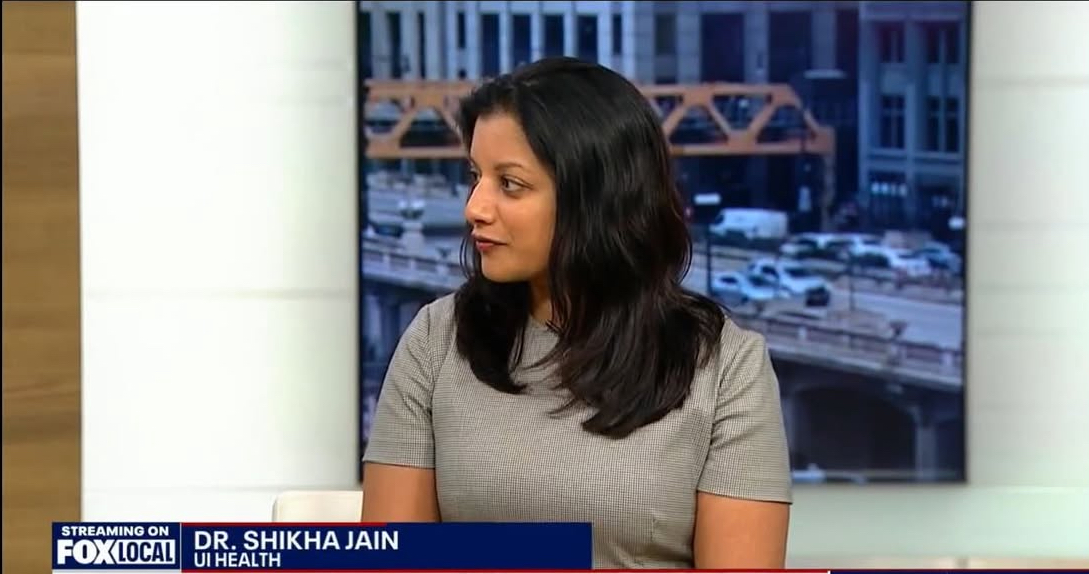
What’s worse, the doctors interviewed say, the calls that can make or break a patient’s coverage aren’t always with doctors who share their specialty or expertise, sometimes resulting in significant care delays and perilous health risks for their patients. “You are the person, sitting in the room with the patient...crying with them because their chemotherapy has been denied,” Dr. Jain says, while “somebody who has never seen a patient with this disease is sitting at a computer a thousand miles away, making decisions based on an algorithm that is set up to deny care.”
Dr. Anita K. Patel, a pediatric critical care physician at a large children’s hospital in Washington, D.C. says she recently called out Anthem BCBS “100% in response” to Dr. Potter’s own post about the company’s announcement that it would put time limits on anesthesia (a decision it has since reversed due to widespread backlash). “I work in an ICU for kids,” says Patel. “We would get notifications they were denying coverage.” She often finds herself on peer-to-peer calls fighting for life-or-death necessities like ventilators and wheelchairs. She once spent what she describes as a “demoralizing” hour in circles with an attending physician on the insurance side who was intent on denying an ICU stay to a vulnerable child with a life-threatening neurologic injury. “Any delay of care could cost the kid their life, and there was no way the parents could afford the bill,” she said.
“NOBODY WANTS TO BE IN THE HOT SEAT”
So what can patients do when they’re at wits’ and wallets’ end with the insurance system? Besides keeping meticulous records of each contact with an insurance company and urging one’s workplace to pick plans that prioritize women’s health, Dr. Potter hopes patients will use social media for accountability, too. “I want to see open conversations about the nitty-gritty details of healthcare and the dark stories in courtrooms being had by providers and patients,” she says. But Dr. Jain says that while patients calling out insurance companies on social media can be effective, she understands why it could be the last thing they want to do. “How horrible is it if you're being treated for cancer,” she says, “then on top of that having to go to social media and fight for your ability just to get treated? That's not right.”
It may not be right, but the discomfort of publicly pressuring insurance companies could lead to more meaningful reform. Though, it may be a long road. While editing this piece, Dr. Potter fired off another IG post saying another patient came to her with a denial from United. “Nobody wants to be in the hot seat,” Dr. Potter says, “but I want to make it more comfortable for doctors and patients to say insurance and hospitals are doing things that are not good for patients, and not good for providers.”

Vivian Manning-Schaffel is a journalist and essayist who covers entertainment, culture, psychology, and women’s health. Her Substack, MUTHR, FCKD, covers pop culture through a feminist Gen X lens.

Can you talk about abortion in therapy?
  February 18, 2025 Fair Monduesday, Meteor readers, I am still emotionally recovering from watching my two husbands reunite during the Saturday Night Live 50th anniversary special. I am, of course, talking about José Pedro Balmaceda Pascal Melero and Benito Antonio Martínez Ocasio Melero. Yes, they took my last name because we’re a very progressive throuple.  In today’s newsletter, we try to understand what you can and can’t talk about with your therapist in abortion-ban states. Plus, a big payday for the athletes at Unrivaled. I love all my husbands equally, Shannon Pascal Ocasio Melero  WHAT'S GOING ONHow do you feel about that?: Therapy couches are sacred spaces, where people are encouraged to say anything and everything to process, heal, and move forward. But what happens when you live in a place like Texas or Mississippi, and the thing you need to talk about is an abortion that your state has made illegal? “I have this fear of bringing this subject up to my therapist because lines can get very blurry with mandated reporting,” one young Texas woman told Public Health Watch in a story released last week. The woman, who chose to remain anonymous, said she had used abortion pills to terminate a wanted but risky pregnancy and has been grieving ever since. But she feels she can’t work through that grief with a professional because of the “climate of fear” in anti-abortion states, where conservatives promise that anyone seen to be aiding and abetting abortion will be punished. How concerned should folks in therapy be? In most states, social workers and healthcare professionals are also mandated reporters, meaning they have an obligation to report any known or suspected abuse, child neglect, or intent to commit harm—so it’s understandable to be concerned that in a state that criminalizes abortion, a therapist could be pressed to report. But patient confidentiality laws are extremely clear about what qualifies as abuse or harm, and so far, abortion has not qualified. Still, the abortion laws in Texas, with their bounty rewards, are written just vaguely enough that healthcare professionals across fields are unsure of exactly what their clients can say to them or how they can respond, according to Public Health Watch’s reporting. As usual, the chaos is the point. “The intention behind these laws is to stoke confusion and fear so that people don’t seek abortion care and that providers are afraid to provide abortion care and that functionally people stop talking about it altogether out of fear,” Lucie Arvallo of the Texas reproductive rights group Jane’s Due Process told Public Health Watch. But as much as abortion ban states may try to fearmonger, confidentiality laws still protect those in therapy. If you’re concerned your therapist may not be trustworthy, you have options and, more importantly, you have rights. A mental health professional cannot share your name, contact information, or session notes without your consent or a subpoena from law enforcement. More suggestions for addressing the issue (and finding a new therapist if you need one):
AND:
 COLLIER AND THE NATASHA CLOUD DURING A GAME EARLIER THIS MONTH. (VIA GETTY IMAGES)
 FOLLOW THE METEOR     Thank you for reading The Meteor! Got this from a friend? |
