
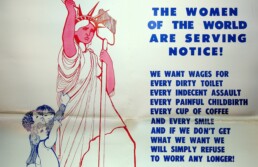
JD Vance's beautiful dark twisted fantasy
  September 8, 2026 Dearest Meteor readers, Today my older kid finally went to Official, Legit, Free School, also known as universal pre-k (and yes, my obsessive ass snagged a spot at aftercare). What should I do with the extra thousand dollars in my bank account each month?! Wrong answers only.  Speaking of government-funded childcare, today we’re examining a JD Vance-backed plan that could be good but…isn’t. Plus, a Lindsay Clancy reading list, and another reason to love Dolly Parton. Lunch is free, too!!! Nona Willis Aronowitz  WHAT'S GOING ONLabor of love: Over the weekend, The New York Times reported that the White House was preparing a rule that’d give parents money to stay at home with their kids. For families under a certain income level, a stay-at-home parent could receive about $9,000 per child per year. Sounds great, right? Anyone who’s cared for a kid fulltime knows it’s no joke; the six weeks I was the sole caregiver for my older daughter were eye-opening. That sweet and satisfying but also isolating and exhausting period made it crystal-clear that the vaunted concept of “parental love” obscures the fact that the labor of raising a kid is, well, still labor. But the proposed draft, which may not need the approval of Congress, is decidedly not in this spirit. For one thing, the subsidy would only be available for married couples. And the Trump administration—specifically J.D. Vance, who has long denigrated daycare as “crap” and “a disaster” and praised stay-at-home parents (read: moms)—isn’t providing additional funding for this program. Rather, the plan is to steal from an existing, already underfunded federal program called the Child Care and Development Fund, which subsidizes childcare for low-income parents so they can work or go to school. Right now, four out of five families receiving these subsidies are helmed by single working parents, most of them mothers. If this proposal is enacted, many of those families would lose benefits to the ones that Vance openly favors: married, 1950s-style families (unlike the Times, I will not be saying “traditional” because, well, they’re not!). The change could deepen the poverty of individual families and worsen the ongoing childcare crisis by depriving centers of money they depend on. The tragedy of this proposal is that it’s a twisted and extremely dark interpretation of a concept that feminists have been demanding for decades. The Wages for Housework movement—launched by Silvia Federici, Selma James, and Mariarosa Dalla Costa in 1972—argued that wives’ domestic work, including caring for children, was an unconscionable system of mass exploitation. “They say it is love,” Federici famously declared. “We say it is unwaged work.”  I FEEL THE ROBE-TUGS OF THOSE CHILDREN SO VISCERALLY. (VIA WIKIMEDIA COMMONS) Despite its name, the movement was not necessarily about calling for literal pay as much as demanding an awareness of how profoundly capitalism depends on the unpaid work of women. But WFH intersected with another movement in the ‘70s and ‘80s that was very much about dollars and cents: the welfare rights movement. Activists like Johnnie Tillmon, a Black single mother on welfare and a founder of the National Welfare Rights Organization (NWRO), spoke out against the invasive, “super-sexist” welfare system and reframed government support for caregivers as a guaranteed right—no strings attached. Notably, neither of these movements pitted stay-at-home moms against women who wanted to or had to work. Instead, they were about expanding all women’s ability to shape their own destinies; Tillmon called the women of the NWRO “the frontline troops of women’s freedom.” These women understood that mothers who worked inside and outside the home have a lot in common. And as for Vance’s policy: There are plenty of ways to support stay-at-home parents without screwing over working ones. By creating a government incentive for women to stay home with their children while penalizing working mothers at the same time, the Trump administration is trying to make us into enemies. One of the goals of Wages for Housework was precisely to undercut this artificial rivalry. They were “reconstructing a real solidarity among women,” Mariarosa Dalla Costa wrote in 1971. “A common solidarity against a common form of labor.” Or, if you prefer, Silvia Federici’s pithier rallying cry from 1974: “We are all housewives.” P.S. Dr. Federici spoke with Reshma Saujani for The Meteor back in 2021 about the care crisis and women’s “labor of love.” Check out the conversation here. AND:

ONE MORE THINGThe Lindsay Clancy case ended in a mistrial, but I can’t stop thinking about these devastating deaths and the mushroom cloud of cultural commentary around them. Here are some reads that have helped put this case in perspective for me:
 FOLLOW THE METEOR     Thank you for reading The Meteor! Got this from a friend? |


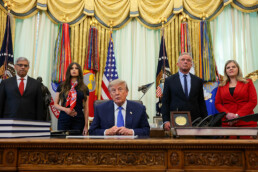
Dr. Jekyll and Ms. Heidi
  August 20, 2026 Greetings Meteor readers, This week, my heart and thoughts are with Mychal Threets, aka Mychal the Librarian, who recently shared that he was admitting himself to a hospital for the sake of his mental health. Threets, who spreads the message that everyone is welcome at the library, has been a bright light for millions, and I hope someone is telling him that we’re all in his corner.  THE BEST GUY WITH THE BEST SMILE. (VIA GETTY IMAGES) In today’s newsletter, we get to know Heidi Overton, the current nominee for commissioner of the Food and Drug Administration. Plus three women poised to make history, and a very important Rihanna update. From the Newark Public Library, Shannon Melero  WHAT'S GOING ONThe latex gloves are off: As you may have heard, Donald Trump has nominated Dr. Heidi Overton to be the new head of the FDA following Dr. Marty Makary’s tense departure from the position. Could this be some kind of improvement? LOL, no. The people Trump has tapped for powerful positions in his second administration are uniformly troublesome. But exactly how troublesome is Overton? Well, in 2023, she wrote a brief for the America First Policy Institute where she referred to the use of abortion pills as “effectively starving the child” to death. By “child,” this medical professional meant "fetus." And that’s just scratching the surface. Overton may have an “MD” behind her name, but her clinical career was short; while she was still a resident, she shifted quickly into health policy, and joined the White House in 2019. She’s supported changing the childhood vaccine schedule and was an advisor on Trump’s recent executive order calling for fewer immunizations for children. At the announcement of that EO, Trump repeated his demonstrably false claims about vaccines contributing to rising autism rates, and Overton was right by his side for the signing. Senator Bill Cassidy (R-LA), who had criticized RFK, Jr.’s anti-vaccine views before casting the deciding vote in the Senate to confirm him, wrote on X, “Dr. Overton’s active role in last week’s nonsensical vaccine executive order calls into question her commitment to standing up for sound science and protecting children’s health.”  THE FIVE HORSEMEN OF THE MAGAPOCALYPSE? MAGAVENGERS ASSEMBLE? IT'S TOO MANY JOKES I CAN'T DO IT! (VIA GETTY IMAGES) But all of that—Overton’s anti-abortion views, her vaccine denialism—is just par for the Trump course. What’s notable about her is just how politically vocal she has been throughout her career. As the chief policy officer of the conservative group America First Policy Institute, Overton penned a number of misleading articles about abortion pills, claiming they are a danger to women. (Reminder: They’re safe and effective!) In 2024, she wrote an op-ed for Newsweek urging readers to vote against Kamala Harris because of Harris’s support for gender-affirming care and abortion rights. This blatant politicization puts her at odds with past FDA leaders, who have made an effort to at least appear to separate their work from the agenda du jour. Marty Makary was not exactly a beacon of goodness—he also pandered to the anti-vaxx movement, endorsed peptides, and blocked a melanoma treatment—but he was ultimately pushed out of his position because he was unwilling to bend to the president’s every whim. The sign of a good FDA leader is arguably that you don’t remember their names, even if you live with the benefits; you may not recall Dr. David Kessler, for instance, but you do know the nutrition labels he gave us. And there’s another thing particularly stuck in my craw about Overton. In her AFPI bio, she includes a Bible verse: “Whatever you do, do your work heartily, as for the Lord and not for people.” There are many ways to interpret that verse, but were I to put myself in the mind of a conservative white woman—a frightening place, indeed—I see a woman who does not want to serve actual people because their needs may be at odds with her idea of the Lord’s work. Never mind that Jesus clarified that we must serve the people in order to be good servants of the Lord. (That which you do for the least of me? Ever heard of it??) The FDA has its hands in lots of pots, including ongoing efforts to curtail the use of mifepristone—so this confirmation is a consequential decision. Experts say that Overton faces an “uphill battle” in the Senate, but given the way things have been going, we’re probably not talking about an Everest-size climb. Still, it is a hill nonetheless, and we can do our best to make it a little better by calling every Senator on the Senate Health, Education, Labor and Pensions (HELP) Committee. Oh wow, who left this list of all the members here? AND:
 THIS IS WHAT AN 11-TIME ALL-STAR LOOKS LIKE. SOAK IT IN. (VIA GETTY IMAGES)
 MOOD BOOSTEREvery Thursday, one of our editors shares a small thing that’s getting them through. If you’ve got something brightening your week, we want to know—reply to this email and share!  If I had to share my red flag as a human being, it would probably be my allegiance to Disney princesses (the OFFICIAL ones, none of this TV show princess nonsense…special exception for the “Descendants” trilogy). Alan Menken is God’s favorite child and is responsible for so many princess bangers; his work brings tears to my eyes, and I still enjoy blasting “Part of Your World” in the car when I’m alone. So this week, when Disney dropped the video for its Ultimate Concert Celebration special featuring the original voices of the most beloved princesses—Jodi Benson, Lea Salonga, Susan Egan—friends, to say I was sat would be an understatement. These women voiced the soundtrack to my youth, and it was nice to be reminded of sweeter times. —Shannon  FOLLOW THE METEOR Thank you for reading The Meteor! Got this from a friend? |


Did Trump Ruin the Workplace?
  May 29, 2026 Did Trump Ruin the Workplace?Three women reflect on the evolution of misogynyBY MARIN COGAN Earlier this year, 2016 nostalgia took over social media, with our friends posting wistfully about their more naive selves. The trend quickly ran its course, but that decade, from 2016 to 2026, has seen huge change—for politics, culture, the world. And it made us wonder: What’s different from then to now, particularly when it comes to women’s lives? What have we lost, and maybe gained? We'll be exploring this topic this summer, and we're starting here, with a deep dive on how work and the professional sphere have changed—or not—for women. A lot can happen in a decade. Around this time ten years ago, Americans were still debating whether to take the new Republican presidential nominee, Donald Trump, seriously. Global pandemics seemed like old-timey problems; artificial intelligence was still mostly in the realm of science fiction. The culture back then was different, too. In various industries, women were starting to speak out about workplace harassment and abuse. Others made noise about the chronic lack of representation of women and minorities. The discussions pressed both big companies and individual actors to acknowledge wrongdoing and work towards more just and equitable workplaces. And then came the backlash: the comebacks, the anti-woke movement, the defamation lawsuits, the assault accusations ignored, the startling rise of the manosphere. Ten years later, we are living in the aftershocks of that era, both the progress made and the retaliation it inspired. The Meteor spoke with three women–leaders in government, tech, and Hollywood–about what’s changed in their workplaces for women in the last decade, for better and for worse.  CLAIRE TRICKLER-MCNULTY IN 2022, WHEN SHE CAME TO GENEVA TO PRESENT AT THE COMMITTEE ON THE ELIMINATION OF RACIAL DISCRIMINATION. (COURTESY OF CLAIRE TRICKLER-MCNULTY) Used to ICE’s Old Boys’ Club, She Became the Target of a Sexist AttackClaire Trickler-McNulty, a lawyer, served as a Deputy Assistant Director at Immigration and Customs Enforcement (ICE) under Obama and during Trump’s first term, then as an Assistant Director there during the Biden administration. She witnessed dramatic swings in rhetoric and policy between administrations, and ultimately became the target of a deeply partisan investigation by House Republicans, who accused her of trying to push a “woke agenda” inside the agency—claims she says were baseless. Trickler-McNulty is now a policy fellow at Hyphen and co-hosts a podcast called The Melting Pod about immigration. There were some efforts under Obama, and then under Biden, to encourage the hiring of more female officers. But the whole time I was there, law enforcement was still predominantly male. If I hadn’t been a lawyer, I would never have been in those rooms. There were definitely parts of ICE that felt like old boys’ clubs—cliques of men where you had no hope of getting into their inner circle of leadership. When I took maternity leave the second time in 2015, my boss told me…that the real burden of maternity leave is on men, because they have to pick up for women who are taking leave. Which is not what you want to hear from your boss as you're taking maternity leave. I befriended a lot of female law enforcement officers during my time there. I wanted to support women moving into leadership positions because I knew it was a gendered environment. I saw a number of women–really good, dedicated law enforcement officers–repeatedly passed over for promotions in favor of men. The women would tell me, “The guys who get promoted are the ones who go drinking with the boys, who go to strip clubs together.” I absolutely saw women get passed over while less qualified men moved up through these networks. That was happening during the Biden administration. It’s recent history. [But] under the first Trump administration, things changed significantly…It definitely felt like more men were being elevated into leadership positions. A certain clique became more ascendant. That said, the [changes of the] first Trump administration felt slower to me. It was more like watching sandcastles slowly get washed away. That’s part of why I wanted to go back into government later. There was still so much detention reform work to do, like trying to implement the Prison Rape Elimination Act. I felt like so much of what we had tried to fix had been washed away, and I still had this fire in me to try to fix some of it. And then, in 2023, I got heavily attacked by the far right. Part of it absolutely felt gendered. I think I was an easier target because I was a woman on the West Coast with a hyphenated last name. When I look at younger women coming up now, I do see progress in how they interact with men and set boundaries. That makes me happy. But then I look at what’s happening at the senior levels, and it doesn’t feel like there’s been nearly as much progress there. I still think about the moments where…women reported harassment and leadership just shrugged. Those are the things I feel guilty about, especially because I was a supervisor. Looking back, I wish I had been less afraid. Less worried about making men angry. Less worried about what they thought about me. More secure in myself and in what I was doing.  TRACY CHOU AT WORK. (COURTESY OF TRACY CHOU) She’s a Tech Worker Who Started at Google—and Became an Anti-Harassment AdvocateTracy Chou started her tech career with internships at Google and Facebook before becoming a software engineer at Quora and Pinterest. In 2013, Chou posted a viral Medium post about the lack of publicly available data about women in engineering roles at tech companies. Chou earned media recognition and awards–but also backlash from male colleagues and internet trolls. Later, she founded Block Party, a digital anti-harassment tool. Quora was this new question-and-answer platform when I was there in 2010-2011, and we needed content for the site. So all of us who worked there were trying to generate content. I found my little niche answering questions about being a woman in engineering. I had colleagues who really didn't like it and would act out. Sometimes they would try to undermine me, or complain about me [advocating for representation of women.] I had one Asian engineer say to me, “Engineering is the one thing that Asian guys have. Why can't you just let us have it?” And other people who complained to me about how we already lowered the bar so much for women and minorities, do we have to lower it even more? I felt like I had to overperform as an engineer. I remember getting in super early to the office, working really late, and trying to create that extra space for diversity work on the weekends, so that it wouldn't feel like it was taking away from my main job. Probably around 2018, my platform had gotten a bit bigger. I started experiencing more pile-ons, but there was still also targeted harassment from individual people who would go pretty deep–I had instances with thousands of trolls on Reddit, and then some of that spilled over onto 4chan, and those people started coming after me too. Then I also had to deal with people who became obsessed with me. There was one guy who was stalking me. He lived internationally but showed up in San Francisco multiple times. Block Party came directly from the experience of dealing with harassment myself and from having seen it on platforms I had previously helped build. I was frustrated by companies saying, “Abuse and harassment are really hard problems to solve.” I thought: It’s not that hard. I’m sure you can do better than what you’re doing now. I had literally worked on some of these platforms [so I knew it was possible]. And I had also been the target of abuse and harassment myself. The silver lining is that I was able to take that firsthand experience and turn it into better solutions—not just for myself, but hopefully for other people too. All the diversity efforts and the MeToo movement impacted the tech industry in similar ways. If you look at computer science enrollment numbers, many more girls are enrolling and graduating with computer science degrees. There are also many more female founders now. The whole ecosystem seems to have improved, and there are many more efforts supporting women in tech, women in VC, women in engineering, and underrepresented minorities more broadly. I also think the general cultural awareness around these issues has increased dramatically. Ten or 15 years ago, most people didn’t know what intersectionality meant. Now, many people are at least familiar with the concept. That’s all positive. What’s worse is the recent backlash and demonization of DEI—the fact that people feel so emboldened to be loudly and proudly anti-DEI. I expected progress to be slow. I didn’t expect this level of aggressive backlash. Still, the work will continue in some way. So overall, I’m still mildly optimistic. But I also feel tired of fighting.  AMY ADRION, RIGHT, ON SET DURING HALF THE PICTURE. (PHOTO BY ASHLY COVINGTON) She’s a Director For Whom “MeToo Absolutely Mattered”Amy Adrion is an Emmy-nominated writer and director. Her 2018 film, “Half the Picture,” examined the experiences with systemic discrimination faced by women directors in Hollywood. She has also directed episodes of Storyline Online, and teaches filmmaking at Rochester Institute of Technology. I never had any particular instance of sexual harassment or overt discrimination. I worked as a production assistant, as an assistant director, and as a low-level crew member on tons of independent films. I worked for a distribution company in New York at the time when [Harvey Weinstein’s] Miramax was the big player in town. I went to Sundance and all the film festivals. I never personally had a negative experience in my early career in film. But I do think the issue was less about individual moments of discrimination and more about the fact that the people in power tended to be white men from a certain cohort, and they responded to the stories that connected with them. And so you would have these breakout films by women directors at festivals [and then] you would see them kind of drop out of the cultural conversation after 10 years. I think that is discrimination in a broader sense. The stories that make women, nonbinary, or gender-expansive people feel better about being themselves just haven’t had as many people in positions of power supporting them. As frustrated as I am by the current state of things, it would be totally disingenuous to say nothing has changed. A lot has changed. You look at the stories that are being made now, and they’re very different from what was in theaters or on television 20 years ago. There is more diversity of voices and stories being told. Is it enough? No. And it’s frustrating because there was this energy around diversity and hiring different voices–especially around 2020–and it definitely feels like there’s been a backslide. A lot of women directors I know who finally got their first TV episode, or maybe their second, aren’t really getting hired anymore because the business is contracting. MeToo absolutely mattered. It was an important movement that had a real impact. Harvey Weinstein is in jail. You can’t say it came and went without consequences. It was necessary and important, and it’s had lasting repercussions. That said, I think MeToo also created a lot of discomfort among people in power, and that discomfort led to backlash. When I started making “Half the Picture,” I interviewed some women who had been part of a group inside the Directors Guild back in the early ’80s who were looking at the numbers of women working as directors and agitating for change. They were probably in their sixties when I interviewed them, and while they were grateful there was renewed attention on discrimination against women directors, they also had this very world-weary attitude of, “Oh, this again.” At the time, I was very much like, “No, this is different. Things are changing. The ACLU is investigating. Women are speaking out. We’re finally making progress.” And now, 10 years later, I find myself with a much more cautious optimism. I think human beings naturally assume things just evolve and get better over time—that progress is inevitable. But it’s not. If the last 10 years have taught us anything…it’s that you have to keep fighting for these rights constantly, or they will be threatened or taken away. That was a hard lesson for me to learn in my forties. The interviews have been edited for clarity and length.  ABOUT MARIN COGANMarin Cogan is an independent journalist. She was most recently a senior correspondent at Vox and has worked as a writer for New York magazine, GQ, ESPN the Magazine, and other publications.  ENJOY MORE OF THE METEOR Thanks for reading the Saturday Send. Got this from a friend? Don’t forget to sign up for The Meteor’s flagship newsletter, sent on Tuesdays and Thursdays.     |


The FDA...Did Good?
  November 11, 2025 Greetings, Meteor readers, It’s 11/11, make a wish.  In today’s newsletter, we’re feeling optimistic about menopause. Plus, a stunning upset in Kansas City. 🥶🥶🥶🌷, The Meteor team  WHAT'S GOING ONWhat’s the HRTea?: Yesterday, Martin Makary, the FDA commissioner, announced that hormone therapies for menopause will no longer be required to carry the black box warning they’ve borne for nearly two decades. It was a difficult moment to process, mainly because it’s almost impossible to believe that a government agency overseen by a man so opposed to science actually appears to be…following the science. And for the benefit of women!? Let’s be clear: There were some fruit loops mixed in with the rational research presented by the FDA yesterday. In a breakdown of the event, reporters at Mother Jones highlighted some of the more dangerous claims, like the suggestion that untreated menopause symptoms lead to divorce (they do not) and that menopause kills women (also nope).  ACTRESS HALL BERRY, LAST YEAR, DURING A BIPARTISAN EFFORT TO INCREASE FEDERAL RESEARCH ON MENOPAUSE (VIA GETTY IMAGES) Makary and Co,’s antics aside, though, “this announcement was a step in the right direction,” says Claire Gill, founder of the National Menopause Foundation. “Removing the black box warning from low-dose vaginal estrogen products is a positive step toward improving women’s midlife health and beyond. And it’s something leading menopause experts and advocates have been trying to get corrected on labeling for more than 20 years.” If you’ve never seen one before, a black box warning (which is the highest form of warning the FDA can issue about prescription medication) lists the most severe risk factors in taking a drug. In addition to drugs used in hormone replacement therapies (HRT), the FDA has placed black box warnings on some antidepressants, opioids, and NSAIDs. In the case of HRT, the FDA issued its warnings—citing risk factors like heart attack, stroke, and breast cancer—following an initial women’s health study that began in 1991. But ”the risk and/or effectiveness of HRT was not something originally in the scope of the study,” Gill explains. When researchers at the time observed the data, there was a slight increase in breast cancer among women in the study who were on HRT versus those who were not. “What we now know,” Gill says, referencing an updated report from JAMA, “is that the women in that study at that time had initiated hormone therapy more than 10 years after they reached menopause. When the data was reviewed to determine the risk for women who started on HRT closer to the onset of menopause, it was shown that there was actually no additional risk for any of those conditions and, in fact, there were some very positive benefits [to taking HRT], in breast cancer risk reduction and osteoporosis prevention, among other things.” And as research since then has shown, HRT—while not a miracle drug, and not recommended for all women—can be an immense help in improving quality of life, reducing certain menopausal symptoms like vaginal dryness, pain during sex, and incontinence. And “an important next step,” Gill adds, “would be to convene medical societies whose members…treat women at midlife and beyond—gynecologists, internal medicine, family medicine, urologists, sexual medicine, geriatricians, etc.—and have a robust discussion to come to consensus on what all of them agree on when it comes to HRT and estrogen therapy. That would provide enormous benefit to advancing menopause care in the U.S.” AND:
 YOUR FAVORITE MUSIC GROUP'S FAVORITE MUSIC GROUP (VIA GETTY IMAGES)
 THE REASON PEOPLE STILL BELIEVE IN YOUNG LOVE. (VIA GETTY IMAGES)  FOLLOW THE METEOR  Thank you for reading The Meteor! Got this from a friend? |


Head Start is at Risk
  October 30, 2025 Happy Halloween eve, Meteor ghouls, Anyone sporting any super cool costumes this weekend? I’m dressing in the same one I wore last year: exhausted mom whose sanity relies entirely on very long showers. Or maybe I’ll join the fray and dress up as Rumi.  I KNOW YOU DIDN'T THINK I WOULD DRESS UP AS STAGE RUMI. SWEATPANT RUMI FOR THE WIN. In today’s newsletter, we take a look at the larger implications of losing access to Head Start. Plus, three questions about embracing your inner crone. Goin up, Shannon Melero  WHAT'S GOING ONA much bigger picture: At the end of this week, more than 100 Head Start centers in the U.S. and Puerto Rico will not receive their funding due to the government shutdown and may have to close their doors. That could leave 58,000 children without the early education programming and meals provided by Head Start centers. In some states, closures have already begun, and communities are scrambling to fill in the childcare gap left behind. On the surface, all of this may seem like an unfortunate but temporary side effect of the shutdown—a harm that can be undone once we flip a switch and turn the government back on. But what does it look like when you zoom out ever so slightly? It looks like the slow but successful execution of Project 2025. In its entirety, we know that Project 2025, released in April 2023, is a manifesto against the poor, immigrants, and anyone else who is not a white, Christian, heterosexual, cisgendered male. Some lowlights include: reversing FDA approval of mifepristone, ending DEI programs, and eliminating the Department of Education. And, relevant to this week’s news, ending Head Start. Project 2025 claims the Head Start program has “little or no long-term academic value for children,” which is why Roger Severino (who authored this section of Project 2025) lists “Eliminate Head Start” as part of the “conservative promise.” The current shutdown is proving effective in delivering on that promise. If I’m starting to sound like a gal who wears a tin foil hat in her spare time, just take a look at the facts. The National Women’s Law Center identified targeted attacks on Head Start from the administration beginning in January and continuing every month. Another tenet of P25 and this administration is to create a scenario where more parents are staying home to raise their own children or leaving their children with relatives. In the conservative worldview, day care is for parents who simply don’t want to parent, which would make Head Start—which has been around since 1965—a key part of the problem, funded by tax dollars. It’s all connected. But the attacks on Head Start are helping to create a Grand Canyon-sized fissure between the wealthy and the working class by playing up the narrative that those with means shouldn’t be responsible for caring for those without. Conservatives have repeatedly called federal safety programs for the poor a misuse of taxpayer dollars, and Head Start and free early childhood education programs, often described as handouts by right-leaning pundits, fit perfectly into the false narrative of wealthy taxpayers being burdened by the needs of medium-to-low earners. If the cuts to federal safety programs continue, they may also serve another purpose: removing the poor from the political process. People often don’t get involved in politics when they’re spending their time hustling just to get food on the table. So it’s not just that SNAP isn’t being funded next month. It’s not just some Head Starts preparing to close. It’s not just funding shortages for WIC, the program that helps moms feed their kids. It’s all that and the increased militarized police presence in lower-income neighborhoods. It’s all that and kidnapping people of color off the streets and disappearing them into the system. It’s what Project 2025 called for. The government shutdown is simply delivering. AND:
 WHERE YOU BEEN GIRL? (VIA GETTY IMAGES)
 WEEKEND PLANS  Three Questions About...Embracing Your Crone EraIt's a thing, says Nina BargielBY BRIJANA PROOKER  COURTESY OF PENGUIN RANDOM HOUSE In the age of Ozempic and deep plane facelifts, in which every outward sign of aging is reversible as long as you have the luxury of money, author Nina Bargiel has a revolutionary idea: Embrace your crone era. It’s a spooky concept, particularly post-2020, when staring at our faces over Zoom prompted a plastic surgery boom, pushing us past body positivity and even body neutrality, all the way into mainstream body hate. But it’s Halloween, the perfect time to honor our wisdom and warts. In THE CRONE ZONE: How To Get Older With Style, Nerve and a Little Bit of Magic, children’s TV writer Bargiel, 53 (who famously wrote the bra episode of Lizzie McGuire), uses the triple goddess concept to answer a key question: what's a crone (AKA any woman over 35, according to my Instagram feed) to do? “Fuck it,” Bargiel writes. You’re a self-declared crone in your 50s. How would you describe “crone” for the modern era? So Baba Yaga has always been my bitch. Baba Yaga is the [Slavic] crone who has self-selected herself into the woods. She lives in a hut atop chicken legs. She has a terrifying fence made of human bones. When a traveler gets lost and knocks on her door, sometimes Baba Yaga eats them. And my thought is, this woman has given every indication she does not want to be bothered. So if you’re knocking on her door, and she ends up frying up your liver, you kind of deserve it, because she has made it very clear: leave her alone. For me, a crone is a woman who is sick and tired of making herself small to make other people feel comfortable. I refer to it as when your inner “fuck you” becomes your outer “fuck you.” In your book, you say, “Whether gracious grandmother or wicked witch, the crone is always cast as a woman whose best days are behind her.” What are we getting wrong about how we understand crones? The crone is overlooked and looked down upon, yet the crone is filled with magic. It’s funny because society [says] you're invisible and you're useless. But [crones also] have wisdom and power. If you think about Shakespeare and Macbeth and the three witches, I mean, they're terrifying. Like, they are hags, but they will mess you up. And I will say, [the definition of] “older women” keeps getting younger by the day. I was talking to a woman at one of my [book] signings…about my crone book, and she was like, “I need this because people are treating me this way.” She's 28 years old. I love your crone touchstones: “Wisdom, to know who we are, Knowledge, to understand what we want, and Fuck It, to do what we please.” What does “Fuck It” mean to you? [As a woman in a male-dominated writer’s room], you’ve got to be nice, you’ve got to get along. I played that [role] for a long time, and I discovered that it didn't get me any further. I would bite my tongue, and then these men wouldn't hire me again anyway. So why was I biting my tongue? I might as well just be 100% who I am. When COVID hit, and I had a divorce, and the entertainment industry was taking a bad hit, I just got sick of pretending everything was fine all the time. I sold my house [in Los Angeles] and moved in with my parents [in Illinois] and got a job working in the cheese department at Whole Foods. And there are people who are like, “You shouldn't say that because people won't take you seriously as a writer.” If people don’t take me seriously as a writer, after 25 years, after two Emmy nominations, after two Kids’ Choice Awards and a Gracie Allen Award, they were never going to take me seriously. So my Fuck It is, if you look at me as lesser because I'm part of the labor force, then I feel sorry for you, because life's gonna hit you hard. Another part of Fuck It is I am 53, and my boyfriend just turned 35, so he is 18 years younger than I am, and fuck it, I don't care. There are a lot of people that have said a lot of things, and by the way, they're mostly men. Almost every woman, when they find out, are like, “Oh, good for you, sister.” If someone's gonna try to shame me for that, fuck it. Women cannot build a hut atop chicken legs or have a fence made of human bones [like Baba Yaga]. But we can wear headphones. We can have all of these things that say, “Do not bother me,” and yet the travelers, who are usually men, still come knocking at our doors. Unfortunately, we cannot fry up their livers, but we do not have to entertain whatever it is they have to say.  Brijana Prooker is a Los Angeles-based freelance journalist and essayist covering health, gender, and culture. She's a proud pit bull and cat mama whose work has appeared in ELLE, Washington Post, Good Housekeeping, and Newsday.  FOLLOW THE METEOR  Thank you for reading The Meteor! Got this from a friend? |


Forty Million Empty Stomachs
  October 28, 2025 Greetings, Meteor readers, I voted yesterday. When are you going? Soon? Yeah? Great! May your sticker be extra adhesive. In today’s newsletter, we look at the looming SNAP cuts. Plus, Irin Carmon tells Rebecca Carroll about her new book, Unbearable: Five Women and the Perils of Pregnancy in America. Hotties vote early, Shannon Melero  WHAT'S GOING ONThe SNAP gap: This week, roughly 40 million people will not receive their scheduled November funds from the Supplemental Nutrition Assistance Program (SNAP). Which means forty million people will spend most, if not all of November, struggling to feed themselves. As the government shutdown approaches the one-month mark, officials seem no closer to a solution and are instead pointing fingers over who is to blame for not distributing the billions of dollars of contingency funding that could alleviate the problem. In the meantime, those in need are left with limited options. “Cutting a federal safety net and telling people to go to a charity is not a solution, it’s a drop in the bucket,” says Greg Silverman, executive director of New York’s West Side Campaign Against Hunger. Silverman, who has worked in the food insecurity space across the world, is frustrated. “We can’t make up the gap on SNAP,” he says. “We’re not gonna volunteer our way out of this.” He explains that in his city alone, one in ten people deals with food insecurity, and in the weeks since the government shut down, emergency distribution groups have already had to step up their efforts to keep communities fed. “We’ve been adding more micro distribution points in neighborhoods where we have the highest number of folks we serve. We do that to get food closer to people so it’s cheaper for them, they save time and money on transport, and they also feel safer getting food closer to home.” While this is a boon to recipients, Silverman knows it’s not enough. Here’s what would be better: “ We need our national elected officials to have the USDA use the funds that are already allocated,” he says. “It exists, the money is there. They don’t need to open up the government to do this; they need to just send that money out to the states to be able to distribute food to people in need.” (If you are looking for ways to pressure your elected officials to act, the Food Research and Action Center has a number of options and step-by-step instructions.) In New York, this has already happened. Yesterday, Governor Kathy Hochul announced the state would be fast-tracking $30 million in emergency food aid for SNAP recipients. “Those weren't additional funds,” Silverman, who was at the press conference when it was announced, explains. “Those were previously allocated funds that [are] being fast-tracked to get out into the community faster.” Across the country, states are also suing the administration for failing to keep food benefits active. These efforts are good and necessary, but they are likely to move slowly through the court system, and won’t put dinner on the table this weekend. So what can the average person do today? “Frontline organizations need dollars right now because they’re out here having to buy more and more food,” Silverman says. In other words: We may not be able to volunteer our way out of this mess, but we can volunteer through. “Everyone can volunteer, whether it's once a year, once a quarter, once a month, once a week. If you have the funds, give them directly to organizations in need. If you have the time, give that.” If you have been impacted in any way by the government shutdown, please visit findhelp.org for resources in your area. If you can donate time or money, please choose a food pantry local to you. AND:
 The Complex Landscape of Pregnancy in AmericaA new book dives into what the experience is like—and whyBY REBECCA CARROLL  (COURTESY OF SIMON AND SCHUSTER, AUTHOR PHOTO BY SOPHIE SAHARA) If you’ve ever been pregnant (to term or not), you know that suddenly your choices are of public interest, and sometimes outright judgment. Pregnancy is a deeply personal experience that also inescapably involves power, vulnerability, politics, and a litany of unjust systems built for only certain beneficiaries. In her latest book, Unbearable: Five Women and the Perils of Pregnancy in America, journalist Irin Carmon weaves together narrative stories and reporting to create a lucid, sometimes heartbreaking, chronicle of how pregnant people are guided, or too often misguided, to navigate the experience in America. Rebecca Carroll: I want to start by asking about something you wrote in the book’s introduction, which is that “being pregnant in America means bearing the consequences of separating one form of reproductive care, abortion, from everything else.” What is “everything else,” and what do you mean? Irin Carmon: All other forms of reproductive medicine—prenatal care, birth, infertility, pregnancy loss—or even gynecological care in general. Before the white male takeover of medicine in the United States and Europe [in the mid-19th century], all reproductive care [including abortion] was more integrated into communal life, really across cultures. It was a group of women who were surrounding somebody at different stages of their reproductive life, from the onset of menarche through pregnancy and childbearing. I’m not saying that that system was perfect or that the old way was the right way, but I was really struck reading the history of the first abortion bans—as we live under the yoke of the new abortion bans, which are even more Draconian and enforced with much more efficacy—that abortion bans and the white male medical establishment takeover of medicine were inextricably linked to each other. It struck me as one of the many original sins of [modern] medical care. The other one being that the foundation of contemporary gynecology and obstetrics was American enslavement, and the unjust experimentation on enslaved women. The part about experimenting on enslaved Black women was really hard to read—I actually physically winced. I think the narrative around childbearing and rearing for Black women in America is so fraught, from the brutal, harrowing reality of how it all started with enslaved Black women, to the way that Toni Morrison used to talk about mothering as this gift of being able to keep and mother our children. How did you reconcile the different ways that Black women and white women experience pregnancy care? Dr. Yashica Robinson [an Alabama-based OBGYN and former abortion care provider] was actually one of the starting points for me wanting to write this book. In so many ways, the work that she does is the embodiment of what could be a better way. I first met her in 2014 when I was reporting for MSNBC, and I had come to interview [her husband], who ran the only Black-owned clinic in Alabama. Dr. Robinson walked into the room, and when she started talking, I thought, “Who is this? Did I come to interview the wrong person?” I thought, this is the person who I want to learn from, and to help me understand the truly bifurcated, painful dichotomy you are talking about. Another Black woman I write about in the book, Christine Fields, died in the same hospital as Maggie Boyd, a white woman I also write about. They were both harmed by the same doctor. But…Maggie was able to come home and raise her son because when her husband screamed for help, he was listened to. And when Jose [Christine’s husband] screamed for help, they called security on him, and wouldn’t let him be in the room. They left Christine alone, maybe because she was being treated like a problem, [and] we know from the research that Black women are much more likely to be treated in medical settings as a problem when they question the treatment or the care that they’re getting. When I had an abortion in the 90s, even though I didn’t hesitate, I still felt so much shame, in no small part because of the picketers outside the clinic calling me a murderer. Where do you think shame falls today in the broader conversation? The shame of being a “bad mother,” whatever that means to the person uttering it, is very powerful. And so the anti-abortion movement has done a very effective job in making people—even when they’re feeling a sense of relief, which is the most commonly cited feeling around an abortion—feel shame for being a “bad mother.” I write about the work of Lynn Paltrow [founder and executive director of Pregnancy Justice] and Dorothy Roberts [civil rights scholar and author of Killing the Black Body] in the book, and I think they have so powerfully shown how this shaming of pregnant people’s very existence is so malleable that it can encompass somebody with a substance abuse problem, as well as somebody who drinks a glass of wine. Everybody thinks, “I won't be the person whose behavior is scrutinized.” [But] the post-Dobbs era has made clear just how broad the tentacles of policing pregnancy can be. How has your own pregnancy experience been impacted by the stories and experiences you write about in the book? I was postpartum when I read about Hali Burns getting arrested six days after her son was born; she was arrested in her son’s hospital room. And so I’m mindful of the fact that I’ve been incredibly lucky, but that I feel a sense of deep connection to these women [in the book]. The work of this book was in trying to go deeper to understand the factors in the systems that led us to any given situation, because I’ve been the recipient of some low-key shitty pregnancy care, and I’ve had some incredible pregnancy care. For people who choose to go down this path, everybody deserves to have access to what I had access to.  FOLLOW THE METEOR Thank you for reading The Meteor! Got this from a friend? |


“I saw a photo and my heart just dropped”
 October 24, 2025 Good evening, Meteor readers, I’ve just stepped off a plane from Vienna, so I’m jet-lagged and 40% pretzel. Tonight’s newsletter is even saltier, featuring upcoming election news, Malala Yousafzai’s new memoir, and a powerful conversation between The Meteor’s Rebecca Carroll and Deesha Dyer, who was the White House Social Secretary during the Obama administration and worked out of the now-demolished East Wing for much of her tenure. Let’s get to it. Mattie Kahn and The Meteor team  WHAT'S GOING ONThis week, President Trump took a literal wrecking ball to the East Wing of the White House and referred to its demolition as “the beautiful sound of construction.” But this was an historic space, with a legacy that meant something to a lot of people. (It has housed the office of every First Lady since Eleanor Roosevelt, for starters.) Several Democrats have pledged to investigate Trump’s “renovation,” and the public wants answers. In the meantime, though, those who worked in the East Wing are grieving—including former White House Social Secretary Deesha Dyer, who held that job during the last two years of the Obama administration. To get a sense of what this moment means, Rebecca Carroll called her.  DEESHA DYER WITH THE OBAMAS (COURTESY OF THE OBAMA WHITE HOUSE) Rebecca Carroll: It must feel so surreal to have been part of the first Black presidential administration in the White House, and to experience this demolition in real time—can you put that into words at all? Deesha Dyer: I can’t. It’s hard, Rebecca. I’ll be honest with you, because right now we’re having so many fights on so many other fronts. This morning I was helping a family get food and find housing. I avoided the photos [of the East Wing] and the conversations, because right now I need to focus on the basic needs of people. And then I saw a photo, and my heart just dropped. It affected me more than I thought it would. Because what we see, as one of my colleagues said, is a metaphor for everything happening right now. The destruction of the East Wing is a destruction for so much of what’s happening in our neighborhoods, in our communities. And as hard as it is going to be to ever rebuild the East Wing back, that is how hard it’s going to be to rebuild everything back. RC: Can you imagine a scenario in which President Obama would ever have been like, “I’m going to demolish…anything”? DD: No. He couldn’t even wear a tan suit. You know what I mean? I remember we had an event doing yoga in the East Room of the White House, and it was like, “Can we do that? Is it okay to lay yoga mats down on this historic floor?” Anything that we did, we did with extra scrutiny. I can’t even imagine if President Obama had cut down a bush outside of the White House. It would’ve been: “How dare you do this to America? You’re desecrating the country!” RC: You noted on Threads this week that three Black women have run events in the East Wing, including yourself, and you ran those events for the first Black First Lady. How symbolic does it feel that Trump chose the East Wing to demolish? DD: Very symbolic. That’s where the First Lady’s office has always been, and so it symbolizes what he thinks about women in general—and women in power specifically. The East Wing is also where people enter for tours and celebrations and all types of events. So it also says a lot about what he thinks about opening up the house, and making it really the people’s house. ... This is a property that is paid for by taxpayers. It is the people’s house. So it is not his. RC: And did you and the former First Lady ever have any conversations about the significance of the East Wing? DD: Definitely. All the time. Mrs. Obama talked to the entire staff about what her vision was for the East Wing and the White House. She always wanted to make it so it felt like everybody’s house. We made sure that from the minute you stepped in the door, you felt like this is a place that considered who you were, whether it was your culture, whether it was your family, whether it was anything. It’s jarring to see that all just gone. RC: What does that space mean to you personally? DD: I’m a Black girl from Philly—a hip-hop writer who had a community college education. I was also in charge of bringing to life the vision of Mrs. Obama and President Obama. And so for me, the space means possibility and hope. And we know that the history of the White House is not all grand. We know the implications of it being built by slaves. But we did our best to make sure that people saw themselves in it. That yes, our ancestors built the building, but we can dance in it. We can have joy in it. We can have our art in it. We can have our music in it, and be happy about that. RC: How are you taking care of you right now? DD: I’ll keep it a buck, I’m not. I’m constantly thinking, “This is terrible. This is a mess.” I’ll be on a walk with my husband and get a call about a food bank or a family in need. And so it's hard to take care of myself at this time. But I have to remember that I am a Black woman in this country that is a product of systems. I have type two diabetes and high cholesterol and high blood pressure. And so the system is also trying to kill us softly while it’s trying to kill us fast too. I need to continue going to therapy and taking my medicine and encouraging other people…. I’m not probably doing the best I could taking care of myself, but I’m trying.  THIS WEEK'S DEMOLITION OF THE WHITE HOUSE'S EAST WING (GETTY IMAGES) AND:
 FOLLOW THE METEOR Thank you for reading The Meteor! Got this from a friend? |


An "Invasion" at Home
 October 7, 2025 Salutations, Meteor readers, Spooky season is fully upon us. The apples are cidered, and the pumpkins are spiced. Delicious.  In today’s newsletter, we take a look at Operation Midway Blitz in Chicago. Plus, a new doll for the sports fans.  WHAT'S GOING ONDespite objections and a lawsuit from the state of Illinois, Trump has deployed the National Guard to Chicago to augment ICE agents and detention facilities across the state. Governor JB Pritzker released a statement saying, “We must now start calling this what it is: Trump’s invasion.” Perhaps it seems like an overstatement to refer to the increased presence of federal agents and the National Guard as an invasion, but let’s look at the facts. Last month, the Department of Homeland Security initiated something called Operation Midway Blitz, which was designed to “target the criminal illegal aliens who flocked to Chicago and Illinois.” DHS claims this operation was driven by the death of a young Illinois resident, Katie Abraham, who was killed in a drunk driving incident in which the driver was an immigrant. So what’s come of it? Well, in the 30 days that Midway Blitz has been active, Block Club Chicago reports that ICE officers have shot two people, tear-gassed protestors, detained children and a journalist, choked a man, and shot a chemical agent into a reporter’s car—all under the guise of protecting U.S. citizens from immigrants. When pressed about children who had been detained and zip-tied, Russell Hott, the field director overseeing Midway Blitz, said, “Children have been encountered pursuant to arrests for targets. In those instances, there have been parents that wanted to bring their children with them, and we have accommodated that.” That so-called accommodation happened during an overnight raid at a South Shore apartment complex last week, where children were removed from their homes in the middle of the night, and 37 people were taken into custody. Chicagoans have been protesting Midway Blitz at every opportunity, which is why, according to Trump’s logic, the National Guard had to be brought in. But these moves aren’t just meant to instill fear into immigrants—they’re also meant to aggravate and worsen existing divisions in Black and Latine communities, which, despite having linked struggles in the United States, have often been at odds due to the racialization of different Latine groups, anti-Blackness, and political manipulation. When ICE agents pursued and choked a man in East Garfield Park last Wednesday, witnesses allegedly shouted at the officers, “He’s not Mexican, he’s Black,” in order to get them to stop harassing the man. These divisions are not a secret to the administration; they know we cannot fight them if we are busy fighting each other. But worsening immigration raids are not simply a “Latino issue” or a Mexican issue; they are a problem for everyone who doesn’t fit the ideal of what an American looks like—yes, that means anyone not white or white-presenting. Anti-immigration policy is, at its most basic level, rooted in racism, and that has never been clearer than it is now. The Trump administration does not want brown, Black, Asian, Chicano, or any other type of people living in the United States (Trump does want white South Africans, though), and Trump is using every tool available to him to make this country in his own crusty caucasian image. So once again, it is on We the People to do the work ourselves. We aren’t going to solve intraracial relations overnight, nor will we pretend they don’t exist. What we can do is recognize that our survival as people of various groups is inextricably linked.  AND:
 THE NEW DOLLS ARE MODELED AFTER ELLIE KILDUNNE, ILONA MAHER, NASSIRA KONDE, AND PORTIA WOODMAN-WCKLIFFE. (VIA MATTEL)
 FOLLOW THE METEOR Thank you for reading The Meteor! Got this from a friend? |

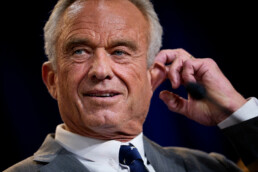
Does RFK Jr. Know the Scientific Method?
 September 22, 2025 Greetings, Meteor readers, We are closed tomorrow in observance of Rosh Hashanah, but we couldn’t let you go into the week without your favorite newsletter! But before we take a little rest, let’s talk about Tylenol. Raw dogging our headaches, Shannon and Mattie  WHAT'S GOING ONFor the past two weeks, news has been swirling that the Department of Health and Human Services is expected to announce a potential link between pregnant people’s use of Tylenol and a supposed increased risk of autism in children. Those reports intensified over the weekend, and senior officials are now briefing media outlets on background. The timing makes perfect sense for exactly one person and no one else: That would be HHS Secretary Robert F. Kennedy Jr. Yes, the same man who is imperiling millions of children with his documented anti-vaccine agenda and has admitted to having a literal brain worm. Several months ago, he said that he intended to find the root causes of autism before the end of September. With October on the horizon, he must be feeling the pressure. So here we are. The expected new guidance—which is expected to drop before the end of the week—will tell pregnant women not to use Tylenol except in cases of high fevers, robbing them of one of the few options they have to manage pain for the 40 weeks they spend growing another human. (Doctors have long recommended Tylenol, the name brand for the generic acetaminophen, because similar fever reducers and pain relievers like Ibuprofen, the generic drug behind Advil, have a documented association with miscarriage and potential fetal harm.) The obvious question, of course: Is Tylenol dangerous? While some limited research has suggested a possible association between Tylenol consumption and autism, larger studies—including a recent and major examination of the outcomes of 2.5 million children in Sweden—have turned up no connection. And the American College of Obstetricians and Gynecologists recently affirmed the recommendation of Tylenol in a recent statement to CBS News, telling the outlet that “there is no clear evidence that proves a direct relationship between the prudent use of acetaminophen during pregnancy and fetal developmental issues.” The prevalence of autism has increased over the past 25 years, according to CDC statistics, with a range of possible explanations. One that we know to be true is that the definition for what constitutes the condition has changed and expanded, making it easier to be diagnosed (and to access services). What we also know to be true? The drug Tylenol has been available over the counter for almost 70 years—well before the documented growth in cases. So scientists, researchers, and those who can count agree: Tylenol is not the likeliest culprit for the increase in autism rates. They reach that conclusion via the scientific method, which isn’t just a unit in high school curricula. It’s an actual process that actual scientists respect. It involves investigating observable phenomena through rigorous testing and careful experimentation. It does not involve setting self-imposed deadlines and drumming up questionable research to meet them. But there is no doubt that this announcement will confuse pregnant women, their providers, and their families. It will, in all likelihood, make those who are experiencing pain while pregnant (that’s 100% of pregnant people, FYI) hesitate before treating it, wondering if their degree of discomfort justifies a dose of relief. (Even though we know that stress and pain can themselves lead to adverse outcomes for babies, including preterm birth, low birth weight, high blood pressure, and other complications.) This announcement will not make pregnant women or children safer or healthier, but it will sow more doubt in the medical establishment, and it will make women suffer. — Mattie Kahn AND:
 I BELIEVE THIS IS WHAT THE YOUNG PEOPLE CALL AURA. (VIA GETTY IMAGES)
 FOLLOW THE METEOR Thank you for reading The Meteor! Got this from a friend? |

The People Preaching No Votes for Women
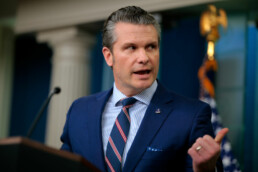
  August 12, 2025 Hello Meteor readers, So pleased to make your acquaintance, and glad to be together in fellowship during these momentous times. (I'm of course referring to the end of both And Just Like That and the American experiment.) I'm Mattie Kahn, writer, former culture director at Glamour, and interim editor of The Meteor, covering for the inimitable Nona Willis Aronowitz while she is out having and tending to her sure-to-be-cute newborn. Likes: peach season, scammer longreads, eavesdropping, surprising people with the knowledge that I've run one marathon. Dislikes: blisters, self-importance, sardines, fascism. I just know we're going to get along great.  In the meantime, today's newsletter has it all: wretched men hating women, sane people hating authoritarian creep(s), and the rest of us loving Taylor Swift. Thanks for having me, Mattie  WHAT'S GOING ONTrue colors shining: Luke 8:17 reads, “For there is nothing hidden that will not be disclosed, and nothing concealed that will not be known or brought out into the open.” This week, Defense Secretary Pete Hegseth brought out into the open the worst-kept secret of this administration when he shared a video of a Christian Nationalist pastor saying that women should not be able to vote. It’s hard to be shocked, considering all the ways this administration has been displaying its disdain for women—cracking down on women asylum seekers, waging open war on birth control, punishing Planned Parenthood, this, that, and the third. But the brazenness of this particular outburst was a little bracing. There isn’t even the pretense of a disagreement over priorities here. This is just a shameless, bald-faced belief that women are a subservient group and not worthy of the same rights as men. The MAGA faithful don’t want to send women back to the 1950s; they want to send them back to the first century AD. There is, however, something positive to be drawn from Hegseth standing ten toes down on religious misogyny. We’ll put it in terms he can understand: You cannot cast out a demon until you know its name. The Trump administration has shown us, unequivocally, who they are, what they intend to do with the country, and just how deeply rooted their ideology goes. We could waste our energy trying to convince all these white men that they’re wrong, but who has that kind of time? If the administration is hinting that they don’t want women to vote, then that’s exactly what we must do. Loudly, frequently, and as if our lives depended on it.  It’s been a long, hard summer for independent media. But despite everything, our goal of changing culture and battling disinformation—at a pivotal moment for women, girls, and nonbinary people—remains unchanged. And we’re grateful for your support! We have two weeks left in our summer 2025 impact appeal for The Meteor Fund, The Meteor’s nonprofit initiative, which supports woman-centered storytelling and community-building. If you’re inclined to give—please do! And please share with anyone you know who loves independent media or maybe just owes you a favor.  AND:

FOLLOW THE METEOR Thank you for reading The Meteor! Got this from a friend? |
