
122 Days Living Without Water
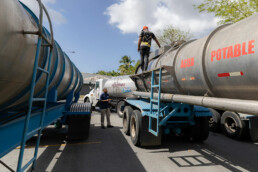
  June 26, 2026 Greetings, Meteor readers, My kid demands to listen to the K-Pop Demon Hunters soundtrack every night before bed, and I’ve started turning it into an opportunity for aerobics. Last night she looked at me and said, “Why you dancin’ like that, mama?” Rude.  Today we bring you an update on a state of emergency that hits uncomfortably close to home. Plus, it’s primary day for Michigan, Kansas, Missouri, Virginia, and Washington. Go get your stickers! With love, Shannon Melero  WHAT'S GOING ONEmpty faucets: For the last 122 days, Puerto Rico has been experiencing a severe water crisis. An estimated 180,000 households have lost running water for days at a time, and while the situation has slightly improved, many homes and businesses are still experiencing hours of either total water loss or potable water loss. The National Guard has been delivering potable water to affected areas in repurposed milk trucks. On Monday, conditions had reached such crisis levels that the government announced a plan for water rationing across the island. How did we get here? In June, power failures, which have become a near-daily occurrence over the nine years since Hurricane Maria, caused service disruptions at a water filtration plant. Then, a few days later, massive ruptures were found in the Superacueducto, a major pipeline that carries water from treatment centers into cities like San Juan, Carolina, and Loíza. Residents there were left without service while the Puerto Rico Aqueduct and Sewer Authority (PRASA) attempted repairs. But the work has been slow, and as water spills from the Superacueducto and electricity becomes spottier at filtration centers, another problem compounds this horrific situation: There’s a drought. More than 82% of the island—which is home to a rainforest—was under abnormally dry conditions as of the end of July. Officials have been confounded. At one point, Governor Jeniffer González Colón “even invoked God, begging him for rain,” Susanne Ramirez de Arellano, a journalist living in Old San Juan, tells The Meteor. “We’re left wondering what kind of a plan she actually has to face this water crisis besides asking for divine intervention.”  WATER TRUCKS PREPARING FOR DISTRIBUTION IN MID-JULY. (VIA GETTY IMAGES) Meanwhile, “abuelas are hauling five-gallon buckets up three flights of stairs to flush a toilet and wash a plate,” writes activist and movement strategist Luis Jonathan Hernandez. “Mothers are heating bottled water on a stove to bathe their kids.” Ramirez de Arellano says although residents are “furious to say the least,” they’re also “resilient. Life must go on. But this water crisis has brought many, including myself, to the end of their tether.” These problems are not new; they are the result of decades of neglect, fiscal mismanagement, and, as always, colonialism. Aqueducts don’t break overnight. Infrastructure does not erode in a weekend. These things are guided to failure by malicious hands. And a coarse salt in the wound is that, as Hernandez puts it, “This is the same summer everybody decided they were Puerto Rican.” It was only a few short months ago we bore witness to Bad Bunny’s Super Bowl halftime show and the internet was awash in praise and cultural dissection of Benito’s message. Everyone seemed to understand that they were witnessing something powerful, something bigger than a singular event. And yet, as Hernandez reminds us: “At that Super Bowl, in front of the whole world, he climbed an electrical pole to point straight at the island’s power crisis, and the crowd cheered the spectacle and let the meaning slide right off them.” It is a cruel irony that a small island surrounded by ocean, known for some of the most beautiful waters on the earth and besieged by rain on a semi-reliable schedule, is experiencing such a massive drought. It is perhaps even more cruel that they are enduring this completely alone. When I talk to people about the crisis they have one of two responses: I thought that ended or I didn’t know that was happening. In his writings, Hernandez gives marching orders to Puerto Ricans living in the diaspora: Don’t just carry the flag, carry the water. So to you, my dear Meteor reader, I step out of my journalist chair for a moment to deliver a personal plea. Do not forget about my people. Help us carry the water. AND:
 IS THE SCHIAPARELLI IN THE ROOM WITH US? (SCREENSHOT VIA YOUTUBE)
 FOLLOW THE METEOR     Thank you for reading The Meteor! Got this from a friend? |


Is the Last Abortion Haven in the Caribbean Closing?
How U.S. influence has been quietly reshaping access in Puerto Rico
By Susanne Ramirez de Arellano
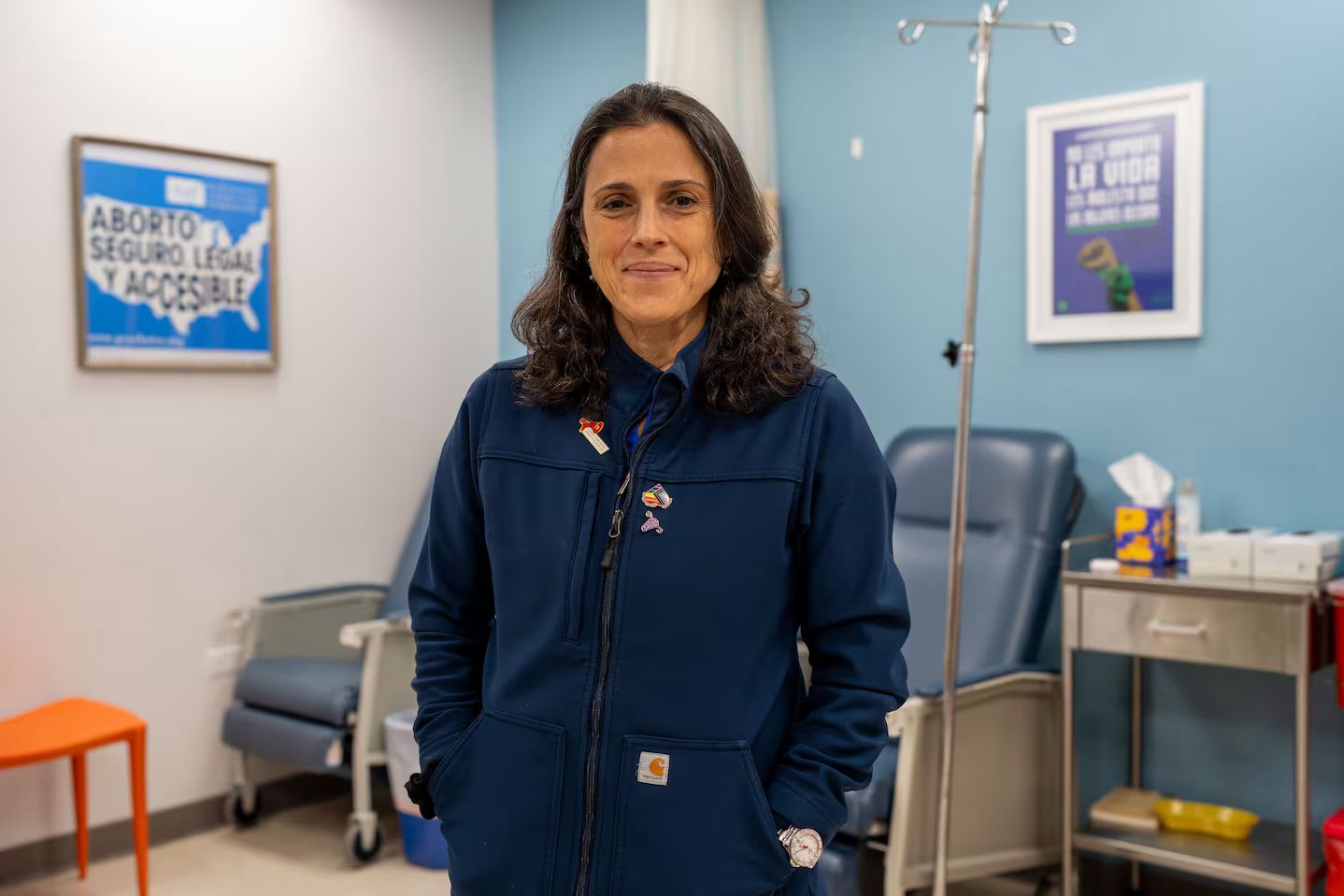
Dr. Yari Vale's petite frame is no longer weighed down by the nine-pound bulletproof vest she wore when anti-abortion threats increased after the end of Roe v. Wade, but she hasn't gotten rid of it. The security guard at Dr. Vale's Darlington Medical Associates clinic in Río Piedras is no longer at the door; still, she has him on standby. With the return of Donald Trump to the White House and Jenniffer González, a Trump devotee, in the governor’s seat, Dr. Vale is bracing for an escalation in the fight to safeguard reproductive rights in Puerto Rico.
The predominantly Catholic island is “on paper one of the most accessible places in the Western Hemisphere” to obtain an abortion, NPR reported just after Roe was overturned. But with the U.S.'s shift toward right-wing Christian nationalism, that could be changing.
Dr. Vale, an OB/GYN at the Darlington clinic—the only one of the island's four that does late-term abortions—is on the frontline of the fight to keep what’s happening in the United States from happening in Puerto Rico, euphemistically called an unincorporated territory (it's a colony, really). It's a battle that, she says, feels like “throwing a firecracker up in the air, and it's just smoke and no one hears you.” But she persists, knowing that the first line of defense is the clinics.
The Legacy of Pueblo v. Duarte
For years, Puerto Rico has been known for its liberal abortion laws: The right is enshrined in the island’s constitution (which exists separately from the U.S. Constitution) and is protected by the right to intimacy under Puerto Rico’s penal code. Abortion is legal on request if it is performed (or prescribed) by a physician to protect the pregnant woman’s life or health—and health includes mental health. There are no limits (abortion may not be banned before viability; post-viability abortions are permitted for the preservation of the pregnant person), and the procedure doesn't require the consent of partners, ex-partners, or, in the case of minors, parents.
However, these laws have their roots in a dark colonial history. In 1902, four years after invading the island, the U.S. enacted policies to control the population, although abortion was still prohibited without exception. Then, in 1937, colonialists who wanted to further limit the Puerto Rican population passed legislation based on racist neo-Malthusian and eugenic theories, virtually legalizing abortion on the island if it was to protect the life and health of the patient. These changes later facilitated clinical trials of the contraceptive pill and mass coerced sterilizations—a procedure that became so common that it was known among Puerto Rican women as “la operacion.”
In 1980, a case involving a minor and her doctor went even further, and set up modern abortion law in Puerto Rico. In the landmark Pueblo v. Duarte, Dr. Pablo Duarte Mendoza, who had performed an abortion on a 16-year-old girl in her first trimester, was sentenced to four years in prison. He appealed, and the Puerto Rican Supreme Court agreed with him, stating that through the island’s penal code, abortion is legal if it is performed to save the woman's life or health, including mental well-being.
Like many things on an island impacted by colonialism, abortion access is still limited for everyday Puerto Ricans. A surgical abortion costs $250, and a medication abortion between $300 and $350; meanwhile, about 43% of Puerto Ricans live below the poverty line, and insurance plans on the island do not cover abortion. And in addition to cost, religion and social stigma—the “what-will-my-family-say” factor—serve as deterrents for many women.
The Dobbs Effect
When 2022’s Dobbs v. Jackson Women’s Health Organization decision removed the constitutional right to an abortion in the U.S., it didn’t automatically affect rights in Puerto Rico (unlike on the mainland, where “trigger bans” were in place). In fact, some U.S. women began to travel to Puerto Rico from states with restrictive abortion laws, such as Florida. It was the return of the “San Juan holiday.”
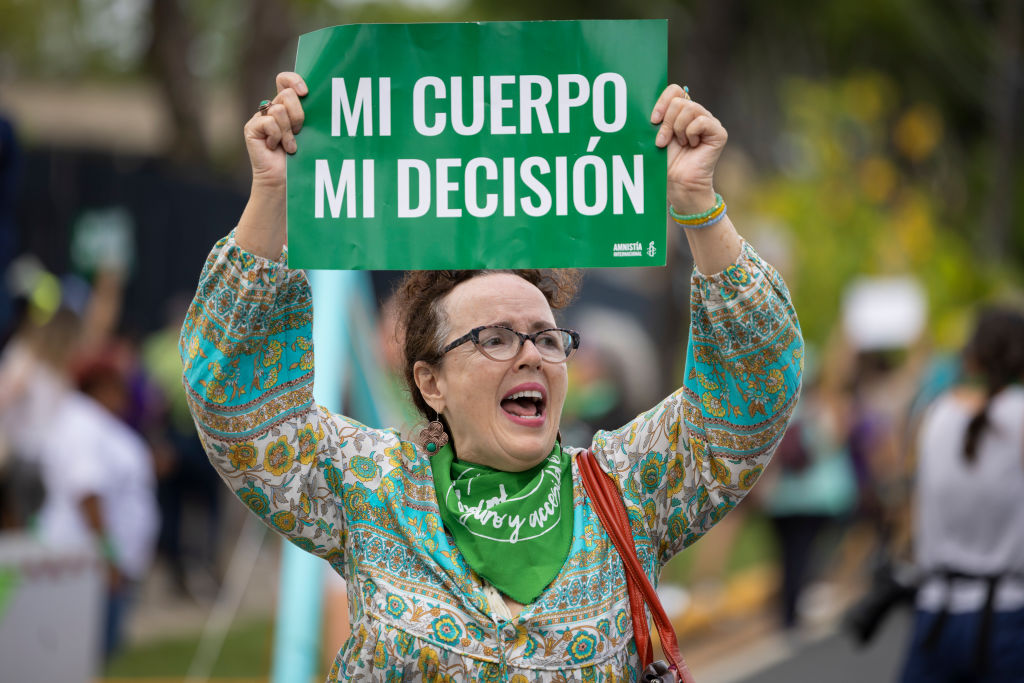
But Dobbs did embolden conservative Puerto Rican politicians and pro-life groups, who saw a window of opportunity and seized it. Shortly after the decision, the right-wing religious party Proyecto Dignidad (PD) adopted the U.S. anti-abortion lobby's blueprint and tried to push through several bills to curtail access to abortion, and even criminalize it. They argued that the end of Roe implicitly negated Pueblo v. Duarte. The Senate ultimately defeated the bills; according to many Puerto Rican legal experts, Pueblo v. Duarte rests on the Puerto Rican penal code, which has no analogy in the U.S. Constitution—and should, therefore, not be affected by Dobbs.
An Ascendant Right-Wing Movement
Abortion-rights advocates warn that efforts to criminalize abortion in Puerto Rico are not over. Traditionally, “the issue of abortion in Puerto Rico has not been the overriding controversy that the anti-abortion and ultra-religious politicians want to make it out to be now,” says Senator Maria de Lourdes Santiago, a lawyer and Senator for the Puerto Rican Independence Party (PIP). But, she says, the anti-abortion campaign orchestrated by Proyecto Dignidad now "magnifies the issue to demonize it."
Founded in 2019, PD has capitalized on its nexus of Catholic and Evangelical churches; the erosion of the traditional duopoly of the pro-statehood New Progressive Party (PNP) and the Popular Democratic Party (PPD); and an increasingly ultra-conservative sector of the population urging a return to traditional values. Even though the party got only seven percent of the vote in the 2024 elections, its influence is strong island-wide, with a campaign that now hinges on the abortion issue.
Proyecto Dignidad Senator Joan Rodriguez Veve, a canon lawyer and face of the populist religious right, has vowed to continue fighting to restrict access to abortion. She recently introduced legislation, PS 297, restricting access to abortion for adolescents under the age of 15. The bill is a carbon copy of one that the Puerto Rican House rejected a year ago. It calls for jail time for any doctor or person who assists a minor in getting an abortion, and a slew of other measures, including forensic interviews of minors seeking an abortion.
The Senate approved the bill in February, and almost everyone I spoke to—politicians, legal experts, and abortion doctors—told me they believe it will pass, even though both pro-abortion and some anti-abortion groups have, for different reasons, voiced their opposition to the measure.
A New Generation Stands Up
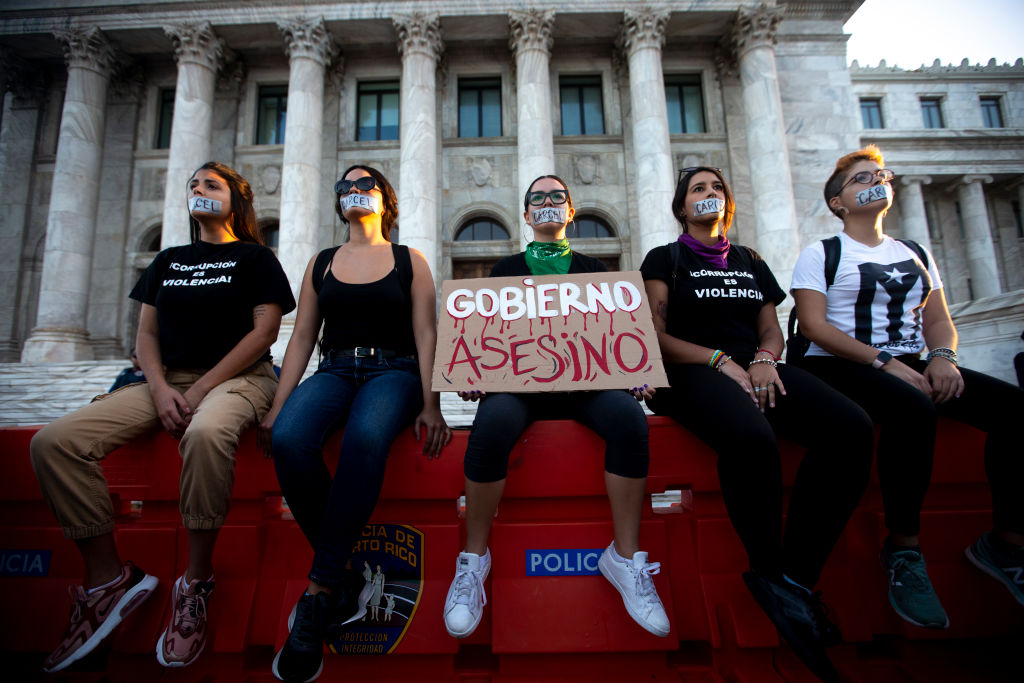
At the same time that PD is gaining influence, attitudes about abortion are shifting with the younger generation. Rising numbers of people support abortion rights, and young people have galvanized around the issue, taking to the streets in protest and amplifying groups like Aborto Libre Puerto Rico, Profamilias, and Proyecto Matria, among others. It’s a generation that, unlike its mainland counterpart, grew up without a sense of abortion as a wedge issue.
Most recently, health professionals and activists have spoken out against PS 297, warning that the bill puts women and girls in danger. “What's going to happen here is that young women and those most vulnerable will seek out illegal abortions and go to the places where illegal drugs are sold to purchase abortion pills, many cut with fentanyl, in doses that are not recommended,” says Puerto Rican feminist activist Alondra Hernández Quiñones.
As religious and conservative groups gain traction in Puerto Rico, Dr. Vale worries that a girl of 15, whose parents are ultra-conservative and refuse to consent to her abortion (as the new legislation would require), would be forced into motherhood. Clinics like Darlington have stopped seeing patients younger than 15 at all, and Dr. Vale fears a future where abortion, currently a safe and regulated procedure, “will once again be a public health problem…where we don't know how many women end up in emergency rooms due to an [unregulated] abortion gone wrong.”
“This worries me a lot,” says Isharedmie Vazquez, a 17-year-old Puerto Rican student. “It seems incredibly wild to me that instead of guaranteeing secure options [for an abortion], what they are looking for is to criminalize it and force women to assume a responsibility for which they are not prepared. It's unfair that they want to take away the right to decide about our lives.”
 Susanne Ramírez de Arellano is an author on race and diversity, opinion writer, and cultural critic. The former news director of Univision, she writes for NBC News Think, Latino Rebels, and Nuestros Stories, among other outlets.