
"The world stopped paying attention"
  August 3, 2023 Hola, Meteor readers, I recently caught up on “And Just Like That,” and finally saw the episode where Steve gives Miranda a piece of his mind regarding their much-stalled divorce. As a SATC fan, one of my biggest issues with AJLT is the mistreatment of Steve’s character, and it really felt like his “This is my house” speech was vindication for the hours of Steve-slander I’ve had to endure. Give that man an Emmy. But more importantly, give the writer who penned that monologue a fair wage. In today’s newsletter, we take a look at Lizzo’s response to the lawsuit against her, offer some good reading for your weekend, and hear from an actual hero, Farkhunda Muhtaj, who helped evacuate teen soccer players from Afghanistan. Typing from Steve’s house, Shannon Melero  WHAT'S GOING ONTruth hurts: As you’ve certainly been made aware of by now, on Tuesday, three of Lizzo’s former dancers filed a lawsuit against the singer, her production company, and her dance captain. The lawsuit painted a picture of a hostile work environment, rife with racist and fat-phobic comments, an “excruciating” 12-hour audition in which one dancer soiled herself, and the now-infamous instance in which a dancer was allegedly pressured to eat a banana out of a nude performer’s genitals. Lizzo posted her response this morning, and the messaging was…well, pretty much exactly what we’ve come to expect from celebrities called out on their behavior. In fact, there’s already a term for it, coined by Dr. Jennifer J. Freyd—DARVO: Deny, Attack, and Reverse Victim and Offender. Here are some examples straight from Lizzo’s post:
This is a well-worn roadmap. But seeing it used by this person, this time, stings. Lizzo represented so many things that felt new: self-celebration, body positivity, sexual liberation—wonderful qualities that people on the right have tried to “cancel” her for time and time again. She had a chance to do something different and new in her response, too—like address the charges with empathy and humility, rather than taking a page from the DARVO playbook and putting her hurt feelings first. But as a singer once sang, people are only great until they’ve gotta be great. AND:
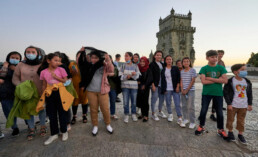
 FLEEING AFGHANISTAN“The World Has Stopped Paying Attention”The soccer captain behind We Are Ayenda is still working to free the women of her home country.BY THE METEOR TEAM  FARKHUNDA MUHTAJ SPEAKING TO PRESS AFTER MEMBERS OF THE AFGHANISTAN YOUTH TEAM WERE GRANTED ASYLUM IN PORTUGAL. (IMAGE BY HORACIO VILLALOBOS VIA GETTY IMAGES) In August 2021, with the world’s eyes on Afghanistan, the teenage soccer players on that country’s Under-18 Women’s National Team left their homes and began a weeks-long journey to evacuate from their country. The experience of these players—many of whom now live in Portugal and compete as Ayenda, which means “future” in Farsi—is the subject of not one but two films this month, the first of which, We Are Ayenda, is out now on Amazon Prime. The second, Ayenda, will be available on Peacock later this summer. We talked to the extraordinary person who led the girls through the rescue process—not an intelligence officer, but a then-23-year-old Afghan-Canadian soccer player, Farkhunda Muhtaj, the captain of the Afghan Women’s National Team. The Meteor: The film shows your day-by-day work evacuating the youth team from Afghanistan. How did you come to be the person entrusted with the job to begin with? Farkhunda Muhtaj: Because I was the captain [of the women’s national team] and I also lived abroad…I was very much trusted from individuals within Afghanistan. And so I think immediately when they needed help, they turned to me. The women's department secretary...reached out and said to me that Canada was supporting 20,000 Afghans and could I help get the families to either Canada or any other kind of safe nation. What impressed you the most about the girls as they navigated the process of trying to leave the country? I would say their courage and determination and resilience for sure. The girls really went through hell. They were trusting me blindly—they didn't know what the next move was, where they were headed, why they were headed [to] a certain location, who they were waiting for, and how they were going to get into the airport and out of the country. But they risked everything and…whether it took them ten tries, 20 tries, traveling all over the region in order to [find a safe way out], they were doing that. And it's not easy for a 15- or 16-year-old girl to…convince their family that this is the best way out. At the time there was a lot of fraud; it was hard to trust anyone. And what really impressed me was their sisterhood as well, the fact that they recognized that they weren't the only ones trying to leave Afghanistan.  MEMBERS OF THE YOUTH TEAM ALONG WITH THEIR FAMILY MEMBERS IN PORTUGAL. (IMAGE BY HORACIO VILLALOBOS VIA GETTY IMAGES) You’re now living in Europe, and because the Taliban has banned women from playing sports, you’re not allowed to play for your home country. What are your hopes for your own future, and for the future of other Afghan women athletes? Just to quickly give you some context: I was a student-athlete in university. I was the captain of the women's soccer team there. And afterward I wanted to continue my education, so I completed my Bachelor of Education [at] a teacher's college in Canada, and became a science and high school teacher. Now I’ve decided to go pro [and play for Fortuna Sittard in the Netherlands]—it's something I've wanted to do since I was younger, but I realized that the girls saw me as a role model. And so I [went pro] just to show the girls that, you know, it doesn't matter that we're from Afghanistan, a war-torn country; we're just as capable as any other European, any other American or Canadian. And what I want for other Afghan women athletes is the same journey that I took: They deserve to be educated. They deserve to have the right to play football, and we deserve to represent our country. I want us to be able to represent and officially compete in FIFA competitions once again. Of course, since the Taliban took over, they have banned that. Beyond sport, I hope that Afghan women can be educated again. But we're kind of out of time. It's been two years already. The situation in Afghanistan is only getting worse, not better. Yes—there's a moment in We Are Ayenda when you say that you knew [in 2021] that you had to get the girls out quickly because the world was paying attention—and that it might stop. Two years later, has the world stopped paying attention? Absolutely. The world has stopped watching. Right when the Taliban had taken over Afghanistan, people cared—partly because the U.S.’s reputation was on the line as well. People cared and were very anxious about what the future of Afghanistan might look like. But after the war in Ukraine happened—and nothing against Ukraine, they deserve all the attention and care—everyone forgot about Afghanistan. And you really saw how Afghans were treated compared to Ukrainians…When I was trying to help [evacuate] Afghans and vulnerable communities [after evacuating the players], no country seemed to have space. But as soon as other issues around the world happened, they had the budget; they had the space; they had the time. It was really disheartening for me. It was something I didn't expect from the global community. And so the world has stopped paying attention. In Afghanistan, women are just there trying to [gain access to] education. I think the most powerful tool is education. Once you're educated, you're aware of your rights and responsibilities, and the fact that women cannot be educated shows that they're trying to silence them. And if our mothers, our sisters, our daughters are not being educated, then what can we expect for the future generations of Afghanistan? I don't think it's going to turn out well at all. But Afghanistan has been in a desperate situation for decades. And regardless of that, our generations continue to thrive. So although we want the global community to act and be a part of the change and help us, we are also very much trying to do our best to help from within.  WEEKEND READS 📚On the NFL: “It’s not every day a group of women defeat a white billionaire man.” But for the women who sued former Commanders’ owner Dan Snyder, that day is here. (The Athletic) On cool kids: A 10-year-old girl threw a water balloon at a local politician from 100 feet away. She got him right in the back of the head and he was so impressed, he suggested she should be playing for the Yankees. So the Yankees invited her for a game. (The Washington Post) On BookTok: Smutty. Hockey. Drama. Need we say more? (The Cut) On climate: The heat isn’t only on land. Unda the sea, an “astonishing” heat wave has been lethal for marine life. (The New York Times)  This newsletter was written by Shannon Melero and Bailey Wayne Hundl. FOLLOW THE METEOR    Thank you for reading The Meteor! Got this from a friend? Sign up for your own copy, sent Tuesdays and Thursdays.
|



A Muslim superhero with a magic bangle?
|
No images? Click here  June 10, 2022 Dear Meteor readers, Happy second Saturday of Pride! This week, I had the pleasure of attending a screening of the first two episodes of Ms. Marvel, the new series out on Disney+. Based on the comic book of the same name, the TV show stars the very charming Iman Vellani as Kamala Khan, a Pakistani-American superhero who gets her power from an ancient family heirloom bangle. I was hooked. I’m not exactly a comic book nerd, but lucky for you my newsletter co-sherpa Shannon is, and she’s written a beautiful reflection on how it feels to watch the series as a Muslim and superhero obsessive. She talks to Meteor founding member Sharmeen Obaid-Chinoy, who also happens to be one of the directors. First, some news. xoxo, Samhita Mukhopadhyay  WHAT'S GOING ONAbout those insurrectionists: It only took seven years, but Ivanka Trump has finally said something truthful. In recorded testimony played Thursday night for the Select Committee overseeing the January 6th hearings, Ivanka stated that, after the 2020 election, she had “accepted” Attorney General Bill Barr’s statement that there was “no sufficient evidence” to overturn her father’s loss. (Trump responded today by ranting that his favorite child simply did not know what she was talking about.) There was a time when people had hoped Ivanka would temper her father’s wrongdoings. This testimony makes clear: She knew full well his claims the election had been stolen were delusional; she just did nothing about it. People died, and we still don’t know what this means for the state of our democracy. But thanks for being honest, I guess.  AND:
 COSMICKamala Khan on TV Is a Revelation...especially for all us Muslim nerds. BY SHANNON MELERO  IMAN VELLANI, MY QUEEN, MY LEADER (PHOTO BY JON KOPALOFF VIA GETTY IMAGES) In the first opening minutes of Ms. Marvel, the new series on Disney+, Kamala Khan (played by Iman Vellani) says, “Finally the moment everyone has been waiting for,” and although nothing had actually happened yet, I teared up. I’ve been waiting for an on-screen version of Kamala—a scrappy young Muslim Jersey girl who discovers she has superpowers—since May 2014 when I walked into Midtown Comics and purchased the first issue. That first “Ms. Marvel”—written by G. Willow Wilson, with art by Adrian Alphona and Ian Herring—followed the early hero days of 16-year-old Pakistani-American Kamala Khan as she works her way up to be the new Ms. Marvel, a title formerly held by Carol Danvers (before her promotion to Captain Marvel). Finally, I thought, a Muslim hero who wasn’t going to get stuck in an outdated trope where her religion or ethnic background would be the only defining quality of her character (like Dust, a little-known member of the X-Men universe who hails from Afghanistan and wears niqab and whose superpower is turning into sand). From the beginning, Kamala was something more, a three-dimensional teenager who also happened to be Muslim. My initial excitement paid off immediately—the very first panel of “Ms. Marvel #1” is an absolutely delightful scene where Kamala and her friends are at a corner store and she’s bent over a sandwich display lusting after a BLT. As a young Muslim woman, I too stare longingly at pieces of pork. (What I wouldn’t do for a guilt-free bite of crispy fried pork salami). It was that moment of connection, that playful wink and nod to a widely shared Muslim experience, that made me a fan.  WHEN I SAY I'VE BEEN WITH THIS GAL SINCE DAY ONE I REALLY MEAN IT (PHOTO BY SHANNON MELERO) And the series premiere is everything I could have hoped for. It is visually stunning, a testament to the artwork that made the comics stand out on the shelf. It’s lighthearted and funny and is about so much more than a journey to superherodom: there’s intergenerational family dynamics, a burgeoning crush situation, dad jokes, teen shenanigans and homage to the unique weirdness that is living in Jersey City. Kamala lives in a world of fantasy—she is a visual artist, makes costumes, and edits videos of Captain Marvel’s adventures for Youtube. She daydreams about winning a cosplay contest with her creations. She is a diehard Captain Marvel fan—which, same!—and she’s marked not just by her nerdiness but by the fact that she’s Pakistani in a school brimming with white kids. At one point, after Kamala is caught sneaking out of her house, the episode culminates in a confrontation with her mother, Muneeba (Zenobia Shroff) asking her daughter, “Do you want to be who we raised you to be…or do you want to to be this cosmic head-in-the-clouds person?” With a huge grin, Kamala answers, “Cosmic.” I screamed. That brief exchange was, for me, the essence of what Kamala represents. When you’re a Muslim person, your religion is often the only identifier people remember. But Kamala is so beautifully multi-faceted and unfettered by a single part of her life. Choosing to live in fantasy or pursuing creativity isn’t something that children of color or children of immigrants often get to do. When your parents uprooted everything to give you a better life—it’s generally frowned upon to follow your “cosmic” urges. I’ve always wanted to become a writer, but the first thing my mom asked when I told her was, “How will you make money?”  ALL HAIL, ALL HAIL (PHOTO COURTESY OF MARVEL STUDIOS) ©Marvel Studios 2022. All Rights Reserved But how can we not pursue our fantasies when we are the very product of our parents’ dreams for bigger and better? That is the question Kamala is answering, and she does so with incredible flair. Finally seeing her on-screen was so meaningful: So few women of color, fictional or otherwise, get to bask in a fantasy of their own making and take joy from it. Sharmeen Obaid-Chinoy, the Oscar-winning documentarian who directs the fourth and fifth episodes of Ms. Marvel, says it best, “I have told stories of ordinary women who do extraordinary things for the better part of two decades…they are superheroes without capes. Ms. Marvel is an extension of that work. Her story will resonate with millions around the world who will see a reflection of their families and themselves in her. The birth of Kamala Khan onscreen is historic—it shows that anyone can be a superhero.” Critics often turn their noses up at the superhero genre. But what creators like Jack Kirby and Stan Lee is no different than what Homer did. It’s all myth. It’s all an examination of the human ethos, of humankind’s struggle with itself, and of the fight between good and evil. But this time around the Pakistani-American girl from New Jersey gets to be the hero.  Shannon Melero is a Bronx-born writer on a mission to establish borough supremacy. She covers pop culture, religion, and sports as one of feminism's final frontiers.  FOLLOW THE METEOR Thank you for reading The Meteor! Got this from a friend? Sign up for your own copy, sent Wednesdays and Saturdays. |

