

Following the Parton Playbook
  August 20, 2026 Greetings, Meteor readers, It’s been a long, sad week with the deaths of actor Tim Curry, queen of everything Dolly Parton, and, heartbreakingly, the voice of Eeyore. But, as always, we’re grateful to be working through all of it with you. In today’s newsletter, we’ve got Dolly’s legacy, Meta’s settlement, and injustice on a Navy vessel.  WHAT'S GOING ONWWDD (what would Dolly do): The death of Dolly Parton this week has left a gaping hole in the hearts of millions, but it’s also ensured that the breadth of her philanthropic work is understood, which is no small thing. Parton’s Imagination Library donated three hundred million books; she helped fund a COVID-19 vaccine; and she once gave $12.5 million over just a few months to families who lost their homes after a fire. The New York Times notes that Parton was so good at giving her own money away that other rich people, including Jeff Bezos, asked her to give away some of theirs. Dolly Parton was, in so many ways, the blueprint. “Dolly was not kind and generous despite growing up somewhere that was ransacked and impoverished,” writes author Mandy Len Catron, who, like Parton, was raised in an Appalachian community. “She was kind and generous because she grew up in a place where people knew how to care for one another because there wasn’t much to go around.” Community care was at the center of Dolly’s work. So: How well will the next generation of stars follow the Parton Playbook of humanitarian commitment? That’s an open question—but this weekend holds a hopeful preview.  MOTHER PARTON PERFORMING DURING THE LAUNCH OF IMAGINATION LIBRARY. (VIA GETTY IMAGES) In Irvine, California, singer Olivia Rodrigo is hosting the Daisy Chain Fields Festival, a show that will benefit organizations serving women and girls, among them Black Mamas Matter Alliance, FreeFrom, and the Center for Reproductive Rights. This is not Rodrigo’s first rodeo when it comes to supporting reproductive freedom. In 2024, when she was touring for her album “Guts,” Rodrigo partnered with local groups to distribute condoms and emergency contraception at her shows; a portion of her tour’s proceeds went to the National Network of Abortion Funds. The backlash (“promiscuous!”) was brutal, and eventually the distribution had to stop. Against that backdrop—and the general rightward swing of Trump 2—many artists might have backed away from embracing issues at all. But in aligning herself with 13 other acts, Rodrigo is not just showing up; she’s helping create safety in numbers and a model that other young artists can point to when their publicists tell them their words are too controversial, risky, or otherwise dangerous to the bottom line.  Against a backdrop of global funding for women’s rights organizations dropping catastrophically this year, the festival's exposure feels meaningful. “We live in a world where most people just accept gender-based violence as normal and to be expected,” Sonya Passi, the founder of FreeFrom, tells The Meteor. “Daisy Chain Fields is giving a global stage to our message - we can end gender-based violence if we invest in survivors and…we each have a part in making it happen.” And as a wise woman once said, “If you don’t like the road you’re walking on, start paving another.” AND:
 Love The Meteor? Think independent media that unapologetically centers women, girls and nonbinary people is more important now than ever? Us too! That’s why we hope you’ll consider supporting The Meteor Fund, The Meteor’s nonprofit initiative that backs our journalism and community-building work. Your tax-deductible donation (little or large—your wallet, your choice) to our summer impact campaign will help The Meteor Fund expand our work this fall, with educational briefings, live events on gender justice and human rights, and more. If you’re inclined to give, please do so! We love doing this, and we love you.  FOLLOW THE METEOR     Thank you for reading The Meteor! Got this from a friend? |


Something is Missing from the Manosphere Doc...
  March 24, 2026 Good evening, Meteor readers, East-coast spring continues to be cold as hell, but I’m not that mad about it because I can still comfortably wear my brand-new, Carolyn Bessette-inspired rollneck sweater. “Love Story” is not good, per se, but I have failed to resist its hard sell of ‘90s fashion. Today, we tackle what’s missing from that ubiquitous manosphere documentary. Plus, some optimism (!) about politics (!!) from diplomat-turned-playwright Julissa Reynoso. Officially a fashion victim,  WHAT'S GOING ONThe women beneath the men: Weeks after its release, everyone is still talking about Louis Theroux’s new documentary, Inside the Manosphere. Theroux isn’t the first filmmaker to attempt to capture this subculture, but he’s arguably the most high-profile, applying his Michael Moore-esque style to these guys as he did to similarly odious groups like the Westboro Baptist Church and Scientologists. He tries to get inside the heads of wildly bigoted influencers like Harrison Sullivan (HSTickyTocky), Nicolas Kenn De Balinthazy (Sneako), Myron Gaines, and Justin Waller, focusing on how they profit off of marketing misogyny to young men. Theroux, who has three sons of his own, mainly limits his scope to the influencers themselves and their throngs of young male fans, sons of the Millennial and Gen X women who ushered in a new era of feminist consciousness. Theroux makes it clear that we are now living through that movement’s backlash. And yet he seldom depicts the people who are most hurt by it: women. It’s not that we don’t hear from women at all. Theroux briefly chats with the influencers’ women employees, wives, and girlfriends, whose remarks range from beatific assent (male domination is “how it’s supposed to be”) to resigned eye rolls (“Male audience. What can you expect?”). But Theroux never talks to them for more than a few minutes, and he almost never talks to them alone. The one time he manages to grab a few solo words with the woman who books guests on Myron Gaines’s show, Gaines immediately sends her a cease-and-desist text from the next room. The closest Theroux gets to a substantive interview with a woman is when he speaks with Harrison Sullivan’s mom, who supposedly “hates sexism.” Asked to comment on her son’s profession, she simply says, “Of course there’s things I don’t agree with.”  MYRON GAINES, IN ONE OF HIS MILDER MOMENTS. (CREDIT: YOUTUBE) Maybe individual interviews with these particular women were impossible, but I was dying to know: Where are Sneako’s exes? Who are Waller’s former women employees or employers? Could we have heard from a girl who went to high school with Sullivan, or a woman who worked alongside Gaines when he was, ahem, a DHS agent? If Theroux really wanted to uncover their humanity, as he claims, that could have been a way to go. The short interviews he does conduct with the wives and girlfriends often take on a distinctly paternalistic tone. Theroux harps on the one-sided monogamy many of these relationships have established; several of these men sleep with other women but expect their partners to remain “loyal.” It’s a valid data point about their chauvinism: As a practitioner of nonmonogamy myself, I can nevertheless concede that for more than a century, the jargon of “free love” has been twisted and manipulated by men to shame women into relationships they don’t want. But is polyamory the problem? Or just polyamory with misogynists? And how, I was left wondering, do the women in these influencers’ lives feel about the rest of it? Why didn’t Theroux ask Waller’s partner, Kristen, about what she’s going to teach their two daughters, whose diapers Waller claims to never have changed? How did Gaines’s girlfriend, Angie, feel about being ordered to clean up their shared apartment before Theroux sees it? (Thank gawdess she’s no longer with him.) Does Sullivan’s mum worry about her son’s future wife, or her future grandchildren? When Theroux filmed Sneako taking selfies with a preteen boy—who jovially chants “Fuck the women!” and “All gays should die!”—did he give a passing thought to the girls or gays that go to school with him? Theroux interviews random male fans on the street about why they look up to Waller; perhaps he could have pulled aside a few women observing their fandom.  NOTED HISTORIAN AND ARCHITECTURE EXPERT JUSTIN WALLER. (CREDIT: YOUTUBE) I found myself wanting to dispatch a girl gang to Theroux’s house, composed of regular women and girls who are exposed to this rhetoric on a daily basis. Like this 15-year-old girl who gave readers of The Guardian a glimpse into the “vile,” overtly misogynist content that social media feeds her, no matter how much she tries to steer the algorithm elsewhere. Or the girls in the classrooms of this educator, who reports that they’ve stopped raising their hands in class because “the social cost has become too high.” And this isn’t just about one film. As Feminist points out, these glaring omissions mirror broader discussions about the “boy crisis” and the “male loneliness epidemic”—which, by the way, is not exclusively male; a recent Pew survey reported just as many women feeling lonely as men. These debates zero in on boys as victims of a patriarchal society, and they certainly are, but they’re not the only victims. A subset of these trend pieces blame feminism, not our society’s bedrock misogyny, which these influencers cynically enforce for their own gain. It feels ridiculous to even clarify this, but manosphere influencers are not akin to girlbosses; as Amanda Montei puts it, those women “may have run on white capitalist forms of exploitation, but they did not actively teach other women and girls to abuse, control, and dehumanize men, nor were they advocating for the end of men’s civil rights.” The women affected by this misogyny remain faceless and nameless while journalists give openly misogynist, racist, anti-Semitic influencers the royal treatment. Not anymore. The Meteor will be rolling out a series on life and reality in this anti-feminist era, examining the backlash through the prism of women and girls who have to live through it. Stay tuned. AND:
 Three Questions About…Government that WorksBY SHANNON MELERO  JULISSA REYNOSO IN 2024. (CREDIT: GETTY IMAGES) “The best is yet to come…you’ll see.” These are the final words the audience hears in Public Charge, a political drama playing at The Public Theater in New York, which follows the true story of Julissa Reynoso, a former Deputy Assistant Secretary of State and Ambassador to Uruguay in the Obama administration. At the show’s end, the actor playing Reynoso is referring to the future presidency of Hillary Clinton—a reality the audience knows is never realized. It is a bittersweet moment for both the character and the viewer; after years of work and small miracles, Reynoso’s character has realized her vision of easing relations with Cuba and freeing American political prisoner Alan Gross. In the final moments of the show, which ends in the winter of 2014, she is hopeful and full of belief in the power of good government. As a viewer, you feel some of that too—until you exit the theater and your phone flashes the latest headlines. The experience is jarring. We spoke to the real Julissa Reynoso, who wrote Public Charge with playwright Michael J. Chapiga, about what it was like to strike such an optimistic note in such politically uncertain times. In the play, there are a lot of references to a memo you and Ricardo Zuniga wrote in 2009 about the importance of connecting at a person-to-person level with representatives of Cuba, despite decades of silence as policy. What is it like revisiting that idea as the U.S. is moving more towards isolationism? That’s just…diplomacy. We need to talk to all types of people, from people you like or don’t to people who don’t like you. It’s the only way you really can get anything resolved. That is the whole function of the State Department. [With this play] I wanted to help [people] understand what public servants do and the issues we face in trying to get things done. That was the main objective: explaining the life of a government official.  ZABRYNA GUEVARA AS JULISSA REYNOSO IN PUBLIC CHARGE. (COURTESY OF THE PUBLIC THEATER) A lot of the characters in the show are Latine, and as they’re trying to open the door to relations with Cuba, I noticed a theme of how we as Latine people struggle to work together intraculturally in the U.S. Was that intentional? No, it just happened to be that the people dealing with these hard things at the time were all people of color! That’s just who was there and that’s really a testament to [then-Secretary of State] Hillary Clinton, who put us there. But also, growing up I would see films about foreign policy or international relations and I did not see people like me in any of those scenarios. [In the administration], I had a bunch of people of color whirling around with me trying to solve issues and trying to make things better. And with the people who were around at this time—Cheryl Mills, [Uruguayan] President Mujica, some of the Cuban officials—I always thought, Man you can’t make this stuff up. It was all so out of the ordinary. [Now, with the current administration,] I think there's a lot that we've lost along the way. I do have faith that some of the people at these institutions can get it back in the right direction. This is not the first time our institutions have been under attack. But we can come back and be stronger—it’s just going to take a lot of work. And good people are going to have to join in at some point. It’s interesting you say that people have to join because there really is so much apathy right now. I don’t know that everyone still has the will to, you know, be the change they wish to see. People are gonna have to get over it. I always say, If it's not me or you, then who? We can’t just say Oh God, everything is so bad and then do nothing about it. That’s not how this works. You can’t just give up. I really want folks to understand that it is hard to make change but once you do it, it’s extraordinary. As a country we’re still able to do that, but it’s just hard. If it were easy, we would do it all the time. But change is a major investment and it takes a lot of failures along the way. We just have to keep at it.  FOLLOW THE METEOR  Thank you for reading The Meteor! Got this from a friend? |

We All Live in the Manosphere Now
Everyone’s talking about "Inside the Manosphere," but there’s one glaring omission.
By Nona Willis Aronowitz
Weeks after its release, everyone is still talking about Louis Theroux’s new documentary, "Inside the Manosphere." Theroux isn’t the first filmmaker to attempt to capture this subculture, but he’s arguably the most high-profile, applying his Michael Moore-esque style to these guys as he did to similarly odious groups like the Westboro Baptist Church and Scientologists. He tries to get inside the heads of wildly bigoted influencers like Harrison Sullivan (HSTickyTocky), Nicolas Kenn De Balinthazy (Sneako), Myron Gaines, and Justin Waller, focusing on how they profit off of marketing misogyny to young men.
Theroux, who has three sons of his own, mainly limits his scope to the influencers themselves and their throngs of young male fans, sons of the Millennial and Gen X women who ushered in a new era of feminist consciousness. Theroux makes it clear that we are now living through that movement’s backlash. And yet he seldom depicts the people who are most hurt by it: women.
It’s not that we don’t hear from women at all. Theroux briefly chats with the influencers’ women employees, wives, and girlfriends, whose remarks range from beatific assent (male domination is “how it’s supposed to be”) to resigned eye rolls (“Male audience. What can you expect?”). But Theroux never talks to them for more than a few minutes, and he almost never talks to them alone. The one time he manages to grab a few solo words with the woman who books guests on Myron Gaines’s show, Gaines immediately sends her a cease-and-desist text from the next room. The closest Theroux gets to a substantive interview with a woman is when he speaks with Harrison Sullivan’s mom, who supposedly “hates sexism.” Asked to comment on her son’s profession, she simply says, “Of course there’s things I don’t agree with.”
Maybe individual interviews with these particular women were impossible, but I was dying to know: Where are Sneako’s exes? Who are Waller’s former women employees or employers? Could we have heard from a girl who went to high school with Sullivan, or a woman who worked alongside Gaines when he was, ahem, a DHS agent? If Theroux really wanted to uncover their humanity, as he claims, that could have been a way to go.
The short interviews he does conduct with the wives and girlfriends often take on a distinctly paternalistic tone. Theroux harps on the one-sided monogamy many of these relationships have established; several of these men sleep with other women but expect their partners to remain “loyal.” It’s a valid data point about their chauvinism: As a practitioner of nonmonogamy myself, I can nevertheless concede that for more than a century, the jargon of “free love” has been twisted and manipulated by men to shame women into relationships they don’t want. But is polyamory the problem? Or just polyamory with misogynists?
And how, I was left wondering, do the women in these influencers’ lives feel about the rest of it? Why didn’t Theroux ask Waller’s partner, Kristen, about what she’s going to teach their two daughters, whose diapers Waller claims to never have changed? How did Gaines’s girlfriend, Angie, feel about being ordered to clean up their shared apartment before Theroux sees it? (Thank gawdess she’s no longer with him.) Does Sullivan’s mum worry about her son’s future wife, or her future grandchildren? When Theroux filmed Sneako taking selfies with a preteen boy—who jovially chants “Fuck the women!” and “All gays should die!”—did he give a passing thought to the girls or gays that go to school with him? Theroux interviews random male fans on the street about why they look up to Waller; perhaps he could have pulled aside a few women observing their fandom.
I found myself wanting to dispatch a girl gang to Theroux’s house, composed of regular women and girls who are exposed to this rhetoric on a daily basis. Like this 15-year-old girl who gave readers of The Guardian a glimpse into the “vile,” overtly misogynist content that social media feeds her, no matter how much she tries to steer the algorithm elsewhere. Or the girls in the classrooms of this educator, who reports that they’ve stopped raising their hands in class because “the social cost has become too high.”
And this isn’t just about one film. As Feminist points out, these glaring omissions mirror broader discussions about the “boy crisis” and the “male loneliness epidemic”—which, by the way, is not exclusively male; a recent Pew survey reported just as many women feeling lonely as men. These debates zero in on boys as victims of a patriarchal society, and they certainly are, but they’re not the only victims. A subset of these trend pieces blame feminism, not our society’s bedrock misogyny, which these influencers cynically enforce for their own gain. It feels ridiculous to even clarify this, but manosphere influencers are not akin to girlbosses; as Amanda Montei puts it, those women “may have run on white capitalist forms of exploitation, but they did not actively teach other women and girls to abuse, control, and dehumanize men, nor were they advocating for the end of men’s civil rights.” The women affected by this misogyny remain faceless and nameless while journalists give openly misogynist, racist, anti-Semitic influencers the royal treatment.
Not anymore. The Meteor will be rolling out a series on life and reality in this anti-feminist era, examining the backlash through the prism of women and girls who have to live through it. Stay tuned.


Four Oscars for Glen Coco
  March 12, 2026 Greetings, Meteor readers, I take back all the bad things I’ve said in the past about men’s baseball. As a matter of fact, does anyone know how I can get this job with the MLB? In today’s newsletter, Rebecca Carroll shares her Oscars predictions and hopes. Plus, some bloodthirsty chatbots to avoid. Take me out to the ball game, Shannon Melero  WHAT'S GOING ONIt’s that time of year again: Let’s give out some shiny statuettes to movie stars! The 98th Academy Awards is this Sunday, so here are some of my (Rebecca’s) selective predictions and/or hopes for the winners. Jessie Buckley should and will win Best ActressIn Hamnet, Irish actress Jessie Buckley gives a career-defining performance as Agnes, the fiercely independent wife of a young William Shakespeare. The film is a powerfully intimate adaptation of the 2020 novel of the same title by Maggie O’Farrell, who co-wrote the screenplay with director Chloé Zhao. It imagines the raucous courtship between Agnes and William, their subsequent marriage, the family they create together, and the devastating loss of their 11-year-old son Hamnet to plague. Opposite Paul Mescal, who is quietly extraordinary as William, Buckley depicts the messy, raw anguish of a mother who has lost her child with everything she has. It is as much a physical performance as it is an emotional one, and it is absolutely one for the books. Michael B. Jordan deserves Best Actor DONNA JORDAN, THE WOMAN WHO GAVE US THE GIFT OF MICHAEL B. JORDAN. WE OWE YOU SO MUCH, MS. DONNA. (VIA GETTY IMAGES) After the drama of the last few weeks, it almost certainly won’t be Timothée Chalamet, despite an egregiously self-serving and overindulgent press campaign for Marty Supreme. (Shouldna been talking shit about the opera and ballet, Timmy.) He also doesn’t deserve it. The award for Best Actor should go to Michael B. Jordan, who plays twins and (spoiler) a twin-turned-vampire, so he actually gives three transformative performances in one brilliant movie. In case you’ve been without wi-fi for the past year, Sinners is the story of twin bootlegging brothers who return to the Jim Crow South from Chicago. They put up a juke joint, and the rest is history. Benicio del Toro and Teyana Taylor NEED to get Best Supporting Actor/ActressBenicio del Toro’s performance in One Battle After Another is maybe the only reason to see this film—it’s that good. Director Paul Thomas Anderson’s political drama-cum-action thriller is meant to be about former white guy revolutionary Bob (Leonardo DiCaprio), who got soft, smokes weed all day, and has a Black and biracial daughter. But as soon as the film introduces del Toro as karate sensei Sergio St. Carlos, he becomes the understated star. There’s something del Toro does as an actor in a supporting role (see: The Usual Suspects) that transcends the time his character is afforded, and he does it with a glorious, breathtaking ease. My guess is that Sean Penn (who also stars in One Battle After Another) will win, because his portrayal of Colonel Lockjaw is a classic Oscar performance—broken, stilted, deranged. And Hollywood loves a straight white man playing a damaged, disabled, or otherwise impaired person. Teyana Taylor plays Black revolutionary Perfidia Beverly Hills in the same film. It’s a problematic role that has stirred a lot of discourse. It screams Black woman tropes to some, real-talk empowerment to others. But trope or not, Taylor nails it. She is that bitch, and I admire her commitment. She deserves to win, but she is also favored to win, since she won both the Golden Globe and BAFTA for supporting actress. Sinners should win everything elseIts collaborative ingenuity, elegance, and masterful storytelling are simply undeniable. Ryan Coogler gathered a team of actors, filmmakers, musicians, and dreamers, and created a miracle. Honorable Mention: Bugonia THE BRILLIANT MINDS BEHIND BUGONIA (VIA GETTY IMAGES) I’ve seen Bugonia three times. It’s a haunting, subdued prophecy about human nature that feels acutely on point. Directed by Yorgos Lanthimos and starring his longtime collaborator Emma Stone, Bugonia is a remake of the 2003 Korean film Save the Green Planet! by Jang Joon-hwan. In it, Stone plays Michelle, a high-profile CEO of a major pharmaceutical company, who is kidnapped by part-time beekeeper and full-time conspiracy theorist Teddy (a pitch-perfect performance by Jesse Plemons) and his neurodivergent cousin, Don (Aidan Delbis). It’s hard to describe the plot further without including spoilers, and also without making it sound wacky or predictable. Trust me: It is neither. Somehow, the arc of this film manages to be melancholy, torturous, and eerily beautiful all at once. —Rebecca Carroll AND:
 HEIGL'S RESPONSE TO CRITICISM WAS, "ANIMALS DON'T VOTE." GIRL? GIRL. (VIA GETTY IMAGES)
 FOLLOW THE METEOR     Thank you for reading The Meteor! Got this from a friend? |

Smizing? In this economy??
  February 24, 2026 Greetings Meteor readers, So. How ‘bout that snowstorm, eh? Personally, I am on the side of one random New Yorker on TikTok who said she wants to see Punxsutawney Phil “seized and seasoned” by noon-thirty tomorrow. I’m on my way to Pennsylvania. In today’s newsletter, we enjoy some really funny jokes about hockey, and stand in admiration at the Epstein survivors attending the State of the Union tonight. Plus, Julianne Escobedo Shepherd weighs in on the America’s Next Top Model documentary we can’t stop talking about. I just wanna talk Phil 🔪, Shannon Melero  WHAT'S GOING ONNo laughing matter: This weekend, both the men’s and women’s USA hockey teams took home gold medals after beating Canada in overtime. (There’s a Heated Rivalry joke running through my head, but I just can’t seem to articulate it.) We should all still be riding a collective high from that moment, but sadly, we do not live in the world of Rachel Reid. In this world, Donald Trump called the men’s team in the locker room after their win to congratulate them, also extending an invite to the State of the Union and to “do the White House the next day, just have some fun.” It should have been a standard moment. But he also took the opportunity to say that he would “have to bring” the women’s team, adding that he’d be impeached if he didn’t. The men in the room laughed as if it were a joke that another gold medal-winning team would be invited to the White House. You know what is funny, though? Women were not allowed to play ice hockey at the Olympics until 1998, almost thirty years after Title IX was signed into law. They won gold that year. The men, who have been playing Olympic hockey since 1920, didn’t medal at all in ‘98. You know what else is really funny? Until this weekend, men’s hockey hadn’t seen a gold medal since 1980.  YOU WOULD THINK A MAN OBSESSED WITH GOLD WOULD BE THRILLED TO BRING AS MANY MEDAL WINNERS AS POSSIBLE INTO HIS SPACE. (VIA GETTY IMAGES) And you know what’s absolutely freaking hilarious? A Republican president and his lackeys are celebrating women winning gold medals for the U.S. while simultaneously tripping over themselves to weaken Title IX, the very thing that made it possible for women to secure 67 percent of the gold medals won by Team USA this year. Surely, though, nothing is as funny as the fact that the women’s team was eventually also invited to attend the State of the Union, but declined, mainly for travel reasons. Because while the men’s team was flying by charter back to the states, the women’s team booked commercial flights back to Atlanta and weren’t aware they had been invited until late Sunday night. It’s almost as if proving dominance over and over and over again isn’t enough to be treated equally on a team whose entire motto is literally “One For All.” But I’m sure that’s not the case, because we’re all just kidding, right? P.S. Thrilled by the hockey events this weekend and still want to support women players? You’re in luck: The PWHL season resumes this Thursday (another reason the Team USA women had to rush home) when the New York Sirens take on the Montreal Victoire. Show up and show out. AND:
 America’s Next Top Model is a cautionary tale for this dark eraBY JULIANNE ESCOBEDO SHEPHERD  L-R: CYCLE 2 WINNER YOANNA HOUSE, TYRA BANKS, SHANDI SULLIVAN, AND MERCEDES SCELBA-SHORTE. MANY FANS STILL REMEMBER SHANDI FROM THE INFAMOUS "CHEATING" EPISODE THAT YEAR WHICH WAS REVISITED IN REALITY CHECK. (VIA GETTY IMAGES) America’s Next Top Model died first by sinking ratings, and then by TikTok. During pandemic lockdown, a new generation of viewers revisited the reality competition show, which ran from 2003 until its cancellation in 2018, and realized what they may have thought was a fun series about fashion shoots was, in fact, kind of messed up! This epiphany led to loads of social media posts by bored Zoomers lobbing critiques of the show and its supermodel host, Tyra Banks—and eventually culminated in Reality Check: Inside America’s Next Top Model, a Netflix documentary series probing ANTM’s effect on its contestants and the culture at large. Reality Check, which hit number one on Netflix, is the latest entry in the cottage industry of Y2K nostalgia, which reevaluates the mean-girl era through fresh eyes and contemporary values. Through interviews with former contestants and cast—including runway coach Miss J, creative director Jay Manuel, photographer Nigel Barker, and Tyra herself—the series examines how ANTM started as an aspirational project to upend the fashion industry’s constrictive white norms and ended as an outrageous circus that put white women in blackface and had models pose as crime-scene victims, among many other terrible, misanthropic ideas. It is clear from Tyra’s interviews that she has seen the TikToks and was media-trained and lawyered to near-oblivion before Reality Check, her responses containing a tablespoon of accountability and a heaping cup of denial about her own role in some of the most horrific things that happened on set. The most infuriating of these dodges is in response to Shandi Sullivan, the Cycle 2 model who was filmed “cheating” on her boyfriend but who, in retrospect, was unable to consent to sex with a virtual stranger after downing two bottles of wine (and, as Shandi confirms in the doc, blacking out). She charges that she was not cared for by production, their cameras rolling through it all. “It’s a little difficult for me to talk about production because that’s not my territory,” Banks says, before executive producer Ken Mok sidesteps an apology by saying the “girls” knew they were being filmed as if in a “documentary.” “Made for good TV,” present-day Shandi tells the camera, forlorn.  BANKS WITH ORIGINAL MEMBERS OF THE ANTM JUDGES' PANEL, NIGEL BARKER, RUNWAY DIVA COACH EXTRAORDINAIRE MISS J ALEXANDER, AND JAY MANUEL. (VIA NETFLIX) Tyra gets the brunt of Reality Check’s blame—the producers who declined to intervene with Shandi are nowhere to be found in this series—but as the writer Taryn Finley points out, ANTM was a microcosm of the racist, sexist, nihilistic culture of the years in which it aired. The 2000s were particularly exploitative, and it’s easy to write off that exploitation as a product of a long-ago, less-enlightened era. But Reality Check should be a warning for this era, too: The size diversity that Tyra says mattered so much to her is disappearing in a wash of semaglutides—and with it, acceptance of bodies that aren’t super-skinny. The racial and ethnic diversity Tyra says she hoped to champion has been banned (and even criminalized) at the federal and judicial levels. The tendency towards unexamined cruelty is apparent in U.S. culture every day, and its effect on women and girls won’t be calculable for years. And still, as a longtime America’s Next Top Model viewer, I can appreciate some of the small advancements it made. In a culture where a skinny, rich, white woman like Paris Hilton was viewed as the ideal, the fact that Black women and Latinas were shown as beautiful and worthy was important—even if some of those same women of color were often portrayed as angry, argumentative, or otherwise wild, especially early on. Later contestants like Isis King, Nyle DiMarco, and Winnie Harlow shared their lives with a massive audience which wouldn’t have otherwise seen a transgender model, a deaf model, or a model with vitiligo, respectively. In that sense, Tyra accomplished at least some of her stated goals, even if she had to bully a whole lot of other models to do it. (Justice for Danielle Evans, who should have been, and still could be, a supermodel.)  MODEL ISIS KING WAS ORIGINALLY BROUGHT TO ANTM AS A BACKGROUND MODEL DURING A CYCLE 10 PHOTOSHOOT WHERE THE CONTESTANTS WERE TOLD TO PRETEND TO BE UNHOUSED. AT THE TIME, KING HERSELF WAS AN UNHOUSED PERSON. SHE WAS INVITED BACK TO THE SHOW IN CYCLES 11 AND 17 TO COMPETE. SHE HAS SINCE BECOME AN ACTRESS AND STAUNCH LGBTQ+ RIGHTS ADVOCATE. (VIA GETTY IMAGES) While I would never argue that ANTM’s achievements outweighed its mistakes, it maintains a storied place in U.S. pop culture for a reason. (For one thing, it directly influenced RuPaul, who borrowed some of its rubrics for Drag Race.) And while Reality Check cocks an eyebrow toward the series’ increasingly outrageous storylines, through a lens of camp there’s a lot to love there—the rapper The Game visibly falling for OG e-girl Allison Harvard during the infamous “Pot Ledom” episode; the jokes about the lacefront beard; “Mama Hot.” Even the season hosted by musician Rita Ora—the more celebrity-zhuzhed Cycle 23, which aired in 2017 on VH1 after Tyra got the boot from her own show by the higher-ups—was packed with memeable, memorable moments. Even so, Reality Check forces the question: Was any of this worth all that? Lisa D’Amato, winner of Cycle 17: All-Stars and star of a forthcoming competing ANTM documentary on E!, suggests it wasn’t—and as a fan of the show, I tend to agree. “Watched the Netflix docu on antm and I still think it was sugar coated,” D’Amato wrote on Instagram. “It was wayyyyyyy worse for so many of us.”  Julianne Escobedo Shepherd is a Wyoming-born Xicana journalist, editor, and co-founder of Hearing Things, living in New York. She is currently at work on a book for Penguin about her upbringing and the mythology of the American West.  FOLLOW THE METEOR Thank you for reading The Meteor! Got this from a friend? |

A Bigger, Badder, Bunnier Bowl
  February 5, 2026 Hey there Meteor readers, Nona and I both woke up this morning with fevers and intense cases of the daycare schmutz. So this newsletter is brought to you by Tylenol, Ricola, and some nasty-ass ginger tea.  Today, we’re going full Sporty Spice with some emotional prep for Bad Bunny’s halftime performance this weekend. Plus three questions about what athletes are facing at the Winter Olympics. Achoo 🤧, Shannon Melero  WHAT'S GOING ONDomingo Gigante: Last weekend, during his Grammy acceptance speech for Album of the Year, Bad Bunny opened with a vastly underappreciated line: “Puerto Rico, créeme cuando te digo que somos mucho más grandes que 100 por 35.” If you haven’t gotten your Duolingo minutes in today, that’s “Believe me when I tell you, we’re so much bigger than 100x35,” which are the land measurements of Puerto Rico’s main island. The rest of his message, delivered mostly in Spanish, touched on perseverance. But the idea of being bigger is what’s stayed with me these last few days, particularly in a political moment where the best thing anyone can be is unseen. Unseen by ICE agents lingering in train stations. Unseen by trigger-happy police officers. Unseen by right-wing extremists. Stepping out of my house every day, my greatest desire is for my family to go completely unnoticed and make it back safely. But throughout his career, Bad Bunny has defied the idea of being small, of asking permission to enter a space as his authentic self. He just shows up. He simply is, and he does it loudly, boldly, and sometimes in a fabulous gown. He’s done so in a way that his musical forefathers—DY, Marc Anthony, Tego Calderon—never could because they were either trapped in the Latin music gilded cage, or chose to avoid politics until much later in life. For all their fame, they were also kept smaller by (mostly) American audiences and an industry that sees Latin music and people as separate from the American identity. But in the words of another great, Residente, “América no es solo USA, papá.”  HOW WE'RE ALL ABOUT TO BE SMILING THIS SUNDAY. (VIA GETTY IMAGES) Of course, the ability to make yourself more or less visible is rooted in privilege. White and light-skinned artists can take a step back *cough* JLo *cough* in a way that protects them from the ire of entire administrations. After all, Turning Point wasn’t running counter programming in 2020 when JLo and Shakira headlined the halftime show. Conservatives did, however, have a ton to say after Kendrick Lamar’s performance last year. (I guess a Black, California-born Pulitzer Prize winner just isn’t American enough?) And despite making no noise over Green Day, who are performing on Sunday as well and have an entire album devoted to political criticism, conservatives have been spending the last few months proselytizing about how un-American it is to have a Spanish-language artist take center stage at the Super Bowl. (Let’s all be honest with ourselves for a minute, y'all don’t want most of these songs translated. I promise you chocha is not going to hit the same in English.) Which is why Bad Bunny’s choice to use his privilege to step into the fray rather than avoid it is so important. His pride is not a performance piece he takes on and off when the mood suits—and that kind of authenticity encourages others to walk in pride. It’s bigger than a 15-minute set we won’t remember a year from now. It’s bigger than 100x35. It’s a call to know who you are—your history, your symbols, your land, your people—and to stand tall, whether or not you are acceptable to the powers that be. Especially when you’re not. AND (promise a sports break):
 PENNY THE DOBERMAN PINSCHER, THIS YEAR'S BEST IN SHOW. (VIA GETTY IMAGES)  Three Questions About...This Year's Winter OlympicsThe trailblazers to watch and the ICE of it all.BY SHANNON MELERO  LAILA EDWARDS (FRONT, BLUE) AND TEAM USA HOCKEY FACED OFF AGAINST CZECHIA THIS WEEK, AND SECURED THEIR FIRST WIN OF THE GAMES. (VIA GETTY IMAGES) Jamie Mittleman has the kind of job that, if it were explained in a Netflix rom-com, would sound entirely made up: She talks to Olympic and Paralympic athletes all day. Fine, it’s more than that; she’s the CEO and founder of Flame Bearers, a media company centered around women Olympians and their stories. But the fun part of her job is working with athletes and traveling to the Games. The summer Olympics usually get all of the shine, but this year, the roster for Team USA is, as I think the kids say, bussin’. Two-time gold medalist Chloe Kim is back chasing a third podium. Figure skater Alysa Liu is out of retirement at the ripe old age of 22 and skating better than ever. Lindsey Vonn plans to compete on a totally destroyed ACL (girl, please don’t do that) and, of course, we’re all ready to get our Heated Rivalry on and cheer for the women’s ice hockey team captained by the incomparable Hilary Knight. Ahead of her travels to the Milan/Cortina Olympics, Mittleman took some time to talk to us non-Olympians about what to expect. The Olympics have always had political undertones. As someone working closely with so many women athletes ahead of Milan/Cortina, are there themes you’re seeing pop up? A major theme I’m hearing from athletes is access. Who gets into winter sports? Who can afford it? Who sees themselves in it? Winter sports remain some of the least diverse athletic spaces in the world, and athletes are acutely aware of that. They talk about the cost of equipment – how expensive is a ski pass? Hockey gear? A bobsled? [Plus] the lack of local facilities. Do they have to drive to get to the track? What if they don’t have a car? Nobody from my community competes in this sport…and how all of these compound over time. There’s also a strong thread of athletes wanting to use their visibility to widen the doorway for the next generation. I’ve now worked with just shy of 400 Olympians and Paralympians from 55 countries, and many are navigating being “firsts” in their sport—first from their country, first openly queer, first Black athlete in their discipline. They’re proud, but they’re also very aware of the weight of representation they carry. It’s a privilege, but it’s also a responsibility they didn’t necessarily sign up for. Speaking of firsts, Team USA has two major ones on the roster this year with Amber Glenn, the team’s first openly queer figure skater, and Laila Edwards, the first Black woman to play ice hockey for the U.S. What are you hoping viewers can take from watching them compete?  EDWARDS AT A WELCOME EVENT IN MILAN MAKING BLACK HISTORY DURING BLACK HISTORY MONTH. (VIA GETTY IMAGES) Seeing Amber Glenn and Laila Edwards on this stage matters far beyond medals. I hope young viewers see that there is no single mold for who belongs in sport. In her "Making It To Milan" interview, Hilary Knight mentioned, "There is a place for everyone in sport.” You can be openly queer and compete at the highest level. You can be a Black woman in a sport that has historically excluded you. You don’t have to shrink yourself to fit into a system. For many young people watching, this may be the first time they see someone who looks like them, loves like them, or comes from a background like theirs on Olympic ice and snow. That moment of recognition matters. It’s often the first spark of belief: Maybe I belong there too. That belief is why my company exists—to make it clear that you do. It’s also important to mention that just as many “firsts” exist in the Paralympics, which begin immediately after the Olympics—and I highly recommend tuning in. We recently learned that ICE is also going to Milan with Team USA—which as an Olympic fan, fills me with embarrassment during a time I’d normally be feeling a rare moment of national pride. Does that change the viewing experience for you at all? ICE traveling with the U.S. delegation is fundamentally at odds with the spirit of the Olympic Games, a hollow stunt of performative power. While hidden under the guise of ‘protection’, this move reads less as a safety measure and more as a PR maneuver—an attempt by the Trump administration to reclaim international relevance and authority at a moment when the US is increasingly isolated and losing credibility. Coming on the heels of Davos, where international leaders such as Canadian Prime Minister Mark Carney signaled clear resistance to Trump’s agenda, ICE’s presence is an attempt to project strength at a time when US influence has clearly decayed. Outside the US, the context is very clear: ICE is not relevant, nor wanted. The International Olympic Committee has said their presence is ‘distracting and sad.’ The Mayor of Milan explicitly said they are not welcome. Since the announcement of their presence, several organizations have moved to disassociate from the word “ICE.” The Milan hospitality suite, once called the “Ice House” has already been renamed. [But their presence] reinforces why the athletes’ stories—and their humanity—matter even more. The athletes are showing up to compete after lifetimes of work. This is about them. Their journeys. Many come from immigrant families, from underrepresented communities, from places where sport was their pathway to opportunity. The geopolitical backdrop is real, but what I see up close is athletes trying to hold onto the purity of why they do this in the first place. You can listen to Flame Bearers' full Making it to Milan series here.  FOLLOW THE METEOR Thank you for reading The Meteor! Got this from a friend? |



Who is the Diddy Doc For?
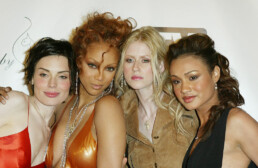
  December 2, 2025 Hey there, Meteor readers, Good evening to everyone except the casting directors of Chicago, who have chosen to put Whitney Leavitt on Broadway. May the ghost of Gwen Verdon haunt you forever.  In today’s newsletter, we wonder what’s to be gained from the Netflix docu-series about the rise and fall of Sean Combs. Plus, a quick suggestion on where to send some support this Giving Tuesday. Shannon Melero  WHAT'S GOING ONThe Diddy doc: Tonight, you may be partaking in the ancient practice of scrolling through Netflix to find something to watch, and it’s more than likely that you’ll immediately be met with the cover art for a new docuseries: Sean Combs: The Reckoning, which premiered today. But what is it really hoping to achieve, and who is it actually serving? As the title suggests, the series is about Combs, who was convicted of “transportation for the purposes of prostitution” earlier this year (he was acquitted of sex trafficking and racketeering). The four episodes follow his career and track the allegations and rumors that surrounded him even as a teenager—including delving into the theory that he was involved in the death of Tupac Shakur (the doc does make clear that official charges were never brought against Combs). The major selling point of the doc is hours of exclusive videos from the days leading up to his arrest, acquired by Curtis “50 Cent” Jackson, who is an executive producer on the series. Here is where things get complicated. Jackson is a known grudge-holder who has loudly and proudly taken revenge on his perceived enemies. (He once bought 200 tickets to a Ja Rule concert so that the first four rows of the show would be completely empty.) It just so happens that Combs and Jackson have been feuding with each other since 2006, which calls into question the narrative that The Reckoning is really driving. Is this a series, in the vein of Surviving R. Kelly or On the Record, in which victims are centered and telling their stories, or is this Jackson’s final move in a long game played against Combs? Watching Jackson gleefully recount his favorite footage from the series in a recent interview with Robin Roberts leads us to believe it’s the latter. “If I didn’t say anything, you would take it as hip hop was accepting this behavior,” Jackson tells Roberts, responding to the idea that this doc is a product of his disdain for Combs. “No one would be saying anything.” No one? In truth, women in the music industry have been pointing a finger at Combs for years. Some of them, including Aubrey O'Day, appear in the doc, which is largely narrated by the men who surrounded Combs. But making note of that wouldn’t serve the hero narrative Jackson is creating for himself. He’s also claimed that the proceeds of the documentary will go to victims of sexual assault—although how exactly that will happen is unclear.  DANITY KAINE, THE GIRL GROUP FORMED BY SEAN COMBS. O'DAY (SECOND FROM RIGHT) CLAIMS IN THE DOCUMENTARY SHE WAS RELEASED FROM THE BAND FOR REFUSING TO "PARTICIPATE SEXUALLY" WITH COMBS. (VIA GETTY IMAGES) We certainly can’t tell you what to take from this series; we will all walk away with something different. Much of what I watched felt like a round-up of Combs’ enablers clearing their conscience and offering a historic deep dive into the concept of “Diddy” rather than a victim-focused project. But there are a few questions we can all consider before pressing play. Do victims stand to gain anything from it? Will it persuade fans to take Diddy’s reported crimes (and the people they harmed) more seriously? Or is it finally time to give Sean Combs the one thing that would hurt him most: a slow, painful fade to anonymity? Only time and the ratings will tell. THIS GIVING TUESDAY, WE NEED YOUR SUPPORTWe’re writing to you on #GivingTuesday, a day when we give some special love to The Meteor Fund, our affiliated nonprofit, which supports our storytelling about women’s lives, and helps us create community and conversation with all of you. We’re now at a pivotal moment. Many traditional media companies are shrinking—in courage and conviction. Even as everyday Americans are standing up for their rights and the rights of others, too many news outlets aren’t interested in keeping pace. But at The Meteor, we’re energized—and mobilized. We’re expanding our coverage, forging partnerships with other independent outlets, and taking our trademark events on the road. Will you support The Meteor Fund this year, and join us as we grow? Your tax-deductible donation (little or large!) will help The Meteor Fund expand our work in the months ahead. AND:
 WOMEN AND CHILDREN ARRIVING IN DULLES AIRPORT IN 2021 AFTER BEING EVACUATED FROM KABUL. (VIA GETTY IMAGES)
 FOLLOW THE METEOR Thank you for reading The Meteor! Got this from a friend? |

It's a Love Story
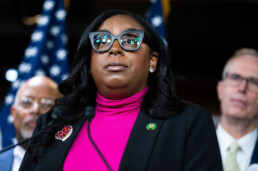
  August 26, 2025 Good evening to Swifties and the people who love them, Today marks 0 days since Taylor Swift announced her engagement and 105 years since the ratification of the 19th Amendment, which secured the vote for (some) women in the United States. Huge day. To sort out our feelings about that (the unfinished work of suffrage, not Taylor, for whom we’re uncomplicatedly happy), we called up Rep. LaMonica McIver. The congresswoman has been in the news since May, when she was charged with assault after attempting to conduct an entirely legal congressional oversight visit at an immigration facility in Newark, New Jersey. She has pleaded not guilty. In today’s newsletter, Rep. McIver shares her own personal call for action. Plus, something good is happening in Illinois. Fearlessly, Cindi, Mattie, and the team  WHAT'S GOING ONVoting like our lives depend on it: Over a century ago, the 19th Amendment became law and millions of women in the United States were granted access to the ballot box. Sounds great, and it was. But not for everyone. It’s never simple to mark these kinds of dates on the calendar, and the 19th Amendment—a rad thing, to be clear—did not in fact do what it promised for large chunks of the population. Poll taxes kept some poor women from voting. It wasn’t until the Voting Rights Act of 1965 that Black women in the Jim Crow South (and some Native American women, for that matter) were able to cast their ballots. Voting can feel like the bare minimum, but August 26 is a reminder that people fought hard for even this basic right. We vote so we can exercise one of our most essential liberties, but we also vote so that we can elect qualified, inspiring candidates, who can represent our interests. When democracies are working as they are supposed to, this is in fact a wildly beautiful and cool process.  REP. LAMONICA MCIVER, AT A NEWS CONFERENCE IN FEBRUARY 2025. VIA GETTYIMAGESIn honor of Women’s Equality Day, we called Rep. LaMonica McIver—one such legislator. Below, the 39-year-old U.S. congresswoman from New Jersey shares her thoughts on suffrage, activism, and where we go from here. When I think about suffrage, I think about how women are leading the fight for representation across this country. Women have always been leaders on voting rights, immigration, and justice, and they’ve shown how these issues are tied together. Now more than ever, women are doing that work. Our freedom is under attack each and every second of the day under this administration, and that makes this anniversary so much more important. It’s a day that reminds us why we have to keep leading. We have an administration that is trying to take us backward, rolling back civil rights, women’s rights, and the protections our ancestors fought for. We’re seeing them do it with the stroke of a Sharpie pen. I know people feel defeated, but I want people to focus on what they can do. As a member of Congress, I’m always asking myself, “Why am I doing this?” The “why” for me is the people I represent, who are counting on me to raise their stories and to advocate for them, to make sacrifices for them, to give a voice to the people who are voiceless. They give me strength. We all have a “why,” and we all need to find it to keep pushing for the country that we know. We can’t always predict where our fight will take us. I tell people all the time: I did not come into office with a robust immigration plan. That is the honest truth. But I knew I wanted to protect the people in this district—documented, undocumented, women, children. And that is exactly what I am doing. I am showing up to do the job I was hired to do. There’s something for everyone to do. Voting is something. Exercising the right that suffrage gave us is something. Keeping your circle informed is something. The work that folks in the media are doing is something, because you are being attacked as well. You don’t have to be the next Martin Luther King, Jr., but you have to find something to do. You have to stay engaged. — Rep. LaMonica McIver (D-N.J.), as told to The Meteor A few “somethings” you can do on this anniversary:
AND:

 FOLLOW THE METEOR Thank you for reading The Meteor! Got this from a friend? |

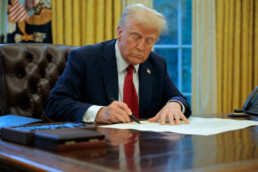
“You can’t rewrite a statute with a Sharpie”
  January 30, 2025 Greetings, Meteor readers, Too much is happening at once.  In today’s newsletter, we take a close look at the many anti-DEI actions Trump has put in motion, and what they mean in real life. Plus, what to expect at this year’s Grammys. Resting my eyes, Shannon Melero  WHAT'S GOING ONThe ripple effects of the DEI crackdown: The morning after the aircraft collision over the Potomac River on Wednesday night, Trump was busy blaming the DEI policies of Biden and Obama for the crash. “Their policy was horrible,” he said, “and their politics was [sic] even worse.” His evidence-free rant is just the latest move of his administration’s obsessive, all-out assault on diversity, equity, and inclusion programs. So what do Trump’s slew of executive orders, freezes, and attacks on programs that help people of color, women, and LGBTQ+ people thrive actually mean? Before we parse out what we should expect, let’s first review what’s happened. On his very first day, Trump overturned Biden’s executive order on DEI, which, among other things, ordered all federal agencies to come up with equity action plans, which address discrimination in the workplace. The second Trump executive order, handed down the same day, went further, ending any DEI activities in the federal government and reversing core policies that have been around for decades, including a Lyndon B. Johnson-era order that required any workplace taking federal dollars to implement equal opportunity measures. The Trump administration made clear just how much they mean it: Tens of thousands of federal employees got an email directing them to report any colleagues trying to “disguise” DEI “by using coded or imprecise language” and promising that they’d face “adverse consequences” if they didn’t. This effort extends throughout the government. The Department of Justice was ordered to halt ongoing cases in its civil rights division, including police reform agreements negotiated in the final days of the Biden administration. The Department of Education removed more than 200 web pages with guidance for schools on how to implement DEI policies and create welcoming campus environments. And just last night, Trump issued an order that threatened to remove federal funding from schools teaching about things like transgender identity, white privilege, and unconscious bias (though it’s unclear how much of this will actually happen, given how difficult it is for the federal government to dictate curricula.) So, are you ready for the hopeful part? “These executive orders cannot change civil rights law,” says Amalea Smirniotopoulos, senior policy counsel at the NAACP’s Legal Defense Fund. “You can’t rewrite a statute with a Sharpie.” That means that hiring, say, only white people is still illegal. Denying a woman a promotion just because of her gender is still illegal. Firing someone for being gay is still illegal, even according to the rightwing Supreme Court. Which also means that if any federal employee experiences discrimination or workplace harassment, they still have rights under Title VII of the Civil Rights Act and can file a lawsuit against the federal government. And despite the administration’s attempt to frame DEI programs as “illegal and immoral,” the programs it’s ending “are lawful and have been upheld by courts in many cases,” says Smirniotopoulos, pointing to the NAACP’s success in winning an injunction to stop an anti-DEI executive order issued by Trump during his first term. She predicts these newer orders will face challenges, too. But that doesn’t mean this crackdown won’t have far-reaching effects. There’s the law, and then there’s enforcement. “The reason DEI programs exist in the first place is to help with compliance of civil rights laws,” Smirniotopoulos says. “If we see the federal government roll them back, there is a risk that they’ll allow discrimination to fester among their own workforce.” In other words, you’re still free to file a lawsuit alleging discrimination—but the guardrails and systems that might discourage discrimination to begin with may be deteriorating. This deterioration could be widespread, given how the current administration is “encouraging” the private sector to roll back DEI. Since the election, many private companies—from Walmart to McDonald’s to Amazon—already have. Anti-DEI efforts will also rob federal employees of things like volunteer affinity groups. “Employees are feeling that the loss of these programs [will deprive] them of community and the social network that’s essential in any workplace,” Smirniotopoulos says. “Your ability to succeed in your workplace isn’t just about your raw intelligence, it’s also about knowing how to navigate workplace dynamics, knowing the culture and norms. Those social factors can play just as much of a role in whether someone can thrive or get promoted.” For the federal government, the ultimate effect may be a working environment where swaths of the population feel unwelcome—which will hurt hiring and retention for government positions. (Many suspect this is part of the point; the president of the American Federation of Government Employees called the anti-DEI orders “a smokescreen for firing civil servants.”) A diminished federal workforce affects everything from getting through airport security quickly to making sure we have clean water. “When the federal government works well, it’s invisible,” Smirniotopoulos says. “When the federal workforce is attacked, that ultimately hurts all of us.” If you’re experiencing workplace discrimination or harassment: The Equal Opportunity Employment Commission technically still exists, but to be safe, we recommend contacting independent organizations like the ACLU, NAACP, or National Women’s Law Center to get advice on how to proceed. —Nona Willis Aronowitz AND:
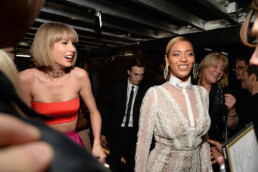
 Two Pop Stars, Both Alike in DignityBeyoncé and Taylor Swift face off at the GrammysBY SCARLETT HARRIS  IN FAIR LOS ANGELES WHERE WE LAY OUR SCENE, FROM ANCIENT GRUDGE BREAK TO NEW MUTINY. (VIA GETTY IMAGES) It’s been an incredible year for women in pop, and this weekend at the 67th Grammy Awards the race for the highly coveted Album of the Year award is stacked with the gals who ruled the summer. Billie Eilish, Sabrina Carpenter, Chappell Roan, and Charlie XCX are among the nominees. And while each of these women has a strong chance of taking home the gold, the real competition is between two titans of the industry—Taylor Swift and Beyoncé, who have 157 nominations and 46 wins between them. This weekend promises to be a kind of referendum on the notoriously racist and old-fashioned music establishment. All eyes will be on whether Bey, with “Cowboy Carter,” can finally clinch the Album of the Year award that has eluded her her entire career—or whether Grammy darling, Swift, will add to her already record-breaking tally of four AOTY golden gramophones with “The Tortured Poets Department.” The last time they were pitted against each other in this category was at the 2010 Grammys, for “I Am… Sasha Fierce” and “Fearless,” respectively, which Swift went on to win. This followed Kanye West’s infamous “I’mma let you finish” screed at the MTV Video Music Awards the year prior, in which he interrupted Swift’s acceptance speech for Best Female Video for “You Belong With Me,” asserting that Beyoncé had one of the best videos of all time and should have won for “Single Ladies (Put a Ring On It).” (He wasn’t wrong.) Ever the consummate professional, Bey had invited a deer-in-the-headlights, 19-year-old Swift back on stage during her own acceptance for Video of the Year so she could give the speech truncated by West.  WEEKEND READING 📚On stoking division: Anti-immigration policies are creating a wider divide in already fragile Latine communities. One Mexican/Puerto Rican writer shares what that looks like for her family. (New York Times) On letting the dead rest: A new documentary about Selena Quintanilla called Selena y Los Dinos has some wondering where to draw the line between honoring late artists and profiting off their tragic stories. (Refinery 29) On sex and other cities: A new character has emerged from the manosphere: the “passport bro.” While that may sound like a cool name for travel buddies, it’s just the latest depraved rebrand of sex tourism. (The Baffler)  FOLLOW THE METEOR  Thank you for reading The Meteor! Got this from a friend? Sign up for your own copy, sent Tuesdays and Thursdays. |

Two Pop Stars, Both Alike in Dignity
Beyoncé and Taylor Swift face off at the Grammys
BY SCARLETT HARRIS
It’s been an incredible year for women in pop, and this weekend at the 67th Grammy Awards the race for the highly coveted Album of the Year award is stacked with the gals who ruled the summer. Billie Eilish, Sabrina Carpenter, Chappell Roan, and Charlie XCX are among the nominees. And while each of these women has a strong chance of taking home the gold, the real competition is between two titans of the industry—Taylor Swift and Beyoncé, who have 157 nominations and 46 wins between them.
This weekend promises to be a kind of referendum on the notoriously racist and old-fashioned music establishment. All eyes will be on whether Bey, with “Cowboy Carter,” can finally clinch the Album of the Year award that has eluded her her entire career—or whether Grammy darling, Swift, will add to her already record-breaking tally of four AOTY golden gramophones with “The Tortured Poets Department.”
The last time they were pitted against each other in this category was at the 2010 Grammys, for “I Am… Sasha Fierce” and “Fearless,” respectively, which Swift went on to win. This followed Kanye West’s infamous “I’mma let you finish” screed at the MTV Video Music Awards the year prior, in which he interrupted Swift’s acceptance speech for Best Female Video for “You Belong With Me,” asserting that Beyoncé had one of the best videos of all time and should have won for “Single Ladies (Put a Ring On It).” (He wasn’t wrong.) Ever the consummate professional, Bey had invited a deer-in-the-headlights, 19-year-old Swift back on stage during her own acceptance for Video of the Year so she could give the speech truncated by West.
The two have been eerily linked ever since: fans noticed Beyoncé dropped her groundbreaking self-titled visual album at midnight on Swift’s birthday in 2013. The streaming debut of Swift’s The Eras Tour concert film was released on the 10th anniversary of that self-titled album. (Queen Bey showed up to the film’s red carpet premiere, quashing any lingering rumors of beef between the two.) They are the only two women to debut a single at number one on the country charts. And both dominated the cultural conversation in 2024, a year full of women taking back and transforming pop music.
Despite pretty much every other awards body and cultural arbiter giving Bey her dues, and despite a trio of standout albums in BEYONCÉ, Lemonade, and Renaissance, the Grammys routinely withholds AOTY from her (this is her fifth nomination). As writer Kathleen Newman-Bremang explained last year—after Jay-Z accepted the Dr. Dre Global Impact Awards at the Grammys and slammed the Academy in his acceptance speech— Black music is often relegated to the genre categories like R&B, rap, and dance, which Renaissance won in in 2023. Albums by Black women seldom win the general categories like Album of the Year—which was last won by a Black woman in 1999 with The Miseducation of Lauryn Hill.
“[Calling] Black artists the greatest of all time… would require admitting the power of Black art, it would require acknowledging the history of cultural pillaging and musical theft of Black work that the industry was built on,” Newman-Bremang wrote at the time.
Cowboy Carter is a direct response to that kind of racism in the industry, featuring Linda Martell, a Black country pioneer, and her modern-day contemporaries Shaboozey, Tanner Adell, Brittney Spencer, Tiera Kennedy and Reyna Roberts. Despite being her most critically polarizing album in over a decade, Bey will probably win for what is, in my opinion, her weakest body of work since 4. That is if Swift doesn’t best her for the similarly conflictingly reviewed and unwieldy The Tortured Poets Department.
Of course, Grammy voters might surprise us and hand the award over to one of the freshly crowned pop princesses, like Sabrina Carpenter or Chappell Roan. But the fact that Beyoncé will actually be attending the award ceremony this year tells me she expects to be leaving with some hardware. Or perhaps everyone’s just there to have a good time and we’ll still be waiting for an AOTY award in another 15 years (you know, if society holds up in the meantime).