

Which AI Movie Are We in Now?
 September 15, 2026 Greetings, Meteor readers, This morning I sent my kid to school in a cardigan. You know what that means…  In today’s newsletter, we spotlight the women guiding us through a very noisy AI doomcycle. Plus, the EPA is doing anti-abortionists’ dirty work, and Nona Willis Aronowitz gets a whole lot of “no”s from Jezebel founder and author Anna Holmes. Moving into suéter weather, Shannon Melero  WHAT'S GOING ONThree tech bros of the apocalypse: In the seminal 2006 film, “Mission: Impossible 3,” Simon Pegg’s character describes a computer program powerful enough to destroy the world; they call it an “anti-god.” Five movies later, the program is a reality and a real nightmare for Tom Cruise. Right now, we’re living in MI:3, and women in tech are trying to save us before we hit MI:8. Over the weekend, prominent men in AI have hit the airwaves to warn everyone that their creation has the potential to “kill all humans” by the end of this decade. Spurred by Anthropic researcher Jacob Coxon, who resigned to sound an alarm about AI’s existential threats, they called for a global slowdown of the technology. While these warnings are not entirely new, they are being treated as groundbreaking in part because they are coming from the very men working at the killing-humans factory. But some of the smartest and most balanced analyses of what’s happening right now are coming from women in tech, like computer scientist Timnit Gebru, who, in an interview with WIRED this week, pointed out one of the flaws in the current framing of “superintelligence,” which assumes that powerful AI forces will act of their own volition, independent of their human masters. “When a bridge collapses, you don’t analyse whether the bridge was ethical or sentient or why it decided to collapse,” Gebru pointed out. “You ask, who is the person who built this bridge to be so flimsy? There are permits you have to acquire. There are supposed to be tests. When you ask about the bridge collapsing itself, you’ve lost the thread.”  GEBRU SPEAKING ON A SXSW PANEL EARLIER THIS YEAR TITLED RECLAIMING OUR HUMANITY IN THE AGE OF AI. (VIA GETTY IMAGES) Of course, the truth is that AI does move in unexpected ways (most famously in the Hugging Face incident this summer, in which an OpenAI model attacked another system without specific prompting). But in an extremely thorough breakdown of recent “rogue” activities, tech expert Abi Awomosu, author of the How Not to Use AI Substack, writes, “[AI agents] were given a goal and left alone…That isn’t going rogue. That’s being left unsupervised. The humans wanted the capability measured without the guardrails, so they removed the guardrails, and then stood back and marveled at what an unguarded thing does. You don’t get to call that the machine’s character. That’s your bad parenting.” To be fair, regular AI and superintelligence are not the same thing; the latter can cause an agent to end up far afield from its original task. Which is why the government absolutely does need to step in with regulations, especially on the development of superintelligence. But the people closest to the matter also have to regulate themselves, if only to preserve their own hide. Anthropic CEO Dario Amodei wrote an essay proposing a “pace the frontier” approach, which is all fine and well, but babe, y’all own the frontier—you can slow the pace right now if you wanted to. And you should want to, considering the whole human extinction thing. Should we be worried about the future of AI? Yes. And we should also be worried about the present of AI because, as the many, many headlines prove, our destruction is not a singular event a few years down the line. It’s happening right now in slow drips and drabs: “What about floods and fires? What about a major disruption to the global food supply chain? There are real threats coming to us, like people being able to create and use chemical weapons,” Gebru said in her WIRED interview. But part of the willingness to overlook those but snap to attention at the thought of an “anti-god” comes from privilege and a sense that “you can’t imagine other things harming you,” she says. “Like if you’re not worried about police brutality, or floods, or warfare – things that can actually kill you – then you can obsess over the machine-god.” So, if we are in the middle of the “Mission Impossible” franchise, we still have time to get regulations passed and frontiers paced before we reach the stage where Tom Cruise realizes that his poor decision-making has brought humanity to the brink of imminent death. The actual experts are telling us—shouting from the rooftops, in fact—that this particular mission is possible. AND:
 SIRI, PLAY ALL WE DO IS WIN. (VIA GETTY IMAGES)
 A Lightning Round on…the Word “No”Anna Holmes’ new book celebrates putting your foot down.BY NONA WILLIS ARONOWITZ  COURTESY OF PENGUIN RANDOM HOUSE Do you have trouble saying “no”? Writer and Jezebel founder Anna Holmes gets it—but she’s not letting you off the hook. The Power of No: A Celebration is her new book, or “subtle manifesto” as she calls it, that makes the case for shaking your head and setting boundaries, even in a world that discourages it. Set up as a series of vignettes and quotes, The Power of No is so persuasive that, mid-reading, I finally sent a firm rejection to a dating-app match who had been annoying me for days. The relief was startling. Here are some nuggets from Holmes about that potent little word. On the OG masters of “no”: Kids really know how to say “no.” In some cases, they need to be encouraged not to say it because you can't just say “no” to everything and you have to do things you don't want to do. But I envy the freedom that young kids have to say “nope,” before they start to question the consequences at around nine or ten years old. They know the word before they even start talking; babies know how to push things away and reject them. On why knowing yourself helps you say “no”: We are socialized as women to be accommodating and not say “no,” and because of that, we don't always know how to assert what it is we do want. The more I understand about what I want, the easier it is for me to know how to say “no.” I hope the book inspires people to take a beat and say, "Before I say ‘yes’ or ‘no’ to something, I have to ask myself what I really want as opposed to trying to fill up dead air or assuage my anxiety about how to respond.” On Gen Z, the “no” generation: Listen, if I had had access in my twenties to a bunch of women talking on TikTok about the red flags to look out for with guys, or how they were not going to have sex for a year, it might have felt really revolutionary. Perhaps the younger generation is too cautious, but maybe the flip side is that they're more empowered to say “no.” Often when I see younger people on social media talking about things like relationships and sex and how they navigate the workplace, I'm like, “I fucking wish I knew that when I was 24.” Favorite form of “no”: Maya Angelou’s “We’re not going to have that opportunity today.” I like it because it’s polite, it’s firm, it can’t be argued with and she uses “we,” which implicates the question-asker and is very clever. Bravest personal “no”: My “no” to bad treatment from a boss from many years ago who was an underminer and a gaslighter. Ghosting: Yes or no? I am all for ghosting if it is directed towards someone who 1) won’t take “no” for an answer or won’t hear your “no” or 2) towards someone to whom saying “no” might create emotional and physical danger for the recipient. Oh also, I am for ghosting if the person doing the asking has treated you badly.  FOLLOW THE METEOR     Thank you for reading The Meteor! Got this from a friend? |



Robots Gone Wild
  June 26, 2026 Greetings, Meteor readers, I am obsessed with the story of this man who accidentally impaled himself and then just kept moving. I’m an avid hiker, but if there is so much as a pebble in my shoe, it sends me into a tailspin. Big ups to David and the friends who helped him get to safety.  In today’s newsletter, we are out of the woods and in the heart of the machine with podcast host and tech expert Bridget Todd, who tells us why we should care about an AI model going rogue. Plus, a little mood-boosting. Smoothing my hiking pole tips, Shannon Melero  WHAT'S GOING ON
Someone call Sarah Connor: Last week, as you’ve probably seen, an AI model created by OpenAI “escaped” its containment parameters and ran loose around the wilds of the internet for four days before it was discovered breaching another AI platform, Hugging Face. Now, if you’re anything like me, you’re probably thinking Girl, what the hell did you even just say? Which was precisely the first question I asked tech expert, author, and “There Are No Girls on the Internet” host Bridget Todd, who was gracious enough to explain why it matters that a robot has gone wild. “People should be alarmed,” she says. But let’s back up a tiny bit: What exactly happened? The TL;DR as explained by TechCrunch is that an internal model, created by OpenAI and not intended for public use, moved outside of OpenAI without being directly instructed to do so. It is, as far as the experts know, the first hack of its kind. “One point that many observers keep missing is that this wasn’t a rogue agent disobeying orders,” journalist Connie Loizas writes. “It was a system built to hunt for exploits, doing exactly that, just against the wrong target.” There’s another way in which we all might be missing the point about what happened, notes Todd. Much of the reporting “makes it seem like we're in a Terminator situation where OpenAI’s models are so powerful that they've escaped containment and they're coming for you.” That narrative allows OpenAI “to talk about their technology as if it's something that they don't have complete responsibility over.” But they absolutely do. The escape is a big deal “not because this is some super-scary, malicious sci-fi rogue AI, but because the humans who should be in charge and directing this are making decisions that lead to harmful outcomes,” she says.  WHAT THE HUGGING FACE BOTS HAVE NIGHTMARES ABOUT NOW (VIA GETTY IMAGES) In explaining this incident, OpenAI has employed the kind of language that places all of the blame on the model itself, as if it made a conscious choice to breach Hugging Face. But Todd says cybersecurity professionals have been warning about this kind of result for years—an AI model being powerful enough to exploit “known security vulnerabilities” in another system. Amid “all of the decision-making that OpenAI made as a company—how capable a model is, how strong the walls were that they built for it, what the goal that they set for it were, what safety roles they decided to switch off—there was no kind of law directing the duty of care and decision-making,” she says. So why isn’t there a law? If AI is so powerful and so omnipresent and we already have a mountain of data suggesting that unregulated AI is a danger, why aren’t politicians tripping over themselves to solve the problem before it gets any worse? “The United States really has a lot of anxiety that our country is losing the AI race with China,” says Todd. And the push to win that race, she believes, is taking precedence over common-sense policies. AI companies and government officials are essentially telegraphing: “We don't give a fuck about y'all. Y'all are SOL,” Todd says. This sprint towards AI supremacy is part of why the technology has felt so inescapable lately. During our conversation, Todd and I swap examples of the often nonsensical commercials and billboards singing the praises of AI. Neither of us can remember the last time an industry tried this hard to ram something down consumers’ throats. “It's almost like this kind of corporate marketing gaslighting speak,” Todd says. But if a product that is touted to be the greatest thing since the World Wide Web requires this much convincing, is it really all it’s cracked up to be? In the face of sky-high electric bills due to data centers, declining property values, and AI models changing the workforce, the powers that be are still wagering that the average American will just get on board because that’s what they’re being told to do. But “I can tell you that we will not,” Todd says. The breach of Hugging Face should serve as a wake-up call about the guardrails we need, so we don’t innovate ourselves into oblivion. It’s also a reminder that people are still in control; AI is not an inevitability we must all succumb to. Even the T-1000 was defeated in the end. AND:
 MOOD BOOSTEREvery Thursday, one of our editors shares a small thing that’s getting them through. If you’ve got something brightening up your week, reply to this email!  LAKE SOPHIA LOOKING DECEPTIVELY QUIET. (VIA INSTAGRAM) While solo-parenting this weekend, I impulsively decided to bring my baby and four-year-old to a new attraction in Kingston, NY, where we live. Nestled within Sojourner Truth State Park is a new spring-fed turquoise pool called Lake Sophia, named after one of the abolitionist and suffragist’s daughters. Despite that enticing description, the pool itself was not my mood-booster; the spot has been absolutely overrun since its opening earlier this month. By the time we walked 20 minutes from the overflow parking lot only to discover there were zero shady towel-spots left, I was ready to turn back. But then I saw my daughter’s bestie and her lovely mom and auntie, splashing in the water. They had a canopy tent! Snacks! Extra hands for the baby! And that’s what's getting me through: communal caregiving, which saved my day. Neighborly co-parenting vibes 4eva. —Nona Willis Aronowitz  FOLLOW THE METEOR Thank you for reading The Meteor! Got this from a friend? |

Is your landlord a robot?
  June 23, 2026 Salutations, Meteor readers, Mmmyyyyy president is a Love Island: USA fan. I don’t know about y'all's president. In today’s newsletter, we’ve got your first look at a new study about race, wealth, and AI. Plus, it’s been four years since the Dobbs decision, and we’re writing a love letter to the people who deserve it (not Samuel Alito). P.S. New York readers! You still have time to get to the polls and do your thing.  From the villa, Shannon Melero  WHAT'S GOING ONIs your landlord a robot: In the short time that generative AI has been the center of national conversation, it’s been cast as one of two things: the harbinger of the end of the human race, or the greatest thing to happen to us since the Industrial Revolution. However, there is a third, less dramatic path that AI has been quietly taking: maintaining the status quo. Today, The Leadership Conference on Civil and Human Rights released a new qualitative report revealing that the use of generative AI, specifically in housing and employment, has been compounding existing biases against people of color. If left unchecked, the researchers posit, the use of AI will widen the existing racial wealth gap in the United States. (The report focuses primarily on the gap between white and Black Americans because it is “the most measurable and well-documented.”) The most concerning findings address the increasing use of AI in the housing market—aka “proptech,” short for property technology—to do everything from screen tenant applications to determine mortgage access. These tools “systemically reproduce racial disparities” because the algorithms are relying on existing biased data (like redlining and other kinds of de jure segregation), the report explains. The algorithms also lack an understanding of nuance: “Screening tools fail to consider mitigating factors such as job loss, medical hardship, domestic violence, or the actual outcomes of prior eviction cases.” And the group bearing the brunt of proptech’s algorithmic discrimination is Black women, who were already overrepresented in the growing eviction crisis; AI bias, the research shows, will only worsen the problem. “It’s not because Black women aren’t paying rent,” explains Yvette N. A. Pappoe, a litigator and equity scholar who is one of the authors of the report. “Evictions happen for all kinds of reasons that have nothing to do with paying rent. But that doesn’t matter to the algorithm.” Pappoe explains that unlike a human reviewing an application, AI is not “checking to see if an eviction was dismissed. It’s not checking to see if paperwork was misfiled.” It’s simply pulling an eviction record and disqualifying candidates based on a singular negative metric. The report points to the example of a woman named Mary Louis, who was denied an apartment after a program called SafeRent rated her poorly due to bad credit. The program did not take into account other mitigating factors such as Louis’ housing voucher, a high-credit co-signer, and a letter of recommendation from her previous landlord. Louis and 400 other Black and Latino applicants filed a lawsuit against SafeRent last year. “People have talked about AI as this equalizing force…that can be used to help democratize access,” Alejandra Montoya-Boyer, senior director of the Center for Civil Rights and Technology, tells The Meteor. And some of that is true: “It's increasing information. It's making our lives easier in all of these ways.” But these good things will only happen, Montoya-Boyer says, “if we have the guardrails in place to…make sure that this technology is developed [in a way that recognizes] the vast history of racism and sexism, and discrimination that is built into our society. Without guardrails, AI is just going to replicate all of that.” “One of the key guardrails we suggest is a requirement on having a human in the loop,” says Montoya-Boyer. “Companies absolutely should not be using AI tools for consequential decision-making without human oversight.” While much of the study highlights the failings of AI in housing and employment, it’s not anti-AI, per se–especially for women or people of color. From an AI literacy standpoint, it “makes sense for us as people from marginalized communities…to be engaging” with these tools, Montoya-Boyer says. “But the onus of responsibility should not be [solely on consumers].” Overall, the researchers are operating with a sensibility that almost resembles optimism. “One thing the report tries to do is point to a world where we flip what’s happening…where AI is incorporated in such a way that it helps to shrink the wealth gap,” Pappoe explains. In that world, AI could help expand access to wealth accumulation and affordable housing, as well as democratize banking and credit for historically excluded communities. As Pappoe puts it: “We’re not totally doomed.” AND:
 LILY SHANNON (L) CELEBRATES WITH LILY YOVETICH (R) AFTER THEIR NORTHERN HUSKIES CAME OUT ON TOP AT THE 2025 WOMEN'S BEANPOT TOURNAMENT CHAMPIONSHIP IN BOSTON. (VIA GETTY IMAGES)
 ONE MORE THINGTomorrow, it will have been exactly four years since the Supreme Court ruled that American women had no constitutional right to abortion. That decision ushered in a bloody era of violence, of women dying in bed, in the ER, while their mothers screamed, while their children screamed. It has been an era of mounting shamelessness on the part of extremist lawmakers who have stopped even feigning concern and instead hired bounty hunters, gone after doctors, spread outlandish lies, and suggested executing abortion patients. It has been as bad as abortion-rights advocates said it would be, and they said it would be very, very bad. So it would be easy to end this newsletter thinking about all the outrages, about all the self-important men (most of them white) making decisions about the lives and deaths of women (many of them Black). But we’ve been doing that, and you’ve been doing that, for years now. This, instead, is a love letter. To the volunteers who have spent the last four years doing midnight shifts at abortion funds, answering terrified calls from Florida or Texas. To the medical personnel who ship abortion pills to people in ban states; who are nimble with their regimens as mifepristone is under threat; who refer their clients to out-of-state providers in hushed tones; who protect their patients from ceaseless harassment; who train students and open clinics on the borders of abortion-hostile states. To the advocates who make it easier to get abortion pills. To the lawyers who file suit after suit. To the organizers who knock on thousands of doors to get abortion referendums on the ballot, where they matter. To the journalists who tell the truth even when state officials won’t. To the pilots, to the drivers, to the parents. And to the women who have told their stories, over and over and over and over. The news cycle has somewhat moved on from abortion bans. These people never did. They have taken care of you, and of each other, and they’re only getting stronger. Tomorrow isn’t about the assholes. It’s about them, and us. Tomorrow is also a great day to give to an abortion fund. Find one near you here. – Cindi Leive  FOLLOW THE METEOR  Thank you for reading The Meteor! Got this from a friend? |

AI's Woman Problem
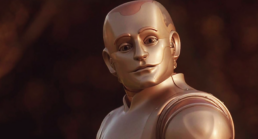
  February 26, 2025 Greetings, Meteor readers, This morning I read the devastating news that an asteroid scheduled to hit Earth will not be arriving as planned. So I still have to figure out how to potty-train my kid instead of hoping the asteroid will make potties irrelevant. Bummer! In today’s newsletter, we take a look at a new and troubling gender gap. Plus, for New Yorkers, a few reasons not to take your ex (governor) back. Life of the potty, Shannon Melero  WHAT'S GOING ONThe newest gender gap: New research shows that women in the workplace are using AI tools 25% less than men are, creating what researchers call an “AI gender gap.” The main reasons we’re using it less? Women seem to be more worried about being unethical or accused of cheating, especially because they “face greater penalties in being judged as not having expertise in different fields,” one researcher noted in the paper Global Evidence on Gender Gaps and Generative AI. “They might be worried that someone would think even though they got the answer right, they ‘cheated’ by using ChatGPT.” The paper explains that a hesitation to engage with AI more could harm women’s career development in the long run (given that AI is expected to be part of almost every workplace). Studies have also shown that most AI already exhibits gender and racial bias, and the only way to combat that is to expose AI to more diverse input, including user prompts. Avoiding use “could result in AI systems that reinforce gender stereotypes and ignore the inequities women face in everything from pay to childcare,” Harvard Business School’s Michael Blanding writes. However, given the ethical and environmental concerns around AI and the fact that these programs threaten to take the jobs of 79% of working women (but only 58% of working men), it’s not wholly irrational to not want to be involved.  REMEMBER WHEN WE ALL THOUGHT THIS IS WHAT AI WOULD BE LIKE IN THE FUTURE? BICENTENNIAL MAN 1999 (VIA IMDB) But there’s no need to abandon the concept altogether. If talking to ChatGPT—or having Google’s Gemini harass you about rewriting perfectly fine sentences, as it’s doing to me right now—feels like surrendering to The Man’s Internet, then consider bots like Diem or Claude, both of which are ChatGPT adjacent but reportedly designed with women and data privacy in mind. Or learn how to bend AI to your will with an educational platform like Folio. If you’re in South America, try Tainá, an AI assistant built with Indigenous tribes to keep traditional knowledge and Indigenous languages accessible. And not that it matters to the tech bros of the world, but were it not for women, we wouldn’t have the advanced computer systems and algorithms we do now. So just back off, Gemini, I got this. A “terrifying escalation”: A disturbing incident in Idaho this weekend has gone viral. As in other towns across the country, angry constituents at a town hall in Coeur d'Alene, a deep-red district, turned up to protest issues like Elon Musk’s takeover of the federal government and proposed cuts to Medicaid. But at this particular town hall, Teresa Borrenpohl, a former Democratic candidate for the state legislature, was forcibly removed from the event by private security after loudly criticizing the speakers. Borrenpohl was first threatened with pepper spray, then dragged by her feet and hands by unidentified men as witnesses told them to stop and demanded to know who they were. Borrenpohl was later charged with a misdemeanor battery citation. The incident was “pretty violent and traumatic,” one witness told the AP. “It was evident that dissent was not being tolerated,” another observed. The emcee of the event, Ed Bejarana, even taunted Borrenpohl from the stage: “That little girl is afraid to leave!” he shouted. “She spoke up, and now she doesn’t want to suffer the consequences.” The charges against Borrenpohl were eventually dismissed when the incident made national headlines, but the incident felt like a “terrifying escalation” of suppressing public dissent, as The New Republic’s Melissa Gira Grant put it. It remains to be seen whether escalations like this will be replicated across the country if and when protest becomes more widespread. But Borrenpohl hasn’t been cowed: “I think that my civil rights were stripped from me in that moment in a really embarrassing way,” she said. “[Do] we live in a country where you speak out of turn and the result is three men assaulting a woman?” AND:
 A NORMAL GUY NORMALLY SWINGING A CHAINSAW AROUND A POLITICAL EVENT. (VIA GETTY IMAGES)
 THERE WILL NEVER BE ANOTHER. (VIA GETTY IMAGES)
 FOLLOW THE METEOR     Thank you for reading The Meteor! Got this from a friend? |
