
My Personal Black History
Four Black women on the moments that made them
By Rebecca Carroll
When you think about Black history, you may think of stories and lore from the long ago and far away past. But the small details of our personal experiences as Black people in America in the recent now comprise the same nuanced Black history made by our ancestors. So we asked a few Black women in The Meteor collective to share memories themselves. Black history in the making.
“In that sacred space, Black history was not abstract”
A year before my mother, Dr. Willa Alfreda Campbell Wilson, passed away, we traveled to Orangeburg, South Carolina, the town where I was born and where my parents devoted years as professors at South Carolina State University. We were there for a dear friend’s wedding, joyfully reconnecting with our community, but it was essential to my mother that we visit the memorial honoring those killed by state violence during the 1968 Orangeburg Massacre. Standing there with my father and my husband, Mom paid tribute to friends she had lost and shared what she had endured and survived during the massacre and in those years: being beaten, jailed more than a dozen times, chased by police dogs, and hosed down for demanding basic human rights. She spoke about how Black women’s bodies were deliberately targeted, how she was kicked repeatedly for sitting at a lunch counter, and how violence was used to threaten dignity and suppress the movement.
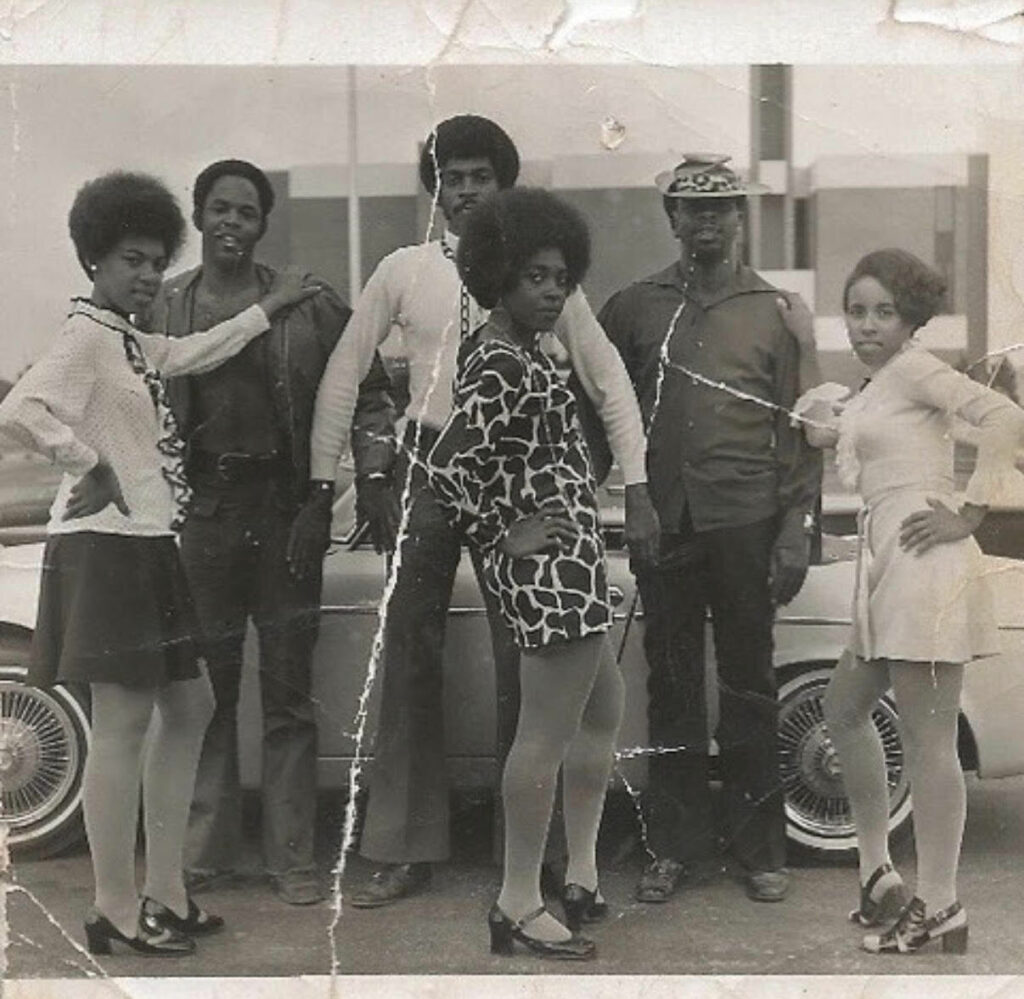
In that sacred space, Black history was not abstract. It was personal, embodied, and still reverberating through our family. That moment affirmed why I do the work I do. As a storyteller and amplifier of cyclebreakers and truthtellers’ stories, I understand that documenting our narratives is an act of love, resistance and preservation. My mother taught me that silence enables erasure, and that bearing witness is both a responsibility and a form of protection for future generations. Honoring our ancestors means telling the truth about what they endured and ensuring their sacrifices are neither minimized nor forgotten.
—Jamia Wilson, Random House executive editor and author of Young, Gifted and Black and Make Good Trouble
“She was showing me that we could make our own platforms”
My mother was an artist, a teacher, and an entrepreneur. When I was a child, I used to go with her to sell t-shirts and other apparel she made through her silk-screen printing business. She’d make drawings and create designs particular to Blackness, and print them herself. [Her life] was her—a single, independent woman—her daughter, and her work. At the time, it felt ordinary, but now I see it as Black history happening in real time.
Sitting beside her at those events, watching her build something from her own creativity, taught me what Black entrepreneurship, Black womanhood, and Black artistry could look like. She was showing me that we could make our own platforms, our own economies, our own images. I ain’t really realize it until recently, but I carry that with me in my own practice now. My work feels like a continuation of that history she started.
—Tatyana Fazlalizadeh, artist and cultural worker
“I wish I’d known then what I was looking at”
My father, Rev. Ronald B. Packnett, pastored a historic Black church in my hometown of St. Louis, Missouri. Among the responsibilities of the pastor’s daughter was to accompany him on his visits to those on our church’s “Sick & Shut-in” list every week, after school and during the summer break. And at 6 or 7, it wasn’t always the most welcome experience.
One day we stopped by a nondescript house on St. Louis’ North side—the forgotten side of the city—where storied brick houses that have been in Black families for generations stand buttressed against the white flight, urban blight, and systemic neglect of a city determine to choke off the very people who made it great. An old man opened the door of the house; he wore a white t-shirt and suspenders, slippers and a slight smile on his face. He was glad to see us darken his door, and was kind to me. I was polite, because I had home training, but I knew what was coming: boredom.
Sure enough, I sat. I waited. I waited more. I wandered. While my father and the old man in the white t-shirt talked, I happened upon some photographs. I wish I’d known then what I was looking at, and would have then known what to ask the man who owned them. I would have asked how it felt to watch the great Jackie Robinson break the color line. I’d ask him if it was true that Satchel Paige and Josh Gibson were even better than Jackie, and if the Negro Leagues would have beat up on the MLB as badly as we all think they would have. I would have asked him what he thought of Ozzie Smith, our backflipping hometown hero, who was as successful as he was popular with the Black folk and white folk in our still segregated city. I would have asked him if, given the chance he should have gotten, he thinks he would have beaten the greats, been a Hall of Famer, and retired wealthy in Ladue, instead of his well-kempt home full of love and care on the forgotten side of St. Louis.
That day, I was in the home of the legendary James ‘Cool Papa’ Bell, who played for some of the greatest baseball teams in Negro League history. And before I left, he gave me some caramel candy and a kiss. Because that’s how we do. Our heroes strive because they love us. And we owe them our love in return. May the makers of Black history be elders who live bountiful lives of dignity. And like Cool Papa and my daddy, they become our ancestors to remind us to be free.
—Brittany Packnett Cunningham, podcast host and interdisciplinary strategist
“An emotional blueprint”
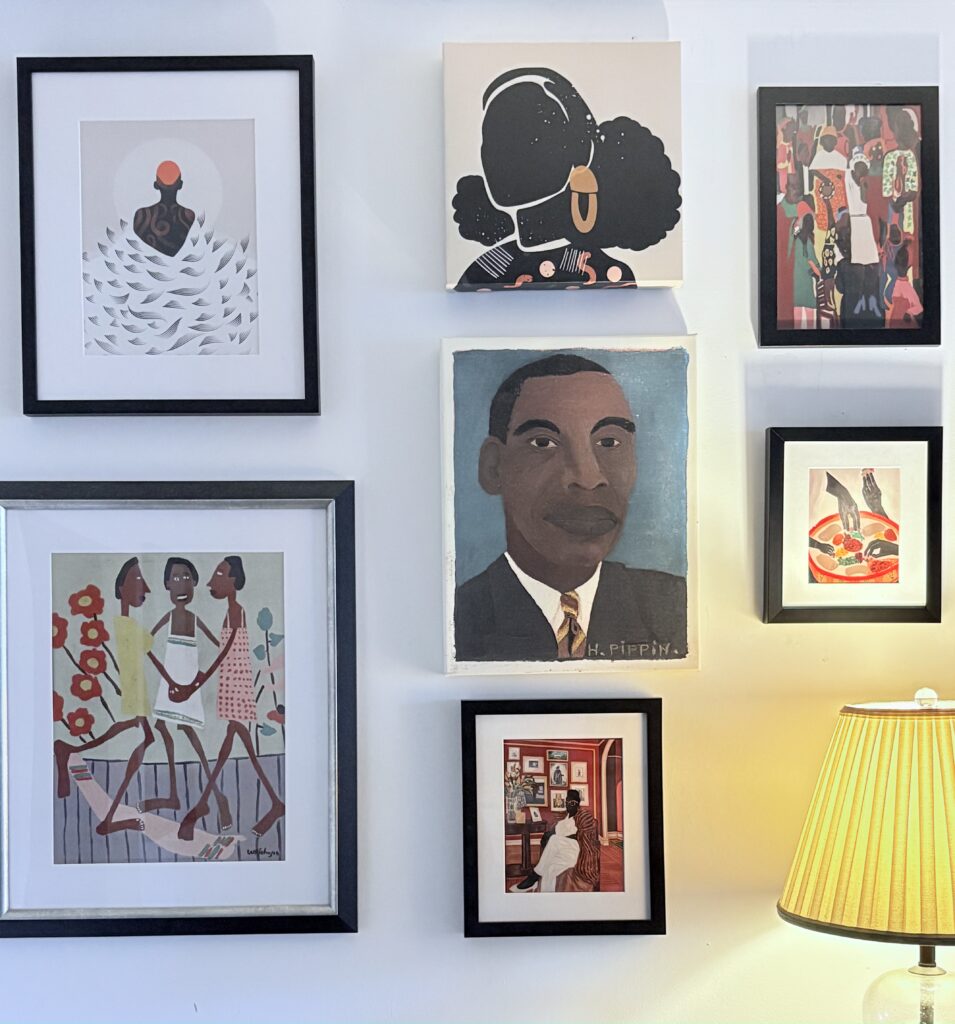
As a Black woman who grew up without Black family, it has been imperative for me to create my own Black history, every day throughout my life. And as a mother, that has meant hanging Black art on the walls of our home, stacking our shelves with an abundance of Black books, listening to Black music on our Bose speakers, and cultivating community and traditions with our chosen Black family. Perhaps as meaningful, if not more so, it has meant pouring my love of Black culture, and my dedication to honoring its representation and impact, into my son, openly and often, providing him with an emotional blueprint that will help to shape the future of his own Black history.
—Rebecca Carroll, writer and cultural critic, editor-at-large for The Meteor