
A Feminist Love Letter to Baby Formula
Is it the key to a more equitable partnership? The Meteor’s Nona Willis Aronowitz makes the case
By Cindi Leive
Two days ago, in The New York Times, my colleague Nona tossed a lovingly crafted, deeply researched grenade into one of the more passionately held beliefs about parenting: that breast is best. The title of her piece, “The Secret to Marriage Equality is Formula,” argues exactly that, but it goes further—Nona argues that formula (often a source of raised eyebrows in feminist circles for some very good reasons) can also be the secret to less stress and happier parenting for women in or out of partnerships.
The piece struck such a nerve that the comment section is now closed. But after breastfeeding two babies myself, and feeling guilty whenever I used formula, I had questions.
First off, for those who didn’t read the piece, how did you personally discover that the secret to marriage equality is baby formula?
I discovered this the hard way. The first time around, with my daughter Dorie, I breastfed because it seemed like the default: Everybody assumes that if you can breastfeed, you should breastfeed. While breastfeeding was a very nice way to bond, the experience was also very intense: It led me to desperately want to control the feeding realm. I was learning so much about her, which led me to push my partner, Dom, out of the space (he didn’t exactly argue—socialization runs deep!). Meanwhile, I was sleep-deprived, isolated, and resentful. I felt like I hadn’t signed up for being Mom-In-Chief with a hapless underling as a co-parent. My husband and I fought constantly, which wasn’t good for any of us, including the baby.
So, when we had a second daughter, Pearl, we figured we should try to prioritize equality, even if it undermined breastfeeding.
It seemed like a small price to pay for a harmonious experience, and for my baby to genuinely have a wonderful bond with her father from the get-go. And you know what? It worked almost instantly. I breastfed exclusively for two weeks just to establish breastfeeding, and it was like PTSD—all of the bad feelings came flooding back. But as soon as we started introducing formula and Dom started doing overnight feeds, the vibe in our household totally changed.
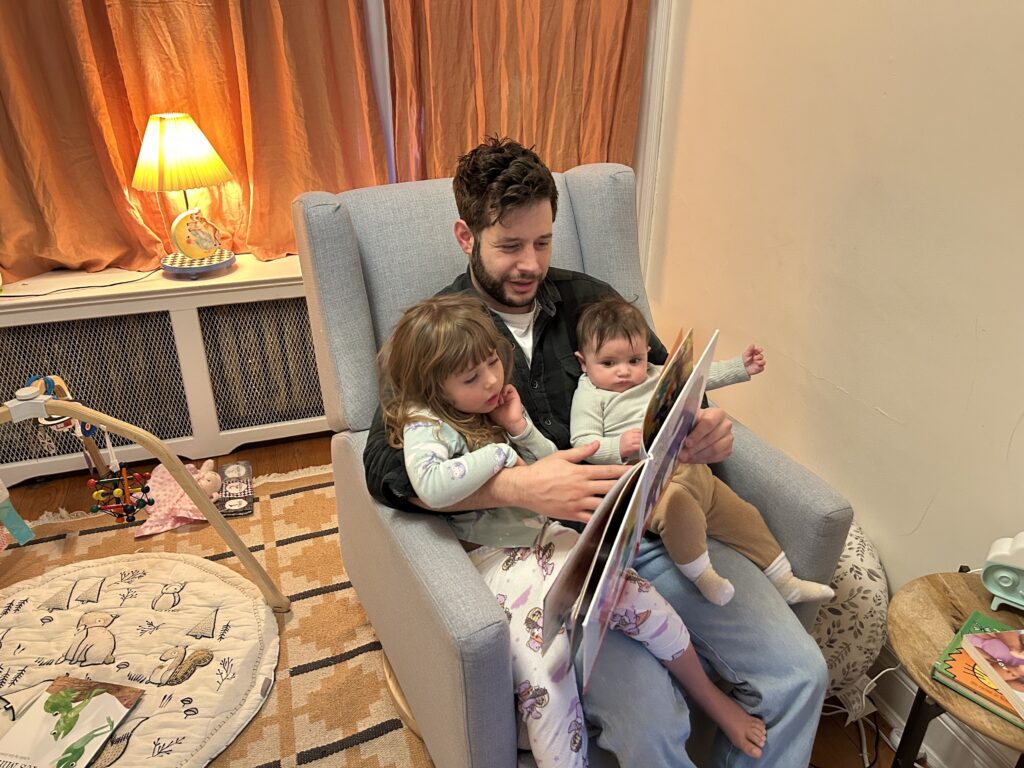
I felt so much closer to him, I felt so much happier to see my baby in the morning, and he really learned Pearl in a way that he didn’t learn Dorie until she was a toddler. As we used more formula and bottles, he was just as good at soothing the baby as me.
The comments on your piece are copious and mostly very positive, from women saying thank you, we should have options. There were two other strains of responses I wanted to ask you about. First, from people who say: Just pump! And second, from people noting that the scientific evidence shows that breastfeeding is medically superior. Let’s start with the idea that pumping breast milk could solve the equal parenting issue.
Pumping is not the same as formula! First of all, it involves joyless labor from the lactating parent—time I could be spending with my baby or my older child. It also still creates that executive/employee dynamic, where I give my husband this precious breast milk that he better not waste. He once likened it to borrowing the company car and being told to return it without a scratch on it. Pumped breastmilk isn’t a total responsibility transfer.
One of the most revelatory findings of my research was a 2009 piece by Jill Lepore in the New Yorker that questioned our society’s promotion of breast pumps. “Should I take three twenty-minute pumping ‘breaks’ during my workday, or use formula and get home to my baby an hour earlier?” she asks pointedly. When we tell women to obsessively focus on the liquid itself rather than ways to better bond with their babies, it’s a Pyrrhic victory.
[She also writes] that many of the proven benefits of breastfeeding are social and emotional (“smiling and cuddling”), rather than nutritional. Which brings me to your second question: The medical benefits of breastfeeding are often overstated. The data shows that there are immune benefits [over] formula in the newborn stage, but they amount to, like, one fewer ear infection a year or slightly fewer GI issues. As economist Emily Oster puts it, these benefits are “real, but modest,” and some advertised benefits, like a higher IQ or protection from obesity, are more about correlation than causation: People who can breastfeed are wealthier and more educated. They often have more time off. There’s all sorts of other factors affecting their babies’ lives that have nothing to do with the nutritional makeup of their breast milk.
Your column wasn’t about politics, but as you’ve noted, this is a political subject. RFK Jr.’s MAHA program has included breastfeeding as an official recommendation and been quite derogatory about the insufficiency of formula. So the government is encouraging women to breastfeed based on what you’re saying is insufficient medical data. Why do you think they are doing that and why was this an important column to write right now?
First of all, exclusive breastfeeding requires maternity leave. We don’t have guaranteed paid maternity leave in this country, so asking any woman to exclusively breastfeed is implying that she shouldn’t work. So let’s get that out of the way. But there’s this deeper assumption that women will sacrifice anything—their mental health, their career opportunities, their marriage, their sleep—for their baby. So even if there is a slight benefit to the nutritional makeup of breast milk, that still doesn’t justify pushing women this hard to breastfeed. It puts a huge amount of stress on a lot of women. And I think the message of the MAHA movement is, “You should prioritize your family, your baby. And if that means you can’t work or have any time for yourself, well, that’s just your role as a woman.” It couldn’t be more clear.
Furthermore, the contrast between all the information we get about breastfeeding and the dearth of information we get about equal parenting—which upwards of 85 percent of parents claim they support—is one of the most insidious forms of sexism I can think of. All these parents are saying they want to split the load, and yet there’s very little guidance on how to do that, which leaves it up to individuals (very sleep-deprived individuals) to figure it out. Before we had children, my partner and I agreed on a feminist partnership in broad terms, but we didn’t talk about what that would look like day-to-day when we had a baby. We just assumed that I would breastfeed unless it didn’t work. I didn’t even know the term combo-feeding at the time. It would have been great to discuss this before the newborn scrum.
This could even start during the two-day period after birth, when experts are coming in and out of your room every few minutes. A lactation consultant or somebody else should also be educated on how to administer formula and why. I asked a lactation consultant a couple of months after Dorie’s birth, when breastfeeding was killing me, “How do I introduce formula while still breastfeeding?” And she clutched her pearls and said, “Oh, I don’t know anything about that. You’re gonna have to refer to the CDC website.” The American Academy of Pediatrics has a lot to say about breastfeeding; they should also have information about formula and its benefits to families. And there should be more studies commissioned about combo-feeding—I found, like, two studies about it, as opposed to approximately one million studies about breastfeeding.
After your column came out, one of our colleagues, who had breastfed her child for two and a half years and was a self-described “breast is best” advocate—said that she felt you had unintentionally, but effectively, read her to filth.
[Laughs] That was absolutely not my intention. There can be lots of benefits to breastfeeding, and if you enjoy it, then by all means, do it. What I would like is for people to go into the very hard work of breastfeeding with their eyes open, knowing that this will likely impede domestic parity. It’s just a fact. Some women (like our friend) may choose to exclusively breastfeed, anyway, because they want to. But if equal parenting is a priority for you, I invite you to consider other options—without shame or guilt.