
A winning week for workers
|
No images? Click here  April 6, 2022 Greetings, Meteor readers! I wish I had something quippy and hilarious to share at this moment, but as I mentioned last Saturday, I am fasting for Ramadan, and the brain fog has fully set in. On the bright side, I’ve had so much extra time—time I normally spend preparing and reheating one cup of coffee—I finally finished knitting a top for Spring (if she ever decides to show up). Today we have a cautiously optimistic look at the recent history and future of the labor movement in the U.S. from author Nona Willis Aronowitz. She predicts the aftermath of last week’s big wins at Starbucks and Amazon and what that could mean for workers’ rights across the board. Talk about your David versus Goliath matchups. Who was it that won in the end again? But before we load our slingshots, let’s take a look at the news. —Shannon Melero  WHAT'S GOING ON
AND:
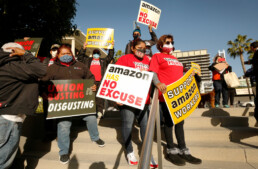
—SM  JOURNALIST'S NOTEBOOKLabor’s Vibe ShiftHow a decade of organizing led to this week's wins at Amazon and StarbucksBY NONA WILLIS ARONOWITZ  PRO UNION PROTESTS OUTSIDE OF AN AMAZON HEADQUARTERS IN ALABAMA (PHOTO BY AL SEIB VIA GETTY IMAGES) It’s been a major week for the labor movement in America. After workers at more than 100 Starbucks locations nationwide petitioned for union recognition, the coffee chain’s flagship store in New York voted to unionize 46-36. At Condé Nast, a smaller but highly influential company, workers announced that they’re organizing 500 employees with the NewsGuild—a major milestone for the ever growing number of media companies forming unions. And in a move that shocked even the most optimistic labor activists, two young men of color who worked in Amazon’s Staten Island warehouse managed to organize the site’s 8,000 workers. It’s a heartening, electric moment for anyone invested in holding powerful corporations accountable for the well-being of workers. The Amazon vote in particular, which was meticulously tracked on Twitter and accompanied by videos of employees joyously celebrating, feels like an exciting but unexpected vibe shift. But as a journalist who has long covered labor and the lived economy, I was reminded that these wins build slowly over time. Allow me to bring you back to 2012; when organizing Amazon was unthinkable, Gawker’s union contract (which started a wave of media organizing) was years away, and the only group trying to organize Starbucks was a radical, grassroots labor union called the Wobblies. America’s labor movement was the weakest it’d been in many decades, the media declaring it all but dead; private-sector union membership was the lowest it’d been in decades, hovering at just over 10 percent, down from 13.5% in the early 2000s. At the same time, though, there was a national class consciousness brewing: The devastation of the Great Recession was still palpable. Occupy Wall Street made such a splash that President Obama expressed tentative support for the movement, and major unions jumped on the bandwagon. Mitt Romney, a vivid symbol of capitalist greed, lost the election after he was caught on tape disparaging the 47 percent of Americans who are “dependent upon government” for handouts.
Still, it was hard for me at the time to get my hopes up about the labor movement truly coming back to life. In stories I wrote at the time, I took pains to point out that most workers still felt too vulnerable to join the nascent Fight For $15 movement to raise the minimum wage happening at retail stores like Walmart and fast-food restaurants like Burger King. I covered a failed union campaign at a handful of Minnesota Jimmy John’s, reporting that high turnover, emotional exhaustion, and extreme precarity might have doomed the effort from the start. Workers with kids, chronic health problems, and elderly parents mostly sat out the Jimmy John’s fight, which was spearheaded by white college students. And the idea of being in a media union myself hadn’t even occurred to me; it was only years later, after Gawker unionized, when it started to seem feasible. But then, while I was moderating a panel in 2013 at the liberal economic think tank Roosevelt Institute, organizer and scholar Dorian Warren said something I’ll never forget: If this new class-conscious era is our civil rights movement, we’re only at the Montgomery bus boycott—almost a full decade before the signing of the 1964 Civil Rights Act. I realized then that setbacks at Jimmy John’s and elsewhere weren’t signs of doom—we just weren’t there yet.
It feels like today we might be at a tipping point, closer to 1964 than we are to 1955. This cluster of wins for the labor movement makes clear the increased attention being paid to workers’ rights which have shifted during a demoralizing pandemic, where both essential and white-collar workers have been pushed to the point of burnout. Chris Smalls, the Amazon employee who kicked off the successful union effort, is now in his early thirties, which means he was in his formative years back in 2012 when his generation became painfully aware of class inequality. Now, Chris Smalls’ generation makes up the largest group in the workforce. We have a long way to go for a true sea change: Even though 50 warehouses have reached out to the Amazon Labor Union, their victory won’t be easily replicated, and contract negotiations will be a challenge. Flagrant and unapologetic union-busting is still the go-to move for powerful companies. There’s also work to be done in terms of integrating the labor movement into other social justice efforts. Many of the workers spearheading these efforts are women; women are more likely to work in retail and Amazon warehouses, and women have been more likely to quit their jobs during the pandemic. Yet worker’s rights often take a backseat in mainstream feminist conversations. And these particular victories may very well feel short-lived—so we should prepare ourselves for setbacks. I clearly remember the acute depression many people felt when Occupy fizzled out or when other Amazon votes came up short. But these ebbs and flows are a natural part of building any movement. It’ll behoove us to remember that this week’s successes did not happen overnight—and neither will future wins. But against the backdrop of a culture ripe for change, they will come.  PHOTO BY EMILY SHECHTMAN Nona Willis Aronowitz is an author and journalist who’s written about the economy, generational politics, and sexuality for the New York Times, The Cut, Elle, VICE, the Washington Post, and many others. Her book Bad Sex: Truth, Pleasure, and an Unfinished Revolution will be published by Plume in August 2022.  FOLLOW THE METEOR    Thank you for reading The Meteor! Got this from a friend? Sign up for your own copy, sent Wednesdays and Saturdays. |



Muslims are not a monolith
|
No images? Click here  April 1, 2022 Hi Meteor readers! Spring housekeeping: you won’t see my name as much around these parts for a while, as I’m shifting my focus exclusively to a book I’m writing about my upbringing in Wyoming and the myth of the American West. (Short version: the hypermasculine white narrative of Western Expansion has always been a lie.) I’ll miss you all, but don’t worry—I’ll be back. More importantly, and FORTUNATELY FOR YOU: you will start seeing the name of the great Samhita Mukhopadhyay, who’s joining Shannon Melero on this newsletter ship and is simply one of the best humans around. In today’s newsletter, Shannon writes about the start of Ramadan and asks why non-Muslims still know so little about a holiday observed by two billion people. And after that, we’ve got a wonderful comic strip from Huda Fahmy with tips on how to be mindful of your Muslim co-workers this year. Check it all out, right after the news. And call if you’re in Wyoming! —Julianne Escobedo Shepherd  WHAT'S GOING ON
AND:
—JES  HAPPY HOLIDAYSRemember to Wish Your Friends a Blessed Ramadan This YearAnd please, while we’re celebrating, take some time to educate yourself on what it is BY SHANNON MELERO  A SHOP SELLING RAMADAN DECORATIONS IN GAZA (PHOTO BY MAJDI FATHI VIA GETTY IMAGES) I converted to Islam sometime in 2014, secretly, in a bathroom. I’d love to tell you that “bathroom” is some sort of metaphor, but I took my Shahadah (declaration of faith) in a literal bathroom by myself and told very few people what I had done for almost a year. Why the cloak and dagger? I was a church youth leader. On weekends I would teach teens about their Lord and savior, Jesus Christ. And while Jesus is a beloved homie in Islam, I didn’t fully believe a lot of what I was teaching. But I cared for those youngsters and the thought of leaving them in the hands of other adults who wouldn’t understand them felt like a betrayal. So I hid my faith and continued working at the church, where my mother was associate pastor, until I was asked to leave (but that’s another very dramatic story for another time). Not too long after my conversion—my first Ramadan was upon me. It was horrific. I didn’t make it through the first two weeks of fasting. In the years since, there have been plenty more “failed” Ramadans for me, which have all met their end in a similar fashion—a hunger-induced brain fog where I start asking myself: Why are we doing this? Why am I doing this? Why is it so long? Why couldn’t I be drawn to Catholicism? That seems like it’s not too hard. Before you know it, I’m face down in a bag of spicy sweet chili Doritos like a raccoon on speed.
I wasn’t alone in this line of questioning (although I was absolutely alone on the Doritos binge). Canadian journalist, podcaster, and fellow Muslimah Shireen Ahmed tells me that she also stared down difficult questions, like: “What am I actually doing? And why am I doing it? Is it because I want to please Allah or do I want to be able to flex that I’m fasting?” Ramadan is a beautiful time full of reflection, elaborate community meals, a focus on charity, finishing the Quran and an obscene amount of dates (the fruit!). But fasting seems to be the thing we all get stuck on, both inside and outside of the Muslim community. “What kind of parent would let their kid starve all day,” I’ve heard non-Muslims say. (You know who you are and I will not let that go.) But when I was in Catholic school and it was time to choose what we were giving up for Lent, no one lobbed the same judgment. When I took up the Daniel Fast during my teen years with my family, that was normal. What many non-Muslims choose to remain ignorant about is that fasting is scalable, and it’s also not the only way to participate in Ramadan. Not everyone fasts: There are those who simply cannot fast, because they’re pregnant, suffer from eating disorders, or are on medication. There are also those who simply don’t want to, which is as valid a reason as any other. “Ramadan isn’t supposed to deplete you to a point where you can’t function,” Ahmed says. “It’s supposed to reinvigorate you.”
Ahmed was born into the Muslim faith and understands as well as anyone the struggle that comes with the fast, but also the fun there is to be had within the community. “In the summertime, after Taraweeh, the Tim Horton’s is like nuts,” she says. For those who don’t know, “Taraweeh” is a special night prayer that takes place after we break fast and is often a huge community gathering. Taraweeh is a lot longer than the length of the five prayers Muslims are obligated to do every day and if you attend a poppin’ mosque, it can go on until sunrise. So why do we celebrate Ramadan? Were you to ask five Muslims that question, you’d have five completely different answers. Some will say it’s a way to ensure a place in heaven. Others do it to understand suffering, or to develop humility. Some seek to develop community. Some make goals to memorize Quran. And the list goes on and on. But an answer you rarely hear from our leaders is “introspection,” something a lot of us end up doing anyway. Sure, we’re asked to reflect on our sins and seek forgiveness, but we never talk about extending that forgiveness to ourselves. “When we think about worship, we think about submission...but there’s also an internal spiritual self that needs taking care of,” Ahmed explains. Yet our focus is pulled in so many different directions over the course of 30 days. Decorating, planning iftars (the fast-breaking meal), memorizing Quran, attending Taraweeh, and on top of that, maintaining our normal work or school schedules. It’s a grueling marathon made all the more difficult by having to move in a world that looks at Muslims sideways simply for existing.
I’d love to blame non-Muslims for all of this but really, Ramadan has always had a bit of a branding problem. We don’t have a mascot like all of the other holidays; there is nothing to put a smiling face on 30 days of Hunger Games. (No disrespect to Rafiq the Ramadan date palm tree, who is a mascot for the under-five group.) Without some sort of hyper-commercialized gloss over it, non-Muslims can only understand Ramadan through the portrayals already in front of them, and it’s not like the nuances of faith made it into any episodes of Homeland. (If you are looking for a show about Muslims that isn’t about terrorism, I recommend We Are Lady Parts. And as far as Ramadan goes, Ahmed points out there's an entire “micro-economy” around this holiday dominated mostly by women of color who sell dates, decorations, Eid outfits, and even Ramadan trees!) But instead of helping us string up some cute Ramadan lights, folks want to scuritinize religious fasting anew despite being able to mind their own when former Twitter CEO Jack Dorsey was doing it as a wellness habit. “I had a teammate who told me once what I was doing was unhealthy and it's like please, no one asked you," Ahmed recalls. Particularly as we prepare for the fast, Muslims are inundated with outside opinions on our entire belief system and all of its flaws. “The world is not where it was 30 years ago, but we should be further along,” Ahmed explains. “People know what Ramadan is. People know who Muslims are. I just don’t think they’ve learned that we’re not monolithic.” While I’d love to argue with and educate every person who clings to the monolith, I try to follow my mother’s advice: God doesn’t need you to play defense. (But find me on the wrong day, and you will catch these holy hands, I promise you that.) “We are not new to this. We know ourselves, and I know myself well enough at 45 to handle it. Do I get tired? Yes. But I get tired anyway. Like, the point is just because you’re uninformed doesn’t mean that we are,” Ahmed says. I’m sure this year, I’ll ask myself once again why I’m doing any of this—and because I’m hangry, I won’t have an answer. But in my current satiated and clear-headed state, the answer seems painfully obvious: because it’s what I believe.  Shannon Melero is a Bronx-born writer on a mission to establish borough supremacy. She covers pop culture, religion, and sports as one of feminism's final frontiers.  BEFORE YOU GO Know better, do better. Artist and author Huda Fahmy writes some of the funniest comic strips about the Muslim experience. She also put together a handy How-To on making workplaces more accommodating for Muslim employees.  Copyright © 2022 by Huda Fahmy. All rights reserved.  FOLLOW THE METEOR    Thank you for reading The Meteor! Got this from a friend? Sign up for your own copy, sent Wednesdays and Saturdays. |


"Our bodies are not public domain"
|
No images? Click here  March 30, 2022 It’s hump day and what a week it’s been already. I know I’m not alone when I say I don’t think any of us will soon forget the incident at Sunday's Oscars. Obviously, I’m talking about the grand larceny that was Billie Eilish winning best original song over Lin-Manuel Miranda’s “Dos Oruguitas.” It’s absolutely absurd! Other than that, it was a pretty boring show. (Just kidding, we’ll get to the other thing in a minute.) In today’s newsletter, we’re talking about the Biden administration’s brand-spanking-new budget (weird how you can budget when you’ve got no money). This one is of particular interest as it omits the Hyde Amendment, opening the door to federal funding for abortions. It’s the second time President Biden has made this move—but with all of the anti-abortion legislation at the state level, what’s it really mean? Julianne Escobedo Shepherd will tell you! But first, let’s get newsy with it. —Shannon Melero  WHAT'S GOING ON
AND:
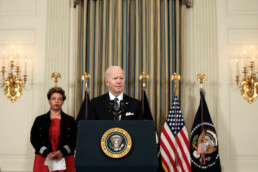
—SM  YOUR TAX DOLLARS, YOUR BODYDems, Put Your Money Where Your Mouth IsFederally funded abortion is in the 2023 budget, so let's make sure it stays that wayBY JULIANNE ESCOBEDO SHEPHERD  PRESIDENT AND OMB DIRECTOR SHALANDA YOUNG PASSING AROUND THIS YEAR'S BUDGET SPREADSHEET. (PHOTO BY ANNA MONEYMAKER VIA GETTY IMAGES) President Biden released his 2023 budget this week and in a bit of *good* news for humankind, it includes a provision that omits the Hyde Amendment and allows federal funds for anyone seeking an abortion. This is the second time since Biden took office that he’s included this directive, and while it got axed last year thanks to one single man (take a wild guess, his name rhymes with “overexpansion”), it’s an important statement about protecting the right to abortion in a year when states across the country are effectively banning the procedure, and will likely see the gutting of Roe v. Wade. A quick history of the Hyde Amendment: First passed in 1976 after its introduction by the virulent anti-abortion Congressman Henry Hyde, it barred federal funds—that is, Medicaid and Medicare—from being allocated towards abortion. Its legality was challenged for several years, and so it didn’t take effect until 1980 when the all-male Supreme Court declared it constitutional by a 5-4 split—promptly leading to over four decades of struggle for people who need the procedure, but might not be able to afford it. Unsurprisingly, Hyde impacts low-income women of color most of all. And that unfair economic burden is what Biden is taking aim at in his budget proposal, which touts “bold commitments to advance women’s economic security, gender-based violence prevention and response, and sexual and reproductive health and rights both at home and around the world.” The proposal isn’t perfect. It provides $400 million to Title X family planning to “improve overall access to vital reproductive and preventive health services and advance gender and health equity” (great!), but the word “abortion” is nowhere to be seen (not great; it’s a simple medical procedure, people). And there are other, larger issues with the budget—an astronomical, 700% increase in funding for ICE, for instance, as well as giant bumps for police and military spending—all of which can make it feel like its basic support for women, LGBTQIA+ people, and families is all Oliver Twist begging with an empty bowl. (Please sir, may I have some childcare?) Besides, Shmoe Shmansion is still on his warpath to sink any legislation that might actually help people—including this Title X allocation, where he’s likely to reintroduce Hyde yet again. But still, it’s important. The move was praised by leaders like Rep. Ayanna Pressley, who called Hyde “racist and discriminatory” (it is), and Planned Parenthood President Alexis McGill Johnson who, in a statement, called the budget “an essential opportunity to underscore the administration’s values.” Amid a countrywide crisis for reproductive rights, Biden’s stand against Hyde signals to those of us who believe in equal healthcare that we still have some ground in this fight. Not to be all “call your Congressional representative,” but—call your Congressional representative! And if anyone asks, Joe Manchin’s number is (202) 224-3954. Thank you!  Julianne Escobedo Shepherd is a Wyoming-born Xicana journalist and editor who lives in New York. She is currently at work on a book for Penguin about her upbringing and the mythology of the American West.  ONE LAST TIMEPlease Scrub This Year’s Oscars From My BrainBY SHANNON MELERO  THE ONLY PERSON WHOSE OPINION TRULY MATTERS IN ALL OF THIS. (PHOTO BY MYUNG CHUNG VIA GETTY IMAGES) As you may have heard a few thousand times, on Sunday, 16 million people watched as Will Smith arose from his front-row seat at the Oscars, walked on stage, and slapped Chris Rock after Rock made an insensitive joke directed at Jada Pinkett Smith—who has been living with alopecia for four years. That brief exchange has stretched into three days’ worth of discourse, covering every nook and cranny of the moment. The slap has meant different things to different people—with some seeing it as an example of toxic masculinity, others seeing a deserved response to a bad joke, and some questioning why a joke so entrenched in misogynoir had to be made at all. Since Sunday, Smith has apologized, and Jada has posted a new Instagram tile about healing. It sounds like we’re all just about ready to move forward from this. However, this incident was precipitated by a cruel, ableist joke at the end of the day, which is an element worth highlighting. Alopecia is an autoimmune disorder that attacks a person’s hair follicles, resulting in hair loss, and it is, in fact, a disability—one that disproportionately affects Black women. So while the broadcast spent an evening celebrating one groundbreaking depiction of disability (the film CODA, about a Deaf white family), another was being mocked—and it's possible that everyone in that room (including Will Smith) would have laughed and moved on if it hadn't exploded into a spectacle. Of all the voices that had something to say (and nearly everyone said something), let’s end it with the words of Congresswoman Ayanna Pressley, another Black woman living with alopecia. “Our bodies are not public domain,” she wrote in a tweet Monday. “They are not a line in a joke—especially when the transformation is not of our choosing.”  Instead of sharing another slap meme, why not share this newsletter with your friends! FOLLOW THE METEOR Thank you for reading The Meteor! Got this from a friend? Sign up for your own copy, sent Wednesdays and Saturdays. |


The long known truth behind the KBJ hearings
|
No images? Click here  March 26, 2022 Hey Meteor readers! This week has been a living how it started/how it's going meme. It began with the historic confirmation hearings to confirm Judge Ketanji Brown Jackson to the Supreme Court—hearings in which the most qualified and brilliant nominee in years was made to rebuke a pasty melange of Republicans who used their time to racistly invoke spurious and dangerous lies about her record. And the week ended with the revelation that sitting Supreme Court Justice Clarence Thomas's wife Ginni was (BIG GULP OF AIR) texting deranged QAnon conspiracy theories supporting overturning the 2020 election to Mark Meadows, Trump's chief of staff, around the same time that Trump was hoping SCOTUS would help him… overturn the election. We've got a lot more on all this in the news, and after that, Rebecca Carroll writes about Judge Jackson's exceptionality and whether her confirmation hearings may have woken white America up to the double standard Black women endure every day. —Julianne Escobedo Shepherd  WHAT'S GOING ON
AND:
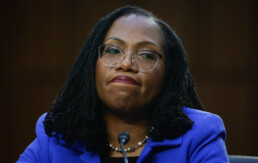
—JES  KETANJI BROWN JACKSONOn Being Twice as Good to Get Half as MuchBlack women could have predicted what KBJ went through. So why are so many people surprised?BY REBECCA CARROLL  THE FACE OF A WOMAN WHO HAS HAD ENOUGH (PHOTO BY CHIP SOMODEVILLA VIA GETTY IMAGES) Last week, during the Senate confirmation hearings for Judge Ketanji Brown Jackson, after hours of watching the relentless, shameless and openly racist baiting by white male senators of the country’s first Black woman Supreme Court nominee, I posted a tweet: The way that a Black woman in America can be as highly, hyper educated, intelligent, elegant, skilled, experienced and qualified as KBJ and still be treated like this by white men on national television. It’s not even symbolic. It’s a glaring body of evidence. I didn’t feel as though I was saying anything special or new. I’m a Black woman in America who has not only experienced this kind of racism and misogyny, but has made it my life’s work to call it out in everything I make and do. In fact, I have said or written some iteration of what’s in that tweet literally dozens of times, to varying levels of response. I said it when I first started in magazine journalism, and my ideas were passed over for the less-developed ones of my white peers. I said it when Michelle Obama was in the White House, constantly tested and scrutinized by the media despite the fact that she showed up more graceful, poised, and magnanimous than it was perhaps reasonable to expect. I said it on my podcast Billie Was a Black Woman, for this reason exactly—because Billie Holiday, among the most influential jazz singers of all time, was a Black woman, and as such, was relentlessly targeted and pursued by the FBI all the way to her grave. This is the same historical double-burden of racism and sexism that Jackson, among the most qualified Supreme Court nominees in the history of this country, is experiencing today. I’ve seen this. I know this. Not new. But this time, for whatever reason, it struck a chord. Over the first 48 hours, the tweet was liked nearly 170,000 times and retweeted by over 30,000 people—including, I might add, white male political figures Robert Reich and Howard Dean. All of which mystifies me. Why now? How can you say a thing a thousand times and not have it truly be heard until the thousandth time? Is it just an algorithm? Was it the collective witnessing of what Judge Jackson had gone through? Event television? And mostly, I wondered: Will this change anything for Black women?
Some comments on the tweet, not surprisingly, were from fellow Black women who knew all too well what we were witnessing as we watched Senator Lindsey Graham bitterly interrogate Jackson, and callously speak over her answers, while palpably seething with resentment over her sheer presence. For many of those women, it evoked that famous scene from Scandal, when Papa Pope tells his already exceedingly successful grown Black daughter, Olivia, that she has to be “twice as good as them to get half what they have!” One Black woman in the comments put it a bit differently, tweeting: “We have to be better than the best.” And in Judge Jackson’s case, “better than the best” isn’t an exaggeration. By definition and anyone’s standard — including the white one — she is the living, breathing embodiment of the best. Judge Jackson went to Harvard University (magna cum laude) and Harvard Law (cum laude), became a judge in the U.S. Court of Appeals, a Supreme Court clerk, and a public defender. There’s no “best” for her to be “better” than.  LINDSEY GRAHAM, A DISGRACE TO LINDSEYS EVERYWHERE (PHOTO BY SCOTT APPLEWHITE VIA GETTY IMAGES) And that’s it right there. The hearings weren’t just about the way that white America continues to move the goalposts for success when it comes to Black women (and all people of color); it’s about the way it unrepentantly steals words and lynches language in actual plain sight. We aren’t just forbidden from being “the best,” we are simply not allowed to have or hold the word and its meaning. And if we try, especially in public, white America will snatch it right out of our exhaustively achieved grasp. This week made that reality visible. Because it wasn’t just Black women and other Black folks and people of color who responded to my tweet — white people, lots of them, tweeted comments like, “Those Senators make me ashamed to be a white man.” Some responses felt genuine, others performative. Either way, clearly some (most?) white people are just starting to understand the kind of racism we endure all the time—because they were seeing the evidence. They, and all of us, were watching it right in front of our eyes. I’m still not sure Why Now, but I’m also not that interested in speculating about why white people do what they do; I’m more interested in us and in finding our harbingers of hope. And the reactions did give me a glimmer of hope. Two years into our so-called “racial reckoning”—more a phrase than an actual change—it felt to me this week as if people might actually be reckoning. But there’s no real victory in the simple acknowledgment that racism exists. I will feel victorious when Judge Jackson is.  Rebecca Carroll is a writer, cultural critic, and podcast creator/host. Her writing has been published widely, and she is the author of several books, including her memoir, Surviving the White Gaze. Rebecca is editor at large at The Meteor.  ONE MORE THINGNicole Chung on Having “The Talk”The racism talk, not the sex talkBY SHANNON MELERO  Few things terrify me more than the thought of parenting. I watch all of the parents in my life, and I am astounded and filled with equal amounts awe and fear. How does anyone stay sane while navigating the boss-level Mario Kart map that is being a parent? Particularly parents of color, who have the added responsibility of explaining complex concepts like structural racism, respectability politics, and police procedure to children under 10, because to delay such a conversation is a life-altering risk? On this week’s episode of UNDISTRACTED, author Nicole Chung shared her story of being a transracial adoptee and parenting her own daughter, now 14, amid a surge in anti-Asian hate crimes. “I think we were always going to have these conversations” about violence against Asian women, Chung said on the episode. “Not just because she’s old enough to get news alerts on her phone, but because we’ve always had these conversations… I still feel that parental urge to want to protect her or to just like, keep her safe at home where nothing could happen.” It made me think back to my own teen years and whether or not my mother and I ever had such a talk or how we would have even started it. My family covers a wide racial spectrum, from our Afro-Latino elders to my one cousin on my grandfather’s side, who is full Irish. When you’re a kid seeing this assortment at family functions, it’s as if racism has been magically solved. So my mom had to take a very different approach. Sparing you the details (gotta save something for the memoir), there were many things we never talked about because we had lived through them, and really when life Stone Cold stuns you in the face with a hard lesson, what’s the point in conversation? But I’ll never forget the conversation we had when she was dropping me off at college for my freshman year—the first time we would ever be so far apart from each other. “These white girls are going to be different than what you’re used to,” she said. I attended a predominantly white institution and had already met my new white roommate via Facebook. “They’re raised different. I don’t want you picking up their habits. And remember, you already have three strikes against you. You’re Latina, you’re a woman, and you believe in God. So you need to be careful.” And as much as I hate to admit it, my mother was right. The women I met and lived with were different, and I struggled. When assimilation failed me, I leaned into the unspoken segregation on my campus. I joined the Latino Student Union, Black Student Union, Caribbean Student Association, and even the Asian Student Association—just to fill up the week with people who understood to some degree what I was going through. My weekends were devoted to hockey games and parties with my white friends because, despite our differences, I didn’t want to totally cut them out. It also helped that with a few strokes of a flatiron I could blend in with any white crowd (just not during the summer). And maybe that’s part of why my mother was able to skip some of these conversations: I easily pass, and I was born a people pleaser. But eventually, my turn will come to have a small human, and if I remember seventh-grade genetics correctly, they’ll look like my husband and won’t pass as I do. And even though I’m nowhere near parenthood, I’m already trying to figure out how to have a useful talk with my future kid about race. I reckon that once the big moment comes, I’ll feel much like Chung, who told host Brittany Packnett Cunningham, “The adult you, with the adult perspective… You look back on these moments you experienced, many of them before you had the tools or the vocabulary or the support or the community or whatever it is you needed to kind of deal with it…and it really messes you up a little bit.” One thing I am certain of is that I will be repeating Chung’s advice to her own child published in the Atlantic: “If there are those who do not consider your life precious, I hope that you can always feel assured of your own immense worth and your absolute right to be safe. You deserve to be safe. We all deserve to be safe.” For more of Nicole and Brittany’s conversation, listen here.  UNDISTRACTED IS SPONSORED BY:  MAILCHIMP IS AN ALL-IN-ONE MARKETING PLATFORM FOR GROWING BUSINESSES. Mailchimp helps millions of customers around the world to start and grow their businesses with world-class marketing technology, award-winning customer support, and inspiring content. Millions of businesses and individuals – from community organizations to Fortune 100 companies – trust Mailchimp to help them connect with their audience with the right message, at the right time, in the right place.  FOLLOW THE METEOR Thank you for reading The Meteor! Got this from a friend? Sign up for your own copy, sent Wednesdays and Saturdays. |

The best (and worst) parts of the KBJ hearings so far
|
No images? Click here  March 23, 2022 Hello, howdy, and hey there Meteor readers. Welcome back to your favorite part of Wednesday. It’s been an inexplicably long week and I have yet to manifest all of the intentions I set forth during my Spring Equinox full moon ritual. Is the moon ignoring my calls? In today’s newsletter, Julianne Escobedo Shepherd contemplates the absolute clown show that has been the confirmation hearings of The Honorable Ketanji Brown Jackson. These hearings are historic, not just because of the woman in the hot seat but because it may very well be the first time a grown man asked someone if a baby was racist. I wish I was joking. Also today, a reminder that the water crisis of your youth is still ongoing and, as with so many other things, getting worse. But first, the news! —Shannon Melero  WHAT'S GOING ON
AND:
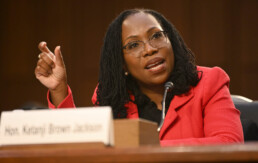
—SM  SCOTUS WATCH6 Takeaways from the Judge Ketanji Brown Jackson HearingsWhat surprised me (and didn't) over the last 48 hoursBY JULIANNE ESCOBEDO SHEPHERD  KETANJI BROWN JACKSON ILLUSTRATES HOW MUCH PATIENCE SHE HAS LEFT FOR TED CRUZ. (PHOTO BY CHEN MENGTONG/CHINA NEWS SERVICE VIA GETTY IMAGES) In the last 48 hours, I have watched approximately 324 hours of confirmation hearings for Judge Ketanji Brown Jackson. (Please don’t challenge my math—I’ve seen Mr. Robot and claim my right to employ the same logic as Sen. John Cornyn, who told Judge Jackson that he is “not an attorney—I watch Law and Order from time to time.”) Some of the proceedings have gone just as I’d anticipated. I expected the racist and sexist aggression that white Republicans are volleying at Judge Jackson, and I expected her response to be professional and controlled—skills she certainly was expected to triply perfect as a Black woman working in law. I expected the condescension, the gotcha questions, the abuse, and I expected her to meet them with thoughtful measure. But what actually hit me was how absurd the Republican line of questioning was, and how beautifully Judge Jackson has responded. In honor of Her Honor, my takeaways so far.
1. The racist nonsense before she even publicly spoke with Congress.Last week, Sen. Josh Hawley introduced the lie that Judge Jackson has been soft on sentencing for child pornographers, a dog-whistle meant for the ears of the “government pedophilia conspiracy” QAnon cult. (This will continue tomorrow when Republicans introduce testimony from a lawyer for the extreme fringe group Operation Underground Railroad.) During the hearings, Hawley doubled down on these accusations despite major outlets like the Washington Post disproving them as “scurrilous”—and the reasoning was repeated in questioning from many of his worst Republican peers, including Sens. Ted Cruz, Tom Cotton, and Marsha Blackburn. The latter also spent a considerable amount of time trying to paint Judge Jackson as having been mean to anti-abortion protesters, as well as goading her to define the word “woman” in a long transphobic tirade. 2. But she’s so much smarter than these jokers.In response to these allegations, Judge Jackson explained the circumstances in the pornography cases she ruled on, pointing out that judges are constrained by Congress’s laws and effectively showing that she knows the inner workings of Congress better than some of the people working there. All this while Senators' questions forced her repeatedly to relive the clearly painful experience of having to see, in her capacity as a judge, the “heinous” evidence in child pornography cases. Cruz, who was one of Jackson’s peers at Harvard Law and is definitely still seething that he’s a lesser mind, also invoked the bogeyman of Critical Race Theory, an academic school of thought that most people don’t encounter until law school (if even then), and which Cruz seems to think is being taught to babies. After his barrage, Jackson paused and let out a deep sigh. It was a moment indicative of the circumstances: that a woman of her great intellect and patient temperament had to spend hour upon hour answering disingenuous and deeply uneducated questions.  WHAT SOLID PROOF DO WE HAVE THAT TED CRUZ KNOWS HOW TO READ? (PHOTO BY WIN MCNAMEE VIA GETTY IMAGES) 3. Despite all this, the hearings have been a breath of fresh air.Judge Jackson met even the most ridiculous questions with a level of gravity her questioners didn’t earn. She did not, like Brett Kavanaugh, whine or cry or yell at Senators—something she knows that she, as a Black woman, would end her nomination in a way it didn’t end Kavanaugh’s. Her race and gender were a clear factor in the way a litany of white Republican Senators addressed her (note to Sen. Kennedy: Do not call a Black woman “articulate”) and even still she responded with patience. Her display of fairness and skill was exhilarating, a refreshing palate cleanser for those of us still reeling from the Kavanaugh and Coney Barrett proceedings. (For a really nice example of this, watch her exchange with Sen. Mazie Hirono, who skillfully dunked on the spurious accusations of her Republican colleagues.) 4. Judge Jackson will be an addition to the court who “thinks like America.”Yesterday, Sen. Richard Blumenthal addressed why he thinks the Judge’s position on SCOTUS is significant. “You will make the court look and feel more like America, but also think more like America,” he said. He also asked her to address the importance of her experience as a public defender, a job he too once had. “Zealous defense council… ensures the government is protecting these rights and that people are getting due process in the criminal justice system,” she said. “That’s to all of our benefits. That helps everyone in America when we ensure that liberty cannot be denied due process.” As Republicans repeatedly tried to paint Judge Jackson as soft on crime, this is an important point to remember. After all, as the lawyer and podcaster Josie Duffy Rice told Brittany Packnett Cunningham on a recent episode of UNDISTRACTED: “[Public defender]... is a job that should really resonate with conservatives in this country that are worried about Big Government. These are the same people that should be cheering her. Here’s someone who repeatedly stood up and tried to protect regular people from the tyranny of government.” 5. She understands the difficulties of working motherhood.In a conversation with Senator Cory Booker, KBJ addressed her position as a working mom with visible emotion. “It’s a lot of early mornings and late nights, and what that means is there will be hearings during your daughters’ recitals. There’ll be emergencies on birthdays that you have to handle,” she said. “And I know so many young women in this country, especially who have small kids who have these momentous events, and have to make a choice. I didn’t always get the balance right.” (Her kids, though, seem to think she did all right, as evidenced by a beautiful sign on her daughter Leila’s seat: “You Got This!”) 6. Finally, nobody is tamping down the joy of this moment (dammit).Nothing the Republicans attempt to do can take away from this historic nomination, and I have been moved by how meaningful the moment has been—and for the sight of unadulterated hope in government at a time when there’s not a lot to feel great about. “Judge Jackson’s explanations are so clear, she is talking to the Senators but also is teaching,” tweeted National Women’s Law Center President Fatima Goss Graves. Maya Wiley noted that it is “a joyous day unto the world.” And in a profile of some of the Black women rallying in D.C. in support of KBJ, Washington Post reporter Anne Branigin writes: “We need a little joy in this moment,” said Glynda Carr, a political strategist and co-founder of Higher Heights, a group that helps elect and support Black women in politics. “If that little joy comes in the fact that this woman looks like us — looks like me, from my hair to my glasses to the hue of my skin — it gives you the possibilities that exist, in that we can always reach higher..”  Julianne Escobedo Shepherd is a Wyoming-born Xicana journalist and editor who lives in New York. She is currently at work on a book for Penguin about her upbringing and the mythology of the American West.  CLIMATE CHANGEThe Water Crisis Is Getting WorseBY SHANNON MELERO  BANGLADESHI PEOPLE TRAVELING TO GATHER WATER AMIDST AN EXTREME WATER CRISIS IN RANGAMATI. (PHOTO BY MOHAMMAD SHAJAHAN/ANADOLU AGENCY VIA GETTY IMAGES) Yesterday, March 22, was World Water Day, a day of observance started by the United Nations in 1993 to highlight the importance of access to fresh water sources in the global community. Unfortunately, about 2 billion people are living without access to clean water, and in 2019, 1.2 million people died from drinking unsafe water. In fact, “in the last year, more people died from lack of access to water than from war-related violence,” Mustafa Mabruk tells me. Mabruk and his business partner Murad Noful are the cofounders of Wear the Peace, a slow fashion brand working to educate people and raise money for some of the world’s largest ongoing crises; their latest initiative is in partnership with Charity: Water, to build long term sustainable water safety in the areas most affected by the crisis. Like many of us, Mabruk and Noful are searching for the answer to what feels like an existential question: what can I, a regular person, do to solve an enormous global problem? The first step is understanding that the problem is ours to fix. For as long as I’ve been alive, there’s been a water crisis, and for years it’s been framed as a problem other people have and not the concern of Europe or the United States. And yet, in 2014, in supposedly the most powerful nation in the world, Flint, Michigan, did not have a drop of clean water. (A crisis that is still ongoing.) The water crisis is everyday life for millions of people who will spend nearly half of their lives just walking to gather clean water. Countries that do not have entire populations actively gathering water are beginning to grapple with a lack of sustainable water sources and a future where water privatization may be the new normal.
“Climate change is the biggest cause of the current water shortage, but there’s also increased human consumption in general and overuse of water,” Nofal explains. Solving the water crisis is no longer just about building wells and providing tankards of water; now it’s intertwined with more frequent weather events, climate-based immigration, and thousands of people migrating to flee war violence. . So the big picture answers are sustainability in water gathering, better management of water resources—and understanding that war and climate change are interconnected issues. “At the end of the day, allowing a crisis to continue—allowing hundreds of years of violence and war—it’s all a choice. [Solving this crisis] comes down to political choices. All of it is doable, especially now,” Nofal says. He’s skeptically hopeful. And while we need huge sweeping policy changes to really tackle this problem, there are steps that those of us who aren’t scientists, researchers, politicians, or Water Protectors can take to make sure this World Water Day isn’t just a blip on the calendar: Manage your water use at home, safe, clean water is finite and needs to be treated as such. Divest from fast fashion. Understand where your water comes from and how it's treated. Donate to organizations like Charity: Water. Vote for officials in local elections who back “green” legislation at the city and state levels.“If there’s a time to start pushing toward a solution,” Nofal emphasizes, “it’s yesterday.”  What's way less stressful than watching a confirmation hearing? Sharing this newsletter with your friends. Give it a try! FOLLOW THE METEOR Thank you for reading The Meteor! Got this from a friend? Sign up for your own copy, sent Wednesdays and Saturdays. |

"You sound like a white girl"
|
No images? Click here  March 18, 2022 Hello and happy Saturday to you. In today’s newsletter, Julissa Arce writes about the ways white supremacy works in Mexico to denigrate Indigenous and Black Mexicans—and how her experience with white supremacy in the U.S. worked in tandem with that. It’s an excerpt from her forthcoming book You Sound Like a White Girl: The Case for Rejecting Assimilation (out March 22), and believe me when I say I felt that when I read it. There’s still a misperception among U.S. Anglos—and some Latinxs—that racism and colorism does not exist among Latinxs (and it’s a perception that some Latin Americans are happy to perpetuate). But of course, one look at the mostly pale palette of Univision and Telemundo hosts shows how wrong that is. I’m so glad Arce wrote about this important topic, and how we should resist the insidious ways colonialism affects the world. Before that, though, some news! —Julianne Escobedo Shepherd  WHAT'S GOING ON
AND:
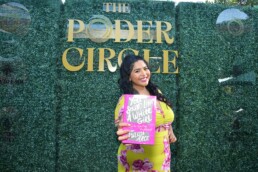
—JES  MUST-READJulissa Arce On How Latinx Communities Have Been “Tricked Into Yearning for Whiteness” JULISSA ARCE, MATCHING HER LOOK TO HER BOOK. (PHOTO BY ARAYA DOHENY/GETTY IMAGES FOR PODERISTAS) I was in middle school the first time someone told me, “You talk white.” It was an off-hand comment from a peer who wasn’t aware of all the implications behind that phrase, but I thought about it for a long time. I went through all of high school codeswitching between the jargon and cadence my friends used—peppering words like “brick,” “deadass,” and all types of Spanish slang into every other sentence—and the educated verbiage my mother expected of someone she was sending to private school. It wasn’t until college, surrounded by actual white people, that I realized my well-practiced, NPR-esque accent wasn’t fooling anyone. I was still “talking white” and yet it didn’t bring me any closer to my white classmates—one of whom would go on to write racial slurs on the door of my dorm room. In her new memoir, You Sound Like a White Girl: The Case for Rejecting Assimilation, author and activist Julissa Arce shares her own experience of trying to squeeze herself into the box of whiteness, a box formed both by white supremacy in American culture and anti-Indigenous sentiments in Mexican culture. The book is a moving, infuriating, and at times funny overview of the ways Arce, like many Latinxs, was taught to see whiteness as aspirational; an idea that was reinforced by her time working at Goldman Sachs as an undocumented immigrant. But it wasn’t just the talks about Aspen and summer homes that made Arce second-guess herself, it was also the colonizer mentality of those closest to her, the ones who praised her European features and ignored her Indigenous heritage. (You know the ones, the “pelo malo, pelo bueno” tías.) Below is an excerpt from Arce’s book—just the tip of the iceberg in her touching and well-argued case for rejecting assimilation, no matter how alluring it might seem. —Shannon Melero
IMAGE COURTESY OF FLATIRON BOOKS My nephew, a junior in high school in Mexico, was visiting me in Los Angeles a couple of years ago when I asked him if he knew that Vicente Guerrero, the second president of Mexico, was Black. “Are you serious?” he said. “In all the pictures he looks ‘bien blanquito.’” Because of his stature, he could not be ignored or erased from history, but his standing didn’t stop him from being whitewashed. Even when negating the history and importance of Indigenous and Black people simply can’t be done, we are not allowed to claim power alongside our Indigenous or Black identities—the identity must then be erased. This strategy is deployed from Mexico to the Dominican Republic to Europe. Vicente Guerrero was the son of a Black father and an Indigenous mother. Inspired by the Haitian Revolution, Guerrero fought to end African slavery in Mexico some thirty years before it was abolished in the United States. Schools all over Mexico bear his name. It’s tragic to think that our people in Mexico died to gain independence, freedom, and equality for the Indigenous worker and for the enslaved African, but many haven’t been able to shake the colonizer in our heads. A document of twenty-three principles for the future of a free Mexico, called the Sentimientos de la Nación written by José María Morelos Pérez y Pavón in 1813, included the prohibition of slavery “forever,” as well as the abandoning of the caste system, and only “vice and virtue” making people different from one another. When John Quincy Adams was secretary of state, he wrote a letter to his brother in 1818 in which he described America’s independence as “a War of freemen, for political Independence,” and Mexico’s as “a War of Slaves against their masters.” Adams was right that Mexico’s independence—as well as the independence of other Latin American and Caribbean countries—was different. The independence of the United States was one where elites sought liberty only for themselves and for the protection of their land and property, which included African people. Mexicans won our independence from Spain to free the most oppressed, even if it hasn’t played out that way. We’ve been so beaten down by white supremacy that we have yet to be truly free. Whiteness infiltrates Mexican institutions and life just as it does those of its neighbor to the north. It is a problem that plagues much of Latin America. In Bolivia, for example, the first and only Indigenous president came to power in 2006, 181 years after the county’s independence. Colombians have taken to the streets to protest racist police, because Black people are killed more often there, too. From Brazil to Mexico, Indigenous and Black people remain oppressed.
When I go back to Mexico now, I am deeply saddened to hear the same everyday racist talk I heard when I was a kid. I often wonder if I had stayed in Mexico, would I see clearly how we’ve been tricked to yearn for whiteness so that we don’t strive for justice? I often think of a brilliant line by author Domingo Martinez when I grapple with our own people becoming the oppressor when they’ve known the scourge of whiteness: “There is nothing more potentially hostile than the indigenous ego interpreting the laws of his conqueror upon his own people.” We become vicious to our own bodies, to our own souls. In our own home countries, we learn to view white as superior, as something we should aspire to. Then when we immigrate to the United States, we bring those sentiments packed in our suitcases. Those ideas are hardened on our hearts like a wax seal the minute we cross into the United States. Mexico introduced me to the lies of whiteness, but it was the United States that taught me just how corrosive white supremacy truly is. Seeking whiteness is a matter of survival here: white skin in the United States means you exist. It means you matter. Some of us flatter ourselves white by virtue of our education, our job, or our bank account—despite the nopal on our faces, we introduce ourselves as “Spanish” at work. In the United States, whiteness didn’t just render me less than—it rendered me invisible. Here a Brown Mexican seems to have no past, no future, and no identity. I was further ostracized because I was undocumented. It was the ultimate layer of being alien. But here, in my new home, is also where I learned to fight it.  PHOTO BY ALY HONORE Julissa Natzely Arce Raya is an American writer, speaker, businesswoman, and advocate for immigration rights. She is co-founder of Ascend Educational Fund and the author of My American Dream, and Someone Like Me. FOLLOW THE METEOR Thank you for reading The Meteor! Got this from a friend? Sign up for your own copy, sent Wednesdays and Saturdays. |


The woman I flew 2,486 miles to vote for
|
No images? Click here  March 16, 2022 Special announcement for you on this lovely Wednesday: the weather is nice! Or at least it is where I live. Yesterday was also quite nice—I went roller skating and I could feel the snakeskin of seasonal depression slipping off my body. I hope the sun is shining just as bright in your corner of the world. In alignment with the mood-boosting weather, today Paola Mendoza reports from her native Colombia on last weekend’s presidential primary and the shifting tides in Latin America. I can’t remember the last time I was so pumped about a presidential candidate, but Mendoza’s hope for the future of Colombia and their potential next vice president gave me chills–and I know it’s not from the cold because as I cannot say enough, the weather is good. Also on the agenda today: a better way for your boss to celebrate Equal Pay Day. Do you feel fairly paid or is your job just sucking your life force and paying you in Starbucks gift cards? Let us know at [email protected]! But first, let’s check in on the rest of the world. —Shannon Melero  WHAT'S GOING ON
 AND:
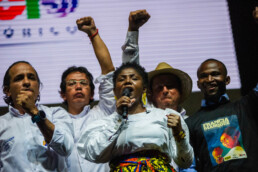
 THERE'S STILL HOPE IN POLITICSI Believe in FranciaHow it felt voting for Colombia’s most progressive political candidate in yearsBY PAOLA MENDOZA  FRANCIA MÁRQUEZ CELEBRATING A HISTORIC NIGHT WITH GUSTAVO PETRO (PHOTO BY DARWIN TORRES) Last week, I boarded a plane and flew 2,486 miles from my home in New York City to Bogotá, Colombia, the city where I was born. I went there to vote in the Presidential primary elections—not just for any candidate, but for Francia Márquez. Voting for Francia means voting for a Colombia that centers the most vulnerable, the most in need, those who have suffered at the hands of corrupt politicians, the 52-year civil war, and generational poverty. On election night, she looked into the cameras that surrounded her and spoke to the Colombian people. “I acknowledge the nobodies,” she said, “the nobodies of Colombia, those from the mountains, plains and neighborhoods of this country who accompanied us.” Francia is one of those “nobodies” she was talking to on election night. She is an Afro-Colombian woman who was born in Yolombó—a small village where she grew up working in artisanal gold mining. Her activism began at 14, when she organized her community against the construction of a dam that would have dramatically altered the way of life for her people. Francia lost that battle but she refused to stop fighting for her community and her land. In 2014, she led a group of at least 80 women in a 350-kilometer march to the capitol to protest illegal gold mining. In 2018 she won the “Nobel Prize of environmentalism”—the Goldman Prize—for her work. Her activism has come at great personal cost. Colombia is one of the deadliest places on earth to be an environmental activist and in 2019 Francia survived an assassination attempt.  Two years later, she launched her presidential campaign. Initially, the political establishment, the wealthy, and even some of her own community wrote her off—they said she was just an activist, she’d never held public office, she didn’t have experience. She’s also young (now 40), became a single mom as a teenager, and is the first Afro-Colombian woman to run for President. Everyone thought these qualities were a detriment; Francia believed they were exactly why she should be President. Last year I interviewed Francia for The Meteor and asked her what she would say to people who criticized her lack of experience. “The experience white men have has not allowed my family to live in dignity,” she told me. “Or my people. Or this country. So what experience are they talking about?... The experience that allows these powerful men to use violence against their own people and kill them?... Well, that experience I don’t want to learn.” This was the reason I flew to my homeland to vote for Francia. I left Colombia when I was just three years old, but I have always had a strong connection to it—my mom would send me back to live with my grandmother for the summers so she could work in the United States. When I was 14, I came back to live in Colombia for three years—three years that saved my life, that allowed me to connect with my people and my history, that provided me safety and security when I was at my most vulnerable. I owe such a debt of gratitude to this country. The least I can do is participate in building a better future for all Colombians—and so I always return to vote.
Election day was warm and sunny in Bogotá. There were streams and streams of people walking into the convention center on the Sunday my cousin and I went to vote. I showed security my cedula (Colombian ID), and off I went to find table 99. The beautiful thing about voting in Colombia is that you don’t have to be registered to vote, which is what should happen here in the U.S.—if you’re 18, the legal voting age, you can vote. And unlike the U.S., there are pictures of all the candidates, and you simply mark an X over the person’s face. It was thrilling to put my X over Francia’s picture—a historic moment for her, and for the whole country. When the votes were tabulated that night, the leading candidate in Francia’s party, Gustavo Petro, got over four million votes, and she received 781,865, which is a lot in Colombia. It is an extraordinary feat that Francia Márquez came in third place behind Petro and Federico Gutiérrez, a right-wing candidate; she had more votes than three-time presidential candidate and former mayor of Medellín, Sergio Fajardo, and beat a handful of other well-known men from the political establishment. The headline of the night was that Francia dominated—and a new political force was born in Colombia. If she is selected as Gustavo Petro’s vice presidential candidate and if they win in May, she would be the first Black woman VP in our country’s history. And regardless, I believe Francia is on her way to one day being La Presidenta of Colombia.  ELECTION DAY IN COLOMBIA. WHO DO YOU THINK SHE VOTED FOR? (PHOTO BY DARWIN TORRES) That’s the celebration for me: that Francia continues to show the power of the Afro-Colombian and Indigenous communities in a country that excludes and abuses them; the strength of feminism; and the audacity of being unabashedly progressive, pro-choice, and pro-environment in everything she fights for. She is a political candidate for the future of this country. Isn’t this what’s needed everywhere? Our world feels like it’s collapsing—we’re still in the throes of a pandemic, we’re on the verge of a massive war, it’s scary and it’s exhausting. I don’t want the same leadership. I want something different. I want women’s leadership—progressive women’s leadership. And it is Latin America that is showing the world how this is done. In the U.S., rights are being taken away from so many people, and the rise of the white conservative woman is aiding and abetting that. But in Latin America, Honduras just elected its first female president, Xiomara Castro, who’s a socialist; Chile recently elected its youngest President, Gabriel Boric, who ran on a feminist socialist platform; and feminist values are sweeping Latin America with the Green Wave movement for reproductive rights. So often in the U.S., we don’t look to others—we think we know more than everyone else in the world. But right now, we need to look to the south for a roadmap. I look to Francia.  PHOTO BY SHAYNA ASGHARNIA Paola Mendoza is a filmmaker, actor, author, activist, and co-founder of the Women's March. She recently released her debut YA novel, Sanctuary.  WERKDoes Your Job Deserve You?Before you go... let's chat Equal Pay DayThis week marked Equal Pay Day, the day when women (on average) famously have to work each year to make what men made the year before. For Black women specifically, the day doesn’t roll around till September 21; for Latinx women, it’s practically a whole year later, on December freaking 8! Years ago, I worked for a wonderful feminist boss who christened that day National Go Ask For a Raise Day (I did), and that’s always a good way to spend the holiday, but… what if we didn’t have to spend so much time advocating for and improving ourselves at work? Last week I went to a book event for Reshma Saujani, author of the new book Pay Up: The Future of Women and Work, and Daisy Auger-Dominguez, author of Inclusion Revolution. And the thing that got the most applause in the room was when they both told the audience to just stop trying to be better. “I don’t want to hear another word about mentoring, or how to get over imposter syndrome, or how to work ‘harder faster,’” said Reshma. “We’re already showing up overqualified. They need to deserve us.” I’ve got nothing against work advice for women; I’ve given it, taken it, and do office hours on Sunday afternoons with folks interested in media (DM me). But as Reshma noted, half the time women already have more skills and qualifications than the job requires; what’s missing is a workplace that’s worthy of us—with paid leave and child care to accommodate our lives. (The pay gap increases sharply, especially for women of color, when you have a child or take on other caregiving responsibilities.) All this is no surprise—it’s part of what’s fueling the Great Resignation. But in a week where billionaires told us to pull up our bootstraps, it’s a good reminder. Maybe your boss (and your Senator) should take that leadership course instead. —Cindi Leive  FOLLOW THE METEOR Thank you for reading The Meteor! Got this from a friend? Sign up for your own copy, sent Wednesdays and Saturdays. |

The GOP’s latest tactic for targeting trans kids
|
No images? Click here  March 11, 2022 Bonjour Meteor readers! I am feeling mildly upbeat today—despite, you know, everything—thanks to the good folks at The Dan Lebatard Show, who literally created an entire musical about the Super Bowl. I had my doubts at first, but the whole soundtrack is Rock of Ages meets Chicago meets Rent. Give it a spin, and thank me later for the serotonin boost. And it’s a boost you will appreciate after today’s newsletter, which is a deep dive into the anti-trans legislation in Texas and how Republicans are using the bogeyman of forced sterilization to defend their stance. If you thought you were mad about it before, just wait until you get the full context from historians Dr. Lauren Jae Gutterman and Dr. Gillian Frank. But first, let’s check in on the news. —Shannon Melero  WHAT'S GOING ON
 KETANJI BROWN JACKSON, BOOKED, BLESSED, AND UNBOTHERED (PHOTO BY ANNA MONEYMAKER VIA GETTY IMAGES)
AND:
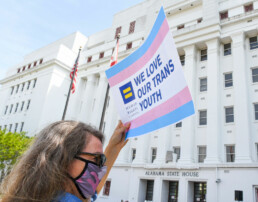
 THE FIGHT FOR TRANS LIVESThe Reproductive Ideology Behind Texas’s Attack On Trans KidsKen Paxton is abusing the history of forced sterilizationBY LAUREN JAE GUTTERMAN AND GILLIAN FRANK  KEN PAXTON, TERRORIZER OF CHILDREN. (PHOTO BY DREW ANGERER VIA GETTY IMAGES) Over the past few weeks, the nation has witnessed an onslaught of attempts to ban gender-affirming treatment for minors. It’s been a competition to see who can go the furthest and be the cruelest: First, Texas Governor Greg Abbott directed the state’s child welfare agency to categorize gender-affirming care as “child abuse.” Then, lawmakers in the Idaho House voted to make such treatment a felony, with medical providers and parents looking at life in prison. And in Alabama, a similar bill, House Bill 266, would also force teachers and school counselors to out trans students to their parents. It’s all horrific. But as historians of sexuality, we are especially disturbed by lawmakers’ repeated invocation of the ugly history of forced sterilization to justify their anti-trans campaigns. It’s an attempt to cloak their cruelty in pseudo-feminist language—and it’s completely disingenuous. The forced sterilization connection was made most explicit by indicted Texas Attorney General Ken Paxton in his statement against gender-affirming care for minors. “Historically weaponized against minorities, sterilization procedures have harmed many vulnerable populations, such as African Americans, female minors, the disabled, and others,” Paxton’s opinion reads. Then he delivers the ideological punchline, poached from the language of the reproductive justice movement: “These violations,” he claims, “have been found to infringe upon the fundamental human right to procreate.”
Contrary to Paxton’s argument, irreversible surgical procedures are rarely, if ever, performed on youth under age 18. And the other, much more common gender-affirming medical treatments that these bans criminalize—such as puberty-blocking drugs and hormonal therapy—do not cause sterilization. They are also supported by the leading medical associations in the United States and proven to lower teens’ risk of suicide and depression. In the arguments lawmakers have made against trans kids’ participation in sports, legislators have demonized trans girls in particular, alleging that they have an unfair advantage against their cisgender peers. Similar bans on trans student-athletes have been enacted in 10 other states. But when it comes to gender-affirming care, instead of portraying trans children as threatening, Republicans have cast them as victims of their caregivers and medical providers. And in order to do it, they’re appropriating reproductive justice language—even though the actual history of reproductive justice affirms, rather than denies, the right to bodily autonomy for all people. The predominantly Black and brown women activists who have been drawing attention to forced sterilization in the United States since the 1960s haven’t simply been fighting for the freedom to reproduce. Rather, they’ve been fighting for the freedom to determine their own reproductive lives—to govern their own bodies. As the Committee for Abortion Rights and Against Sterilization Abuse wrote in 1979, “Policies that restrict women’s right to have and raise children—through forced sterilization or the denial of adequate welfare benefits—are directly related to policies that compel women to have children, on the view that this is their primary human function. Both kinds of policies constitute reproduction control by the state.”  READ THE SIGN, LIVE THE SIGN (PHOTO BY DREW ANGERER VIA GETTY IMAGES) In one well-known case of that era, Relf v. Weinberger (1974), the Southern Poverty Law Center filed suit on behalf of two Black sisters, Minnie Lee and Mary Alice Relf, aged 14 and 12, who had been sterilized at a federally-funded Family Planning Clinic in Montgomery, Alabama. The girls were operated on without their parents’ knowledge or consent; a nurse told their mother only that they were going to receive “some shots.” Minnie Lee, Mary Alice, and so many others were targeted for sterilization because state caseworkers and clinic staff deemed them, based on their race, class, and perceived mental ability, as undesirable citizens—“unfit.” It is galling that Texas Attorney General Paxton cites Relf v. Weinberger as a precedent for his attack on trans teens, claiming that trans-affirming health care is equivalent to the compulsory sterilization of uninformed minors. However, the invocation of this history misses the main lessons of Relf: the need for informed consent and reproductive choice. The plaintiffs in Relf were not opposed to sterilization as a whole. What they objected to was the authorization of “involuntary sterilizations, without statutory or constitutional justification,” at a moment when millions of Americans sought out sterilization as a form of birth control, and many women who begged doctors for the procedure were denied. Well into the 1970s, in fact, many physicians followed the “Rule of 120,” a recommendation of the American College of Obstetrics and Gynecology, which withheld sterilizations from women whose number of children multiplied by her age was less than 120. Whether the case was coerced or refused sterilizations, at issue was a question of bodily autonomy. So why is the Texas Attorney General deploying the language of sterilization, child protection, and reproductive freedom? Like Senate Bill 8, the state’s recent legislation banning abortion after six weeks of pregnancy, it’s all about making reproductive anatomy into social destiny; from this perspective, anything that threatens to medically interrupt procreation is viewed as harmful. In the name of making children one day have children, Republican leaders in Texas are willing to stomp on the health of trans kids and the reproductive freedom of abortion-seekers. Right now, trans youth and those who love them are rightly terrified; multiple families are under state investigation. Using the legacy of human rights abuses against the Relf sisters and so many others to justify these human rights abuses is simply unconscionable. As 11-year-old Austin trans activist Kai Shappley has told the Texas leaders behind these recent attacks, “Just stop.”  PHOTO BY PATRICIA JANG Dr. Lauren Jae Gutterman is Associate Professor of American Studies, History, and Women's and Gender Studies at the University of Texas at Austin. She is the author of the award-winning book, Her Neighbor's Wife: A History of Lesbian Desire Within Marriage, and co-host of the Sexing History podcast.  PHOTO BY MATT KWONG Dr. Gillian Frank is a historian of sexuality and religion and co-host of Sexing History, a podcast that explores how the history of sexuality shapes our present. He is currently at work on a manuscript called A Sacred Choice: Liberal Religion and the Struggle for Abortion Before Roe v Wade.  BEFORE YOU GO“Carbon Footprint” Was Bullshit This Entire Time???BY JULIANNE ESCOBEDO SHEPHERD If you’ve ever wondered what your carbon footprint is, and how to reduce it, here’s some illuminating information that you may not already know. On this week’s edition of UNDISTRACTED, climate journalist Mary Annaïse Heglar told Brittany Packnett Cunningham that the idea of one’s individual “carbon footprint” is a big load of garbage invented by BP, the megalithic oil and gas corporation. More specifically, she explains: “BP created the concept of a carbon footprint to … shift the responsibility for the climate crisis to the consumer that they are selling the oil and gas to.” And when companies like BP calculate their own footprints, “they don’t count the oil they sell to everyone else…So their carbon footprint is so much bigger than they even take credit for.” I echo Ms. Heglar’s sentiment that this is “some real evil shit.” To hear it with your own ears, as well as learn more about how the West’s dependence on Russian oil helped make that genocidal oligarchy so powerful, listen here. You'll also learn about what you can do to keep the heat on the fossil fuel companies—and the governments who enable them.  FOLLOW THE METEOR Thank you for reading The Meteor! Got this from a friend? Sign up for your own copy, sent Wednesdays and Saturdays. |

Sex tapes were never really about sex
|
No images? Click here  March 9, 2022 Hello, precious Meteor readers. I hope you’re taking care of yourselves—don’t be like me and immediately decide to doomscroll when you can’t sleep at 4 a.m. (Do NOT do it!) Events both domestically and abroad are grim, and many of us are feeling helpless and stressed, but we all need to keep our heads up in order to keep going. Instead, try sending some cold hard cash to the Trans Justice Funding Project, or this GoFundMe for Black people fleeing Ukraine, or the Missouri Abortion Fund. An objectively better thing to do than open Twitter before dawn! In today’s newsletter, Tracy Clark-Flory looks at the misogynist legacy of the celebrity sex tape through the lens of Hulu’s Pam and Tommy—and how the violation of a woman’s privacy is almost always the point. After that, Shannon Melero speaks to attorney Carrie Goldberg about how the law protects—and doesn’t protect—victims of revenge porn today. But first! The news! —Julianne Escobedo Shepherd  WHAT'S GOING ON
 AND:
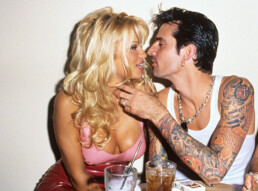
 REVENGE PORN AND OTHER CRIMESSex Tapes Really Aren’t About SexHulu’s Pam & Tommy is a reminder of the many ways we treat women’s pain as entertainmentBY TRACY CLARK-FLORY  PAMELA ANDERSON AND TOMMY LEE, 1995 (PHOTO BY S. GRANITZ/WIREIMAGE) This week brought the finale of Hulu’s Pam & Tommy, a limited-series dramedy about the leak of a private sex tape that none of us should know anything about. We’re talking eight whole episodes reenacting the ’90s-era theft and viral spread of an explicit home movie starring celebrities Pamela Anderson and Tommy Lee. That’s more than five hours of television devoted to replaying a privacy violation. The tape’s leak in 1995 was paradigm-shifting and emblematic of a cultural moment, so it’s possible to imagine a worthwhile critical retrospective. Instead, Pam & Tommy is less a reconsideration of the leak than a nostalgic reliving of it. It’s less about the tape than of the tape, which ushered in an ongoing era of stolen moments treated as entertainment. Anderson and Lee’s video was historic as the first celebrity sex tape, spawning dozens of direct imitations, but also setting the stage for whole new privacy violations, like the 2014 hack targeting famous women’s nudes (a.k.a “The Fappening”). The tape’s leak teed up an explosion of nonconsensual entertainment online—and not just starring celebrities. Soon, everyday women had to reckon with the public humiliation of everything from “upskirting” videos to “revenge porn.” Fast forward over two decades and the majority of states have had to legally address nonconsensual pornography (or nonconsensual image abuse, as some experts now call it). The next challenging legal frontier: “deepfake porn,” where a person’s face is seamlessly swapped onto pornographic material.
But let’s be clear: leaked sex tapes aren’t really about sex. The most famous ones—as with Paris Hilton and Kim Kardashian—are defined by entitlement, trespass, violation, and embarrassment, vis-à-vis a woman. This is a fundamental part of the attraction: these videos provide forbidden access. Kevin Blatt, a self-described celebrity sex tape broker, says the appeal is seeing something you “weren’t supposed to see.” Even when there are questions about a sex tape being leaked for fame and publicity, there’s still the suspension of disbelief that allows viewers the fantasy of crossing boundaries, of getting what is not freely given. The entire meaning of the tape changes if a woman intentionally and openly participates in its creation and release. Pam & Tommy itself adds another layer of non-consent to the original violation of the tape’s leak: Anderson wanted nothing to do with the series. (While Lee has voiced support for Pam & Tommy, Anderson reportedly finds its release “very painful.”) The show was made anyway—and then promoted as “feminist” for being sympathetic to her experience. In reality, the show identifies at the start with Rand Gauthier (Seth Rogen), the contractor who stole the tape after remodeling the couple’s mansion. We’re given a comedic, rollicking justification for the theft: Tommy Lee (Sebastian Stan) is an over-the-top asshole clad in a banana hammock who barks unreasonable orders at Rand. These early episodes are driven by laughs—take the scene where Tommy has a conversation with his own penis, which talks back via cringey animation. We’re living in a cultural moment of re-evaluation around the sexism of the ’90s and ’00s, which no doubt helped greenlight Pam & Tommy, but the show’s true impulse is to laugh and wax nostalgic.
The series does eventually get around to inviting identification with Pam (Lily James), instead of literal and figurative dicks. It depicts Pam’s struggle to be taken seriously as an actor as her Baywatch lines are cut to prioritize zoomed-in shots of her butt. After the sex tape is leaked, Pam & Tommy spotlights her pain, portraying Pam as having a devastating miscarriage amid the stress of the violation. The series feels like an unintentional meta-commentary on the many ways we are entitled to, and entertained by, women’s pain—not just with leaked sex tapes but also with limited-run TV series dramatizing leaked sex tapes. Eventually, Anderson is shown in a brutal and shaming deposition for her lawsuit against Penthouse’s Bob Guccione, as she tries to stop the magazine from publishing stills from the tape. She is cross-examined about her sex life and even forced to watch parts of the tape in a room packed with men. We’re meant to feel outraged, but that outrage arrives after Pam & Tommy has already had its giddy fun.  LILY JAMES AS PAMELA ANDERSON DURING HER DEPOSITION. (SCREENSHOT VIA HULU/ANNAPURNA) The tone-deafness of the first half of the series is only matched by the inappropriateness of its handling of partner violence. Though it’s not depicted in the series, Lee was sentenced in 1998 to six months in jail for felony spousal abuse following an incident in which Anderson accused him of kicking her while she held her 7-week-old son; she had “a broken fingernail and red marks on her back,” according to police. The series portrays several early red flags in the relationship—like Tommy calling Pam non-stop and following her uninvited on a trip to Mexico—but treats them as fun material. Pam & Tommy leaves Lee’s arrest, and their divorce, as a literal postscript at the end of the series. It’s a sanitized version of events, referring only to “a physical fight in the couple’s kitchen.” Hulu has cheekily promoted the show as “the greatest love story ever sold.” All these years later, it’s tempting to believe that we have enough perspective to critically revisit this long-ago sex tape leak and other misogynies of yore. Instead, the last two decades have created a convenient new cover for exploitation: Pam & Tommy delights in replaying the violation, only to abruptly pivot toward superficial wokeness. It makes claims of a redemptive narrative while risking retraumatizing one of its subjects. Ultimately, the show is an accidental testament to the many ways women’s suffering is consumed as entertainment. You can call it “reflection,” but we’re not nearly as far away from these events as we might like to think.  Tracy Clark-Flory is the author of the coming-of-age memoir Want Me: A Sex Writer’s Journey into the Heart of Desire (Penguin, 2021), a New York Times “notable” book and NPR best book of the year. For over 15 years, Clark-Flory has reported on feminism, gender, pop culture, and sex.  ASK A LAWYERDoes the Law Do Enough to Protect Victims of Revenge Porn?BY SHANNON MELERO  CARRIE GOLDBERG (PHOTO BY CRAIG BARRITT VIA GETTY IMAGES FOR GLAMOUR) Decades after Pamela Anderson unwillingly introduced the broader public to the concept of revenge porn, has the law gotten any better at protecting victims? I asked lawyer and author Carrie Goldberg—owner of victims’ rights law firm C.A.Goldberg, PLLC. What are some of the barriers to trying revenge porn cases? Is it particularly difficult to prove guilt/intent? Carrie Goldberg: All states have criminal laws that make it illegal to film or record somebody without their consent in places—the bedroom, bathroom, changing room—where the person has the expectation of privacy. These laws are usually called video voyeurism or unlawful surveillance….And 48 states now have laws that criminalize the nonconsensual publishing of intimate images and videos. The problem is that it’s up to law enforcement to decide when to prosecute. Unfortunately, crimes that predominantly impact women and girls—like sexual assault, revenge porn, and intimate partner violence—are notoriously under-prosecuted. One reason that law enforcers don’t prosecute is that many criminal laws require proof of the offender’s motive and, specifically, a showing that the motive was to harass or abuse the victim. But we know from working with victims that [predators can have] a range of other motives such as money, clout, boredom, or entertainment. About a dozen states also have civil remedies for victims. In other words, a victim can sue their offender…[But] suing never resolves what is often a victim’s main priority—getting that material the hell off the internet. The internet, as they say, is forever. So what happens to victims who [do pursue criminal charges] over materials uploaded online? Does the law offer any assurances that those images will be removed, and if so, whose responsibility is it to remove them? There is no legal fix for getting pictures off the internet. Criminal cases have the goal of punishing the offender, while civil cases have the goal of “making the victim whole” through financial recovery. But, there is federal law, Section 230 of the Communications Decency Act, which has been interpreted by our courts to shield platforms (i.e. Instagram, Facebook, YouTube) from any responsibility for material that users post. It really falls on the victim to try to use things like copyright law and appeal to the goodwill of websites and social media companies and to be persistently searching the internet for material. What needs to change to better protect victims? The current laws are not adequate….While we’ve made so much progress in the last decade with getting new laws, we still need federal law. In honor of International Women’s Day, several lawmakers reintroduced the Stopping Harmful Image Exploitation and Limiting Distribution Act (the “Shield Act”). This is bicameral and bipartisan legislation that makes the nonconsensual dissemination of intimate images a federal crime. Another gulf in our laws involves celebrity victims. We’re now seeing defendants try to claim that sharing nude images of celebrities is protected speech. With Pamela Anderson, we saw a court hideously claim that she had no legal rights because her body belonged to the public. We need the right of privacy to extend to everybody—whether you are a teacher, student, nurse, congress member, cashier, or supermodel.  You have our enthusiastic consent to share this newsletter with all of your friends. FOLLOW THE METEOR Thank you for reading The Meteor! Got this from a friend? Sign up for your own copy, sent Wednesdays and Saturdays. |

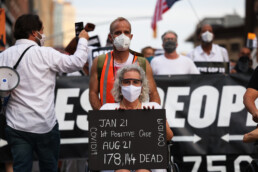
There's no vaccine for stupid
|
No images? Click here  March 4, 2022 I am first a fraud or a trick. Or perhaps a blend of the two. Hello pals. This riddle has been rattling in my brain for a solid two days since watching The Batman, starring reformed vampire Robert Pattinson. The movie was pretty good if you’re into darkness and brooding. Speaking of darkness, Jennifer Finney Boylan writes this week about the start of the most difficult time in recent memory—the start of the coronavirus pandemic, which unimaginably began two years ago on March 11. I still remember those early days when we thought it would last just few weeks; two pandemic puppies later, I’m still working in pajamas, and you may be too. Also in today’s letter, Julianne Escobedo Shepherd recommends some escapism for those of us who still need it. Thoughts on The Batman (when I say thoughts, I mean please give me the riddle answer), the end of the pandemic or anything else? Send us some Batmail at [email protected]. —Shannon Melero  WHAT'S GOING ON (IN UKRAINE)
 WHAT ELSE IS GOING ON
AND:
 TWO YEARS LATERThere’s No Vaccine for StupidThe world we’re returning to is not the one we leftBY JENNIFER FINNEY BOYLAN  NURSES AT THE VA HOSPITAL IN THE BRONX, NEW YORK DEMANDING BETTER PROTECTION AT THE START OF THE COVID 19 PANDEMIC (PHOTO BY SPENCER PLATT VIA GETTY IMAGES) It was going to be just like old times. I’d been preparing for a reunion of my best friends from high school, that weekend in March 2020. The four of us—members of the class of 1976—were going to gather at a shore house in Atlantic City. My hope was that all those old faces might make me feel young. Then I learned that, as of that Sunday night, there had been a total of 31 confirmed deaths from the virus in this country. Damn, I thought. I guess we need to make another plan. By Friday the 13th, my classes at Barnard had gone remote, and the reunion with the boys was canceled. I grabbed a ride with my daughter back to our home in Belgrade Lakes, Maine. And there, with a few exceptions, I would stay for the next twenty-two months. There was an election. There was an insurrection. There was an inauguration. I got two Moderna vaccines, and a Pfizer booster. There was Delta, and Omicron. Finally, in New York at least, the number of cases began to subside. Like so many others, I began, tentatively, nervously, to return to the world. This January, I found myself back on the Barnard campus, walking down the familiar corridor in my department known as the “English channel,” and trying my key, for the first time in almost two years, in the lock of my office door. As it swung open, I thought of the description of archeologist Howard Carter opening the burial chamber of King Tutankhamun—100 years ago this November. “At first, I could see nothing, the hot air escaping from the chamber causing the candle flame to flicker,” he later wrote, “but presently, as my eyes grew accustomed to the light, details of the room within emerged slowly from the mist.”  A MEMORIAL IN AUGUST OF 2020 FOR THOSE WHO HAD DIED FROM COVID-19 (PHOTO BY MICHAEL M. SANTIAGO VIA GETTY IMAGES) There they were: all the pieces of my life, right where I’d left them. There was a stack of books I’d borrowed about Zora Neale Hurston, Barnard’s first African-American graduate; I’d been planning on writing a column about her. There was a stack of graded papers I’d never returned to their authors. On one wall was a long to-do list of things I had to write, and the deadlines. There were details for the national book tour I was supposed to go on. That tour, of course, been cancelled, along with so many other things: my son’s in-person graduation from the University of Michigan, my daughter’s wedding. For a moment I found it hard to remember the person I once had been. I sat down at my desk, intending to get started with the semester’s business, but instead, I just sat there for a long moment, feeling the tears in my eyes. They were tears of sadness, of course, sadness for everything, and everyone, we’ve lost. But they were also tears of rage. This crisis ought to have been a time when we got to see how good people can be. And we did see that, in sacrifices big and small; health care workers, and grocery store employees, especially emerged as heroes. But so many others showed us their cruel and narcissistic sides instead: distrusting and hobbling government, when what we needed was good governance; mocking and questioning medicine, when what we needed was reliable science; and above all, singing the songs of conspiracy and selfishness at a time when what we needed above all was to be looking out for, and caring for, one another.
The vast majority of people dying from COVID now are unvaccinated. With over 900,000 Americans dead, rather than publicizing the efficacy of vaccines, a whole cohort of frauds and blowhards has instead advocated horse de-wormer. Another genius suggests drinking your own urine. In Florida, Oklahoma, Texas, and Utah, laws were put into effect preventing schools from mandating the masks that could hinder the spread of disease. Because freedom, I guess. I am hopeful that COVID will eventually subside into something like the seasonal flu—an endemic virus that, within reason, we will be able to control and endure. But how do we live with the knowledge that, at the moment of greatest crisis, so many of our fellow Americans opted for ignorance instead? In fits and starts, we are slowly returning to our lives. But we are forever changed by what we have been through, and by what was revealed about so many of the people with whom we share this country. What was revealed to you? Did you find new sources of resilience and hope? I found some of that, to be sure. But I fear the pandemic has shaken me forever—not because of the disease itself, but because of what it forced me to see. Omicron may be on the wane, but the virus of heartlessness and ignorance is thriving. It may yet end us all.  Jennifer Finney Boylan is the Anna Quindlen Writer in Residence and Professor of English at Barnard College. She is a Trustee of PEN America and a Contributing Opinion Writer for the New York Times.  THE METEOR RECOMMENDSWhy I’m Binging a Fantasy Show About DruidsBrittania's Trippy EscapismBY JULIANNE ESCOBEDO SHEPHERD  SOPHIE OKONEDO AS HEMPLE ON BRITANNIA (IMAGE VIA METRO-GOLDWYN-MAYER STUDIOS/EPIX) Like a lot of people, the last two years of social distancing has turned me into a voracious television consumer. In the absence of seeing friends or going dancing, I just binged what seems like every show ever made and, thanks to glut and languishing, promptly forgot 95 percent of any given storyline. But one genre of TV has stuck with me: ancient historical fiction in which women are situated as the most powerful, interesting characters. This week, Netflix released its sequel series to the great Vikings, Vikings: Valhalla, which is currently in its top two most-watched shows, and includes great fictional portrayals of real-life heroines Freydís Eiríksdóttir and Queen Emma of Normandy. I binged it, as well as the Netflix show The Last Kingdom (also about Vikings), but my favorite of all these early historical dramas is Britannia on Epix, which is set in 43 AD and concerns the Romans trying to get over on the Celtic Druids, who have a lot of tattoos. Britannia also has a fantastical element, with the Druids getting looped up on psychedelic brews and talking to their gods about prophecies, all to a classic rock soundtrack. (Its theme songs include Donovan’s “Hurdy Gurdy Man” and “Season of the Witch.") But the plot mostly hinges on Cait (Eleanor Worthington Cox), a young Celtic girl who embarks on a mystical hero’s journey to discover she is the Chosen One, meant to protect the Druids from the murderous Romans and basically rescue all humanity from war along the way. Season three is airing now and I’m thrilled by it, particularly as it’s added the great Sophie Okonedo to the cast—she’s one of the best actors alive and is brilliant and terrifying as a powerful high priestess. Truly, I will proselytize to anyone about how much I love this show. I’ve been watching all the other stuff, too—ask me about 2020 when I saw approximately 236 episodes of Love Island in nine months—but the immersive and often funny tone of Britannia has hit my perfect escapist sweet spot. (Though, let’s be real: I am also just a sucker for a big budget and a tattoo.)  You can't spell friends without s-e-n-d! So be a pal and share this newsletter with all of your faves, we'd really appreciate it. FOLLOW THE METEOR Thank you for reading The Meteor! Got this from a friend? Sign up for your own copy, sent Wednesdays and Saturdays. |
