
“I'm Not Afraid to Keep Talking”
BY SAMHITA MUKHOPADHYAY
As I began reflecting on the five years since #MeToo went viral, I found myself thinking, maybe surprisingly, of the many years that came before it. I thought about the Take Back the Night marches I attended in college, the organizations that had long been committed to eradicating rape, such as RAINN or the New York and California Coalitions Against Sexual Assault, and anthologies like Yes Means Yes, edited by Jaclyn Friedman and Jessica Valenti in 2008 in which survivors shared their experiences and talked openly about rape culture. After all, Tarana Burke, the leader of the #MeToo movement, coined “me too” in 2006.
Today we celebrate the anniversary of a breaking point: the moment it went from a conversation in the margins to one that couldn’t be ignored. But survivors have been coming forward with their stories for a long time, and we wanted to take today to reflect on the work that came before 2017 and the work that lies ahead.
I knew exactly who I wanted to talk to in honor of today’s anniversary: my dear friend, feminist, anti-rape advocate, writer, Mornings with Zerlina on SiriusXM, and author of The End of White Politics, Zerlina Maxwell.
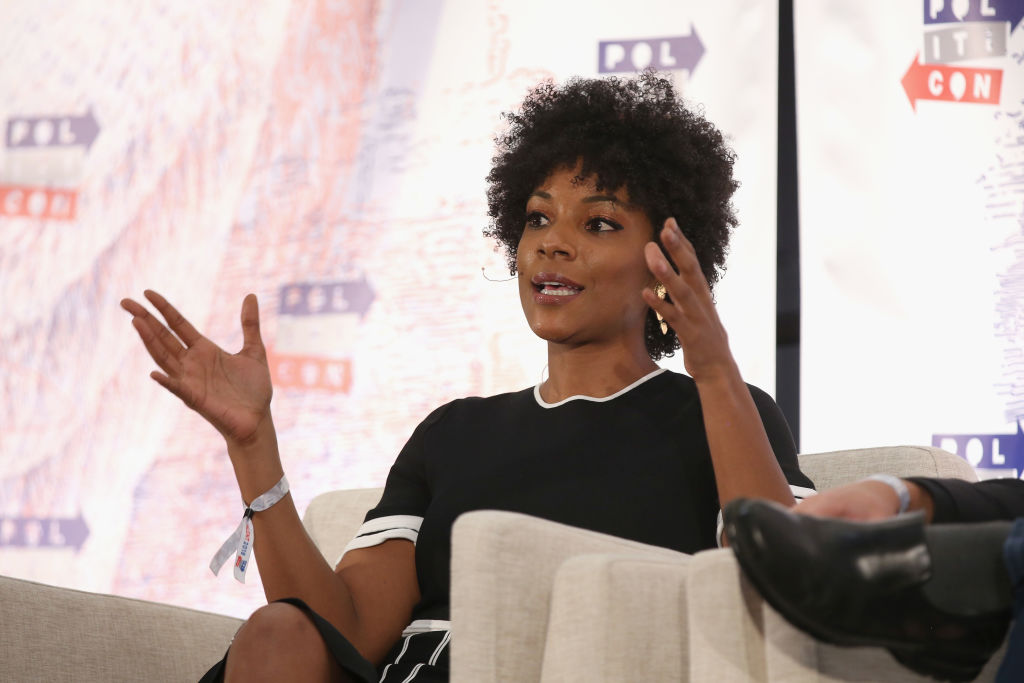
Samhita Mukhopadhyay: One of the first conversations we ever had with each other, over 10 years ago, was bonding over being survivors.
Zerlina Maxwell: I remember; it was in that bar in Brooklyn. We talked about how we both had issues sleeping after our assaults. And we cried and we held hands. I think it was like meeting a “friend soulmate” but also meeting someone with the same scars on our souls. It was a connection through a shared and deep pain.
By the end of the night, we were best friends. How did you first come forward with your story, and what was that experience like?
I hadn't really called it anything yet…and when I explained what happened to someone the day after it happened, their answer back to me was: “That sounds like sexual assault.” So I went to the hospital to officially report it, and the police also responded to me: “What you describe is a sexual assault.” So for me, I think it was getting other people to say it to me. [That’s] when it became real. I knew something bad happened to me right away and was really numb but hearing people call it sexual assault helped me begin processing the trauma.
I think it happens differently for everyone. And sometimes it can take a really long time because you've tried to probably block it out and move on and pretend it didn't happen at all, or maybe that it was just some confusing thing. And it's the process of coming to terms with what happened: Something really did happen, and now my life would never be the same again. It was kind of world-shattering.
But I think what broke me more than the actual assault was the people who didn't believe me. That's what bothered me the most. Because I always felt like I'm a very trustworthy person. I really don't lie. I just try to be honest about stuff, and for people to be like, "I don't believe that happened to you," that broke my spirit. I was lost for a few years and a shell of the person I was before or who I am today. The impact of the victim blaming is actually what broke me. I don't think people really recognized how traumatizing that part of it could be. And I really broke. I fell all the way apart.
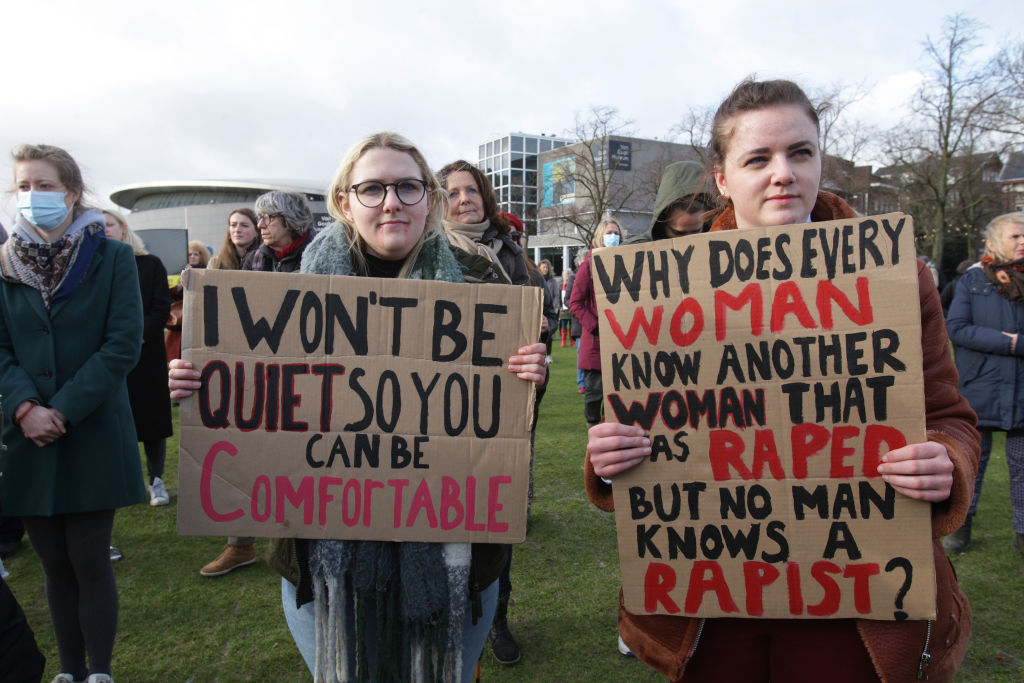
This was in the early 2010s, long before #MeToo. In 2014, there was a similar hashtag, #YesAllWomen, which women were using to share their experiences with sexual assault. How did that make you feel?
Validated. It made me feel less alone. That's one of the reasons I wanted to talk about it: Because I knew it wasn't just me.
One of the things I [realized] was this idea that we believe that good things happen to good people and bad things happen because you did something bad, or bad circumstances happen because of a mistake that you made and a choice that you made. But that is bullshit. And that was one of the big realizations I had, like, “Why is it that people are blaming me for what happened? Why?” I didn't understand that. I was like, "I didn't do anything. I didn't make choices that led to that.”
And through that [questioning], I gained a level of courage. Because once I felt like I figured it out, I was like, "I found the matrix: [it was] rape culture."
The right criticized #BelieveWomen as ignoring evidence and facts. We know that was a disingenuous argument because no one ever meant, “Believe all women no matter what the facts are.” What do you mean when you say it?
When I'm saying you're believing somebody as a default position, what you're defaulting to at that moment is empathy and compassion. I always tell kids on college campuses; if you don't remember anything I said today about rape culture, I want you to remember one thing. And it's that if somebody comes to you and they say, "I think,"—which is usually what they say, "I think I've been sexually assaulted," and not, like, "I have been"—you say in response: "I am sorry. How can I help?" That's all you're going to say. You're not going to say, "Are you sure?" You're not going to say, "Oh, were you drinking?" You're not going to say, “What were you wearing?" All of those things. You're not going to say any of that. You're just going to say, “I am sorry that happened to you. How can I help?” That's all you're going to say.
You don’t have to make a judgment call at that moment about a verdict or about the case. People get too caught up in that. Besides this idea that people have, “Well, I don't want to believe without evidence,”—I always like to remind them that in the law, testimony is actually evidence. Sure, there are other types of evidence that you can use to corroborate, and certainly, physical evidence is helpful but not always present in cases like this. But testimonial evidence is evidence. And I want to live in a world where somebody's account of what happened to them is taken seriously and not shot down.
In 2013 you were on Fox News. You made a statement and it turned into a... I mean, it was a zoo of getting attacked. So walk us through what you said on the air. What happened?
Fox called me to do a segment. The Colorado state legislature was debating a law that would legalize concealed carry on college campuses. And I was like, “That's not a good idea.” And one of the people that testified was talking about how she was sexually assaulted on a campus in a place where there weren't guns allowed. And if she had had her gun, she would've been able to defend herself. And so the premise of the segment on hand was, “What's wrong with the people in Colorado? Why won't they let women defend themselves with guns…that they can carry everywhere to prevent sexual assault?”
And my argument in the segment was, I don't want or need a gun to not be raped. There's nobody jumping out of the bushes. It's the people that you know, your family members and your friends and your intimate partners, classmates, and your colleagues who [rape you]. And so I reframed it in the segment and I said, "Don't tell me I need a gun. Tell men not to rape."
And after the segment, I got death threats and rape threats.
People were like, "What do you mean, teach men not to rape??” And I was like, you have to start teaching people about consensual sex, affirmative consent. And men are not being taught that. They're being taught that women are literally objects that they're supposed to dominate. And if they can liquor them up to make it easier, then that's what they are encouraged to do through popular culture. And that's resulting in real-world harm. And I just wanted to reframe the conversation away from the things that women are always told they need to do to prevent their own assault. I hate that shit.
What was going through your mind five years ago when #MeToo broke through and people started to pay attention?
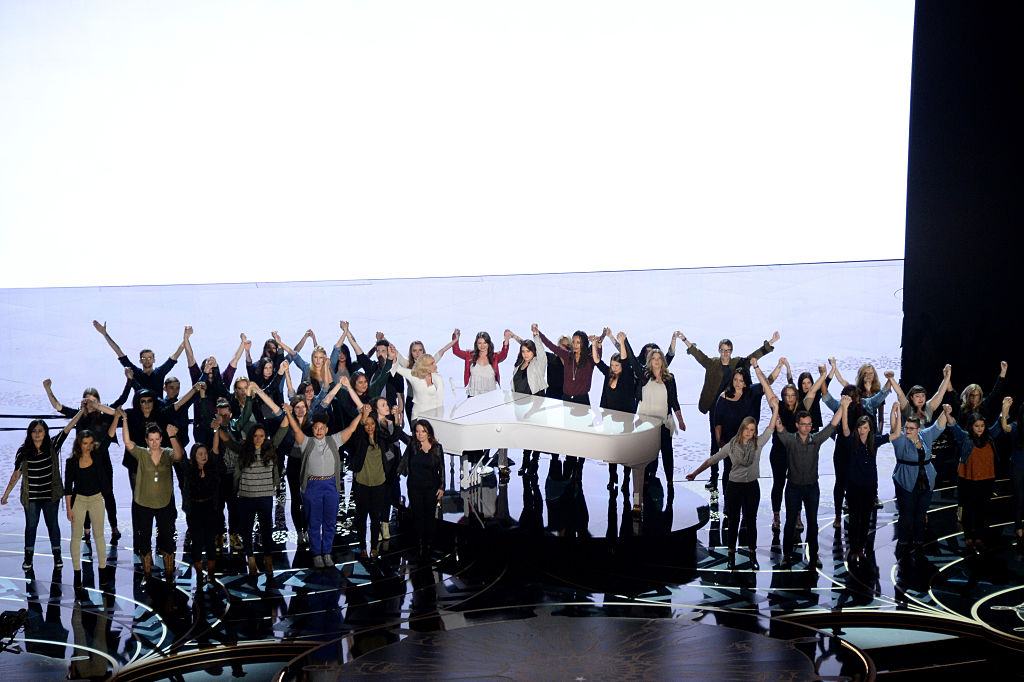
One of the things that happened before that story about Harvey Weinstein came out in 2017 is that at the beginning of 2016, I went to the Oscars. I went to the Academy Awards with Lady Gaga and 50 survivors. It was a life-changing experience. It was a diverse group of people in all aspects—on the gender binary, racial, age, everything. She was performing Till It Happens To You because it was nominated for Song of the Year, and we were invited to stand in solidarity with survivors, triumphant and speaking about our experiences. It was an emotional experience. There was a lot of crying. People were triggered. Lady Gaga was triggered. She walked [into rehearsal one day] and just burst into tears. And she was talking about how seeing us she felt a validation that she kind of had never felt before.
So when Harvey Weinstein's story broke, and all these famous women started coming out, I thought back to the Oscars because that was before that; I mean, he was still having his big party the year that we did our performance. He was still Harvey Weinstein then. But obviously, there was a dam that was about to break because those emotions were really raw that night.
And I think there's a momentum that comes with seeing somebody else come forward... Number one, you realize you weren't the only one that had that story—but also that you're more likely to [be] believe[d].
So how are you feeling now, five years since #MeToo went viral, and 10 years since you started talking about sexual assault publicly? And do you think that we're kind of in the midst of a backlash in some ways?
Oh yeah, we're definitely in the midst. And can we just be honest about the fact that there's a spectrum? Everybody that is on the survivor side of this conversation is acknowledging that not everybody's assault is the same. And somebody that is touching you inappropriately, or putting their hand around your waist, like Al Franken, is not the same as Bill Cosby or Harvey Weinstein. We all understand that. Everybody understands that. You're acting dense and gaslighting us to believe that we're the ones that are overreacting.
When you think about what just happened with Johnny Depp and Amber Heard, the backlash is pretty clear at this point. I mean, I think unfortunately, we overcorrected back to worse than even we were before—maybe in terms of not just believing the woman, but literally destroying her if she had the nerve to talk about something that happened to her. And if, God forbid, she's not the perfect victim, then we'll destroy her. We won't only not believe her, we will destroy her.
Do you feel any hope for the future?
I think that Gen Z certainly is empowered to talk about assault. And I'm not afraid. I'm not afraid to keep talking even though there is a backlash. Because any backlash or hate comment you can send to me that's not going to be worse than the actual assault that I have survived.

Samhita Mukhopadhyay is a writer, editor, and speaker. She is the former Executive Editor of Teen Vogue and is the co-editor of Nasty Women: Feminism, Resistance and Revolution in Trump's America and the author of Outdated: Why Dating is Ruining Your Love Life, and the forthcoming book, The Myth of Making It.

A Shocking Death Toll in Iran
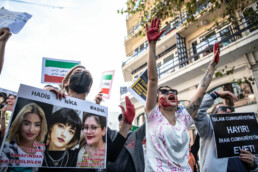
  October 11, 2022 Hey there, Meteor readers, Happy Monduesday! That’s what I call a Tuesday after a 3-day weekend where I spend the entire day believing it’s Monday. Not to be confused with its more disappointing cousin Frursday (a Thursday that should be a Friday). This week I am absolutely splenetic, irate, and other SAT words that mean angry over Logan Paul calling Bad Bunny a hypocrite. In case you missed it: YouTuber Paul, also low-key accused BB of tax fraud after BB’s latest music video, which mentions Paul as someone taking advantage of Act 22. The Act is a tax-incentive program that allows colonizers (like the Paul brothers) to move to Puerto Rico and not pay local taxes on certain kinds of income. The entire debacle is complex and might potentially be an orchestrated beef by the WWE. (Both LP and BB occasionally appear in matches.) 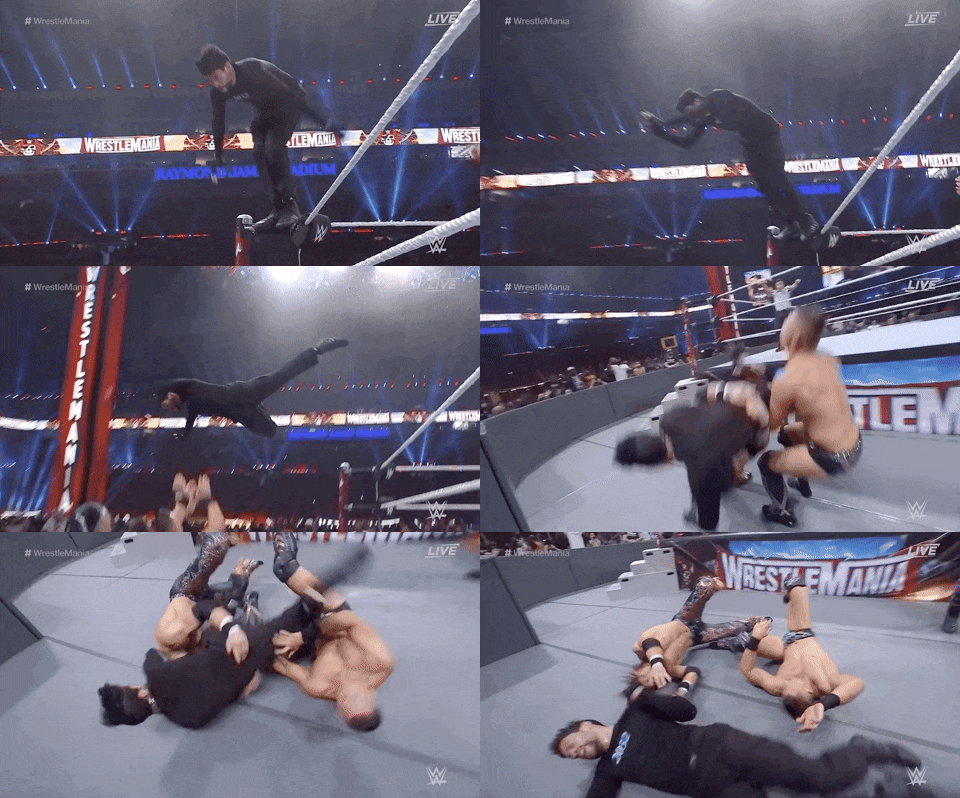 But at the end of the day, it’s opened up a real discussion on how many of these tax incentives harm the island. Moving on from that: Today’s newsletter features an update on protests in Iran, a frightening forecast for one city in California, and a bear-y upsetting voting scandal. Let’s get into it. Watching El Apagón again, Shannon Melero  WHAT'S GOING ONIran’s youth: Last week, we watched as young girls in Iran led the way in protests, and mourned the unexplained death of 16-year-old protestor Nika Shakarami. This week, the fallout continues and the situation is grim. Advocacy group Iran Human Rights (IHRNGO) estimates that 185 people have been killed during protests following the death of Mahsa Amini, the young Kurdish woman detained by morality police in September. Of that number, at least 19 are children. In a statement detailing the findings, IHRNGO said, “In many cases, particularly those of young girls, security forces have subjected families to arrests, coercion, and duress to force them into announcing their children’s deaths as suicide on camera or to keep them quiet.” In one particularly atrocious incident in the province of Zahedan, civilians gathered on Sept. 30 after Friday prayer to protest the rape of a 15-year-old girl by a local police chief. The protest was “bloodily suppressed by security forces” and has since been named Zahedan’s Bloody Friday. An activist group within Iran shared with IHRNGO that at least 90 have been killed in connection to that event so far. (These 90 have not yet been added to the official 185 total, as they are still being looked into by IHRNGO.) The report concludes with a note that efforts to verify deaths have been delayed by security issues and the internet shutdowns across Iran. But the authors are certain that the precise number of civilians killed since Amini’s death is higher than the current report.  PROTESTORS IN ISTANBUL HOLD UP IMAGES OF YOUNG GIRLS WHO HAVE RECENTLY BEEN KILLED IN IRAN. (IMAGE BY ONUR DOGMAN VIA GETTY IMAGES) AND:
PLUS: 

 Please share this newsletter with anyone who hasn't cast their vote for fattest bear yet. FOLLOW THE METEOR    Thank you for reading The Meteor! Got this from a friend? Sign up for your own copy, sent Tuesdays and Thursdays.
|

Why Was Abuse in Women's Soccer Ignored?
 October 6, 2022 Dear Meteor readers, We’ve got a good one today, so let’s get right to it: The Yates Report, led by former Obama-appointed Deputy Attorney General Sally Yates, was released this week. It’s a deep dive into 10 years of abuse in American women’s soccer—and the findings are horrifying. Don’t know much about soccer? Lucky for you, my colleague Shannon has the goods. She’ll be summarizing the findings and giving us some ways to support the players. Also, of course, more on Iran. Samhita Mukhopadhyay  WHAT'S GOING ON
 Also, in Iran: What happened to Nika Shakarami? In mid-September, 16-year-old protestor Nika Shakarami went missing after telling a friend Iranian police were chasing her. Days later, her family members appeared on Iranian broadcast news claiming Nika had died falling from a building. It turns out her family was forced to make these statements after what a source described as “intense interrogations [by police] and being threatened that other family members would be killed.” Her family ultimately took her body back to their hometown for burial, but before a funeral could be carried out, Nika’s body was taken by Iranian security forces and buried without ceremony in a different town 25 miles away. Her family believes that Nika was killed by Iranian police for her protest activity and have called for an investigation into her death. AND:
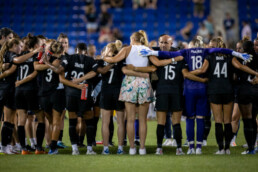
 ON THE PITCHWhat Exactly Is the Yates Report?The biggest report into widespread abuse in American soccer is here, and it’s worse than we imagined. BY SHANNON MELERO  MEMBERS OF THE NWSL'S NJ/NY GOTHAM FC HUDDLING BEFORE A RECENT GAME AGAINST THE CHICAGO RED STARS. (IMAGE BY IRA L. BLACK VIA GETTY IMAGES) On Monday, the sports world was rocked to its core by the release of the Yates Report, an incredibly thorough investigation commissioned by the U.S. Soccer Federation (USSF) and conducted by former U.S. Deputy Attorney General Sally Yates. The purpose of the investigation was to look into what the report called “allegations of past abusive behavior and sexual misconduct in women’s professional soccer,” namely within the National Women’s Soccer League (NWSL). The NWSL is America’s professional women’s soccer league, and it features some of the best players in the world, like Marta, Megan Rapinoe, Crystal Dunn, and other members of the U.S. Women’s National Team (USWNT) along with scores of lesser-known young women who play for amazing teams like OL Reign, Racing Louisville, and the North Carolina Courage. This investigation does include the full details a formal complaint filed by beloved USWNT member Christen Press, but the main subjects are some of those lesser-known NWSL players—both named and anonymous. The full report is over 300 pages long and details years of sexual misconduct and emotional/verbal abuse from several coaches across the top-performing teams in the league (including the Portland Thorns, Chicago Red Stars, and the Houston Dash). “Abuse in the NWSL was systemic,” investigators write. At least half the League’s teams parted with coaches for alleged misconduct including “verbal and emotional abuse, sexually charged remarks, and coercive sexual contact.” Additionally, some of the allegations concern youth soccer leagues, programs designed for school-age children who are training to play at the college level. The report also found that the USSF, individual teams, and the League as a whole failed to address known complaints submitted by players and staff. “They either minimized the reports—claiming players were trying to kill the League, or that a coach was ‘put in a bad position’—or they ignored them entirely,” the report reads. Both the league and the federation also “failed to establish investigation policies and protocols establishing how and by whom investigations of abuse would be conducted.” Those who did come forward—most notably Mana Shim and Sinead Farrelly, who are both named in the report—were mistreated by their employers and the governing body that oversees their league. One player, listed only as Player B alleged that Coach Paul Riley “took control over [her]” in 2010 through sexual coercion and threats to trade her to a different team if she didn’t comply with his wishes and respond to his harassing text messages. That player eventually left the team for her own safety, and Riley continued in his position.  SINEAD FARRELLY ON THE PITCH IN 2015. (IMAGE BY RICH BARNES VIA GETTY IMAGES) So the question now is: Where does soccer go from here? The Yates Report acknowledges that “the roots of abuse in women’s soccer run deep and will not be eliminated through reform in the NWSL alone.” The report goes on to suggest greater transparency and accountability within the League and the Federation. This is long overdue, of course, but it can only succeed with consistent outside pressure. Systemic abuse thrives in darkness and silence—silence from mainstream feminism, from casual viewers, from people who would rather look the other way because “no one cares about women’s sports” so why bother investing time or care into it? You don’t need to be a soccer fan to care about what’s happening in the NWSL. But how we treat athletes says a lot about how we view them as people. If we can show up when they’re winning, we can show up when they need our support. I’m a dedicated fan, and I plan to reassess how I can better support the players in this league going forward. And no matter your level of commitment, we can all be better advocates. Here are some easy ways to start:
 Shannon Melero is a Bronx-born writer on a mission to establish borough supremacy. She covers pop culture, religion, and sports as one of feminism's final frontiers.  BEFORE YOU GO!This week on UNDISTRACTED, Brittany Packnett Cunningham spoke with Congresswoman Cori Bush about her new memoir, The Forerunner. Rep. Bush also shared what it was like to make her way to Congress as a grassroots organizer, mother, pastor, and survivor of sexual violence. It’s an intimate and compelling discussion between two absolute powerhouses. Give it a listen this weekend—after the England v. USA match obviously.  UNDISTRACTED IS SPONSORED BY:  Goldman Sachs 10,000 Small Businesses provides business education, support services and pathways to capital for growth-oriented entrepreneurs. Participants gain practical skills to take their business to the next level, on topics such as financial statements, marketing, and employee management, and gain tools to develop a customized business plan for growth---for free. Goldman Sachs 10,000 Small Businesses has served over 12,800 businesses in all 50 states, Washington D.C. and Puerto Rico. Apply today.  FOLLOW THE METEOR Thank you for reading The Meteor! Got this from a friend? Sign up for your own copy, sent Tuesdays and Thursdays. |



These Movies Really Miss the Mark on Abortion
|
 October 4, 2022 Howdy, Meteor readers, It’s been 100 days since the overturn of Roe v. Wade, and we’ve got reproductive rights on the brain. Maybe it’s the fall weather keeping some of us indoors or maybe it’s the absolutely wild anti-abortion scene in Blonde (the Marilyn Monroe biopic), but today we’re thinking about the ways abortion is portrayed in film and television. In today’s newsletter, author Scarlett Harris looks at another recent Netflix movie that does a disservice to accurate abortion storytelling by pretending abortion simply doesn’t exist. Before we dive head-first into the news, The Meteor wishes a blessed Yom Kippur to those who observe tomorrow. May your fasts be easy. Glued to the screens, Shannon Melero  WHAT'S GOING ON
AND: SACHEEN LITTLEFEATHER AT AN EVENT WITH THE ACADEMY EARLIER THIS YEAR. (IMAGE BY FRAZER HARRISON VIA GETTY IMAGES)
 THE SMALL SCREENLook Both Ways Willfully Ignores AbortionHas post-Roe Hollywood learned nothing?BY SCARLETT HARRIS  LILI REINHART, STAR OF NETFLIX'S LOOK BOTH WAYS. (IMAGE BY EMMA MCINTYRE VIA GETTY IMAGES) Look Both Ways, the Lili Reinhart movie now on Netflix, was marketed as a sweet rom-com in the vein of Sliding Doors about a college senior who takes a pregnancy test. In one scenario, she has a pregnancy scare; the other, a life-changing positive result. The film follows Natalie (Reinhart) who plans to graduate college and move to Los Angeles with her best friend Cara (Aisha Dee). She has a five-year plan and having a baby is not part of it. “I did not see ‘single, unemployed, 22-year-old mom’ on my tarot card reading,” she laments. In both scenarios, one thing is glaringly omitted: the option of abortion, legal or otherwise. Instead, the film glosses over the abortion conversation in a short, two-minute scene with Natalie’s casual hookup/baby daddy Gabe (Danny Ramirez), who weakly asserts that he’s pro-her choice. Like Knocked Up, the odd-couple pregnancy comedy that preceded it by 15 years, Look Both Ways never utters the word “abortion.” Both Reinhart and director Wanuri Kahiu have said that the film is not an “abortion movie;” it’s a movie about “following your heart.” This seems like a cop-out. And it pales in comparison to more recent abortion-themed movies: Unpregnant (2020), Plan B (2021) and Never Rarely Sometimes Always (2020) all engage with dwindling reproductive rights explicitly, and explore the lengths young women will go to in order to obtain them. It’s true that screenwriter April Prosser’s script and Kahiu’s final cut were in motion long before the devastating Dobbs ruling that came in June. But the entertainment industry has an opportunity to grapple with the many ways people experience unplanned pregnancies and not doing so is downright irresponsible. Instead, Look Both Ways normalizes a post-Roe world, in which the only result of an unplanned pregnancy is a birth. Netflix and absolutely not chill.  Scarlett Harris is a culture critic, author of A Diva Was a Female Version of a Wrestler: An Abbreviated Herstory of World Wrestling Entertainment, and editor of The Women Of Jenji Kohan.  ABORTION STORIES DONE RIGHTHere are a few shows (and one movie) that stick out by addressing the topic of abortion with integrity and thoughtfulness. Light spoilers ahead! (But also some of this is old, so don’t @ me. Step up your TV game.) The majority of people who seek abortions are Black—but over the last five years, 66% of abortions shown on television featured white characters. That’s one of the reasons Vida stands out. A STARZ television series following the lives of two Latine sisters, Vida includes a storyline about medical abortion in its third season. The show handles the entire thing with grace and tenderness and reminds us that abortions are not invasive, frightening procedures, even when they might be emotional. You may not remember it, but I vividly recall the abortion plotline in season four of everyone’s favorite Texas-based soap opera. Without giving too much away, this one has less to do with the procedure itself and more with accessing it (and helping someone access it) in an environment that prevents abortion seekers from making their own choices. It’s quite infuriating but newly relevant as Texas is once again at the center of a reproductive rights shitstorm. (Don’t worry, there is lots of Connie Britton to help you get through this watch.) 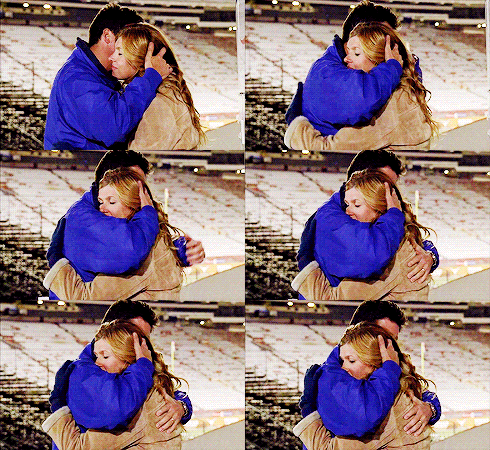 Did you know that only 34% of characters in abortion plotlines actually face any barriers to obtaining the procedure (as many real-life abortion-seekers have for years)? This French film, based on true events from the 1960s, shows a young college student navigating a maze of anti-abortion barriers—some of which still exist today. Be warned: It is graphic and unrelenting in its pace. Certainly not a relaxing watch, but a necessary one. This one hits hard. In the show’s second season, released in 2022, a woman seeks an abortion in Mississippi from the Jackson Women’s Health Organization—the exact same organization at the center of the Dobbs decision. The episode is also a sweeping commentary on Black maternal health. Studies have shown that Black women in America are three times more likely to die during childbirth than white women, a statistic that one character on the show explains summarily by saying, “Pregnancy is life and death for us.” (For an extremely full and comprehensive list of every mention of abortion onscreen since the beginning of time, visit ansirh.org.)  FOLLOW THE METEOR    Thank you for reading The Meteor! Got this from a friend? Sign up for your own copy, sent Tuesdays and Thursdays. |

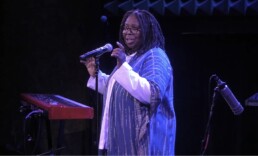
Whoopi Goldberg's Candid Message on Abortion
  September 29, 2022 Felicitations, Meteor readers, Hurricane Ian continues to move inland after tearing a path through Cuba and Florida, with its sights set on Georgia and South Carolina before (we hope) slowing down. Floridians are waiting to see how long their recovery will take, but at least they’ll have the support of local and federal agencies. It still remains to be seen whether the same can be said for Puerto Rico, another U.S. territory waiting for aid from the powers that be—who are, in fact, profiting off of the devastation of Hurricane Fiona. We’ve got something very exciting for today’s newsletter: Meteor editor-at-large Rebecca Carroll sat down with the one and only Whoopi Goldberg last week at our #SaytheWord event to talk about her long-time commitment to saying that word: abortion. But first, some news. Shannon Melero  WHAT'S GOING ONAG on the run: No, this is not a John Grisham novel: Texas Attorney General Ken Paxton and his wife actually fled their home earlier this week to avoid being subpoenaed in a federal lawsuit. (Many of the state’s non-profits are suing to be able to help pregnant people receive abortion care out of state.) Paxton later posted on social media that he ran because he felt threatened by the server of papers. But I’m with Jil Filipovic: The reality is that Paxton, like much of the GOP, doesn’t really want to face the music of his draconian law-making and the fact that more than half of Americans are pissed as hell about it. The subpoena was dropped, but the cowardice still stands. About damn time: Renowned flutist Lizzo performed at the Library of Congress with a 200-year-old crystal flute belonging to prolific enslaver (and rapist) James Madison. As you can imagine, she killed. “I just twerked and played James Madison’s crystal flute from the 1800s,” she exclaimed to the crowd. While people who choose joy were celebrating this moment, other totally grown people like conservative columnist Ben Shapiro completely lost their shit. What exactly is “controversial” about a trained flutist and Black woman playing a former slave owner’s family heirloom, loaned to her by the first Black woman to run the Library of Congress? Oh, right, Ben—it makes you uncomfortable.  AND:
 SAY THE WORD“Change the fucking playbook”Whoopi Goldberg can't believe she's still here fighting the same battles for abortion rights. BY REBECCA CARROLL  WHOOPI GOLDBERG ADDRESSES THE CROWD AT JOE'S PUB IN NEW YORK CITY. (IMAGE COURTESY OF THE METEOR) Whoopi Goldberg has been making the personal political for a very long time. In 1983, she created her one-woman production The Spook Show because she hadn’t been unable to find acting roles as a Black woman. Combining razor-sharp humor and satire, the show featured five characters whose stories made poignant social commentary—a rehabbed drug addict with a PhD, a surfer chick, a physically disabled woman, a little Black girl who longs for blonde hair, and a Jamaican caretaker. The show started with a near-empty house until a rave review in The New York Times not only brought audiences in droves but landed Goldberg a Broadway production and TV special on a then-fledgling cable network called HBO. I was 16 years old at the time and at the height of an intense relationship with my white birthmother, with whom I reunited at 11. One of the things we bonded over was our pure, unadulterated love of popular culture. But, the pop culture we most frequently consumed primarily centered white people. So it was oddly on the mark that when Whoopi’s one-woman show debuted, the character we honed in on was the (presumably white) teenage surfer girl. The trill of Goldberg’s infectious voice, with its dizzying ease and unburdened youth (Uhkay, and I said Uhkay, and we said Uhkay, Uhkay?), buoyed the audience for a while until they realized what this story was actually about: abortion. And not just any abortion—a graphic description of a botched abortion. Nobody with that kind of platform was talking about abortion in 1985, much less a Black female stand-up comedian. What Goldberg did in that sketch was elegant and genius: She made the subject of abortion nuanced at a time when the conversation around them was not. Her now-iconic show left an indelible mark on my life as a Black teenager who grew up wishing she had long blonde hair (like the show’s little Black girl character who wears a shirt on her head), and who wanted desperately to see a Black woman express her love of Blackness while taking ownership of her resolute individuality. So it was an honor to sit down and talk to her backstage at Joe’s Pub last week, where she was appearing in Say the Word, a night in support of New York Abortion Access Fund, about that sketch and this post-Roe world. Rebecca Carroll: Your one-woman show changed my life. I just rewatched the Valley Girl sketch. And the way that it goes from this kind of beautiful lightness to this heavy-ass, harrowing wire-hanger description—I was not prepared, watching it again, to be so moved by it. What did it feel like to play that every night? Whoopi Goldberg: Well, I loved her as a character. And for me, all of the work that I did was really predicated on stuff I wanted to talk about. And I knew I couldn’t talk about it without putting it in a context people could recognize, and they could recognize their teenage daughter. And seeing the character go to the confession booth, and the priest says, “You’ve created a sin in the eyes of God.” And she’s like, “What are you talking about? I actually had a really good time.” Yeah, because sex is really fun. If you don’t arm people with the information, they end up pregnant. And ss a little kid, I remember two women in Chelsea, where I grew up, at different times—one [being] taken out of a bathroom, and seeing…them pulling things out of the bathroom, and seeing them haul this bloody hanger. That’s how I know what it looked like. The visceral reaction I had to watching it again, I just thought, “What must that have felt like?” Every time you acted it out, the slow untwisting of a coat hanger—this is, in a way, like what all actors have to figure out, what to leave behind and what seeps into your viscera and what stays with you. But to be here in this political landscape, what does that feel like for you? Well, it’s annoying…because I did all this shit…so we wouldn’t have to again. But I realize you can’t be angry with people because no one ever thought this was really going to go backward…nobody thought people would cheat and lie and do the shit that they did because we weren’t prepared for that. Unfortunately…the consequence is going to be very, very bad. Except that they’re so protected. Well, as it turns out, nobody’s protected… that’s the bottom line: When you have money, you can do whatever. But you know, you’re not as protected as you think. You can’t go and have a D&C now. You can’t even have your baby die in your body and get relief. That’s how much they don’t give a fuck. Another thing that struck me about rewatching that sketch is that the language is the same [as it is now]—the shame, and the idea that “you have committed a sin.” How do we make new language? Well, you change the fucking playbook. You get in a place of power where you don’t let that shit happen. You start to perform it, and you put it in the parts, and you do it on television, and you do it everywhere you can. When you say “get in positions of power”—what are those positions? Become a mayor. Become a senator. Become a congressperson. I’m trying to not be cynical, but do you still believe that those are positions of actual power? Well, they were until everybody gave them up…I don’t know. I thought everybody was still kind of smart when Obama was in. And then suddenly, everybody’s stupid as fuck. And pretending that there are no civics lessons and that there are no morals that we all have to function with… I often hold with me something that [the late civil rights activist] Julian Bond once said to me: “You find the ease in the struggle.” That’s all we can do. Because it’s hard to keep fighting. It’s real hard. People talk about being woke. I always say, “I was never asleep”...because we [Black folks] always knew that nothing that has to do in particular with us is solid. Voting rights. Why can people fuck with voting? Why isn’t that sacrosanct? Why hasn’t that been made sacrosanct? You know what’s coming, and yet you can’t find a way to get it together to make it sacrosanct.  Rebecca Carroll is a writer, cultural critic, and podcast creator/host. Her writing has been published widely, and she is the author of several books, including her recent memoir, Surviving the White Gaze. Rebecca is Editor at Large for The Meteor.  FOLLOW THE METEOR Thank you for reading The Meteor! Got this from a friend? Sign up for your own copy, sent Tuesdays and Thursdays.
|

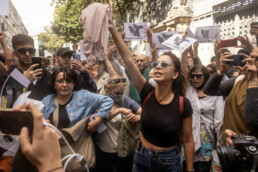
It's About More Than a Hijab
  September 27, 2022 There’s a lot of pressing news in the world today, but before I get to it: Can we take a moment to bask in the fact that Rihanna will be performing at the Super Bowl halftime show next February?? Naturally, I have questions: Does this mean new music? A new tour? Will her baby come on stage as a special guest? Also, why did Taylor Swift turn down the performance? My synapses have been firing all weekend. More soberingly, Hurricane Ian has made landfall in Cuba and is making its way toward Florida. We hope all of our readers and colleagues are staying as safe as they possibly can. Lots to cover today—including a potential government shutdown and the growing protests in Iran—so let’s dig into it. Waiting for R9 and Midnights, Shannon Melero  WHAT'S GOING ON“What are you setting on fire?”: The unrest in Iran continues following the death of Mahsa Amini, a 22-year-old Kurdish woman who was detained by the country’s morality police and died in their custody. Based on photos of Amini’s bruised, comatose body lying in a hospital, many believe she was severely beaten by police, but officials have denied this version of events. Iran’s foreign minister even went so far as to assert during an NPR interview that the protests in Iran are “not a big deal” and the noise around Amini’s death is being caused by “foreign media and outside agitation.” But videos on social media, showing thousands of people around the world—and, tellingly, within Iran itself—marching and demonstrating, tell another story.  PROTESTORS REMOVING THEIR HEADSCARVES OUTSIDE OF THE IRANIAN EMBASSY IN ISTANBUL. (IMAGE BY CHRIS MCGRATH VIA GETTY IMAGES) The most profound symbols of this multi-national protest have been women (and a few men) removing their head coverings and cutting their hair in public—acts that are illegal under Iran’s theocratic law. As a Muslim woman living in the U.S., I have been reluctant to enter the debate about Islam’s role surrounding this tragedy. Hijab—which is an entire lifestyle, not just a scarf on one’s head—is often touted as a symbol of the oppression of women abroad, used to flatten the complexities of Muslim women’s experiences. Head coverings have been used to justify wars, invasions, xenophobic laws, and Islamophobic hate crimes. As women living in the West, we often feel the need to plant our feet firmly on only one side of the debate: We champion women who defy the laws forcing them to cover, but when it comes to those who want to cover—even if, just like the former group, their choices are being limited by the government—we adopt either silence or a sort of conversational waffling. (Yes we support you but that scarf is a sign of internalized patriarchy, so why cling to it?) But two realities can exist at once and both are deserving of more nuance than they get. As a practicing Muslim in a country hostile to them, it’s difficult to both speak out against these oppressive practices and defend my faith without colleagues, employers, or strangers in general challenging whether or not I’m really a feminist.  PROTESTOR IN GREECE CUTTING HER HAIR IN SOLIDARITY WITH IRAN. (IMAGE BY MILOS BICANSKI VIA GETTY IMAGES, ILLUSTRATION BY THE METEOR) But what is happening is not merely an issue of unclipping the shackles of a religion that’s already been demonized in the West. What is happening in Iran is a political uprising against a corrupt government—so let’s beware of conservative Western politicians who are jumping on board the “liberate Iranian women” train, while helping engineer one of the greatest losses of women’s rights in the U.S. for 50 years. Writer Mona Eltahawy puts it perfectly: “So successful has white supremacist patriarchy been at convincing you that you’re lucky to live in the U.S. and not Saudi Arabia or Iran, that so many of you did not pay enough attention to the theocracy that white supremacy was building right here, at home.” The U.S. flavor of theocratic rule Eltahawy refers to is, of course, forced pregnancy, which is not that different from a nationwide dress code. Both stem from a willful misinterpretation of ancient texts and the desire to control women’s bodily autonomy. To be abundantly clear, hijab is not merely the scarf we see. It is a religious practice that comprises one’s dress, comportment, and language and is an outward manifestation of the relationship one chooses to have with their maker. It’s also not just for women.  PROTESTOR IN CHILE TOUTING WOMEN, LIFE, LIBERTY. (IMAGE BY LUCAS AGUAYO ARAOS VIA GETTY IMAGES, ILLUSTRATION BY THE METEOR) While we can argue all night and day about whose god is right or wrong, the fact remains that there is no version of a god that is a politician. The fight ahead both here and abroad isn’t against personal beliefs, but the political structures that have allowed men of privilege to turn their own beliefs into laws and political policy. Iranians burning their hijabs are not committing an affront to Islam; they are saying loudly and proudly that choice and bodily autonomy are fundamental human rights. So for anyone who’s been having strong feelings about what’s happening across the world but not about what’s happening in your backyard, I’m asking the same existential question Eltahawy is: What are you setting on fire?
 University of Idaho’s newest gag order: The Intercept just released a communication between the University of Idaho’s general counsel and its staff, telling employees of the university how to talk to students about abortion. The short version? Don’t. “During all times that university employees are performing their jobs,” the letter says, “the law prohibits them from taking any action, and from using or providing institution funds or facilities, for any of the following…promoting abortion…providing or performing an abortion…counseling in favor of abortion,” and so on. The memo also notes that the school will stop providing birth control (an unusual move for a university), and that the consequences for breaking these rules could be firing. It’s possible that other large public universities in states that, like Idaho, have largely banned abortion or are trying to also have similar policies, whether written or implicit. But these guidelines deprive students of crucial health information—and they’re especially disappointing considering that Idaho has in the past at least nodded to a more compassionate stance. Last month, when The Meteor’s Talia Kantor Lieber asked 61 schools about their abortion travel policy, the University of Idaho told us that the university “does not provide money specifically for students to travel for an abortion. The university does have emergency funds available to students…While it is possible a student could use it for this, the university does not get involved in the medical decisions of our students….We provide information and resources that allow students to make informed and independent decisions.” Or maybe not anymore. AND:
 FOLLOW THE METEOR Thank you for reading The Meteor! Got this from a friend? Sign up for your own copy, sent Tuesdays and Thursdays.
|

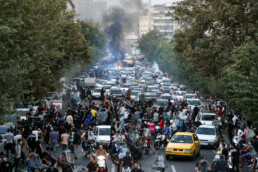
Iranian Women Are Burning Their Hijabs
  September 22, 2022 Dear Meteor readers, It’s officially the Fall Equinox which means summer is truly, truly over. But the silver lining is we can all start sporting our fall fashions—which, in my opinion, are the only good fashions. Also: leaf peeping! In today’s newsletter we’re covering the latest on the growing unrest in Iran after the death of Mahsa Amini, a 22-year-old woman who died under suspicious circumstances after being detained by Iran’s morality police. Sitting under a sun lamp, Shannon Melero  WHAT'S GOING ONBurning their hijabs: Last Tuesday, 22-year-old Mahsa Amini was arrested by morality police in Iran for allegedly failing to cover her hair in accordance with the law. Three days after “mysteriously” falling into a coma while in police custody, she died. Witnesses to her arrest say that Amini was beaten by officers on her way to a detention center (a story officials are refuting). But since her death, women have taken to the streets and the internet to protest Amini’s treatment and the restrictive law in Iran that states that women must fully cover their hair and wear loose-fitting garments. Protestors—led by women but supported by men—have been cutting their hair in defiance, while others are burning headscarves in the streets. So far nine people have been killed in altercations with Iranian security forces. Videos and images from the protests have been moving, heartbreaking, and essential to our understanding of how dangerous the situation has become for those daring to protest.  PROTESTORS REMOVING THEIR HEADSCARVES OUTSIDE OF THE IRANIAN EMBASSY IN ISTANBUL. (IMAGE BY CHRIS MCGRATH VIA GETTY IMAGES) But now the Iranian government is slowly but surely trying to silence the voices of protestors by blocking internet access in cities where demonstrations are happening. Residents of Tehran have reported issues with Instagram and WhatsApp, platforms used to share messages about what’s really happening on the ground. Back in the United States, Iranian President Ebrahim Raisi was scheduled for an interview with Christiane Amanpour where one of the topics would be the unrest in Iran. However, after Amanpour refused to comply with his request that she don a head covering for their conversation, President Raisi declined to speak. It would be easy—lazy, even—to write off what is happening in Iran as a local issue of religious freedom. Instead, this is a huge opportunity for the international community to support women fighting for their bodily autonomy. We cannot allow Mahsa Amini to fade into another tragic hashtag. Here is a list of reporters and experts to follow and amplify as the situation unfolds.  PROTESTORS IN THE STREETS OF TEHRAN, CLASHING WITH IRANIAN SECURITY FORCES. (IMAGE BY ANADOLU AGENCY VIA GETTY IMAGES) Justice for Shireen Abu Akleh: According to a new report conducted by human rights group Al-Haq and research agency Forensic Architecture, there is sufficient forensic evidence to prove that Israeli forces “deliberately killed” Palestinian journalist Shireen Abu Akleh earlier this year. Abu Akleh was shot by a sniper while reporting from the city of Jenin while wearing a vest that clearly identified her as a member of a press. The report confirms the long-held suspicion that Abu Akleh was targeted by Israeli forces, despite the Israeli government’s claims that she was struck accidentally during an exchange of fire. There is even evidence that after Abu Akleh was hit, the shooter continued to fire on a civilian who attempted to give aid. On Tuesday, the report was presented at The Hague and an official complaint was filed. The IDF has released no response. AND:
 BEFORE YOU GO...THERE ACTUALLY WAS SOME GOOD NEWS THIS WEEK!The news cycle has been particularly bad this week, but that doesn’t mean there aren’t a few positive things going on in the world. Let’s get a quick hit of serotonin before the weekend.
  FOLLOW THE METEOR Thank you for reading The Meteor! Got this from a friend? Sign up for your own copy, sent Tuesdays and Thursdays.
|

Meet the Black Filmmakers That Changed Representation in Movies
BY REBECCA CARROLL
“When I was a little girl, all I wanted to see was me in the media. Someone fat like me, Black like me, beautiful like me.” –Lizzo
If anyone needed a reminder of how important representation is in visual media, last week’s release of the new Little Mermaid trailer provided it. Dozens of cheerful, genuinely moving videos of little brown and Black girls, rejoicing in seeing a Black Halle Bailey as the new Ariel, hit social media—and were swiftly followed by racist backlash.
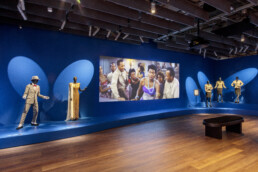
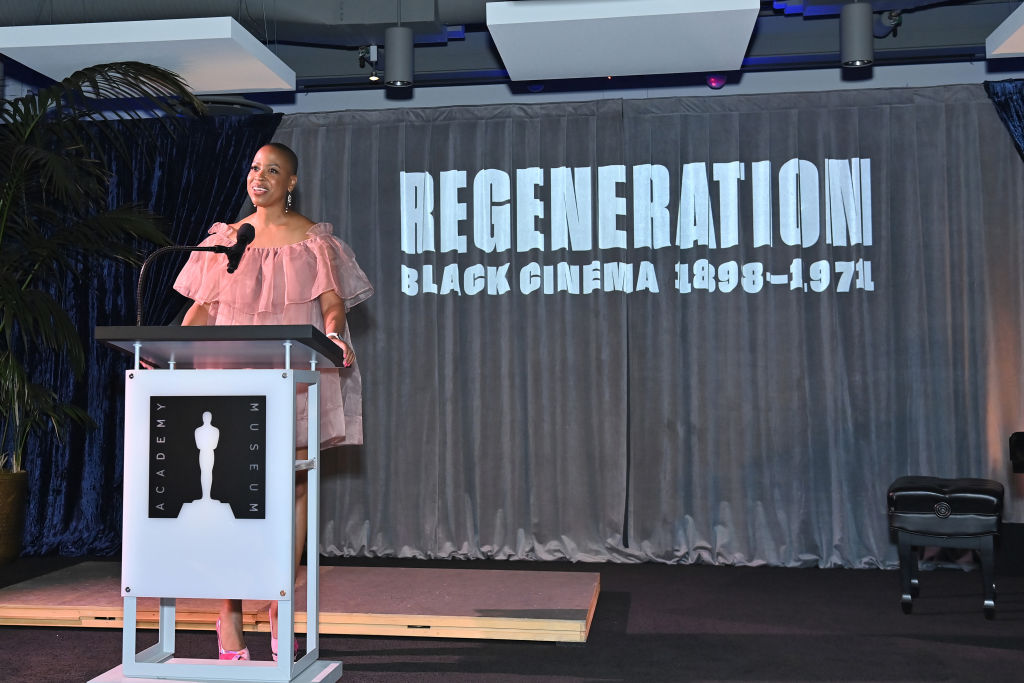
Representation matters and its absence in visual media is not because Black folks haven’t been creating it; it’s that predominantly white gatekeepers who fund and distribute film and TV have chosen to exclude Black creators. And that’s why REGENERATION: BLACK CINEMA 1898-1971, an exhibit at the Academy Museum in Los Angeles exploring seven decades of the vast canon of work created by Black American filmmakers, is so important. The exhibit is a tribute to Black filmmakers who did their work not just in the face of structural racism, but in a burgeoning industry that refused to acknowledge them.
I sat down with Rhea Combs, the co-creator of REGENERATION and director of curatorial affairs at the Smithsonian’s National Portrait Gallery, to hear about what she learned.
Rebecca Carroll: This exhibition features films and visual art from nearly a century of Black filmmaking. Are there pieces that you still think about all the time?
Rhea Combs: Yes, short answer. We open it with Something Good - Negro Kiss from 1898, a 29-second work that shows Gertie Brown and Saint Suttle in this kind of playful embrace (the first documented on-screen kiss between two Black folks in film history). It’s the piece that you see when you walk in, and it's emblematic of everything that Doris Berger and I were really looking to accomplish with this exhibition. And by that, I mean: You see this juxtaposed with a Glenn Ligon Double America 2 work that’s this neon piece that has America written right-side up and then written upside-down—that kind of double consciousness of knowing someone else is looking at you, but then also doing it for yourself and doing it with such pride and such dignity and such beauty. I think Something Good - Negro Kiss embodies all of that.
The exhibition notes describe how the groundbreaking Black filmmaker Oscar Micheaux was working in an environment where the bar for what a film should look like was D.W. Griffith's Birth of a Nation—which, as most people aware of the film know, was wildly racist. What do you think the impact of that film was on Micheaux and other Black filmmakers?
When we looked at this show and conceptualized it, we had to predate cinema and look at theater and photography, which then allows you to understand that there were these conversations around Black modernity that were happening. When you situate it within that framework, then you understand better an Oscar Micheaux. Yes, there was D.W. Griffith, [but] there were also people like Booker T. Washington and [W.E.B.] Du Bois, who were creating these really grassroots, organized protests against [Griffith’s] work.… So I think there were these kinds of social and cultural dynamics at play within the African American community that we try to address in the exhibition through showing forward thinkers like Sojourner Truth, who used photography, and Du Bois, Frederick Douglas, and Booker T. Washington.
That is sort of a summation of Black culture—so much of the work we create is in response to what we haven't been able to do, what we haven't been able to be. Were there moments in the exhibition when it was clear that these filmmakers were creating work that was not [only] in response to the ways in which we were and are oppressed?
I think even within the spaces in which these works were shown (pop-up churches or community centers) suggest that while these social realities were happening with structural racism, I believe that filmmakers were doing this in part because they wanted to do the work. They weren't just doing it in response to.
We talk a lot about the power of seeing ourselves reflected in film and TV, especially as we have been so objectified and dehumanized, right? It’s just amazing to me that we've been doing this for so long and internalizing as much as we have—both the beauty of something like Negro Kiss, and the ugliness of Birth of a Nation.
We’ve been navigating. As you look through seven decades of a push, [a] pull, an ebb-and-flow of this artistic practice, you still have these moments of hope and glimmer. You have an 18-year-old Josephine Baker going from leaving after being traumatized from race riots in East St. Louis to France, not knowing how to speak French, to becoming fluent in French and becoming a spy.
Did you say a spy?
Yes, she became a spy during World War II!
I always seem to forget that.
We hope to take the visitor on a journey [in this exhibition], and to understand the complexities of not only the external world, but also the people—performers, folks in front of and behind the camera—and the complexities behind their stories.
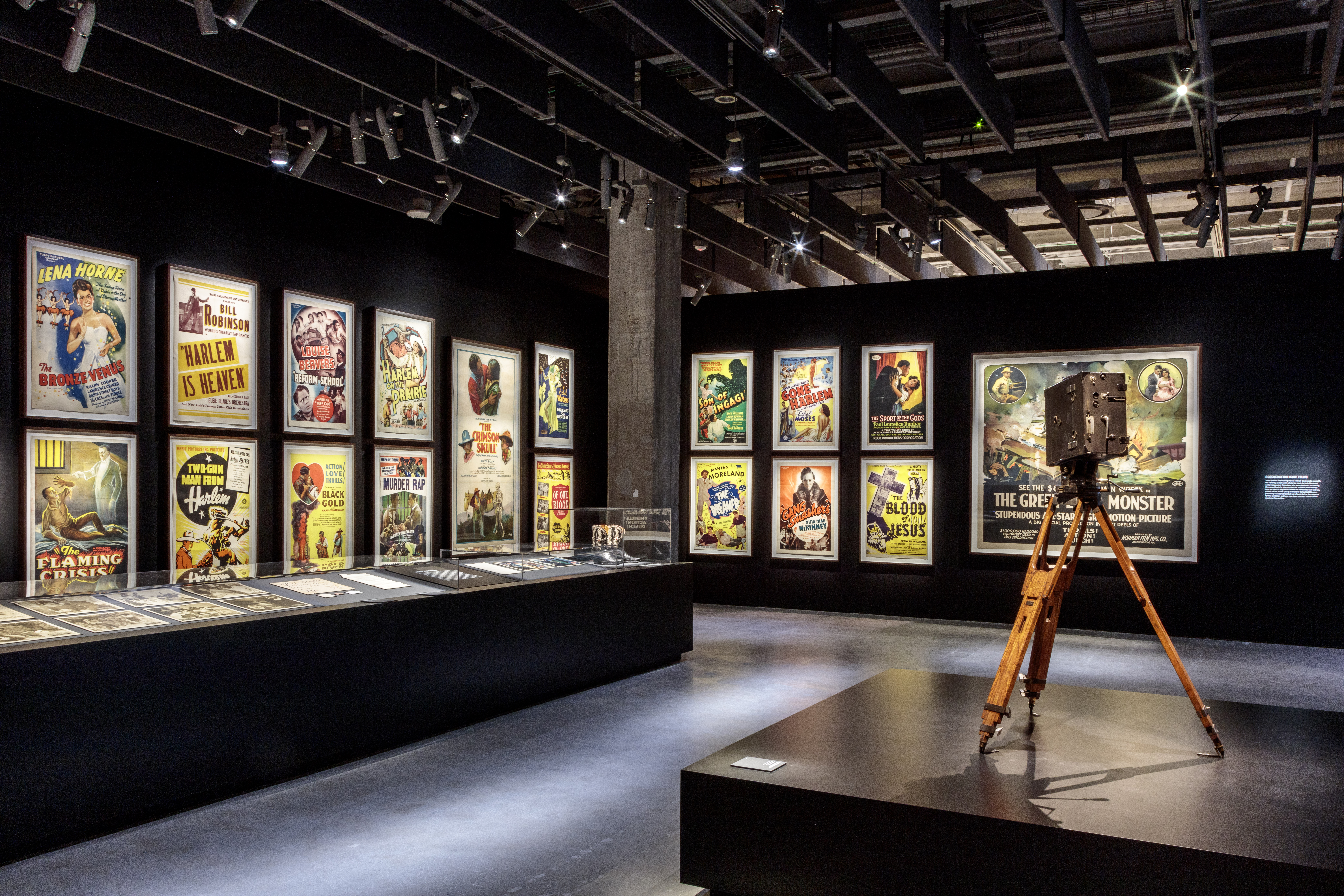
So if you wish for the visitor to go on a journey, where do they land at the end of that journey?
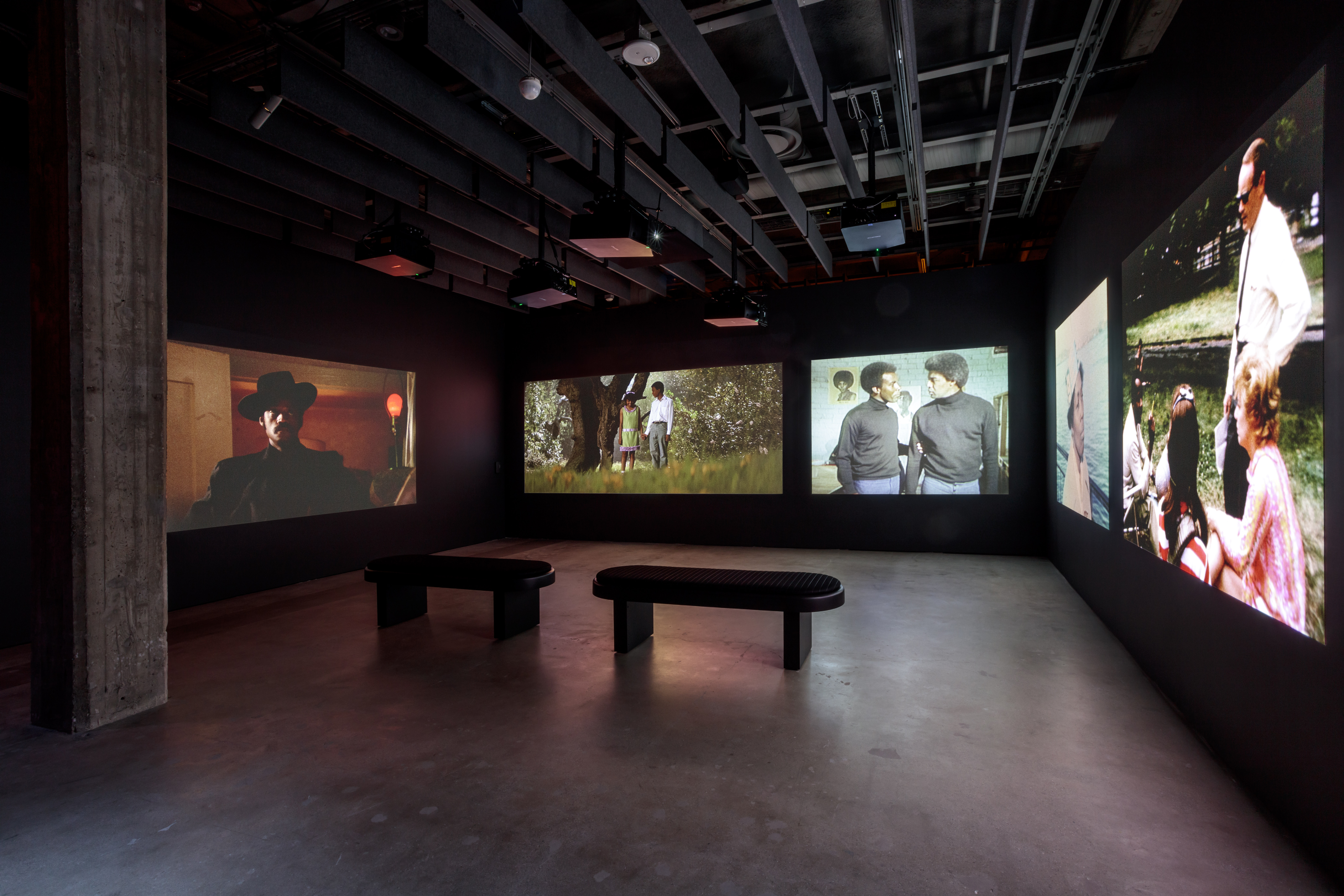
They land with a sense of hope, a sense of possibility, and this notion of resilience. In the culminating gallery, we showcase five filmmakers: Madeline Anderson, an independent filmmaker; documentary filmmaker William Greaves; the writer and filmmaker Robert Goodwin, whose work had been lost until recently; Gordon Parks; and Melvin Van Peebles. So you get a range of styles. You also get a sense of how the industry was shifting by the time you get to the late 60s/early 70s. At the end, you see this mantle where artists have chosen yet again to use this art form of film as an opportunity to speak about issues in a variety of ways. And I think that then leaves the visitor [with an expanded] understanding of American cinema.
And where have you landed?
Where have I landed? [laughs] I sit in this space of awe and inspiration—that through so many trials and tribulations, there were people who still found a way to create artwork that was meaningful.

Questions Like “What is a woman?” Work to Divide the Left
BY CHASE STRANGIO
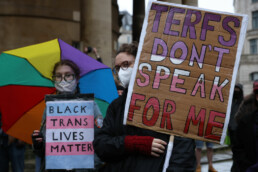
If you have been activated by the fall of Roe v. Wade but have failed to notice the endless onslaught of anti-trans sentiment and legislation that’s been sweeping the country, you have fallen into a well-laid trap to divide natural allies in the fight for gender justice and liberation. While the left has spent the last few years embroiled in a battle over the contours of womanhood, the right has capitalized on our willingness to fight each other to advance legislation that will curtail bodily autonomy for all of us.
Just last week, Texas Attorney General Ken Paxton, a national leader in the fight against abortion access and trans health care, made strategic use of our internal divisions by announcing his support for a “Women’s Bill of Rights to Affirm Basic Biological Truths and Fight Back Against the Left’s Attempts to Redefine the Term ‘Woman.’”
Though he claims to be taking a stand against “the Left,” the anti-trans rhetoric he endorses was actually developed by the center-left. For at least seven years, we have been subjected to a disingenuous and, unfortunately, very destructive discourse that purports to ask, “What is a woman?”—but ultimately seeks to question the legitimacy of trans existence.
And it’s worked: The fear-mongering and concern-trolling has not only further propelled the far-right into power but has also caused some advocates for trans inclusivity in existing feminist and LGBTQ+ spaces to abandon their support for transgender people.
...the right has capitalized on our willingness to fight each other to advance legislation that will curtail bodily autonomy for all of us.
Back in 2015, the New York Times published an op-ed from Elinor Burkett asking “What Makes a Woman?”, tied to Caitlyn Jenner coming out as trans. Burkett wrote, “I have fought for many of my 68 years against efforts to put women—our brains, our hearts, our bodies, even our moods—into tidy boxes, to reduce us to hoary stereotypes.” Somehow, looking at all the different ways sex stereotypes are deployed and weaponized in the world, Burkett points the finger, not at right-wing campaigns, not Victoria’s Secret catalogs, not dress codes or sex-separated learning, but at trans people.
More recently, we saw the “What is a woman?” dog whistle invoked during the Senate confirmation hearings for Justice Brown Jackson, in Senate hearings on abortion access and maternal health, and again in a New York Times column by Pamela Paul decrying “The Far Right and Far Left Agree on One Thing: Women Don’t Count” just days after the Supreme Court’s decision in Dobbs overturned Roe.
This type of rhetoric cultivates the conditions that allow for conservative activists like Matt Walsh to release his 2022 anti-trans documentary of the same name: What is a Woman? (It’s been praised by British fantasy author turned anti-trans advocate J.K. Rowling.) The more the left entertains the idea that “women” are threatened by the inclusion of trans people, the more people like Walsh and Paxton will capitalize on the precarity of gender justice solidarity to drive an SB8-sized hole in our collective rights to bodily autonomy and self-determination.
And when trans inclusion and the overturning of Roe are seen as two sides of the same coin, “erasing women,” we all but ensure that government actors succeed in their longstanding plan to curtail all our health. At this point, it is on us—those of us who are truly committed to the fight for gender justice and liberation—to get it together. Womanhood is not a zero-sum game where one person’s inclusion limits another person’s.
What if, instead, we just accepted that our sexed bodies are more complicated and dynamic than we’ve been told—full of beautiful possibility and desire—and break down all the reductive tropes about gender that hold everyone back?
Imagine what it would mean for our collective fight for health care, bodily autonomy, and liberation if, instead of spending our time casting people out of the categories of manhood and womanhood, we challenged the very idea that the state should get to decide who we are, what we need, and how we work together.
Chase Strangio is a lawyer and trans rights activist who lives in New York City.

"Why Are We Still Talking About Royalty?"
BY MEGAN CARPENTIER
When Queen Elizabeth II—the former Elizabeth Windsor—died last week, she received the uncomplicated veneration we bestow upon world leaders and celebrities (and the occasional person, like The Queen, who was both) upon their passings. But she was also criticized and mocked, online and off, by those whose ancestors and culture had been subject to the violent, extractive colonialism of the vast British empire.
Those criticisms, of course, were inevitably followed by calls to not speak ill of the dead, verbal attacks on those who did, and yet further paeans to her 70 years of rule.
A little background: When Elizabeth Windsor was born in 1926, only a handful of the colonies her family had ruled for generations—Ireland, South Africa, Canada, New Zealand, and Australia—had achieved nominal independence. And by 1952, when she came to power, only India, Pakistan, Sri Lanka, Burma, Palestine, and Egypt had joined them. But within the 15 years of her ascension to the British throne, the empire that had at its height encompassed 25 percent of the Earth’s landmass, controlling the lives of 20 percent of its people, now consisted of just a few islands. (The largest and most populous of these was Hong Kong, which reverted to Chinese control in 1997.)
But though the dissolution of the British empire under Queen Elizabeth II is thought of as peaceful in the popular Western imagination, in many places it was far from an orderly, non-violent handover of power. For instance, mere months after Elizabeth II took the throne, British forces began a nearly decade-long campaign to suppress an independence movement in Kenya, which they referred to as the “Mau Mau uprising.” Recent research has shown this campaign involved the mass detention of 1.5 million Kenyans, most of whom belonged to the Kikuyu ethnic group, and a systematic process of torture, forced labor, rape, and murder that the British government covered up for decades.
The British government still holds documents from 37 other former colonies in still-secret archives that are reportedly similar to the ones that proved their involvement in the “Mau Mau uprising” in Kenya.
Nonetheless, the Queen never apologized for the abuses of colonization, and there have been calls—long-standing and recent—for the British government to do so, and to provide reparations to countries damaged by extractivist colonialist policies and reconsider the role the British monarchy should have (if any) in the 21st century and beyond.
To talk through some of these questions, The Meteor turned to the people whose lives and ancestors were affected by British colonial policies about why there is both criticism and admiration of Queen Elizabeth II—and what her death represents.
“...if the British had found diamonds here, we probably wouldn't be independent now.”
–Tshepo Mokoena, London-based journalist and editor, originally from Botswana
The running joke in my family in Botswana was always that, if the British had found diamonds here, we probably wouldn't be independent now. But we gained independence from the British in 1966; the diamonds were discovered in 1967. [The mining company is jointly owned by the Botswana government.] The diamond money was used to fund public services and public health, which was very important as the HIV crisis hit Botswana in the 1990s.
There was a sense that we happened to time the discovery of the mines quite well, whereas in South Africa—where the mines were found early—there was that constant tug-of-war between the British and the Dutch. And it created centuries of a back-and-forth of European powers trying to control South Africa's resources.
Today I would say that the monarchy feels very distant from Botswana, because it is a small, landlocked country where there is not a strong remnant of white settlers. Besides some leftover rituals around Christmas and Christianity, you don't tend to feel much of that connection to Britain, and especially not to the royal family as an institution.
“But by and large, the reaction [among Indians] has been almost like losing any other beloved celebrity who was like this grandmotherly figure.”
–Rohit Kulkarni, D.C.-based former journalist, originally from India
Currently, whether in Bollywood, among the cricketers from India, or in [Indian] society in general, there is a lot of empathy and sympathy for the royal family, and they really appreciate what the Queen did. She was a chief guest for the India Republic Day celebrations in 1961; there were at least a million people who stood on the roads in New Delhi to say hello to her. The second time she visited was in November 1983, when she met with Prime Minister Indira Gandhi for the Commonwealth Leaders meeting.
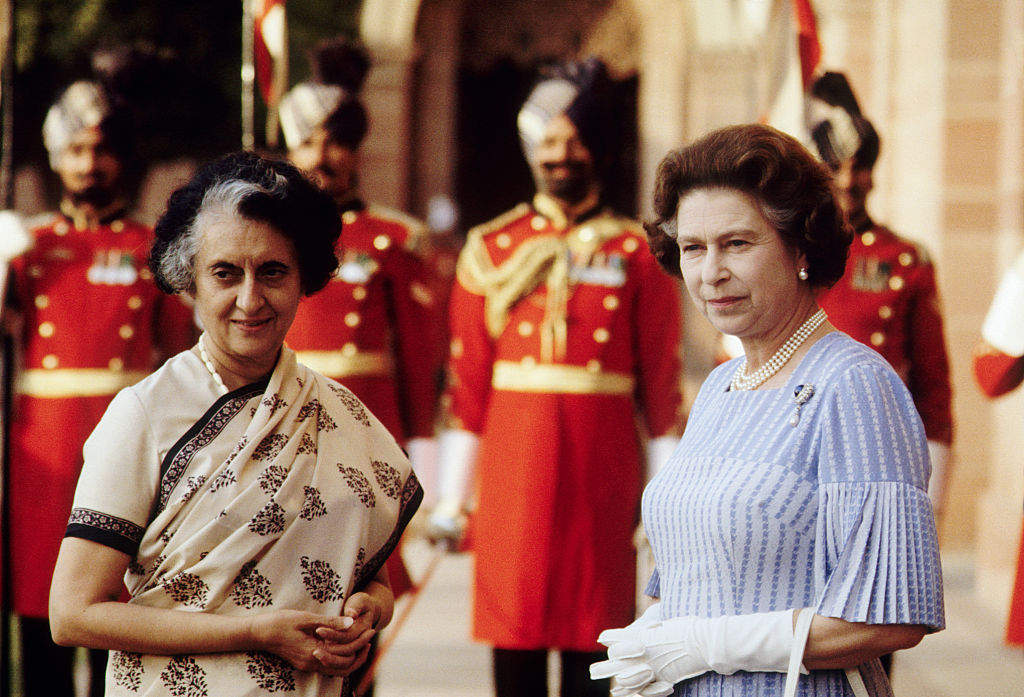
She visited for the third time in 1997 (I had just graduated high school and started college) and was supposed to visit the site of one of the biggest British massacres during the regime, which happened in the state of Punjab at a place called Jallianwala Bagh. People asked her to apologize, but she gave a speech the day before she visited in which she spoke about the dark past and how we cannot rewrite the history.
There is a whole generation of people who really don't know much about the dark history and have never witnessed a royal visit, but for whom there has been this fascination with the British royals as just celebrities. At the same time, you'll also see a reaction like, “It's 2022, people. Why are we still talking about royalty? And especially a person who belonged to the family that butchered and massacred our country and destroyed our social fabric.”
But by and large, the reaction [among Indians] has been almost like losing any other beloved celebrity who was like this grandmotherly figure.
“For Irish people, what [the Queen] represents is just so beyond toxic.”
–Sadhbh Walshe, New York-based writer and screenwriter, originally from Ireland
For Irish people, what she represents is just so beyond toxic. And partly that's just this whole idea of the empire and all of that. But I think at the moment what really, really jumps out at me—and what I think some other people feel—is in reaction to the idea that she presided over this period of stability and so on with her great service. And yet, Britain is in the worst state it's ever been; the country is coming apart at the seams. The health services are falling apart, various labor unions are on strike, the ports are a complete mess, the airlines are a mess, ordinary people are literally choosing between food and heat.
This is all happening under “the great stable presence”—and while she and her family have relentlessly enriched themselves at the expense of the general public. She's managed to procure personalized exemptions from more than 160 laws, and some of the things are really questionable: She secured immunity from anti-discrimination laws and from standard workers' rights related to benefits, to pensions, to compensation, [and] working hours.
Looking at that as an Irish person, I just don't know how ordinary Britons can put up with it.
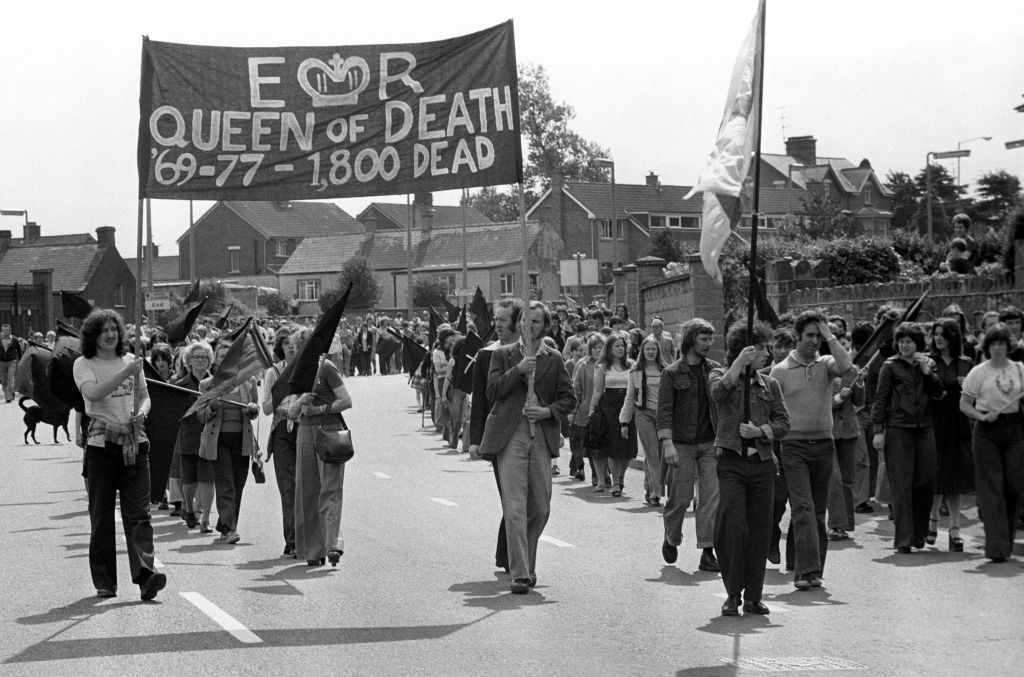
One nice thing: She did visit Ireland in 2011. For all of my childhood, no member of the royal family set foot in Ireland. But she was terrific on that visit. She did all the right things. She expressed “sincere thoughts and deep sympathy” for those who died in the troubles—though the British government has trouble sometimes taking responsibility for its actions—and went to the memorial for the Bloody Sunday victims. I think it really did advance the cause of Irish and British relations.
“The British monarchy is being given a moment—an opportunity—to do something different from its history of pillaging, from its exploitation and oppression of communities of color, beginning with the continent of Africa, all of the Caribbean, India, [and] Asia.”
–Staceyann Chin, poet, actor and activist from Jamaica
Jamaica was once under British rule. [Since 1962] we've become a country in which we have elections [but] the queen is the “head of state,” [even though] Jamaica is not a colony of Britain. We still bow and scrape to her, and when she visits, we still pull out the pomp and ceremony. We still have to get her permission, her blessing, on the things that we're doing with regard to government and leadership. But we have been removed from the list of people who could [visit without a visa]; we were removed from the space where we could become citizens once the British economy grew and their social welfare got better.
What it feels like to me, as a Jamaican citizen, is we still are indebted to England, but England is no longer responsible for us. Essentially, we have no rights as subjects of the queen, but then she gets to say, "These are my subjects."
I think that we should do away with that. The British monarchy is being given a moment—an opportunity—to do something different from its history of pillaging, from its exploitation and oppression of communities of color, beginning with the continent of Africa, all of the Caribbean, India, [and] Asia. I think that Charles is being given an opportunity to do something with his life, to do something to distinguish himself. A rather radical, rather unprecedented opportunity, a giant moment to do something different with this institution that has brought so much pain to so many people on the planet.
Megan Carpentier is currently an editor at Oxygen.com and a columnist at Dame Magazine; she's also worked at NBC News, The Guardian, and Jezebel, among other places. Her work has been published in Rolling Stone, Glamour, The New Republic, the Washington Post, and many more.