
Roofies and a “King in Albany”
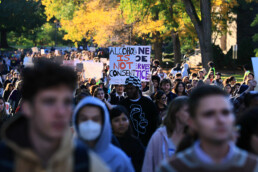
  October 6, 2026 Greetings, Meteor readers, I recently learned that Netflix produced and is going to air a new version of the Stanford Prison Experiment, this time putting participants in an actual prison. We have quite literally gone too far as a TV-watching society. In today’s newsletter, we answer some lingering questions about the legal loophole that protected the Cornell 7 from criminal rape charges. Plus, a quick romp through the news. With love, Shannon Melero  WHAT'S GOING ONThe inner workings of injustice: Last week we reported on New York State’s voluntary intoxication exclusion loophole—a gap in the state’s penal code that leaves sexual violence victims who willingly got drunk unprotected by the law. The exclusion has been at the center of trying to understand why the Cornell case didn’t go anywhere when the incident was first reported in 2024. Many readers and commenters had one question: How, in the year 2026, can the law still contain such an egregious flaw? I myself will admit that as I’ve been conducting interviews, the most frequently said phrase in every conversation (by both me and my sources) is, “It doesn’t make any sense.” We realized it was time for an FAQ. So here you go—a product of our own research and many hours on the phone with Elizabeth da Trinidade-Asher, a lawyer and co-chair of Justice Without Exclusion Coalition, who has been working to close New York’s loophole for the last eight years. Please note that what you’re about to read includes descriptions of sexual assault. What do you mean loophole?“There is a vast difference between what is morally reprehensible and what is criminally liable as rape,” Asher says, “and that is defined by the criminal code no matter how deficient it is.” This applies to all crimes—there must be a definition of the crime in the penal code for it to be prosecutable. New York State’s penal code establishes legal differences between various sex crimes and also defines how “lack of consent” or an inability to give consent can be established. Intoxication loopholes in sexual assault laws are widespread across the country, although their details vary from state to state. Some states, like Minnesota and Texas, have closed the loopholes completely. You can review your home state’s approach to consent and incapacitation here. So then how did we end up with this in New York? Speak plainly!When it comes to bringing a charge of rape, there are very specific parameters. New York’s penal code establishes that lack of consent does exist when “the victim clearly expressed that he or she did not consent to engage in such acts” in a way that a reasonable person would have understood.  PROTESTORS ON THE CAMPUS OF CORNELL YESTERDAY. (VIA GETTY IMAGES) But what about situations in which a victim is incapable of giving or refusing consent—for instance, while intoxicated? Asher explains that for an adult with their mental faculties intact to be considered incapable of consent, one of three conditions must be met: “You must be physically helpless, meaning comatose for the entire time—no physical or verbal response at any point; mentally incapacitated; or roofied.” That last condition, being roofied, is the key to understanding how this infuriating loophole came to exist in New York. Asher explains that in the ‘90s there was a surge in “roofying”: slipping Rohypnol, also known as the “date rape drug,” into someone’s drink. In trying to write legislation to address these new crimes, New York lawmakers “committed a rookie mistake.” What they wanted to do was write into law that a person was incapacitated and incapable of consent if they had been unknowingly given Rohypnol. But to single out Rohypnol would have left out any other drugs used to facilitate rape, like GHB, ketamine, or tranquilizers. So legislators wrote the code broadly to include any drug or intoxicant consumed without knowledge. And that was the error. “Because they only specified involuntary intoxication as a way to define your mental incapacitation,” explains Asher, “they left all these other kinds of cases out of the code.” Is Cornell the first known time this loophole has hindered a rape case?Unfortunately, no. In a 2023 case, two NYPD officers sexually abused a woman whom they had met at a bar in the Bronx. She became intoxicated of her own free will; the officers are seen on camera holding her up by the arms exiting the bar, and a second video shows them entering one of the officers’ apartment buildings, where they remained until 7:30 in the morning. This year, after reaching a plea deal, the officers were convicted of criminal sexual abuse—which is defined as misdemeanor “unwanted sexual touching.” Not rape. They both got probation, with only one of them having to go on the sex offender registry. Because that Jane Doe had been drinking voluntarily and was not completely knocked out, she was legally not considered incapacitated or incapable of consent. In the case of the Jane Doe who attended Cornell, the loophole applies because Doe was intoxicated before entering the frat house and allegedly consented to sex, though heavily under the influence of alcohol and ketamine—something at least one of her assailants was aware of. If the loophole had been closed, Doe would have been considered incapable of consenting. Full stop. “The problem with New York law,” Asher says, “is that it differentiates how it is that you came to be completely inebriated. Most states that have ended the loophole basically say…if you couldn’t pass a DUI test, then for sure you can’t consent. So anything that happened to you is rape. It’s such an easy fix.” Um, this is disgusting! Why hasn’t anyone done anything about this?Advocates and legislators have been trying to close this loophole for nearly a decade, via a bill that has garnered near-unanimous support in the state senate. But the bill has never been brought to the floor of the legislature for a vote, although throughout that time one man has had the power to do so: Speaker Carl Heastie, the Democrat from the Bronx who sets the legislative calendar. “The speaker controls all the levers by which a bill becomes a law, which is a huge democratic problem,” Asher explains. “In New York we think everything is great because the Democrats control the Senate, Assembly, and governor’s office. But you know what? There’s a king in Albany, and nobody’s calling him out.”  HOCHUL AND HEASTIE AT AN EVENT IN 2024. (VIA GETTY IMAGES) So now what?On the heels of the Cornell lawsuit, Heastie has agreed to convene a working group to discuss solutions for closing the loophole now that there is an active case—something he’s said he needed in the past in order to get this bill moving, according to Asher. However, Heastie has been in power for at least two other such cases (the 2023 case involving the NYPD officers, and another 2017 case), although Cornell is the most high-profile one so far; Governor Kathy Hochul has appointed New York Attorney General Letitia James as a special prosecutor to investigate Jane Doe’s claims. Still, if the law remains unchanged, James would have limited options for prosecution. Hochul could also, at any point while the investigation is underway, call for a special session of the New York State Assembly to address this issue before the normally scheduled session begins in 2027. But Heastie still needs to schedule a vote. A lot of people want to know: Why hasn’t he brought the bill looking to close the loophole to a vote? In the meantime, another question only Heastie can answer: How many women need to be revictimized by the system before Albany decides to do something about it? Call his office and ask. AND:
 ONE MORE THING: OUR CLIMATE HEROES DR. AYANA ELIZABETH JOHNSON TOES THE LINE BETWEEN "OPTIMIST" AND "WORRIED SCIENTIST" AT A CLIMATE WEEK DINNER HOSTED BY THE METEOR AND LA MER. (PHOTO BY KRISTEN BLUSH) Last month, dozens of women climate activists, scientists, journalists, and environmental entrepreneurs convened in New York City for a Climate Week dinner at abcV, co-hosted by The Meteor and La Mer. “Sustainability is a mediocre goal,” Ashlan Cousteau, a conservationist and one of La Mer’s Blue Heart ambassadors, told the crowd. “We want a better world.” Marine biologist Dr. Ayana Elizabeth Johnson, another ambassador and a member of The Meteor collective, urged the guests to keep thinking about climate issues as the midterm elections approach. “A number that I want you to remember is 11.2 million,” she said. “That is the number of people who have [the] environment as their number one voting issue, who are already registered to vote, and did not vote in America’s 2024 election.” She encouraged all of us to channel the “tenacity and creativity” of the climate activists she’d seen that week, including the people at dinner. When “you get 40 women in a room,” she said, “so much is possible.”  FOLLOW THE METEOR     Thank you for reading The Meteor! Got this from a friend? |



A Legal Loophole That Saved the Cornell 7...the First Time
  September 24, 2026 Greetings, Meteor readers, It’s only Tuesday, and this has already been a heavy week, especially as we learn more about the lawsuit being brought against Cornell University and the seven fraternity members accused of disgusting crimes. In today’s newsletter, we're uncovering the little-known legal apparatus that allows cases like these to escape investigation for so long. Plus, the Trump administration adds insult to injury, and a young icon is born. We recognize that this may be a difficult read for some, so if today’s newsletter is not for you, please know that we are with you in spirit, in grief, and in rage. Help is available if you need it. With extra love, Shannon Melero  WHAT'S GOING ONVoluntary intoxication exclusion: By now, the whole world has learned that earlier this month, a former Cornell University student, known only as Jane Doe, filed a civil lawsuit against the university and seven fraternity members, alleging that the men gang-raped her in 2024 and that the school failed to hold them accountable. (Their fraternity, Chi Phi, was banned from campus, but no criminal charges were brought against the accused.) On Sunday night, Tompkins County District Attorney Matthew Van Houten said his office would revisit the case to see whether criminal charges were appropriate, adding that local police initially hadn't conducted a thorough investigation and instead relied on information gathered by campus police—who never fully engaged local law enforcement. When the news broke that Van Houten’s office was re-opening an investigation, my phone buzzed off the table. For the last few months I have been investigating New York State’s voluntary intoxication exclusion loophole, a failure of the current penal code that excludes someone who was willingly intoxicated from being able to pursue rape charges against their assailant. Jane Doe was allegedly drunk of her own volition the night of her attack so, to put it bluntly: The New York State Penal Code says—for now—a crime did not take place at Cornell University that night. In other words, how someone became intoxicated is the legal difference between a morally reprehensible act and a crime. If someone voluntarily downs enough cocktails, advocate Will Rivera explained to The Meteor last year, their assault “does not technically constitute a crime.” (This changes if a victim presents with bruises or other physical evidence of battery.)  THE CORNELL CAMPUS IN ITHACA, NEW YORK (VIA GETTY IMAGES) In fact, Van Houten raised this exact distinction when he addressed why criminal charges were never brought in the Cornell case: “[Jane Doe] never says [in her original interview] that she was drugged without her knowledge,” he said. “She admits to taking drugs and alcohol voluntarily and with knowledge.” Doe’s lawyer says that campus police never followed up after the initial statement and did not thoroughly investigate the complaint despite evidence provided, and now we know one likely reason why. “There’s an environment where the police are like, Oh, this is just a waste of our time,” explains Elizabeth da Trinidade-Asher, a lawyer and co-chair of Justice Without Exclusion Coalition. “Because these cases are messy, prosecutors don’t take them. It's technically not a crime in the books.” Think all this sounds unjust? It is, and for the last eight years, advocates in New York State have been working on a bill that would close this loophole. “The legislature has to…say this is a crime, period, end of sentence,” says Trinidade-Asher, who has been lobbying for this bill for the last five years. “We recognize in a court of law that if you walk into a car dealership, visibly intoxicated, and you sign for a car, that signature is not valid,” adds Minister Peace, co-chair of Community for a Cause. Yet “we stop short in our law in New York when it comes to sexual assault if you got yourself intoxicated voluntarily.” The bill has passed the state senate five times and, this spring, obtained a record number of bipartisan co-sponsors, but Speaker of the New York State Assembly Carl Heastie, a Democrat, has not brought it to a vote. And the dismissive environment Trinidade-Asher describes is not limited to the police departments, nor to Cornell—it reaches all the way to the corridors of Albany, where this bill has been referred to as the “ruining-drunk-sex bill” by assembly members, Trinidade-Asher and Peace say.  SUMMER WILLIS, WHO HELPED CLOSE THE INTOXICATION LOOPHOLE IN HER HOME STATE OF TEXAS, JOINED ADVOCATES IN NEW YORK LAST YEAR TO BRING ATTENTION TO THE BILL. SHE HAS CONTINUED HER EFFORTS THIS YEAR. (VIA GETTY IMAGES) In May of this year, she and Peace were in Albany to lobby for the bill when Peace heard Assemblymember Patrick Burke of Buffalo describe the bill with that language. “He said it in a very jovial manner,” says Peace. “He was just like, ‘Oh, as me and my colleagues call this, the ‘ruining-drunk-sex bill.’ That took me aback.” Reached for comment, Burke tells The Meteor that he is a supporter of the bill, and plans to vote “yes” if it’s brought to the floor. He denies referring to it in a disrespectful manner, and a representative from his office clarified in a statement that Burke was using a colloquial term for the bill. “‘Drunk sex bill’ is something that was sort of a general reference to it,” Burke said on a call. “This is not something people in Albany are being callous about.” Callous? Maybe not. Infuriatingly slow? Let’s review: This bill has been in the works for nearly a decade. It has the support of survivors, legislators, and advocacy groups. Last year, 92 assembly members signed on as co-sponsors to bring the bill to a floor vote. Yet it has never been brought to a vote and it is still reportedly being called a “drunk sex bill.” And meanwhile, Jane Doe is left with limited legal recourse. New York state senator Nathalia Fernandez, one of the co-sponsors of the bill, released a statement yesterday saying that voluntary intoxication exclusion must be a priority for the next legislative session. She also announced a rally for Thursday at the Bronx County Courthouse to shed light on this loophole. So if you’re angry, hold your anger; tend to it like a houseplant. Bring it with you on Thursday if you’re local, and carry it into 2027 when this bill will have another opportunity to be brought to the floor. It could, after all, have given Jane Doe a chance to pursue justice. And it would have acknowledged: Rape is not “drunk sex.” It’s rape. The Meteor will continue to monitor the progress of this bill and offer further reporting on what's been holding it up all of these years. Stay with us. AND:
 FOLLOW THE METEOR Thank you for reading The Meteor! Got this from a friend? |
