

This Week in Birthing Stories
  November 20, 2025 Greetings, Meteor readers, Why are there so many Christmas decorations up already? Can November live!? In today’s newsletter, we look at three stories of what it’s like to seek care in America. Plus, some weekend plans. Slow it down, Shannon Melero  WHAT'S GOING ONA recurring pattern: This week, you may have seen a viral video of Kiara Manuel, a woman in active labor at Dallas Regional Medical Center, having to answer intake questions while screaming in pain. Her mother, who recorded the ordeal, told local news outlets that staff at the hospital had left Manuel without care for over half an hour, choosing “paperwork over life.” This week, you may have seen another viral video of Mercedes Wells, a woman who was told by a hospital in Indiana that she wasn’t really in active labor and was sent away. Eight minutes into her drive home, she gave birth on the side of the road. Wells’ sister-in-law told ABC 7 Chicago, “Mercedes begged her,” referring to a nurse. “She really begged her, she said I can feel it, I’m in active labor. She just ignored her.” This week, you may have read the story of Tierra Walker, a mother in Texas who asked for an abortion after her pregnancy had left her “wracked by unexplained seizures” and at high risk for preeclampsia. Doctors at Methodist Hospital Northeast near San Antonio told Walker that under the state’s ban, they could not abort because there was no emergency—her pregnancy was fine, it was only her health in trouble, according to ProPublica, which broke the story. Walker’s son found her dead a month later, killed by preeclampsia. All three of these women have one thing in common: they were Black women seeking reproductive care in America. It is a well-known statistic that maternal mortality rates among Black women are more than double that of any other racial group in the United States. Even outside of giving birth, Black women seeking care for any health issues face an onslaught of discrimination and neglect, rooted in centuries of racism. One would assume that, given the staggering statistics, more would have been done to address the issue. But the stories of Kiara, Mercedes, and Tiara show us that it remains persistent, entrenched, and lethal—even though we know much of what it would take to improve Black maternal health. In the last two years, legislators have introduced the Black Maternal Health Momnibus Package and the “MOMMIES” Act. The Momnibus has seen some success in inspiring similar state laws, like this one in Michigan that recognizes and makes illegal “obstetric racism” and “obstetric violence.” But neither Momnibus nor the MOMMIES Act (which focuses on expanding Medicaid coverage for those who give birth) has received enough support from Congress to be passed. So why aren’t we all doing more? Well, that is the incredible hold that systemic racism has on every aspect of this country. Despite the valiant attempts of some advocates in Congress, most members have not prioritized the issue. And even if they did, the issue requires holistic, aggressive approaches to even slightly move the needle in the right direction: racial bias training, new pathways to increase the number of Black OB-GYNs, accessible midwifery care, updated postpartum care and leave policies, and research funding to understand these disparities and the health conditions (like preeclampsia) that are more prevalent among Black women—and that’s just the beginning. But it’s worth tackling. The business of birthing intersects with nearly every facet of life, from education to economics to infrastructure, and until it is treated as such, we will continue living in a world of too many viral videos, and too little action. AND:
  “The Most Important Event Nobody Knows About”
It happened 48 years ago this week, in HoustonBY EMILY KOH  CORETTA SCOTT KING AND FELLOW DELEGATES AT THE 1977 NATIONAL WOMEN'S CONFERENCE. (VIA GETTY IMAGES) Forty-eight years ago this week, my grandmother, Dr. Hesung Chun Koh, joined thousands of women from around the world in Houston, Texas to make history. They came to the first—and only—National Women’s Conference to adopt a National Plan of Action to improve the status of women in America. The plan delegates ultimately adopted at the conference included recommendations on a range of issues—including child care, education, health, and reproductive freedom—that still impact the lives of women today. The conference brought together women from all walks of life, from leading figures including Coretta Scott King, Maya Angelou, and First Ladies Rosalynn Carter, Betty Ford, and Lady Bird Johnson to working women, “homemakers,” and students. It was a historic milestone in the women’s movement and American history, yet its impact is overlooked. Reflecting on the conference, Gloria Steinem declared it “a constitutional convention for the female half of the country.” And she noted: “It may take the prize as the most important event nobody knows about.” It’s time to change that. The conference was an inflection point: a pinnacle achievement for the women’s movement. It also spurred backlash: Opponents who protested it pushed back on the idea that women deserve a full and equal role in public life. Now, that backlash remains as fierce as ever before, and our movement is at another inflection point. We are rapidly losing decades of progress; America is devolving into a nation where women are second-class citizens, transgender and nonbinary individuals cannot live openly and safely, and men suffer from rigid expectations of masculinity. In two years, the fiftieth anniversary of the 1977 National Women’s Conference will be here—and a chance to revisit the National Plan of Action and co-create a new vision with women from all walks of life, men, and the LGBTQ+ community. My grandmother immigrated to America from Seoul, South Korea, for college, and became one of the first Korean women to earn a doctorate in the United States. Her focus on the future made my life possible and created opportunities for the next generation. The vision she and her fellow delegates set forth in Houston can inform and inspire our work today. The question before us now is the same one they faced then: Will gender equity and equality advance or fall backwards in our lifetime? History calls on us to move forward. Emily Koh served on the White House Gender Policy Council in the Biden-Harris Administration. She is currently working on an initiative to advance gender equity and equality in the U.S. that centers on the 50th anniversary of the 1977 National Women’s Conference.  WEEKEND READING 📚On screen: Parents, it might be time to free yourself from YouTube Kids. (The Verge) On a special kind of wellness: Orgasm. Cult. (TCF Emails) On the state of men: Apparently, some men are searching for the tough love they desire in…the Orthodox church? (Yes, of course “traditional values” are part of the pitch.) (The New York Times)  FOLLOW THE METEOR     Thank you for reading The Meteor! Got this from a friend? |


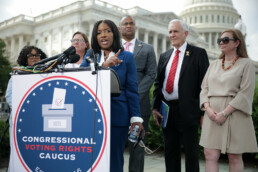
The gerrys? They’re mandering.
  August 5, 2025 Greetings, Meteor readers, I am four weeks into toddler soccer camp, and let me tell you something: The transformation from normie to insufferable soccer mom was swift for me. I don’t think I can ever turn back. I wonder if this is what Deloris Jordan felt like. In today’s newsletter, we are mandering our gerrys and focusing on what we, the people, can control. Plus, a little good news for Unrivaled fans and players. Sports momager, Shannon Melero  WHAT'S GOING ONUnblurred lines: Last week, Rep. Jasmine Crockett (D-TX) sat in front of the Texas House of Representatives and read them for absolute filth during a committee meeting on congressional redistricting. In an impassioned speech, Crockett broke down exactly how Texas Republicans are “playing ‘move minorities around’ ” in their latest gerrymandering scheme. If successful, the map the Texas state legislature is proposing would create at least two new districts that would be, in Crockett’s words, “Anglo-majority”—meaning the likely election of two new Republicans, granting the GOP a vicegrip on the U.S. House in next year’s midterms.  District maps—the ones that determine who your representative in Congress will be—are meant to be redrawn every ten years, using data from the most recent census to create districts that reflect the population. But what is unique about the Texas situation is that it is happening ahead of schedule. The GOP is trying to consolidate power ahead of the midterms, and as just about everyone has pointed out, the party is very clearly drawing lines to dilute the power of Black and brown voters. (That is illegal by the way.) You might think that they’re making such a bold attempt specifically because Trump said they were “entitled” to do—which he did—but the reality is that they’re also doing this because it’s worked devastatingly well in the past. “You can draw a district that almost guarantees one party is going to win instead of another,” former president Barack Obama explained in 2020. His own election, back in 2008, so alarmed right-wing Republicans that they invested significant energy and cash into redrawing districts to favor conservative voters. “You have voter histories and you have a sense of where people are typically going to vote…That could mean a decade of fairly drawn districts where folks have an equal voice in their government or it could mean a decade of unfair partisan gerrymandering.” Guess which timeline we’re currently living in? Gerrymandering is not exclusive to the Republican party, but historically, it has wielded that tool more effectively than Democrats. As The Meteor’s Cindi Leive pointed out two years ago, “The political machinery the right put in place [beginning in 2010] laid the groundwork for our current abortion hellscape. Many of the trigger bans that snapped into cruel effect after Dobbs were in states like Ohio, Missouri, and Georgia, where the majority of people favor legal abortion, but ruthless gerrymandering or voter suppression meant it just didn’t matter.” This game runs deep, and it touches every aspect of our lives. It’s also part of the reason why the average voter feels powerless and like little more than a pawn on a board whose squares are constantly shifting. So what can we do? Apply some pressure. 5calls has a script for calling your representative about Texas’s redistricting. You can join the effort to fight fire with fire via the National Democratic Redistricting Committee. Or you can be part of the movement to make maps fair through Indivisible. So let’s get to work. AND:


 BLESS THIS MAN. (VIA GETTY IMAGES)  FOLLOW THE METEOR Thank you for reading The Meteor! Got this from a friend? |

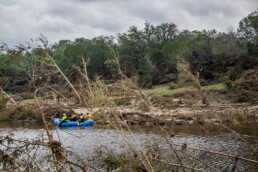
We All Have a Climate Disaster Story
  July 8, 2025 Howdy, Meteor readers, It’s Amazon Prime Day, and in case you’ve been adding to cart, remember: it’s just a week-long scam to line Bezos’ pockets without providing meaningful discounts. There are other stores. In today’s newsletter, we’re grieving with the people of central Texas as they navigate an unbearable tragedy. Plus, a glimmer of hope for Planned Parenthood’s Medicaid patients. Thinking of Silvana and María, Shannon Melero  WHAT'S GOING ONUnforgiving waters: On Friday, a devastating flash flood struck central Texas, washing away homes, vehicles, and much of an all-girls’ summer camp, Camp Mystic. The death toll is over 100 but is expected to rise as rescuers continue searching the Guadalupe River for remains of the deceased. As is often the case when a tragedy of this size occurs, many are wondering what, if anything, could have been done differently to preserve life. According to a timeline compiled by NPR, the National Weather Service (NWS) and the Texas Division of Emergency Management issued warnings of imminent flooding in the area, with alerts upgrading in severity hours before the river started to swell. But some Texas officials are blaming the NWS—an organization that lost 600 workers this year because of Trump’s federal restructuring and funding cuts to its parent, the National Oceanic and Atmospheric Administration—for inadequate warnings. Trump denied the correlation, saying, “This is a 100-year catastrophe.” Well, yes and no. This kind of flooding used to be a 100-year catastrophe, but human behavior and government failures have quite literally changed the game. While there will need to be an investigation to determine if the shortages at NWS (including the fact that a key manager in charge of local warnings reportedly left after cuts this spring) exacerbated the situation, one thing is certain: extreme weather events are becoming more frequent, and this flood’s severity was impacted by worsening climate change. “With a warmer atmosphere, there is no doubt that we have seen an increase in the frequency and the magnitude of flash flooding events globally,” meteorologist Jonathan Porter told the L.A. Times. “The key question is, what did people do with those warnings…What was their weather safety plan, and then what actions did they take based upon those timely warnings, in order to ensure that people’s lives were saved?” Perhaps the loss of life could have been minimized with more evacuations from the area, nicknamed Flash Flood Alley, but it is an inescapable fact that more and more people will die as the Earth continues to warm. And as we’ve seen from the number of young girls swept away by flood waters, it will be the most vulnerable who pay the price. Whether we realize it or not, we’ve reached a point where every single one of us has a climate disaster story. (If you just thought to yourself, I don’t, remember the last two summers were the hottest summers since 1940 and not everyone lived to tell the tale. You’ve lived through at least two climate disasters.) Maybe you lost everything fleeing Hurricane Maria—or found yourself breathing poor air in New York City as smoke from the Canadian wildfires made its way south. Either way, living through or dying from a natural disaster is becoming unremarkable. The time for climate denialism is long gone. If the government is unwilling to take the financial and political steps needed to slow climate change, the “100-year catastrophes” will continue to mount. How you can help survivors in Texas: AND:
 WHAT REMAINS OF A HOSPITAL INSIDE EVIN PRISON. (VIA GETTY IMAGES)

 FOLLOW THE METEOR     Thank you for reading The Meteor! Got this from a friend? |


Everything's Bigger in Texas...Including Abortion Bans
  March 20, 2025 Greetings and glad tidings, Meteor readers, ‘Tis the spring equinox! Time to go outside and frolic in the forests. Good luck finding an egg-laying rabbit.  In today’s newsletter, we are, for the umpteenth time, talking about Texas. Plus, the long-awaited executive order attempting to get rid of the Department of Education, and your weekend reading list. Tree huggin, Shannon Melero  WHAT'S GOING ONTen-gallon nightmare: Last Friday, Texas state senator Bryan Hughes introduced the most expansive anti-abortion bill the state has seen since the overturn of Roe v. Wade. Get comfortable, because we’re going to be here a while. What’s in SB 2880? Well…everything, basically. The bill allows for anyone to file a civil lawsuit against a company or individual for playing any part in facilitating an abortion in Texas or for a Texas resident. Individuals and groups can also be sued for being an “information content provider.” As journalist Jessica Valenti points out in her coverage of the bill, even apps like Venmo and Signal could get sued for their part in an abortion. “If the bill worked, it would be a lot harder to find information about abortion online in Texas and potentially everywhere else,” another abortion expert told The 19th. Since “the internet is the same everywhere,” this law could potentially be used to attack companies throughout the United States that host abortion information. The bill also allows for the “biological father” of an “unborn child” to bring a wrongful death suit against abortion providers in any state, regardless of his relationship to the mother. (Yes, even one-night stands.) There is a carve-out in the law that stipulates a man cannot bring a suit if the child was conceived from an act of sexual assault, but we’re betting it’ll be about as effective as other rape-and-incest exceptions in abortion bans. (That is to say, not very.) But wait! There’s more. This bill gets extremely particular about medication abortion, allowing civil actions against people who “manufacture, possess, distribute, mail, transport, deliver, prescribe, or provide an abortion-inducing drug in any manner to or from any person or location” in Texas. Bought some pills from heyjane.com to stockpile in case of emergency? Lawsuit! Live in a blue state and mailed pills to your friend in need who happens to live in Texas? Lawsuit! Once again, there is a carve-out for any emergencies related to preserving the life of the mother, but as we’ve seen in a number of cases out of Texas, that doesn’t always work in real life. I hope you don’t think we’re done yet. SB 2880 is so nefariously thorough that abortion funds are also caught in the crosshairs. The bill would make it a felony for an individual or group to pay for or reimburse any costs incurred by obtaining an abortion, including the costs of traveling out of state for care. That $20 you gave someone for gas to get to a clinic across state lines? A second-degree felony if this bill becomes law. In fact, if I tell you right now to go support Fund Texas Choice, I could potentially be sued when this bill passes, as could my boss for owning a website supplying this information, as could my editor, Nona, who has to edit these long, rambling sentences. You, on the other hand, could be subject to a criminal suit because you actually sent the money. That is how thorough it is. In the words of a famous Texan, ring the alarm. The bill was read for the first time in the state senate yesterday and has already been referred to the committee for State Affairs. Should it pass and be signed, the law would go into effect in September—but will probably face a number of challenges in court from abortion rights and First Amendment groups. If you live in Texas, call your state senator. If you don’t, continue supporting abortion funds until you can’t anymore. AND:
 RUINING KIDS' FUTURES RIGHT IN FRONT OF THEM. BOLD. (VIA GETTY)
 MY HEART WILL GO ON. (VIA INSTAGRAM)
 WEEKEND READING 📚On denial: Earlier this month the Trump administration received a petition to grant Puerto Rico’s independence via executive order. The move has had a chilling and divisive effect on the island. (The Latino Newsletter) On the end of an era: An inside look at the final days of Voice of America. (Columbia Journalism Review) On the record: Elon Musk’s fearless estranged daughter calls him a “pathetic man-child.” (Teen Vogue)  FOLLOW THE METEOR Thank you for reading The Meteor! Got this from a friend? |


Why Did Texas Target This Midwife?
  March 18, 2025 Hey there, Meteor readers, Bad Bunny and Calvin Klein. I will not be elaborating any further. In today’s newsletter, we grapple with the broader implications of a midwife’s arrest in Texas. Plus, the Trump administration faces off with the judicial branch. Orgullosa, Shannon Melero  WHAT'S GOING ONEasy targets: Yesterday, Texas Attorney General Ken Paxton’s office announced the arrest of a Texas-based midwife, Maria Margarita Rojas; two of her employees were arrested later. Rojas, who was reportedly arrested at gunpoint, and Jose Cendan Ley have been charged with “illegal performance of an abortion” and allegedly practicing medicine without a license, while Rubildo Labanino Matos was charged with conspiracy to practice medicine without a license. This appears to be the first arrest of a provider since the overturn of Roe v. Wade. We don’t yet have too many details on this case, other than statements from Paxton’s office which, as writer Jessica Valenti points out, will only reflect the state’s official framing. Valenti also suggests that the targets themselves are handpicked. “Republicans are strategically targeting people they think the public won’t rally behind,” she writes. And they’re also targeting the people who are serving the most vulnerable: Just the day before Rojas’s arrest was announced, a study of 2023 birth data from the National Bureau of Economic Research found that the fall of Roe v. Wade had disproportionately denied abortions to Hispanic women, poor women, women without a college degree, and women living furthest from abortion providers. These are some of the women Rojas served: Waller County, Texas—where one of her Houston-area health clinics is located—has a more than 30% Hispanic population and a 14% poverty rate. The Houston area is also more than 500 miles away from the nearest abortion clinic. But what makes Paxton so sure the public won't rally behind Rojas and her employees? The answer can be found in his two statements announcing the arrests, where Paxton makes sure to note that Matos and Ley are not U.S.-born—a fact that has no bearing on their charges. It does, however, have a lot to do with Paxton’s anti-immigrant track record. This is the same man who put floating “death traps” in the Rio Grande to prevent immigrants from crossing into Texas. The fact that Ley and Matos are both Cuban nationals and that Rojas was born in Peru is catnip to a man who seeks to eliminate from his state both abortion and immigrants. Paxton and those who support him are relying on the fact that the community Rojas and her clinics served won’t speak up for her because she worked with Spanish-speaking, low-income clients who already contend with a litany of safety concerns. Immigrant communities are already under immense strain with ICE now targeting and detaining people regardless of their legal status. As Farah Diaz-Tello of If/When/How noted to The Cut, former patients “might be worried whether they can be criminally prosecuted, whether their private health information is now gonna be used as part of the criminal prosecution against the provider.” The state still has to prove its cases against Rojas, Matos, and Ley, and we will keep you updated as this story unfolds. But what these initial facts have made clear is that the war on abortion is most focused on the people with the least power in America: anyone who can get pregnant, poor people, people of color, and immigrants. You can help those being prosecuted for abortion-related activities by supporting the Abortion Defense Network or the Repro Legal Defense Fund. AND:
  FOLLOW THE METEOR Thank you for reading The Meteor! Got this from a friend? |
