
Can the Taliban Be Taken to Court?
  September 26, 2024 Greetings, Meteor readers, I’ve never been much of a space gal, (stars are for figuring out your life path, not like, science or whatever), but there is a black hole that is “spitting energy across 23 million light-years of intergalactic space.” And if that doesn’t put whatever’s happening here on Earth in perspective, I’m not sure what will. In today’s newsletter, we look at the big news out of the United Nations General Assembly, a brand-new Emmy winner, and an assault on the Pregnant Workers Fairness Act. Plus, a bit of weekend reading. Just a little speck, Shannon Melero  WHAT'S GOING ON

AND:
 WEEKEND READING 📚On birth: Approximately 20,000 babies have been born in Gaza in the last year. Mothers have been delivering in dangerous conditions, and “four-month-olds understand what airstrikes are.” (Marie Claire) On coming back: One of the most intellectually honest writers of our time, Ta-Nehisi Coates, has a few words for you. (Intelligencer) On selling out: Puerto Rican rappers have been surprising some of their audiences by throwing their support behind a certain orange demon. But considering the protections that proximity to whiteness brings white presenting Latine rappers, is it really all that surprising? (Refinery29)  FOLLOW THE METEOR     Thank you for reading The Meteor! Got this from a friend? Subscribe using their share code or sign up for your own copy, sent Tuesdays and Thursdays. |


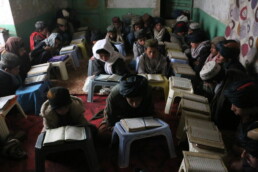
Three Years of Taliban Rule
  August 15, 2024 Howdy, Meteor readers, We’re going on a road trip and we’d love it if y'all joined us—specifically, in Chicago at the Democratic National Convention next week! We’ll be hosting the Power Lounge at McCormick Place, in partnership with Emerge—an organization that trains women to run for office— on August 21st-22nd. We’ll be hosting conversations with trailblazers like Rep. Jasmine Crockett, State Rep. Gloria Johnson (of the Tennessee Three), Brittany Packnett Cunningham, Connie Britton and lots more. You can register for this event by clicking the image below. See you in Chicago!  But before we hit the road, let’s hit this newsletter. Today marked the three-year anniversary of the Taliban’s return to power in Afghanistan. We spoke with Sahar Halaimzai, the director for the Afghanistan Initiative at the Malala Fund, about what life has been like for Afghan women ever since. Plus, your weekend reading list. DNCya later, Shannon Melero  WHAT'S GOING ON
 Three Questions About...Gender ApartheidOn the anniversary of the Taliban’s return to power, an advocate explains what life has been like for women in Afghanistan OLYMPIC RUNNER KIMIA YOUSOFI OF TEAM AFGHANISTAN HOLDS A SIGN THAT READS, "EDUCATION" AND "OUR RIGHTS" AFTER RUNNING THE WOMEN'S 100 METER. POLITICAL AND PROTEST SIGNAGE WAS BANNED DURING THE 2024 OLYMPICS IN PARIS. (VIA GETTY IMAGES) Three years ago today, Taliban forces seized Kabul and restored an oppressive theocratic regime to power. You probably remember the images: people attempting to flee, clinging to airplanes, parents handing babies over fences to strangers. And yet, as quickly as those images came across our screens, they vanished. Over the last three years, women in Afghanistan have lost their ability to work, and girls have been barred from higher education, but in the West, their plight has largely been pushed from the front pages. The Malala Fund, founded by Nobel laureate Malala Yousafzi and her father, Ziauddin, is working to change that. We asked the Fund’s Afghanistan director, Sahar Halaimzai, three questions. What has been the most significant change in the everyday lives of Afghan women since 2021? Women and girls have experienced a total rollback of their basic rights. The Taliban have banned girls from attending school beyond the sixth grade and women from most forms of employment. There are also severe restrictions on women’s freedom of movement and access to public spaces. They cannot enjoy a stroll in a park or go to the salon to get a haircut. This oppression is systemic, institutionalized, and a core part of the Taliban’s governance model; it’s a system of gender apartheid. But as of now, the international community does not legally recognize gender apartheid as a crime despite support from Afghan activists and many global experts, including prominent feminists and legal scholars. Daily life is fraught with danger. [But] there are many brave women and girls who continue to protest, run or attend underground schools, and organize advocacy efforts to fight for their rights. If caught, these women have been subjected to violence and harassment, arbitrary detention, torture, and enforced disappearances. The Taliban have also targeted their families, using coercion and violence to suppress any form of resistance. Despite these risks, Afghan women remain resilient. Has the lack of Western media focus on the plight of Afghan women impacted the movement? Absolutely. Without sustained media attention, it is difficult to maintain the pressure needed to hold the Taliban accountable or support Afghan women and girls. Instead, what we are seeing is a creeping normalization of the Taliban’s atrocities, making it easier to sideline women’s and girls’ rights in favor of other interests. If we could get more media outlets to cover what’s happening in Afghanistan as gender apartheid, it could reignite global solidarity for Afghan women and pressure leaders to take action. What needs to happen to protect the rights of women and girls in Afghanistan—and is there anything the average person can do to help? The international community must recognize gender apartheid as a crime under international law. This recognition would open legal avenues to hold the Taliban accountable for their atrocities. There's a real opportunity to do this: the United Nations General Assembly's Sixth Committee is currently debating the draft language of the Crimes against Humanity treaty. In October 2024, the Committee will resume discussions and vote on whether to advance the treaty to the next stage—a pivotal moment that could solidify international legal frameworks to address and prevent such egregious human rights violations. Everyone can contribute to this push by supporting organizations like [ours] that advocate for Afghan women’s rights, amplifying their stories, and by pressuring their governments to take decisive action during this critical period, first by naming what is happening in Afghanistan as gender apartheid. The situation in Afghanistan is not just a localized issue but a global human rights crisis. The Taliban’s gender apartheid…sets a dangerous precedent. If our elected representatives are happy to engage with a governance system that, at its core, is about enforcing gender apartheid, it signals that women’s rights are negotiable and can be easily sacrificed.  WEEKEND READING 📚On boy things: Are big loud podcast voices like Joe Rogan moving more young men to the right? (The Guardian) On lingering questions: Who is this woman and how did she make it to the Olympics? (The Root) On health: Routine pap smears have been unpleasant and uncomfortable since the dawn of time, but a less intrusive new alternative is right on the horizon. (New York Times)  FOLLOW THE METEOR     Thank you for reading The Meteor! Got this from a friend? Subscribe using their share code or sign up for your own copy, sent Tuesdays and Thursdays. |


Six months of the Taliban
Two Afghan journalists on what life is like for women there now, as told to Mariane Pearl
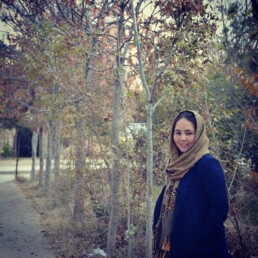
Six months ago next Tuesday, Kabul fell to the Taliban, plunging Afghanistan’s citizens, but especially girls and women, into panic and despair. Rukhshana Media is one of the very few woman-run media outlets in the country; its two founders, Zahra Joya (shown above) and Zahra Nader, now live in exile, working 18 hours a day to ensure coverage of the systematic oppression of women at the hands of the Taliban. I spoke with these extraordinary journalists in late January over Zoom.
MP: Rukhshana Media, the news agency you created, is named after a victim of Taliban oppression. Can you tell us about her, and why you started the agency?
Zahra Joya: For nine years, prior to creating Rukhshana, I sat in newsrooms, most often the only female to be seen, and saw how much women and girls’ lives were ignored by the media. We had no space, no opportunities to show our worth. Men genuinely believed we couldn’t do the job. So, I founded Rukhshana in 2020 with my own savings to tell our stories, drive change and foster a national dialogue about and with all women in Afghanistan, regardless of ethnicity or religious beliefs. Rukhshana herself was a 19-year-old girl from central Afghanistan who, in 2015, tried to flee an arranged marriage to be with the boy she loved. The Taliban accused her of adultery, dug a hole in the ground, leaving her upper body out, and stoned her to death. I chose her name so that each time we pronounce it we honor her—and fight against the risk of oblivion.
Zahra Nader: My biggest fear is that young women who are taught history in the future will say, “I can’t believe there were once female journalists in our country.”
There are only 100 female journalists left in Afghanistan (out of 700 before last August). You have reporters working inside Afghanistan and rely on volunteers. Can you explain how people bring stories to you? And are they in danger?
ZN: They are not quite volunteers because we insist on paying our collaborators. Women have lost their jobs [since the Taliban took over], so this is also a way of encouraging them to join us and speak out. Some of the women now working with us are not journalists; they were students or teachers, so we train them on the job.
ZJ: Right now, we have four female journalists and two men inside Afghanistan. We are looking for someone to cover the Eastern region, but the situation there is beyond control. Despite the danger, our reporters are doing remarkable work. In February alone, they wrote about two abducted women’s rights activists, the ban on women’s voices and music, and how former security forces fear being hunted down when applying for passports, among other critical reporting. We are constantly tracking our collaborators, making sure they are okay, but we don’t want them to take risks. Journalists themselves need to decide. No story is worth a human life, but the cost of an untold story is also very high.
ZN: If we need to contact Taliban officials for comment, we do it exclusively from abroad. One time, I made such a call, and the next day, two women contacted me, pretending they needed help; these calls came from the Taliban trying to measure my vulnerabilities.
“No story is worth a human life, but the cost of an untold story is also very high.”
Afghanistan has one of the youngest populations on earth, with 63% of its people under the age of 25, meaning most Afghans don’t remember what life was like under the Taliban, which held power over roughly three-quarters of the country from 1986 to 2001. Do you have any memories of life under Taliban rule?
ZJ: I was nine when the Taliban left. In order to go to school, I had been dressing up as a boy and called myself Mohammad. The ’90s were particularly harrowing for women. Now at least we have platforms, social media, and networks. They didn’t have any of that then. My mother told me there was no bread on the table. They didn’t even know that there were doctors and clinics that could save their lives.
ZN: When the Taliban came the first time around, I moved to Iran, where I wasn’t allowed to go to school [because I was a refugee]. The concept of home became a very big deal. The day my parents told me we were going back was the best of my life. I went to school and held my head high. To me, school meant change—the Taliban were in history books, a mere nightmare from the past. We were a generation that was going to change this country for the best.
Where were you last August, when the Taliban took Kabul?
ZJ: That first day, I went to the office as usual, but my colleagues told me to leave immediately, so I went back home. The only thing I was able to grab was my diary. I was evacuated to London three days after the takeover. I lost everything.
ZN: I was working on a story about women’s reactions to the Taliban. Suddenly on television, I saw one entering the presidential palace in Kabul. I knew they were coming, but that image brought it home. I didn’t think it would happen so fast. I sat there just crying. It wasn’t only the fall of a country I was witnessing; it was the death of the hopes of my generation.
The Hazara community to which you both belong is being specifically persecuted by the Taliban. What do we know about Hazara women and what is happening to them?
ZJ: We have always been discriminated against. Many Afghans believe that we don’t belong there as we are mostly Shia Muslims, and the majority [of Afghans are] from the Sunni sect of Islam. And if you are a Hazara woman, you are buried under several more layers of discrimination between your ethnicity and your gender.
Yet, as journalists, we are very conscious about not letting labels and nationalism prevent us from representing all women.
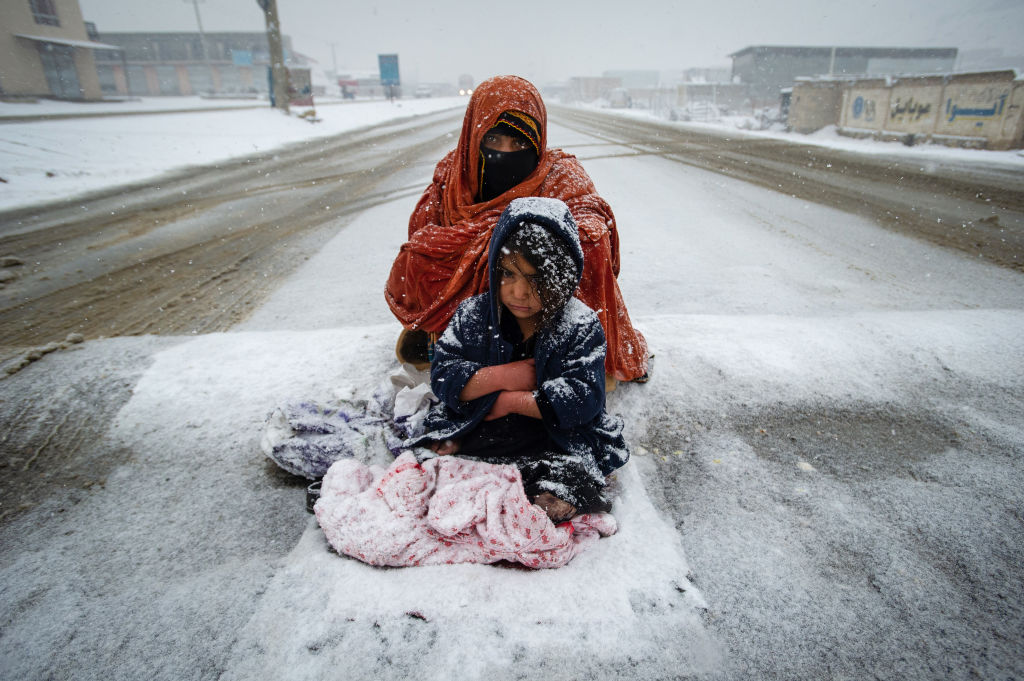
The Taliban promised to respect women’s rights “according to Islam.” But “according to Islam” is a vague, and in this case threatening, formulation, as the interpretation of the Quran is complex and varies widely depending on the individual.
ZN: In May 2021, I asked the Taliban to define what they considered women’s rights. Every Muslim country has its own interpretation of how women should live. Pakistan, Saudi Arabia, Iran—they are all different. The Taliban never answered the question or defined anything. But they are slowly pursuing their agenda and imposing a very narrow interpretation of Islam.
The word “misogyny” lacks the power to represent their ideology towards women. One of the first Taliban decrees stated that “women are human beings.” They actually had to wonder about that.
How at-risk are the women who were most visible during the last 20 years? Journalists, of course, but also women working in the armed forces, as lawyers or activists?
ZN: Rukhshana is doing everything we can to answer that question. We hear about so many stories of women being killed but often we can’t run them because we can’t reach anybody to confirm the facts. When we can talk to the family, friends or relatives, we reach out to the Taliban and they simply deny responsibility: They say these women have died because of family feuds. How is it possible that so many public, visible women are suddenly all dying from family feuds? It’s so easy for Talibans to find and execute these targeted women. All the public data, fingerprints, census and personal information are in their hands now.
“The word 'misogyny' lacks the power to represent [the Taliban's] ideology towards women.”
In January 2022, a delegation of Taliban was hosted in Oslo to speak with world representatives. Officially, the meeting was to address the economic crisis, but activists see that meeting as a first step towards legitimizing the Taliban government. What do you think?
ZN: When we challenge the fact that the Taliban should not be invited to the world table, we are told that Afghanistan has too many problems. That we should resolve the economic crisis first, then we can talk about women. But how do you resolve starvation if half of the country is under house arrest? I was saddened by the lack of protests from the Norwegian people, who ultimately paid for the expenses of that meeting.
How can the international community help Afghan women?
ZJ: The best way is to put pressure on your governments, to tell the world that you disagree with what is happening. Ultimately, this is about all women and the way we can be treated when men are at their worst. Show what you stand for, challenge inertia. Another way is to support Afghan women who are now outside the country. You can help them help us.
Read Rukhshana Media here, and follow them on Twitter here.
Mariane Pearl is an award-winning journalist and writer who works in English, French, and Spanish. She is the author of the books A Mighty Heart and In Search of Hope.
