
SCOTUS Deals in the Dark, Again
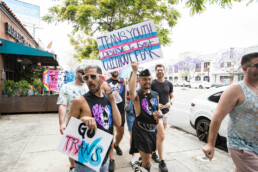
  March 3, 2026 Greetings, Meteor readers, I don’t know about the rest of y'all, but I’m a stress baker and given how bad things are, my oven has been working overtime. On Saturday, I made a burnt basque cheesecake that my taste testers said was perfection.  In today’s newsletter, we take a look at the Supreme Court’s latest use of its emergency docket. Plus, three questions with author Savala Nolan about her new book, Good Woman: A Reckoning. Pain au chocolat next, Shannon Melero Crocker  WHAT'S GOING ONNo argument: Yesterday, in an emergency docket decision, the Supreme Court chose to “pause” a California policy that prevented teachers from informing parents about a student’s gender expression. For the safety of queer students, California’s board of education had directed teachers to not discuss changes in gender expression or any kind of social transitioning with parents, out of concern that some students might face abuse at home. In response, a group of parents and teachers filed an emergency appeal claiming that the policy violated their religious rights. The Supreme Court sided with those parents and teachers. “The State argues that its policies advance a compelling interest in student safety and privacy,” the decision reads. “But those policies cut out the primary protectors of children’s best interests: their parents.” (Nevermind that the parents are arguing not for the sake of their children, but for the right to exercise their own personal religious beliefs over their children’s lives.) The decision essentially means that students do not have an expectation of privacy if they choose to confide in a teacher or start to explore their gender identity (if they, for example, ask to be called by a different name) at school. The pause on California’s policy doesn’t mean teachers are now compelled to out students; rather they will be expected to answer questions from parents who are trying to find out if their child is socially transitioning. If they don’t, they run the risk of being punished for violating parents’ rights to exercise their religious beliefs.  A DRAG MARCH FOR TRANS RIGHTS IN SAN DIEGO (VIA GETTY AIMGES) There are several alarming issues competing in this case, but perhaps none more alarming than the one brought up by Justice Elena Kagan in a dissent joined by Justice Ketanji Brown Jackson. Speaking of the haste with which the conservative judges came to a decision in the case, Kagan wrote, “The court is impatient: It already knows what it thinks, and insists on getting everything over quickly. A mere decade ago, this court would never have granted relief [without a] full briefing, oral argument, conference, and opinion writing, along with the time they take.” Kagan also noted that the Court had received a “scant and inadequate briefing” about the merits of the case and called the majority’s decision “tonally dismissive.” That is the dark magic of the court’s emergency docket: the ability to decide quickly and with minimal explanation which rights supersede others. Kagan herself admits that the parents’ group had certain rights, but so did the California Department of Education, which had created the policy for the protection of students. We are seeing, in real time, an erosion of due process at the highest court in the land, and it isn’t the judges who are paying the price. This time, it’s students, who are daily running out of safe places to express themselves, and who will suffer at the hands of six conservatives and the stroke of a pen. AND:
 Three Questions About…God the MotherIn Savala Nolan’s new book, Good Woman, clarity is the goal.BY SHANNON MELERO  AUTHOR AND ESSAYIST SAVALA NOLAN (COURTESY OF SAVALA NOLAN) There are certain things you read as a writer that make you think, I should stop trying because nothing I do will ever be this good. Most recently, I felt this way after finishing essayist Savala Nolan’s latest book, Good Woman: A Reckoning, which Ms. Magazine has named one of the most anticipated feminist books of this year. Good Woman is a collection of poignant, brutally honest essays exploring the various cages women put themselves into so that they might be considered “good”—good mothers, good wives, good daughters—and the ways in which those cages can be small deaths. The book opens with a gut-punching essay titled “Mothers Superior,” which weaves Nolan’s experiences as a mother and how that changed her understanding of God. In a line that gave me chills, Nolan writes, “Calling God a father seems like wishful thinking, delusion, or outright deception.” I asked Nolan about the godlike work of mothering and how that extends into different facets of life. There’s a lot of friction between mainstream feminism and religious belief, almost to the point where in some feminist spaces you’re really looked down on for believing in God. But you don’t shy away from using that as a point of entry for a bigger conversation about feminist concepts. What was the thinking behind bringing folks into the fold that way? I can relate to the idea that you can't be a deep feminist and also believe in God, although I would add the wrinkle that, at least in American culture, there are certainly Black feminists who have a relationship with God that is interesting and central and different than what you would consider the mainstream white feminist approach. But for me personally, I am a feminist and I'm also a womanist in the Alice Walker sense, [which is] a little bit more earthy and loving than feminism. I also have had a lifelong interest in God and those two things have always been at odds, although I couldn’t quite put my finger on why. What I came to realize after having a child and experiencing motherhood for myself was that the problem was not so much whether or not God exists, but how God was spoken about in American, Judeo-Christian culture. God was always presented to me as a father and that description defied all of my experience because it was mothering that was so much more like what God was supposed to be. This idea that I was supposed to be able to rely on God and trust God and feel God's care 24 hours a day, no matter what… that did not feel like something that I associate with fathers. Because fathers don't really do that. That's a motherly quality. That round-the-clock, tireless day-in-day out kind of caretaking is motherly. Once I was able to really experience that myself, I was able to see that motherhood is actually the right metaphor for any god that's worth believing in. That idea has some kind of spiritual woo-woo juiciness to it, but it has political, real-life juiciness to it as well. [We need to] have policy goals around treating motherhood like something that deserves to be compensated or seen or understood as foundational to the economy. If one way of [highlighting that work] is saying, Hey, what mothers are doing is on the level of God, then that can translate into political arguments. You’re very intentional about describing motherhood as a verb that transcends gender and is not solely rooted in the act of giving birth, but in godlike levels of attentiveness and care. Fatherhood, historically, is not that, but you write that fatherhood could, at some point, become more like mothering. What would that look like? Because when I read it, I felt like you were asking me to imagine a color that’s never been seen. Motherhood is accessible to anyone. There’s not only one way to mother. If we pull the lens back, even just a millimeter, you start to see there are people who perform mothering in a friend group or for their office, their colleagues, or there are people who mother their aging parents. We're talking about a level of attunement, a sense of responsibility, and an emotional openness. Anyone could mother, including a dad. Which is not to say fatherhood isn’t its own special thing. [But in order for dads to mother] I think men would have to be socialized a little differently, and we'd have to understand motherhood in a cultural sense as a godlike function that is worthy of anyone aspiring to do it, because it is the most essential and profound way any of us can connect with the bigger mystery of the universe. Toni Cade Bambara says the goal of the artist is to make the revolution irresistible. I want to make the idea of mothering irresistible. Even to men. What are you hoping people take away from this book as a whole? [When] I hit midlife, I had my career going, my marriage, had a baby—you know, all the stuff. I realized that being the way I was told to be by my culture—agreeable, helpful, obedient, quiet, in control of my body—were making me sick. What you’re told as a girl is that if you’re all of these things, you’ll find happiness. But like many women…I realized that’s a bill of goods. It’s snake oil. I did all that shit and it didn't work. So I just started to question, with searing intensity, how I'd been socialized in every area of my life, and I started to shed it. At that time, I was finding that [my daughter] had so much joy and freeness. And I just thought, This precious little child is also going to be 40-something one day and following the same trajectory. That put some fear in me. So I wrote this book in the hopes that it helps people hit that epiphany sooner than midlife. It isn’t fair that we have to wait to pass 40 to start clearing all of this mess. My dream is that more women can find this clarity way sooner than I did.  FOLLOW THE METEOR     Thank you for reading The Meteor! Got this from a friend? |


SCOTUS Rules in Favor of Racial Profiling in Los Angeles
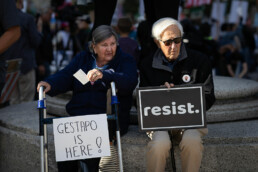
  September 10, 2025 Howdy, Meteor readers, Apparently, today is National Hot Flash Day. So sorry I didn’t get anyone a gift, but you know, the holidays sneak up on you!  In today’s newsletter, we pull back the curtain on the Supreme Court’s latest decision. Plus, good news for parents in New Mexico and a chat about Tylenol. Hot every day, Shannon Melero  WHAT'S GOING ONSomething old, something new: On Monday, the Supreme Court overturned a lower-court order that had temporarily blocked federal agents from stopping people in Los Angeles to ask them about their citizenship status based on race or ethnicity; whether someone speaks in Spanish or with an accent; and their location or profession, the New York Times reports. This means that, for the time being, anyone in LA who looks like they may be from another country can be stopped, questioned, and temporarily detained by a DHS officer without probable cause other than the color of their skin. All of this probably sounds vaguely familiar to you. Stop and frisk. Broken windows policing. Jim Crow. The Geary Act. All policies—from the 2000s, the ‘90s, and the late 1800s—that reflected this prejudiced thinking. In her dissent of the Court’s ruling, Justice Sonia Sotomayor, joined by Justices Elena Kagan and Ketanji Brown Jackson, writes, “The Constitution does not permit the creation of such a second-class citizenship status.” (It once did—but that’s why we have amendments, at least on paper.) However, in practice, the U.S. has had a long-standing relationship with racial profiling, discrimination, and the silent assertion of a second class—it is possibly the most American characteristic there is. But something about how it’s being deployed here feels a bit different. Perhaps it’s how quickly it all seems to be happening, or the violent, militarized nature of it; there is something new in this old practice.  DEMONSTRATORS GATHERED NEAR GRANT PARK IN CHICAGO TO PROTEST DONALD TRUMP'S IMMIGRATION POLICIES. (VIA GETTY IMAGES) “The Court’s order is troubling for another reason,” Sotomayor continues. “It is entirely unexplained.” The Supreme Court justices who issued the majority judgment gave no reasoning for why they overturned the original lower court order. (Meanwhile, Sotomayor’s dissent is 21 pages.) Perhaps that’s what feels novel: the blatant shamelessness with which discrimination is now enacted, despite all of our progress as a nation. There was a time when men convened in secret to plan and execute hateful acts. Now, extremists stroll through the White House in broad daylight, gleefully carrying out a supremacist agenda with the support of American voters. And not having to feel bad about it just fuels their now-unabashed ambition. So much so that the modern GOP is quite literally defending enslavement and trying to reshape how children learn America’s complete and despicable history. You know what they say, those who can’t remember the past… AND:

 FOLLOW THE METEOR     Thank you for reading The Meteor! Got this from a friend? |

The Loss of a "Deeply Personal Freedom"
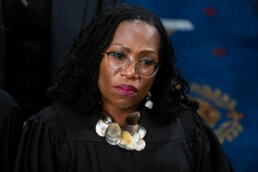
  June 26, 2025  WHAT'S GOING ONYou don’t get to choose: During our morning meeting, while I regaled my colleagues with Sabrina Carpenter theories, a news alert popped up. I swear a group of women hasn’t gone that quiet that fast since Huda’s last crash-out. The alert was that the Supreme Court had published its decision in Medina v. Planned Parenthood. The court ruled 6-3, along ideological lines, that South Carolina’s governor, Henry McMaster, was on sound legal footing when he removed Planned Parenthood South Atlantic from the state’s Medicaid program in 2018. To be clear, South Carolina already outlaws abortions after six weeks, and the Hyde Amendment has long ensured that federal funds cannot be used to reimburse abortion costs anyway. (State funds are a different story.) This case is about punishing Planned Parenthood for its association with abortions, even though its clinics also provide STI screenings, contraception, mammograms, and a number of other vital health services. A 2021 study found that of the millions of women Medicaid recipients who had gone to Planned Parenthood for care that year, 85 percent of them received contraceptive services. That means that when McMaster removed PPSA from the Medicaid program, any Medicaid patient going to one of its clinics lost their healthcare provider, which is why PPSA and one of its patients sued McMaster for violating the “free choice of provider” clause in the Medicaid Act. The lower courts sided with the plaintiffs repeatedly. But the state’s director for the Department of Health and Human Services picked up the fight, and SCOTUS decided that losing access to your health provider is not a violation of your rights. Justice Ketanji Brown Jackson, who wrote the dissenting opinion, characterized this decision as “stymying one of the country’s great civil rights laws” and Slate points out, associated the majority with white supremacists who once sought to undermine Reconstruction. She deftly laid out what this decision will really do: “It will strip countless other Medicaid recipients around the country of a deeply personal freedom: the ‘ability to decide who treats us at our most vulnerable.’ ”  THE FACE OF A WOMAN WHO IS TIRED OF THE TOMFOOLERY IN THE COURT. (VIA GETTY IMAGES) For patients outside South Carolina, this decision could have a ripple effect. Governors nationwide now have the runway they need to essentially defund Planned Parenthood in their states by blocking the organization’s access to Medicaid funds, which account for one-third of Planned Parenthood’s revenue. At the same time, Republicans are trying to eradicate the organization via the Big Beautiful Bill, which seeks to end Medicaid reimbursements to Planned Parenthood nationally. If passed, the bill “could lead nearly 200 clinics to shutter—90% of them in states where abortion is legal,” independent journalist and Autonomy News cofounder Susan Rinkunas told The Meteor. “If the Trump administration is able to nationalize this Supreme Court decision, people even in protective states would have less access to reproductive healthcare, including abortion.” Bottom line: This decision goes beyond attacking bodily autonomy. Today, the court reaffirmed that being poor, or a woman, or Latine, or Black—the groups that make up the majority of Medicaid users—means that the freedoms and choices enjoyed by everyone else don’t apply to you. If you don’t have the money or the whiteness or the penis to pay for the doctor you want, you’re out of luck. AND:
 HOW'S THAT FOR A WARM VENETIAN WELCOME? (GETTY IMAGES)
 Three Questions About...Toni MorrisonShe had a whole other job, and she was brilliant at it. BY REBECCA CARROLL  COURTESY OF HARPER COLLINS Toni Morrison wrote some of the greatest literature of all time. It is less known, though, that she also edited some of the greatest literature, and that is what makes Dana A. Williams’s new book, Toni At Random: The Iconic Writer’s Legendary Editorship, such a gift. Williams, a professor of African American literature and the Dean of Graduate School at Howard University, conducted hundreds of interviews (including a handful with Morrison while she was still living) and unearthed letters and conversations between Morrison and the authors she published—among them Toni Cade Bambara, Lucille Clifton, Gayl Jones, and Angela Davis—during her nearly 20 years as an editor at Random House. The result is a thoughtfully reverent, always engrossing, and occasionally juicy narrative that confirms Morrison’s intricate genius, as well as her deep love of Black writers, Black books, and Black language. Rebecca Carroll: What did you learn about Toni Morrison, the editor, that you did not know about Toni Morrison, the writer? Dana A. Williams: I think they intersect, but Toni Morrison as editor was fully involved in the publishing community. I think of Toni Morrison-as-writer as someone writing in isolation—someone writing at their desk, really thinking about her story and her characters. Morrison as editor was everywhere. She was at every party. She was in the design team’s face, sometimes to their dismay. She was on the street trying to find writers, because she really did have to kind of beat the bushes in those early years to identify writers who had not been signed up by other houses. Angela Davis told me that her office was always bustling. There were people in and out all the time, which is part of the reason why, when she was working on a book of her own, she would not go in the office in the same way. One of the beautiful things about this book has been rediscovering books I’ve loved forever, like Toni Cade Bambara’s Gorilla, My Love, now knowing that Morrison played such an integral role in shaping them. Were there books that you returned to in the same way during the process of writing this one? I absolutely went back and reread [Bambara’s] The Salt Eaters because I thought, Now I think I know what’s happening in this book. I love The Salt Eaters. I taught The Salt Eaters, but I never got all of it. The same thing was true of Leon Forrest, who I probably knew more about than any of the authors. All the fiction—the fiction [Morrison edited] was what I was so drawn to to begin with….But the more [Morrison and I] talked, the more she continued to ignore my questions about fiction. She was like the queen of indirection from the beginning to the end, because she never said, “This book really shouldn’t be about the fiction only.” She would drop hints like, “Have you seen Paula’s last book? Now that’s a book. If you’re going to write a book, that’s a book.” She was talking about A Sword Among Lions by Paula Giddings, which was interesting, because it is a biography of Ida B. Wells, and every time I would ask [Morrison] a question about herself, she would say, “I'm not interested in myself.” After spending over a decade on this book, do you have a strong sense now of what Toni Morrison thought made good writing? I kept asking her that question, and she said, “Well, obviously if it’s nonfiction, the argument has to be sound and it has to be compelling, and it has to make the case for the reader in a way that nobody else has made it before.” If she was editing on a topic that she didn’t know as much about, she was literally reading everything about the current conversation to make sure [the author was] moving this argument in a different direction. Editors don't have to do that. For the fiction…I think she was more drawn to experimental writers than to straight beginning, middle, and end writers. She said, “With Gayl Jones, I had to ask questions about characters: What is motivating this character?” With Bambara, she said, “I just needed to make sure that she didn't leave the reader behind, because she’s moving so fast.” I kept thinking, There has to be this kind of crystallized way of saying [what good writing is]. But it was the interrogation. I think that was her distinguishing mark—to publish what stories she wanted to be told, and to let the writer be the writer.  WEEKEND READING 📚On something different: Babe, wake up, a new kind of masculinity just dropped, and it involves Pedro Pascal. (TCF Emails) On the worst trimester: Vox’s podcast, “Unexplainable,” tells the story of geneticist Marlena Fejzo, whose own torturous pregnancy led her to discover both a biological cause and potential cure for morning sickness. (Vox) On evolving the stitch and bitch: Knitting clubs were once a place to complain about your kids and mother-in law (not me I would never), but young knitters are using their craft for a greater good. (Teen Vogue) On what we eat: Food affects everything, but can it really do much about menopause, or are women being sold another fad diet? (Burnt Toast)  FOLLOW THE METEOR Thank you for reading The Meteor! Got this from a friend? |
