
What activists knew when Roe was decided
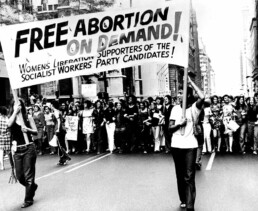
  January 22, 2026 Hi, lovely Meteor readers, Today is one of my closest friends’ birthdays, a balm upon a far more bittersweet milestone: the 53rd anniversary of the Supreme Court’s now-overturned decision in Roe v. Wade. At least there’s birthday cake.  Today, we hear from early pro-choice activists on what it felt like that day when Roe was decided (hint: it’s complicated). Plus, some historic Oscar nominations and your weekend entertainment. Stuffing my face, Nona Willis Aronowitz  WHAT'S GOING ONHope and fear: Fifty-three years ago today, the Supreme Court handed down the Roe v. Wade decision. In a 7 to 2 vote, the justices struck down state abortion bans, replacing them with detailed national guidelines based on weeks of pregnancy. Bending to the groundswell of the women’s movement, four states—Alaska, Hawaii, New York, and Washington—had already repealed their abortion bans, and 13 others had expanded exceptions. But Roe made the right to abortion, based on the constitutional right to privacy, protected everywhere. What was that moment like for women active in the movement? In a post-Roe world, it’s easy to imagine that it was a day of unequivocal joy. I was curious, so I sought out some women who remember it clearly—and discovered that the truth is far more complicated. Yes, there was relief. Heather Booth, who’d started an underground abortion service called The Jane Collective eight years before when she was a student at the University of Chicago, remembers thinking: “FINALLY!” After nearly a decade of abortion advocacy, “the fear, hardship and danger for women who wanted to end an unwanted pregnancy would be addressed.” Dr. Wendy Chavkin, who’d occasionally lent the Janes her Chicago apartment and had organized travel for women to get abortions in New York, recalls the period after Roe as “heady days.” She and her fellow student activists felt “hope, determination and a big vision that saw links between gender and racial discrimination.” Shortly after the decision, she became a counselor at the first legal clinic in Detroit and eventually went to medical school to become an abortion provider herself.  WE GOTTA BRING BACK “FREE ABORTION ON DEMAND.” CREDIT: GETTY IMAGES But many feminists were wary of the meticulous pregnancy timetable the Supreme Court had laid out. “I saw it as a serious compromise,” says Carol Giardina, an early member of the women’s liberation movement in Gainesville, Florida, who recalls referring girls in her freshman dorm to abortionists back in 1963. Although the decision did represent “a mighty win for organized feminism-people power,” she says, her cohort had been “fighting like tigers for repeal of any and all laws on abortion.” That demand, remembers Alix Kates Shulman, radical feminist and author of Memoirs of an Ex-Prom Queen, sprung out of the worry that “any law would contain restrictions on full reproductive freedom and be vulnerable to constant attack. Which is precisely what happened.” Several women referred me to abortion activist and Redstockings member Lucinda Cisler’s 1970 essay in the feminist journal Notes From the Second Year. States were beginning to introduce laws that legalized abortion, but with exceptions—which, Cisler warned, “can buy off most middle-class women and make them believe things have really changed, while it leaves poor women to suffer and keeps us all saddled with abortion laws for many more years to come.” The only option, she argued, was total abolition of laws restricting abortion. And then there were the women who had other things on their minds. “I’m sorry to say I shrugged at Roe,” says Loretta Ross, who went on to be cofounder of SisterSong and one of 12 architects of the theory of reproductive justice, which encompasses far more than the right to abortion. In 1973, Ross was a teenage mother suffering from acute pelvic inflammatory disease as a result of the infamous Dalkon Shield IUD; instead of removing her IUD, a white, male OB/GYN misdiagnosed her for months until her fallopian tubes ruptured and she was forced to undergo sterilization. She’d had a “perfectly safe legal abortion” several years before in Washington, D.C.; “it wasn’t my lived experience to be denied.” So “while other people were celebrating Roe,” she recalls, “I was having the classic experience of a Black woman whose white doctor was deciding she doesn’t need to have any more kids.”  LORETTA ROSS IN 2022. CREDIT: GETTY IMAGES Although she wouldn’t read it until years later, Ross cited a 1973 editorial by the National Council of Negro Women’s Dorothy Height, who sounded a cautionary note about Roe v. Wade and its potential to worsen state control over Black women’s bodies: “We must be ever vigilant that what appears on the surface to be a step forward, does not in fact become yet another fetter or method of enslavement.” Ross’s sterilization led her to file (and win) a lawsuit against Dalkon Shield manufacturer A.H. Robins, and devote her life to bodily autonomy in all forms. If we don't “intersect race, class and gender,” Ross says, we’ll “never understand the full impact of Roe.” In our new landscape, after Dobbs, many activists are starting to come around to the idea that restrictions and exceptions have no place in abortion care. (They’ve succeeded in getting pro-choice states like New York, whose law goes further than Roe, to agree.) These early activists remind us that perhaps our north star shouldn’t be restoring Roe, but to wrest our reproductive justice out of the hands of politicians—and into our own. AND:
 RUTH E. CARTER IN AN EXTREMELY TACTILE PIECE OF CLOTH. CREDIT: GETTY IMAGES
 WEEKEND READING, WATCHING, AND LISTENING 📖 👁️ 🔊On a complex heroine: On the occasion of the Roe anniversary, I rewatched “AKA Jane Roe,” a documentary on the case’s plaintiff, Norma McCorvey…and seriously, wow. (FX) On cop-hating: A close read of an uncollected Joan Didion essay asks the question: What made her consign the piece to obscurity? (Dispatches) On heteropessimism: I am embarrassingly late to Heated Rivalry but maybe you are too, and would enjoy Tracy Clark-Flory and Amanda Montei discussing the show as an escape from heterosexuality. (Dire Straights)  FOLLOW THE METEOR     Thank you for reading The Meteor! Got this from a friend? |


Chrissy Teigen on the “sisterhood” women deserve
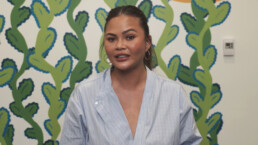
  January 21, 2026 Dear Meteor readers, We’re coming to you with a treat today—a story about reproductive healthcare that, for once, gives us hope. Tomorrow marks the 53rd anniversary of the Roe v. Wade decision. More than half a century later, in a country that no longer grants the freedom that that ruling declared, it’s easy to get mired in the onslaught of harrowing news about our bodies and our lives. But everywhere, there are warriors who keep doing the work of caring for pregnant people, and they are not mired. They are moving forward, every single day. TV personality and best-selling cookbook author Chrissy Teigen has herself helped to humanize reproductive healthcare. She has spoken about her own experience having a lifesaving late-term abortion; visited the Feminist Center for Reproductive Liberation, a clinic in Georgia, in 2024; and then discussed her experiences with Vice President Kamala Harris during the 2024 presidential campaign. “I started crying once I saw this beautiful mural of butterflies above the operating suite” at the Feminist Center, Teigen told Harris at the time. A doctor there “looked me in the eye and she said, ‘You could have had butterflies.’”  Then, in 2025, The Meteor traveled to Tennessee with Teigen on another visit—one that shows that everyone deserves butterflies, and that you can’t talk about abortion care without talking about maternal care. CHOICES Center for Reproductive Health, a Memphis-based clinic, provides the full spectrum of care for people who can get pregnant. “All pregnancies are different,” says Jennifer Pepper, CEO and president of CHOICES. That’s why the center provides everything from midwife-assisted births to high-risk pregnancy care to prenatal classes—and, since abortion was banned in the state in 2022, abortions at their sister location three hours away in Carbondale, Illinois. (Pepper says CHOICES is the only nonprofit in the country where both birth and abortion take place. And after Dobbs, “we could not stomach the idea that [abortion] patients wouldn’t have anywhere to go,” she says.) Teigen was moved by how the clinic felt so “open and welcoming and airy and light,” with a “sisterhood” that was far from “the coldness” of her own hospital experience. “It never crossed my mind that I could give birth on all fours, or be in a tub at a birthing center,” she said. She saw a better way to give abortion care, too. When Pepper told Teigen she got her start at CHOICES as an abortion doula, Teigen said, “I can’t tell you how much I would have appreciated an abortion doula,” someone to explain “what was happening with my body.” Tennessee also has the highest rate of maternal mortality in the country—and so access to supportive birth care can mean the difference between life and death, particularly for Black women. One Black woman in the prenatal class, Jasmine, recalled a conversation with her doula at CHOICES that started with a heartbreaking wish—“First off, I don’t want to die”—and ended with her having a “beautiful experience” delivering her baby. “Every single woman deserves that level of care in America,” Teigen says. “This is what care looks like—people listening to you, and treating your body and your choices with dignity.” WATCH TEIGEN’S VISIT TO CHOICES HERE: PRODUCER/DIRECTOR/EDITOR: EMILY MURNANE PRODUCED WITH SUPPORT FROM POP CULTURE COLLABORATIVE, AS PART OF THE UNITED STATES OF ABORTION SERIES.  FOLLOW THE METEOR     Thank you for reading The Meteor! Got this from a friend? |


This Week in Birthing Stories
  November 20, 2025 Greetings, Meteor readers, Why are there so many Christmas decorations up already? Can November live!? In today’s newsletter, we look at three stories of what it’s like to seek care in America. Plus, some weekend plans. Slow it down, Shannon Melero  WHAT'S GOING ONA recurring pattern: This week, you may have seen a viral video of Kiara Manuel, a woman in active labor at Dallas Regional Medical Center, having to answer intake questions while screaming in pain. Her mother, who recorded the ordeal, told local news outlets that staff at the hospital had left Manuel without care for over half an hour, choosing “paperwork over life.” This week, you may have seen another viral video of Mercedes Wells, a woman who was told by a hospital in Indiana that she wasn’t really in active labor and was sent away. Eight minutes into her drive home, she gave birth on the side of the road. Wells’ sister-in-law told ABC 7 Chicago, “Mercedes begged her,” referring to a nurse. “She really begged her, she said I can feel it, I’m in active labor. She just ignored her.” This week, you may have read the story of Tierra Walker, a mother in Texas who asked for an abortion after her pregnancy had left her “wracked by unexplained seizures” and at high risk for preeclampsia. Doctors at Methodist Hospital Northeast near San Antonio told Walker that under the state’s ban, they could not abort because there was no emergency—her pregnancy was fine, it was only her health in trouble, according to ProPublica, which broke the story. Walker’s son found her dead a month later, killed by preeclampsia. All three of these women have one thing in common: they were Black women seeking reproductive care in America. It is a well-known statistic that maternal mortality rates among Black women are more than double that of any other racial group in the United States. Even outside of giving birth, Black women seeking care for any health issues face an onslaught of discrimination and neglect, rooted in centuries of racism. One would assume that, given the staggering statistics, more would have been done to address the issue. But the stories of Kiara, Mercedes, and Tiara show us that it remains persistent, entrenched, and lethal—even though we know much of what it would take to improve Black maternal health. In the last two years, legislators have introduced the Black Maternal Health Momnibus Package and the “MOMMIES” Act. The Momnibus has seen some success in inspiring similar state laws, like this one in Michigan that recognizes and makes illegal “obstetric racism” and “obstetric violence.” But neither Momnibus nor the MOMMIES Act (which focuses on expanding Medicaid coverage for those who give birth) has received enough support from Congress to be passed. So why aren’t we all doing more? Well, that is the incredible hold that systemic racism has on every aspect of this country. Despite the valiant attempts of some advocates in Congress, most members have not prioritized the issue. And even if they did, the issue requires holistic, aggressive approaches to even slightly move the needle in the right direction: racial bias training, new pathways to increase the number of Black OB-GYNs, accessible midwifery care, updated postpartum care and leave policies, and research funding to understand these disparities and the health conditions (like preeclampsia) that are more prevalent among Black women—and that’s just the beginning. But it’s worth tackling. The business of birthing intersects with nearly every facet of life, from education to economics to infrastructure, and until it is treated as such, we will continue living in a world of too many viral videos, and too little action. AND:
  “The Most Important Event Nobody Knows About”
It happened 48 years ago this week, in HoustonBY EMILY KOH  CORETTA SCOTT KING AND FELLOW DELEGATES AT THE 1977 NATIONAL WOMEN'S CONFERENCE. (VIA GETTY IMAGES) Forty-eight years ago this week, my grandmother, Dr. Hesung Chun Koh, joined thousands of women from around the world in Houston, Texas to make history. They came to the first—and only—National Women’s Conference to adopt a National Plan of Action to improve the status of women in America. The plan delegates ultimately adopted at the conference included recommendations on a range of issues—including child care, education, health, and reproductive freedom—that still impact the lives of women today. The conference brought together women from all walks of life, from leading figures including Coretta Scott King, Maya Angelou, and First Ladies Rosalynn Carter, Betty Ford, and Lady Bird Johnson to working women, “homemakers,” and students. It was a historic milestone in the women’s movement and American history, yet its impact is overlooked. Reflecting on the conference, Gloria Steinem declared it “a constitutional convention for the female half of the country.” And she noted: “It may take the prize as the most important event nobody knows about.” It’s time to change that. The conference was an inflection point: a pinnacle achievement for the women’s movement. It also spurred backlash: Opponents who protested it pushed back on the idea that women deserve a full and equal role in public life. Now, that backlash remains as fierce as ever before, and our movement is at another inflection point. We are rapidly losing decades of progress; America is devolving into a nation where women are second-class citizens, transgender and nonbinary individuals cannot live openly and safely, and men suffer from rigid expectations of masculinity. In two years, the fiftieth anniversary of the 1977 National Women’s Conference will be here—and a chance to revisit the National Plan of Action and co-create a new vision with women from all walks of life, men, and the LGBTQ+ community. My grandmother immigrated to America from Seoul, South Korea, for college, and became one of the first Korean women to earn a doctorate in the United States. Her focus on the future made my life possible and created opportunities for the next generation. The vision she and her fellow delegates set forth in Houston can inform and inspire our work today. The question before us now is the same one they faced then: Will gender equity and equality advance or fall backwards in our lifetime? History calls on us to move forward. Emily Koh served on the White House Gender Policy Council in the Biden-Harris Administration. She is currently working on an initiative to advance gender equity and equality in the U.S. that centers on the 50th anniversary of the 1977 National Women’s Conference.  WEEKEND READING 📚On screen: Parents, it might be time to free yourself from YouTube Kids. (The Verge) On a special kind of wellness: Orgasm. Cult. (TCF Emails) On the state of men: Apparently, some men are searching for the tough love they desire in…the Orthodox church? (Yes, of course “traditional values” are part of the pitch.) (The New York Times)  FOLLOW THE METEOR Thank you for reading The Meteor! Got this from a friend? |

This Email is Censored
  September 18, 2025 Hey there, Meteor readers, I’d love to say something fun and clever here, but apparently, saying too much can cost you your job, so 🤐. In today’s newsletter, we don’t mention a single controversial or emotionally charged topic, and we definitely aren’t talking about censorship, conditions in ICE detention centers, or reproductive rights. In fact, if any spies are here, we’re actually just discussing... some popular films today. So, ya know, nothing to see or report on here. Protecting the bag, Shannon Melero  WHAT'S GOING ONIt is so incredibly difficult to keep up with everything going on when it feels like everything is going on at the same time. But if the GOP can stage a multi-pronged attack on free speech, reproductive rights, and literal science all at once, then we do need to figure out how to walk and chew gum at the same time. So what exactly is happening with reproductive rights while we’re all distracted by what one is or is not allowed to say about a murdered white supremacist? We wouldn’t know. We’re just here to be chill and discuss some really interesting films: A Quiet Place: A recent study from the Electronic Frontier Foundation found a “social media censorship crisis” in which platforms like Meta, TikTok, and even LinkedIn are blocking users from viewing posts that contain information about abortion. EFF found that in the case of Meta, the company has been removing posts, claiming they violated the community terms that prevent users from buying, selling, or trading pharmaceutical drugs. But the posts reviewed by EFF “very clearly did no such thing.” Thankfully, EFF put together some helpful guidance to help keep the free flow of abortion information going (without sacrificing your privacy). Shadow Force: The Cut’s Andrea González-Ramírez spoke to a midwife caring for women in ICE detention. The suffering these women endure—sitting in a detention center where they were placed by a self-described “pro-life” government—is so horrendous and potentially triggering, we won’t repeat it here. But this reporting is a reminder that reproductive justice is inclusive of so many issues, immigration rights among them. Warfare: Anti-abortion states are bending over backwards to limit access to abortion pills, even going so far as to classify mifepristone as a Schedule IV controlled substance, putting it in the same category as Xanax, Klonopin, and Valium. To be clear, this doesn’t make mifepristone illegal, but it does make it more difficult to obtain, even though mifepristone is just as safe as penicillin and Viagra. Thunderbolts*: This is actually a positive update highlighted by our pals at Autonomy News. States like New York and California are strengthening their shield laws to protect abortion providers and doctors offering gender-affirming care. Good things are still possible when we keep vigilant and pressure our elected officials to keep abortion accessible everywhere. AND:
 PRECIOUS BIG BABY BEAR (SCREENSHOT VIA EXPLORE.ORG)
 WEEKEND READING 📚(Home) On the range: More women in the U.S. are getting into ranching than in previous years. Yee hawt or yee nawt? (The Guardian) On well-hidden extremism: Trad-wives started out as a content category, but author Cynthia Miller-Idriss explains how the once innocuous lifestyle trend morphed into something more nefarious. (Teen Vogue) On a musical comeback: Bomba y plena never went away, but it’s seeing a resurgence among young people. (Remezcla)  FOLLOW THE METEOR Thank you for reading The Meteor! Got this from a friend? |
