

Following the Parton Playbook
  August 20, 2026 Greetings, Meteor readers, It’s been a long, sad week with the deaths of actor Tim Curry, queen of everything Dolly Parton, and, heartbreakingly, the voice of Eeyore. But, as always, we’re grateful to be working through all of it with you. In today’s newsletter, we’ve got Dolly’s legacy, Meta’s settlement, and injustice on a Navy vessel.  WHAT'S GOING ONWWDD (what would Dolly do): The death of Dolly Parton this week has left a gaping hole in the hearts of millions, but it’s also ensured that the breadth of her philanthropic work is understood, which is no small thing. Parton’s Imagination Library donated three hundred million books; she helped fund a COVID-19 vaccine; and she once gave $12.5 million over just a few months to families who lost their homes after a fire. The New York Times notes that Parton was so good at giving her own money away that other rich people, including Jeff Bezos, asked her to give away some of theirs. Dolly Parton was, in so many ways, the blueprint. “Dolly was not kind and generous despite growing up somewhere that was ransacked and impoverished,” writes author Mandy Len Catron, who, like Parton, was raised in an Appalachian community. “She was kind and generous because she grew up in a place where people knew how to care for one another because there wasn’t much to go around.” Community care was at the center of Dolly’s work. So: How well will the next generation of stars follow the Parton Playbook of humanitarian commitment? That’s an open question—but this weekend holds a hopeful preview.  MOTHER PARTON PERFORMING DURING THE LAUNCH OF IMAGINATION LIBRARY. (VIA GETTY IMAGES) In Irvine, California, singer Olivia Rodrigo is hosting the Daisy Chain Fields Festival, a show that will benefit organizations serving women and girls, among them Black Mamas Matter Alliance, FreeFrom, and the Center for Reproductive Rights. This is not Rodrigo’s first rodeo when it comes to supporting reproductive freedom. In 2024, when she was touring for her album “Guts,” Rodrigo partnered with local groups to distribute condoms and emergency contraception at her shows; a portion of her tour’s proceeds went to the National Network of Abortion Funds. The backlash (“promiscuous!”) was brutal, and eventually the distribution had to stop. Against that backdrop—and the general rightward swing of Trump 2—many artists might have backed away from embracing issues at all. But in aligning herself with 13 other acts, Rodrigo is not just showing up; she’s helping create safety in numbers and a model that other young artists can point to when their publicists tell them their words are too controversial, risky, or otherwise dangerous to the bottom line.  Against a backdrop of global funding for women’s rights organizations dropping catastrophically this year, the festival's exposure feels meaningful. “We live in a world where most people just accept gender-based violence as normal and to be expected,” Sonya Passi, the founder of FreeFrom, tells The Meteor. “Daisy Chain Fields is giving a global stage to our message - we can end gender-based violence if we invest in survivors and…we each have a part in making it happen.” And as a wise woman once said, “If you don’t like the road you’re walking on, start paving another.” AND:
 Love The Meteor? Think independent media that unapologetically centers women, girls and nonbinary people is more important now than ever? Us too! That’s why we hope you’ll consider supporting The Meteor Fund, The Meteor’s nonprofit initiative that backs our journalism and community-building work. Your tax-deductible donation (little or large—your wallet, your choice) to our summer impact campaign will help The Meteor Fund expand our work this fall, with educational briefings, live events on gender justice and human rights, and more. If you’re inclined to give, please do so! We love doing this, and we love you.  FOLLOW THE METEOR     Thank you for reading The Meteor! Got this from a friend? |


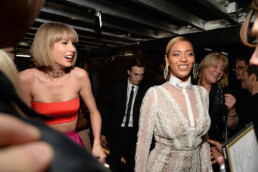
Two Pop Stars, Both Alike in Dignity
Beyoncé and Taylor Swift face off at the Grammys
BY SCARLETT HARRIS
It’s been an incredible year for women in pop, and this weekend at the 67th Grammy Awards the race for the highly coveted Album of the Year award is stacked with the gals who ruled the summer. Billie Eilish, Sabrina Carpenter, Chappell Roan, and Charlie XCX are among the nominees. And while each of these women has a strong chance of taking home the gold, the real competition is between two titans of the industry—Taylor Swift and Beyoncé, who have 157 nominations and 46 wins between them.
This weekend promises to be a kind of referendum on the notoriously racist and old-fashioned music establishment. All eyes will be on whether Bey, with “Cowboy Carter,” can finally clinch the Album of the Year award that has eluded her her entire career—or whether Grammy darling, Swift, will add to her already record-breaking tally of four AOTY golden gramophones with “The Tortured Poets Department.”
The last time they were pitted against each other in this category was at the 2010 Grammys, for “I Am… Sasha Fierce” and “Fearless,” respectively, which Swift went on to win. This followed Kanye West’s infamous “I’mma let you finish” screed at the MTV Video Music Awards the year prior, in which he interrupted Swift’s acceptance speech for Best Female Video for “You Belong With Me,” asserting that Beyoncé had one of the best videos of all time and should have won for “Single Ladies (Put a Ring On It).” (He wasn’t wrong.) Ever the consummate professional, Bey had invited a deer-in-the-headlights, 19-year-old Swift back on stage during her own acceptance for Video of the Year so she could give the speech truncated by West.
The two have been eerily linked ever since: fans noticed Beyoncé dropped her groundbreaking self-titled visual album at midnight on Swift’s birthday in 2013. The streaming debut of Swift’s The Eras Tour concert film was released on the 10th anniversary of that self-titled album. (Queen Bey showed up to the film’s red carpet premiere, quashing any lingering rumors of beef between the two.) They are the only two women to debut a single at number one on the country charts. And both dominated the cultural conversation in 2024, a year full of women taking back and transforming pop music.
Despite pretty much every other awards body and cultural arbiter giving Bey her dues, and despite a trio of standout albums in BEYONCÉ, Lemonade, and Renaissance, the Grammys routinely withholds AOTY from her (this is her fifth nomination). As writer Kathleen Newman-Bremang explained last year—after Jay-Z accepted the Dr. Dre Global Impact Awards at the Grammys and slammed the Academy in his acceptance speech— Black music is often relegated to the genre categories like R&B, rap, and dance, which Renaissance won in in 2023. Albums by Black women seldom win the general categories like Album of the Year—which was last won by a Black woman in 1999 with The Miseducation of Lauryn Hill.
“[Calling] Black artists the greatest of all time… would require admitting the power of Black art, it would require acknowledging the history of cultural pillaging and musical theft of Black work that the industry was built on,” Newman-Bremang wrote at the time.
Cowboy Carter is a direct response to that kind of racism in the industry, featuring Linda Martell, a Black country pioneer, and her modern-day contemporaries Shaboozey, Tanner Adell, Brittney Spencer, Tiera Kennedy and Reyna Roberts. Despite being her most critically polarizing album in over a decade, Bey will probably win for what is, in my opinion, her weakest body of work since 4. That is if Swift doesn’t best her for the similarly conflictingly reviewed and unwieldy The Tortured Poets Department.
Of course, Grammy voters might surprise us and hand the award over to one of the freshly crowned pop princesses, like Sabrina Carpenter or Chappell Roan. But the fact that Beyoncé will actually be attending the award ceremony this year tells me she expects to be leaving with some hardware. Or perhaps everyone’s just there to have a good time and we’ll still be waiting for an AOTY award in another 15 years (you know, if society holds up in the meantime).
"The world stopped paying attention"
  August 3, 2023 Hola, Meteor readers, I recently caught up on “And Just Like That,” and finally saw the episode where Steve gives Miranda a piece of his mind regarding their much-stalled divorce. As a SATC fan, one of my biggest issues with AJLT is the mistreatment of Steve’s character, and it really felt like his “This is my house” speech was vindication for the hours of Steve-slander I’ve had to endure. Give that man an Emmy. But more importantly, give the writer who penned that monologue a fair wage. In today’s newsletter, we take a look at Lizzo’s response to the lawsuit against her, offer some good reading for your weekend, and hear from an actual hero, Farkhunda Muhtaj, who helped evacuate teen soccer players from Afghanistan. Typing from Steve’s house, Shannon Melero  WHAT'S GOING ONTruth hurts: As you’ve certainly been made aware of by now, on Tuesday, three of Lizzo’s former dancers filed a lawsuit against the singer, her production company, and her dance captain. The lawsuit painted a picture of a hostile work environment, rife with racist and fat-phobic comments, an “excruciating” 12-hour audition in which one dancer soiled herself, and the now-infamous instance in which a dancer was allegedly pressured to eat a banana out of a nude performer’s genitals. Lizzo posted her response this morning, and the messaging was…well, pretty much exactly what we’ve come to expect from celebrities called out on their behavior. In fact, there’s already a term for it, coined by Dr. Jennifer J. Freyd—DARVO: Deny, Attack, and Reverse Victim and Offender. Here are some examples straight from Lizzo’s post:
This is a well-worn roadmap. But seeing it used by this person, this time, stings. Lizzo represented so many things that felt new: self-celebration, body positivity, sexual liberation—wonderful qualities that people on the right have tried to “cancel” her for time and time again. She had a chance to do something different and new in her response, too—like address the charges with empathy and humility, rather than taking a page from the DARVO playbook and putting her hurt feelings first. But as a singer once sang, people are only great until they’ve gotta be great. AND:
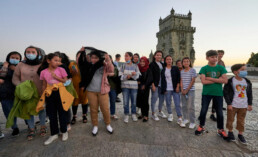
 FLEEING AFGHANISTAN“The World Has Stopped Paying Attention”The soccer captain behind We Are Ayenda is still working to free the women of her home country.BY THE METEOR TEAM  FARKHUNDA MUHTAJ SPEAKING TO PRESS AFTER MEMBERS OF THE AFGHANISTAN YOUTH TEAM WERE GRANTED ASYLUM IN PORTUGAL. (IMAGE BY HORACIO VILLALOBOS VIA GETTY IMAGES) In August 2021, with the world’s eyes on Afghanistan, the teenage soccer players on that country’s Under-18 Women’s National Team left their homes and began a weeks-long journey to evacuate from their country. The experience of these players—many of whom now live in Portugal and compete as Ayenda, which means “future” in Farsi—is the subject of not one but two films this month, the first of which, We Are Ayenda, is out now on Amazon Prime. The second, Ayenda, will be available on Peacock later this summer. We talked to the extraordinary person who led the girls through the rescue process—not an intelligence officer, but a then-23-year-old Afghan-Canadian soccer player, Farkhunda Muhtaj, the captain of the Afghan Women’s National Team. The Meteor: The film shows your day-by-day work evacuating the youth team from Afghanistan. How did you come to be the person entrusted with the job to begin with? Farkhunda Muhtaj: Because I was the captain [of the women’s national team] and I also lived abroad…I was very much trusted from individuals within Afghanistan. And so I think immediately when they needed help, they turned to me. The women's department secretary...reached out and said to me that Canada was supporting 20,000 Afghans and could I help get the families to either Canada or any other kind of safe nation. What impressed you the most about the girls as they navigated the process of trying to leave the country? I would say their courage and determination and resilience for sure. The girls really went through hell. They were trusting me blindly—they didn't know what the next move was, where they were headed, why they were headed [to] a certain location, who they were waiting for, and how they were going to get into the airport and out of the country. But they risked everything and…whether it took them ten tries, 20 tries, traveling all over the region in order to [find a safe way out], they were doing that. And it's not easy for a 15- or 16-year-old girl to…convince their family that this is the best way out. At the time there was a lot of fraud; it was hard to trust anyone. And what really impressed me was their sisterhood as well, the fact that they recognized that they weren't the only ones trying to leave Afghanistan.  MEMBERS OF THE YOUTH TEAM ALONG WITH THEIR FAMILY MEMBERS IN PORTUGAL. (IMAGE BY HORACIO VILLALOBOS VIA GETTY IMAGES) You’re now living in Europe, and because the Taliban has banned women from playing sports, you’re not allowed to play for your home country. What are your hopes for your own future, and for the future of other Afghan women athletes? Just to quickly give you some context: I was a student-athlete in university. I was the captain of the women's soccer team there. And afterward I wanted to continue my education, so I completed my Bachelor of Education [at] a teacher's college in Canada, and became a science and high school teacher. Now I’ve decided to go pro [and play for Fortuna Sittard in the Netherlands]—it's something I've wanted to do since I was younger, but I realized that the girls saw me as a role model. And so I [went pro] just to show the girls that, you know, it doesn't matter that we're from Afghanistan, a war-torn country; we're just as capable as any other European, any other American or Canadian. And what I want for other Afghan women athletes is the same journey that I took: They deserve to be educated. They deserve to have the right to play football, and we deserve to represent our country. I want us to be able to represent and officially compete in FIFA competitions once again. Of course, since the Taliban took over, they have banned that. Beyond sport, I hope that Afghan women can be educated again. But we're kind of out of time. It's been two years already. The situation in Afghanistan is only getting worse, not better. Yes—there's a moment in We Are Ayenda when you say that you knew [in 2021] that you had to get the girls out quickly because the world was paying attention—and that it might stop. Two years later, has the world stopped paying attention? Absolutely. The world has stopped watching. Right when the Taliban had taken over Afghanistan, people cared—partly because the U.S.’s reputation was on the line as well. People cared and were very anxious about what the future of Afghanistan might look like. But after the war in Ukraine happened—and nothing against Ukraine, they deserve all the attention and care—everyone forgot about Afghanistan. And you really saw how Afghans were treated compared to Ukrainians…When I was trying to help [evacuate] Afghans and vulnerable communities [after evacuating the players], no country seemed to have space. But as soon as other issues around the world happened, they had the budget; they had the space; they had the time. It was really disheartening for me. It was something I didn't expect from the global community. And so the world has stopped paying attention. In Afghanistan, women are just there trying to [gain access to] education. I think the most powerful tool is education. Once you're educated, you're aware of your rights and responsibilities, and the fact that women cannot be educated shows that they're trying to silence them. And if our mothers, our sisters, our daughters are not being educated, then what can we expect for the future generations of Afghanistan? I don't think it's going to turn out well at all. But Afghanistan has been in a desperate situation for decades. And regardless of that, our generations continue to thrive. So although we want the global community to act and be a part of the change and help us, we are also very much trying to do our best to help from within.  WEEKEND READS 📚On the NFL: “It’s not every day a group of women defeat a white billionaire man.” But for the women who sued former Commanders’ owner Dan Snyder, that day is here. (The Athletic) On cool kids: A 10-year-old girl threw a water balloon at a local politician from 100 feet away. She got him right in the back of the head and he was so impressed, he suggested she should be playing for the Yankees. So the Yankees invited her for a game. (The Washington Post) On BookTok: Smutty. Hockey. Drama. Need we say more? (The Cut) On climate: The heat isn’t only on land. Unda the sea, an “astonishing” heat wave has been lethal for marine life. (The New York Times)  This newsletter was written by Shannon Melero and Bailey Wayne Hundl. FOLLOW THE METEOR    Thank you for reading The Meteor! Got this from a friend? Sign up for your own copy, sent Tuesdays and Thursdays.
|
