
Something is Missing from the Manosphere Doc...
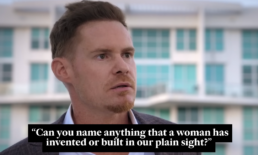
  March 24, 2026 Good evening, Meteor readers, East-coast spring continues to be cold as hell, but I’m not that mad about it because I can still comfortably wear my brand-new, Carolyn Bessette-inspired rollneck sweater. “Love Story” is not good, per se, but I have failed to resist its hard sell of ‘90s fashion. Today, we tackle what’s missing from that ubiquitous manosphere documentary. Plus, some optimism (!) about politics (!!) from diplomat-turned-playwright Julissa Reynoso. Officially a fashion victim,  WHAT'S GOING ONThe women beneath the men: Weeks after its release, everyone is still talking about Louis Theroux’s new documentary, Inside the Manosphere. Theroux isn’t the first filmmaker to attempt to capture this subculture, but he’s arguably the most high-profile, applying his Michael Moore-esque style to these guys as he did to similarly odious groups like the Westboro Baptist Church and Scientologists. He tries to get inside the heads of wildly bigoted influencers like Harrison Sullivan (HSTickyTocky), Nicolas Kenn De Balinthazy (Sneako), Myron Gaines, and Justin Waller, focusing on how they profit off of marketing misogyny to young men. Theroux, who has three sons of his own, mainly limits his scope to the influencers themselves and their throngs of young male fans, sons of the Millennial and Gen X women who ushered in a new era of feminist consciousness. Theroux makes it clear that we are now living through that movement’s backlash. And yet he seldom depicts the people who are most hurt by it: women. It’s not that we don’t hear from women at all. Theroux briefly chats with the influencers’ women employees, wives, and girlfriends, whose remarks range from beatific assent (male domination is “how it’s supposed to be”) to resigned eye rolls (“Male audience. What can you expect?”). But Theroux never talks to them for more than a few minutes, and he almost never talks to them alone. The one time he manages to grab a few solo words with the woman who books guests on Myron Gaines’s show, Gaines immediately sends her a cease-and-desist text from the next room. The closest Theroux gets to a substantive interview with a woman is when he speaks with Harrison Sullivan’s mom, who supposedly “hates sexism.” Asked to comment on her son’s profession, she simply says, “Of course there’s things I don’t agree with.”  MYRON GAINES, IN ONE OF HIS MILDER MOMENTS. (CREDIT: YOUTUBE) Maybe individual interviews with these particular women were impossible, but I was dying to know: Where are Sneako’s exes? Who are Waller’s former women employees or employers? Could we have heard from a girl who went to high school with Sullivan, or a woman who worked alongside Gaines when he was, ahem, a DHS agent? If Theroux really wanted to uncover their humanity, as he claims, that could have been a way to go. The short interviews he does conduct with the wives and girlfriends often take on a distinctly paternalistic tone. Theroux harps on the one-sided monogamy many of these relationships have established; several of these men sleep with other women but expect their partners to remain “loyal.” It’s a valid data point about their chauvinism: As a practitioner of nonmonogamy myself, I can nevertheless concede that for more than a century, the jargon of “free love” has been twisted and manipulated by men to shame women into relationships they don’t want. But is polyamory the problem? Or just polyamory with misogynists? And how, I was left wondering, do the women in these influencers’ lives feel about the rest of it? Why didn’t Theroux ask Waller’s partner, Kristen, about what she’s going to teach their two daughters, whose diapers Waller claims to never have changed? How did Gaines’s girlfriend, Angie, feel about being ordered to clean up their shared apartment before Theroux sees it? (Thank gawdess she’s no longer with him.) Does Sullivan’s mum worry about her son’s future wife, or her future grandchildren? When Theroux filmed Sneako taking selfies with a preteen boy—who jovially chants “Fuck the women!” and “All gays should die!”—did he give a passing thought to the girls or gays that go to school with him? Theroux interviews random male fans on the street about why they look up to Waller; perhaps he could have pulled aside a few women observing their fandom.  NOTED HISTORIAN AND ARCHITECTURE EXPERT JUSTIN WALLER. (CREDIT: YOUTUBE) I found myself wanting to dispatch a girl gang to Theroux’s house, composed of regular women and girls who are exposed to this rhetoric on a daily basis. Like this 15-year-old girl who gave readers of The Guardian a glimpse into the “vile,” overtly misogynist content that social media feeds her, no matter how much she tries to steer the algorithm elsewhere. Or the girls in the classrooms of this educator, who reports that they’ve stopped raising their hands in class because “the social cost has become too high.” And this isn’t just about one film. As Feminist points out, these glaring omissions mirror broader discussions about the “boy crisis” and the “male loneliness epidemic”—which, by the way, is not exclusively male; a recent Pew survey reported just as many women feeling lonely as men. These debates zero in on boys as victims of a patriarchal society, and they certainly are, but they’re not the only victims. A subset of these trend pieces blame feminism, not our society’s bedrock misogyny, which these influencers cynically enforce for their own gain. It feels ridiculous to even clarify this, but manosphere influencers are not akin to girlbosses; as Amanda Montei puts it, those women “may have run on white capitalist forms of exploitation, but they did not actively teach other women and girls to abuse, control, and dehumanize men, nor were they advocating for the end of men’s civil rights.” The women affected by this misogyny remain faceless and nameless while journalists give openly misogynist, racist, anti-Semitic influencers the royal treatment. Not anymore. The Meteor will be rolling out a series on life and reality in this anti-feminist era, examining the backlash through the prism of women and girls who have to live through it. Stay tuned. AND:
 Three Questions About…Government that WorksBY SHANNON MELERO  JULISSA REYNOSO IN 2024. (CREDIT: GETTY IMAGES) “The best is yet to come…you’ll see.” These are the final words the audience hears in Public Charge, a political drama playing at The Public Theater in New York, which follows the true story of Julissa Reynoso, a former Deputy Assistant Secretary of State and Ambassador to Uruguay in the Obama administration. At the show’s end, the actor playing Reynoso is referring to the future presidency of Hillary Clinton—a reality the audience knows is never realized. It is a bittersweet moment for both the character and the viewer; after years of work and small miracles, Reynoso’s character has realized her vision of easing relations with Cuba and freeing American political prisoner Alan Gross. In the final moments of the show, which ends in the winter of 2014, she is hopeful and full of belief in the power of good government. As a viewer, you feel some of that too—until you exit the theater and your phone flashes the latest headlines. The experience is jarring. We spoke to the real Julissa Reynoso, who wrote Public Charge with playwright Michael J. Chapiga, about what it was like to strike such an optimistic note in such politically uncertain times. In the play, there are a lot of references to a memo you and Ricardo Zuniga wrote in 2009 about the importance of connecting at a person-to-person level with representatives of Cuba, despite decades of silence as policy. What is it like revisiting that idea as the U.S. is moving more towards isolationism? That’s just…diplomacy. We need to talk to all types of people, from people you like or don’t to people who don’t like you. It’s the only way you really can get anything resolved. That is the whole function of the State Department. [With this play] I wanted to help [people] understand what public servants do and the issues we face in trying to get things done. That was the main objective: explaining the life of a government official.  ZABRYNA GUEVARA AS JULISSA REYNOSO IN PUBLIC CHARGE. (COURTESY OF THE PUBLIC THEATER) A lot of the characters in the show are Latine, and as they’re trying to open the door to relations with Cuba, I noticed a theme of how we as Latine people struggle to work together intraculturally in the U.S. Was that intentional? No, it just happened to be that the people dealing with these hard things at the time were all people of color! That’s just who was there and that’s really a testament to [then-Secretary of State] Hillary Clinton, who put us there. But also, growing up I would see films about foreign policy or international relations and I did not see people like me in any of those scenarios. [In the administration], I had a bunch of people of color whirling around with me trying to solve issues and trying to make things better. And with the people who were around at this time—Cheryl Mills, [Uruguayan] President Mujica, some of the Cuban officials—I always thought, Man you can’t make this stuff up. It was all so out of the ordinary. [Now, with the current administration,] I think there's a lot that we've lost along the way. I do have faith that some of the people at these institutions can get it back in the right direction. This is not the first time our institutions have been under attack. But we can come back and be stronger—it’s just going to take a lot of work. And good people are going to have to join in at some point. It’s interesting you say that people have to join because there really is so much apathy right now. I don’t know that everyone still has the will to, you know, be the change they wish to see. People are gonna have to get over it. I always say, If it's not me or you, then who? We can’t just say Oh God, everything is so bad and then do nothing about it. That’s not how this works. You can’t just give up. I really want folks to understand that it is hard to make change but once you do it, it’s extraordinary. As a country we’re still able to do that, but it’s just hard. If it were easy, we would do it all the time. But change is a major investment and it takes a lot of failures along the way. We just have to keep at it.  FOLLOW THE METEOR     Thank you for reading The Meteor! Got this from a friend? |


We All Live in the Manosphere Now
Everyone’s talking about "Inside the Manosphere," but there’s one glaring omission.
By Nona Willis Aronowitz
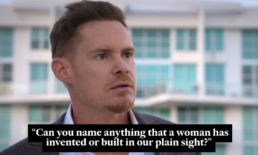
Weeks after its release, everyone is still talking about Louis Theroux’s new documentary, "Inside the Manosphere." Theroux isn’t the first filmmaker to attempt to capture this subculture, but he’s arguably the most high-profile, applying his Michael Moore-esque style to these guys as he did to similarly odious groups like the Westboro Baptist Church and Scientologists. He tries to get inside the heads of wildly bigoted influencers like Harrison Sullivan (HSTickyTocky), Nicolas Kenn De Balinthazy (Sneako), Myron Gaines, and Justin Waller, focusing on how they profit off of marketing misogyny to young men.
Theroux, who has three sons of his own, mainly limits his scope to the influencers themselves and their throngs of young male fans, sons of the Millennial and Gen X women who ushered in a new era of feminist consciousness. Theroux makes it clear that we are now living through that movement’s backlash. And yet he seldom depicts the people who are most hurt by it: women.
It’s not that we don’t hear from women at all. Theroux briefly chats with the influencers’ women employees, wives, and girlfriends, whose remarks range from beatific assent (male domination is “how it’s supposed to be”) to resigned eye rolls (“Male audience. What can you expect?”). But Theroux never talks to them for more than a few minutes, and he almost never talks to them alone. The one time he manages to grab a few solo words with the woman who books guests on Myron Gaines’s show, Gaines immediately sends her a cease-and-desist text from the next room. The closest Theroux gets to a substantive interview with a woman is when he speaks with Harrison Sullivan’s mom, who supposedly “hates sexism.” Asked to comment on her son’s profession, she simply says, “Of course there’s things I don’t agree with.”
Maybe individual interviews with these particular women were impossible, but I was dying to know: Where are Sneako’s exes? Who are Waller’s former women employees or employers? Could we have heard from a girl who went to high school with Sullivan, or a woman who worked alongside Gaines when he was, ahem, a DHS agent? If Theroux really wanted to uncover their humanity, as he claims, that could have been a way to go.
The short interviews he does conduct with the wives and girlfriends often take on a distinctly paternalistic tone. Theroux harps on the one-sided monogamy many of these relationships have established; several of these men sleep with other women but expect their partners to remain “loyal.” It’s a valid data point about their chauvinism: As a practitioner of nonmonogamy myself, I can nevertheless concede that for more than a century, the jargon of “free love” has been twisted and manipulated by men to shame women into relationships they don’t want. But is polyamory the problem? Or just polyamory with misogynists?
And how, I was left wondering, do the women in these influencers’ lives feel about the rest of it? Why didn’t Theroux ask Waller’s partner, Kristen, about what she’s going to teach their two daughters, whose diapers Waller claims to never have changed? How did Gaines’s girlfriend, Angie, feel about being ordered to clean up their shared apartment before Theroux sees it? (Thank gawdess she’s no longer with him.) Does Sullivan’s mum worry about her son’s future wife, or her future grandchildren? When Theroux filmed Sneako taking selfies with a preteen boy—who jovially chants “Fuck the women!” and “All gays should die!”—did he give a passing thought to the girls or gays that go to school with him? Theroux interviews random male fans on the street about why they look up to Waller; perhaps he could have pulled aside a few women observing their fandom.
I found myself wanting to dispatch a girl gang to Theroux’s house, composed of regular women and girls who are exposed to this rhetoric on a daily basis. Like this 15-year-old girl who gave readers of The Guardian a glimpse into the “vile,” overtly misogynist content that social media feeds her, no matter how much she tries to steer the algorithm elsewhere. Or the girls in the classrooms of this educator, who reports that they’ve stopped raising their hands in class because “the social cost has become too high.”
And this isn’t just about one film. As Feminist points out, these glaring omissions mirror broader discussions about the “boy crisis” and the “male loneliness epidemic”—which, by the way, is not exclusively male; a recent Pew survey reported just as many women feeling lonely as men. These debates zero in on boys as victims of a patriarchal society, and they certainly are, but they’re not the only victims. A subset of these trend pieces blame feminism, not our society’s bedrock misogyny, which these influencers cynically enforce for their own gain. It feels ridiculous to even clarify this, but manosphere influencers are not akin to girlbosses; as Amanda Montei puts it, those women “may have run on white capitalist forms of exploitation, but they did not actively teach other women and girls to abuse, control, and dehumanize men, nor were they advocating for the end of men’s civil rights.” The women affected by this misogyny remain faceless and nameless while journalists give openly misogynist, racist, anti-Semitic influencers the royal treatment.
Not anymore. The Meteor will be rolling out a series on life and reality in this anti-feminist era, examining the backlash through the prism of women and girls who have to live through it. Stay tuned.

The Sinister World of Looksmaxxing
  February 17, 2026 Happy Monduesday Meteor readers, Anyone else spend all of yesterday binge-watching and then emotionally recovering from the America’s Next Top Model docuseries? I saw all three episodes, but you know what I didn’t see? Anything resembling accountability from Tyra Banks. We were all rooting for you, ma’am. In today’s newsletter, we look at a troubling Senate race in Kentucky. Plus, we ask what everyone’s been asking the last few weeks: what the hell is looksmaxxing? Writemaxxing, Shannon Melero  WHAT'S GOING ONSo it can get worse: As we all know and appreciate, Senator Mitch McConnell is not running for re-election this year. When he announced his retirement last year, it filled me with peace to know that his specter will no longer haunt the halls of government. But that peace is gone after watching a campaign commercial for Andy Barr, one of the three men in Kentucky vying to be the Republican candidate for McConnell’s seat. The ad is what the young people call ragebait—intentionally designed to make people angry with statements like, “DEI stands for dumb evil indoctrination.” And at the midpoint of Barr’s commercial, he says, “It’s not a sin to be white, it’s not against the law to be male, and it shouldn’t be disqualifying to be a Christian.” Those are words with a history, journalist Judd Legum points out. “The language used by Barr is a variation of the phrase 'It’s OK to be white,’” Legum writes. The phrase, abbreviated to IOTBW, dates back to 2017 when it spread on the "notoriously racist message board" 4chan. The term went on to be adopted by neo-Nazis and other white supremacist groups, who put up flyers with the term. One would like to imagine that proudly updating a neo-Nazi slogan for a political campaign would be disqualifying. (Although, to be fair, posing in front of a Confederate flag and weakening the Voting Rights Act didn’t end McConnell’s career.) It turns out Barr is just part of a trio of horrifying candidates in a campaign that has become “a racialized cage match revolving around convincing White people which candidate hates Black people the most,” according to professor Ricky L. Jones in the Courier Journal. “It’s a disgusting spectacle to behold.” The other two Republican candidates—former Kentucky AG Daniel Cameron and businessman Nate Morris—have both played up their anti-DEI bona fides and subtly vowed to protect white Kentuckians and stay loyal to Donald Trump. Cameron, who is Black, even went so far as to claim that systemic racism is a myth, and that he was proof. (Early polling from the New York Times shows that Cameron is ahead of his colleagues and will go up against either Charles Booker, a progressive who has lost two previous primaries, or the more moderate Pamela Stevenson, who was the first Black woman to lead a legislative caucus in the Kentucky General Assembly.) So what’s the moral here? It can, in fact, get worse than Mitch McConnell. Now’s a great time to check out who’s running against guys like these in your own state’s midterms and decide how the next few years of our collective lives are going to go. AND: 
 Three Questions About...LooksmaxxingMegan Reynolds explains what the menfolk are up to now. A MAN! (VIA GETTY IMAGES) Bubbling up recently from the putrid waters of the manosphere is a thing called “looksmaxxing.” On the surface, looksmaxxing is a language dodge by men who want to achieve a perfect aesthetic without having to use feminine terms like “plastic surgery” or “nose job.” Harmless, right? Probably not if legacy media is devoting so much ink to introducing us to someone named Clavicular—a man I’d happily go my whole life knowing nothing about. To understand the latest trend clogging our FYPs, I turned to author and chronically online elder millennial Megan Reynolds, who has a talent for demystifying internet rabbit holes. What exactly is "looksmaxxing" and how did this particular corner of the internet claw its way into the light? Looksmaxxing is the act of “optimizing” your appearance towards the traditional aesthetics of masculinity, via a wide range of methods, from working out and eating well to various surgeries, steroids, hair transplants, and the like. For the men who participate in this subculture, the focus is generally on the skin, muscles, and, for some reason, the jawline. (Think Gaston from Beauty and the Beast or the phrase “a jaw that could cut glass.”) A looksmaxxer's final form is a Chad—an archetypal "hot" man, the strapping and handsome stereotype of masculinity, idolized by incels. Chads get Stacys, which, as you may have surmised, are essentially their female counterparts—attractive, sexually available blondes. Looksmaxxing has been around since the 2010s, in the more red-pill, incel-adjacent corners of the internet, where distorted and dangerous thinking flourishes. We can thank TikTok and social media in general for the fact that we’re even discussing what this is today. If we want to look for a deeper answer [of why it has become more mainstream], I think looksmaxxing is also about a sense of control, especially in a world where young men feel like they’re in a state of crisis that is seemingly unsolvable, born out of the ballyhoo around the loneliness epidemic. [Also] I would say that Scott Galloway, the NYU professor/pundit/podcast host, who recently published the book “Notes on Being a Man,” is stoking the fires here just a touch, too. In an appearance on Oprah Winfrey’s podcast in December 2025, Galloway suggests that when looking for someone to have sex with, women are looking for men who can “signal resources” (i.e. make money), and while he is careful to not say outright that women want a man who is physically attractive, that is certainly implied. “I worry we are literally evolving a new breed of asexual, asocial male,” he said in an interview with The Guardian in 2025. Galloway’s entire thing is that men are here to “protect, provide, and procreate.” To my mind, presenting this rhetoric to a group of people who are feeling a bit left out in the first place is pouring gasoline on the fire. 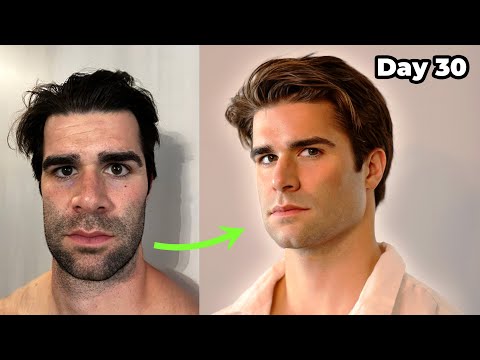 A MAN WHO SPENT A MONTH TRYING TO BE MORE MAN, FOLLOWING THE GUIDELINES OF LOOKSMAXXING. TO BE CLEAR, THIS PERSON IS NOT CLAVICULAR, WHO WE ARE DECLINING TO SHOW BECAUSE HE DOES NOT DESERVE THIS MUCH ATTENTION FROM WOMEN. When we think about the manosphere, we think about guys out in the wild, chopping wood, trying to assert dominance over all things through strength. But "looksmaxxing" sounds like the antithesis of that. Are the bros embracing a wider scope of masculinity, or is it really all a net negative? It’d be nice if this was a gesture towards enlightenment, but what lies at the heart of looksmaxxing is desire—specifically, the men who are trying to mold themselves into the aesthetically ideal men are doing so in order to attract women. The manosphere is powered by the fumes of men who, like many, many people on earth, have faced rejection, either romantically, professionally or otherwise. What’s sinister about this is not rejection, as that is a simple fact of life, but the entitlement that men feel when faced with rejection. And it’s what people do with that entitlement that makes this entire situation alarming, to say the least. The TikToker who is sort of resurrecting looksmaxxing is a 20-year-old named Clavicular who associates with the likes of Nick Fuentes and Andrew Tate. What's the connection between a sharp jawline and the right? Ugly guys can be fascists too, no? If we must trace the connection between the far-right and a jaw that could cut glass, we have to go back to the Nazis and their demented and incorrect views on beauty and the aesthetic ideal. The ideal Aryan man is blonde, blue-eyed, and muscular, the perfect specimen of physical fitness, absent any trace of racial ambiguity. Fascism, too, is about control—and if looksmaxxing is a means of seizing control over the one thing a young man actually can control, then it makes sense that these movements are inherently connected. It’s important to note, too, that Clavicular is doing what he does for the clicks—attention, in this economy, can lead to fame, financial gain. He and his compatriots are just a flash in the pan, but the real issue here is the thinking behind it.  FOLLOW THE METEOR     Thank you for reading The Meteor! Got this from a friend? |

Break Up With the Manosphere
We’ve seen what the bros have built. We can do much better.
BY SHANNON WATTS
It feels like months since Donald Trump took office, but it was just 12 days ago. In that short time, we’ve experienced the whiplash of executive orders, confirmations, and quiet erasures of government workers. Dangerous cabinet members have been confirmed. Diversity and equity gains were gutted with the stroke of a pen. The federal government’s reproductive rights webpage disappeared overnight as if it had never existed (but here’s the archived version). The chaos is all-consuming—each move expected, yet somehow still landing like a fresh gut punch.
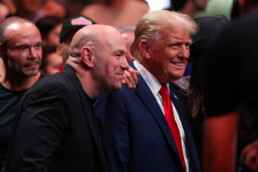
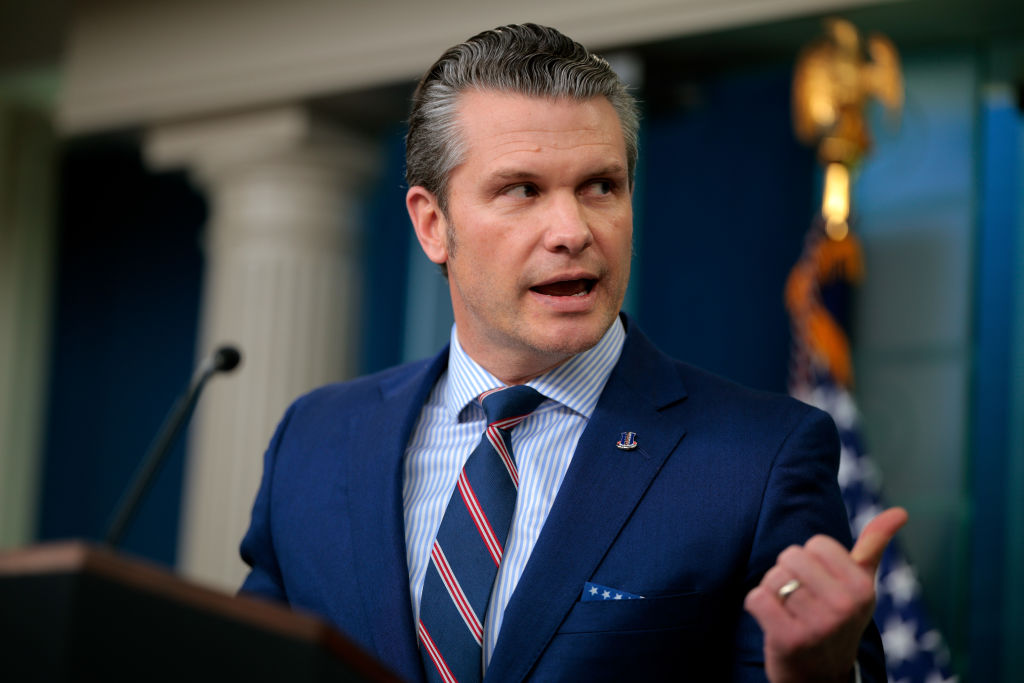
Trump is operating from the playbook he promised voters, but watching men whose own family members have accused them of predatory behavior march into positions of power while women are marginalized feels like a full-throated “fuck you” to feminism. It’s as if the men who are now in power are hellbent on rolling back all of the progress women have made since the 70s and they’re reveling in their revenge.
To be clear, Trump’s victory wasn’t just an election loss for the majority of American women who voted against him; it was a cultural rejection of female power facilitated in large part by the manosphere—a toxic, hyper-masculine echo chamber of podcasters, influencers, and bloggers who have spent years weaponizing misogyny. Their movement laid the groundwork for this moment, and right now, it feels like they’ve won.
A little history
The manosphere gained early visibility during flashpoints like GamerGate in 2014, where online harassment campaigns targeted women in gaming and tech, and the horrifying 2014 Isla Vista shootings by Elliot Rodger, who left behind a manifesto filled with misogynistic grievances. These events reflected a growing backlash to the rise of feminist blogs like Jezebel, the increasing mainstreaming of feminism, and women’s voices being amplified in previously male-dominated spaces. This toxic ecosystem grew to include communities like incels (involuntary celibates), Men Going Their Own Way (MGTOW), and Men’s Rights Activists (MRAs), which have long framed feminism as a threat to their identity and power.
But as I sit with the weight of it all, one thing has become clear: if we are going to successfully combat this backlash, we have to build something stronger than outrage alone. Online activism has played a critical role in mobilization and awareness for progressive causes—just as it has for the manosphere—but it’s not enough on its own to win. We need spaces for women in every arena: online, in real life, in activism, in community, and in joy.
We need a womansphere. Because the antidote to the manosphere isn’t just resistance—it’s connection.
The manosphere certainly creates connections but around the worst things. Modern-day manosphere leaders like “alpha” strongman Elliott Hulse, who preaches male dominance and rails against feminism, and far-right provocateur Nick Fuentes, the “your body, my choice” jackass who never met a nazi salute he didn’t like, exploit this resentment toward women, promoting hyper-masculinity as a cure-all for a world they claim is dominated by “woke” ideologies. Their messaging finds fertile ground in online forums like 4chan and Reddit, where misogyny and grievance politics are celebrated. Figures like Andrew Tate openly normalize violence against women, while he currently awaits trial on human trafficking and rape charges.
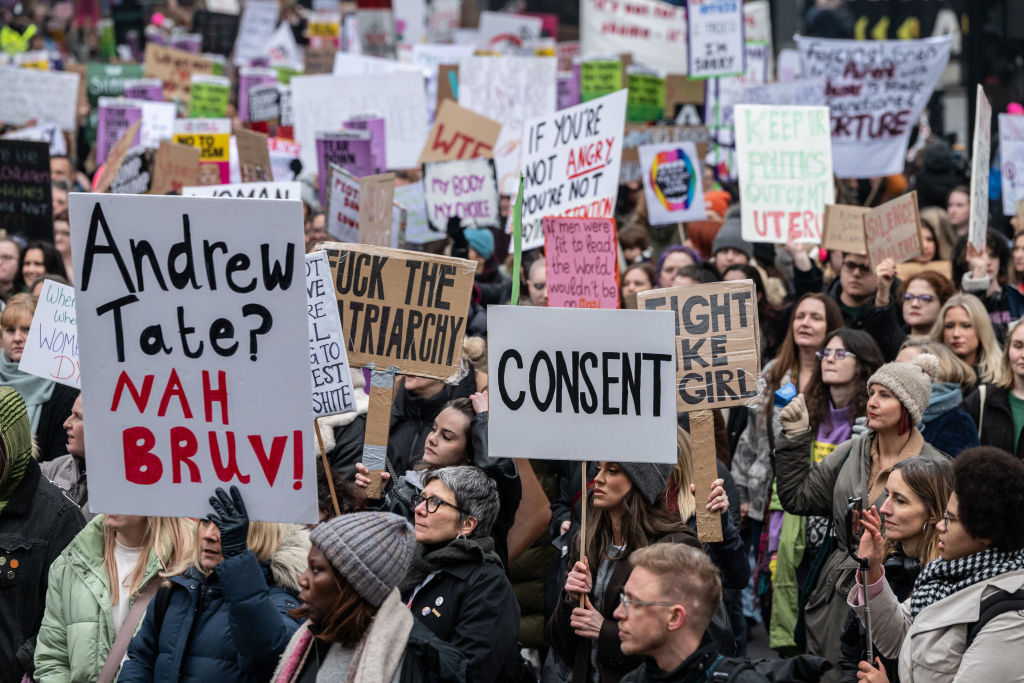
The manosphere now actively recruits vulnerable young men through everything from bodybuilding forums to gaming livestreams, and thrives on creating enemies: women, feminism, and anyone challenging the status quo. Fear, blame, and division remain the cheap fuel that powers this system, pulling in disillusioned men and weaponizing their grievances against progress.
After the election, it felt as if the manosphere was unstoppable. But then I received an invitation to attend a meeting in San Jose with a group called the Gigis, a community created for “midlife women to gather, grow, and give back.” This regular gathering of nearly 60 women wanted me to lead them in a discussion about what they could do in the aftermath of the election. During our two-hour meeting, some of the women said they were exploring a run for office. Others were starting nonprofit organizations to serve their neighbors. And others were going back to school to hone their activism skills. But all of the Gigis were committed to coming together to encourage each other to keep going.
Like the manosphere, this is a community, and the point of communities—of all types—is to help us find our purpose, test and hone our values, and be a part of something greater than ourselves. I’ve seen firsthand through Moms Demand Action that communities are where the real change happens—in ourselves and in the world. Not only is Moms Demand Action one of the largest grassroots organizations in the nation, but it’s also the largest real-life laboratory for helping women find their people and, in turn, their power. And that’s where we need to focus our energy: on creating in-person spaces that inspire connection and collective action. Unlike the manosphere, which thrives online by feeding on anger and fear, what I’m advocating for is grounded in real, face-to-face relationships, that foster compassion and collaboration. That’s the crucial difference between their network and what I’m calling the womansphere—we don’t just build ideas, we build bonds.
The manosphere understands that people crave belonging, even if their version rallies around a fear of inadequacy. But a healthy community—even if it’s just a handful of people—can help us feel connected to others and feel like we're part of something larger than ourselves. The manosphere thrives on reinforcing outdated power structures. The womansphere reimagines them entirely, creating a space for equity, inclusivity, and growth. Online and offline, where women can connect without fear.
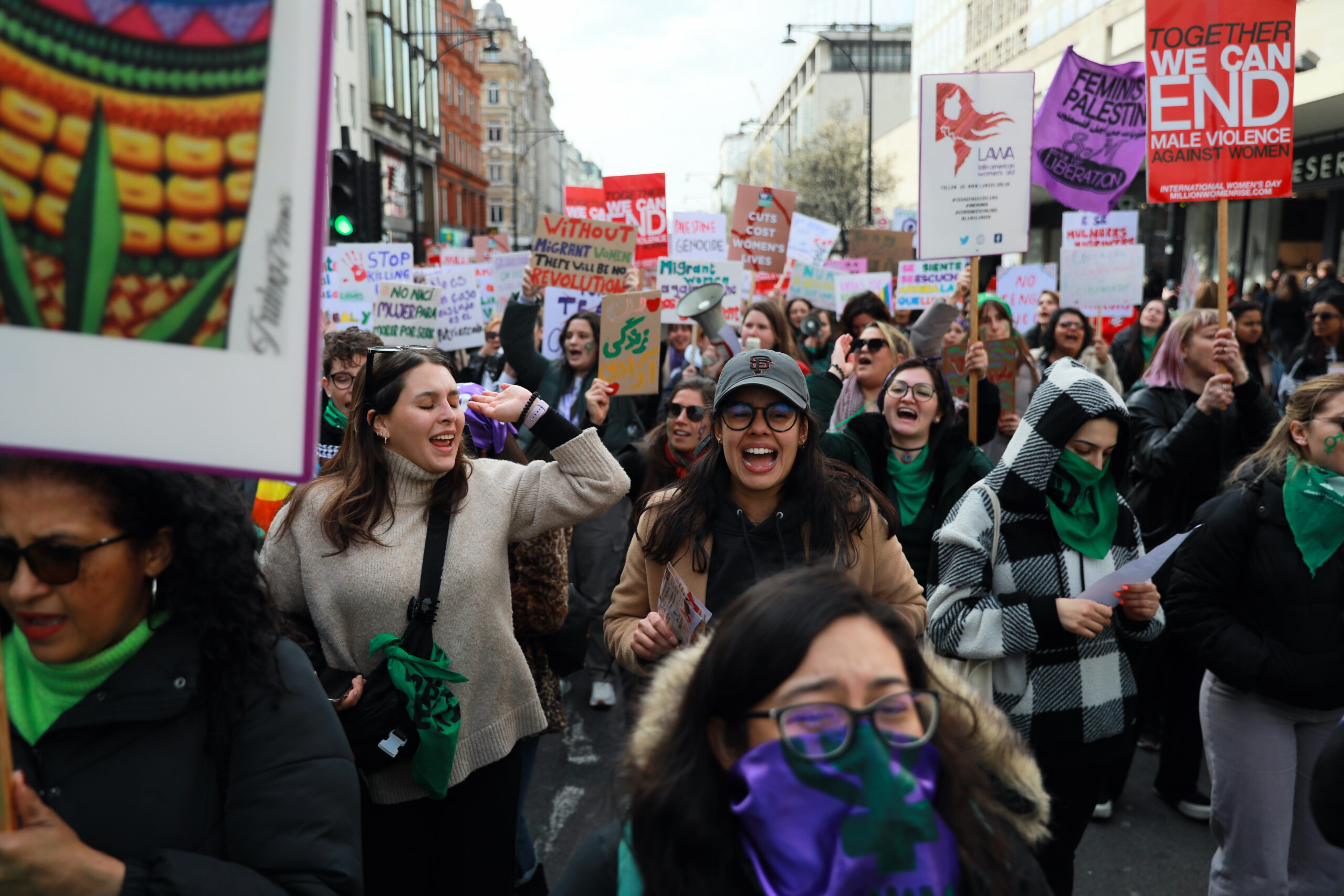
Sitting with the Gigis—knowing that women everywhere, of all different walks, are meeting in their own groups—I realized that the most effective resistance to the Trump administration won’t be en masse, but underground—and it will start in small communities. We need a womansphere where we can come together in person from all walks of life to feel empowered, supported, and seen. We need in-person communities where women can have conversations, despite their levels of education or political views. We need more media and platforms to lift up women’s stories, leadership, and solutions. We need to celebrate and center diverse leadership and lived experiences. And we need to create a womansphere that is as loud and visible as the manosphere, but infinitely more constructive.
To be clear, I’m not talking about the existing “tradwife” communities, where women advocate for a return to regressive, hyper-traditional gender roles and use “feminine wiles” as power. Our womansphere is about real progress, inclusivity, and collaboration—not performative or nostalgic ideas of femininity. The womansphere isn’t just a rejection of toxicity; it’s a blueprint for a better, inclusive future.
The manosphere won’t go down without a weird, gross fight. Right now, they’re gloating, emboldened by political wins and all those inaugural ball invitations. But that’s all the more reason to double down on creating an alternative. In this moment, women, as always, face the harder job. Instead of tearing things down, we’re tasked with building something meaningful, something that endures. We need to work towards something, not against it. And while feminist spaces have historically had their own moments of conflict and division, this new womansphere can learn from the past and make constructive collaboration its guiding principle.
Build your community. Find your people. Start the conversation. This isn’t about perfection; it’s about progress. The womansphere starts now, and it starts with us.
And seriously, our content is way better anyway. Here are a few ways to enter the womansphere:
Podcasts
- America, Who Hurt You?
- Pulling the Thread
- The Amendment
- News Not Noise
- My So-Called Midlife with Reshma Saujani
- Not Gonna Lie with Kylie Kelce
- UNDISTRACTED, with Brittany Packnett Cunningham
Mission Driven Groups
- National Women's Defense League, a nonpartisan organization dedicated to preventing sexual harassment and protecting survivors.
- TOGETHXR, a media and commerce group founded by some of the world’s greatest athletes.
- Women in AI (WAI), a nonprofit do-tank working towards inclusive AI that benefits global society.
- Project Dandelion, a women-led global campaign for climate justice.
- GenderLib, an emergent and innovative grassroots and volunteer-run national collective that builds direct action, media, and policy interventions centering bodily autonomy
- Moms First, grassroots community of moms and supporters taking action in their homes, workplaces, and communities.
Inclusive Journalism:
- The Persistent, a digital journalism platform committed to amplifying women's voices, stories, ideas, and perspectives.
- The 19th News, an independent, nonprofit newsroom reporting on gender, politics and policy.
- them, the award-winning authority on what it means to be LGBTQ+ today — and tomorrow.
- The Gist, a women-led, inclusive, and empowering sports community made for everyone.
- The Meteor, a multimedia company centering the lives of women, girls and nonbinary people. (Hi, that’s us!)
Social Media Darlings:
Emily Amick (@emilyinyourphone)
Your Virtual Anti-Disinformation Bestie (@the.wellness.therapist)
Becca Rea-Tucker (@thesweetfeminist)
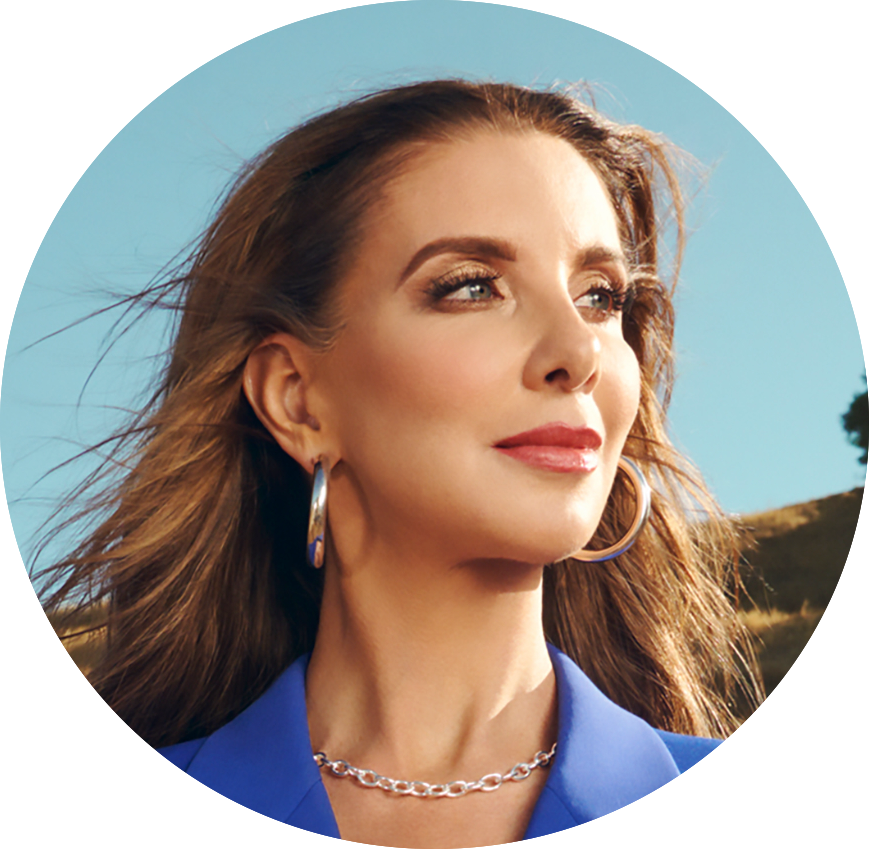
Shannon Watts is an author, organizer, and speaker. She founded Moms Demand Action and recently organized one of the largest Zoom gatherings in history, mobilizing women voters for the 2024 Kamala Harris campaign. Her new book Fired Up is coming in 2025.