
The WNBA's Biggest Test
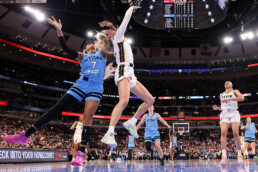
  August 11, 2026 Salutations, Meteor readers, When the great poet said “August slipped away like a bottle of wine,” she really wasn’t kidding. The month just started, and yet I already feel like it’s ending as I prepare for my daughter’s first school season 😭. I’m not crying because I’m wistful; I’m crying because I saw the price of uniforms.  In today’s newsletter, we’re talking about the foul heard round the world. Plus, some good news for abortion seekers. Backpacks and bellinis, Shannon Melero  WHAT'S GOING ONWho’s “protecting” whom?: On Saturday, in a game between the WNBA’s Indiana Fever and the Chicago Sky, the Sky’s DiJonai Carrington committed a flagrant foul that has reverberated beyond the court for one very specific reason: She elbowed the vocal anti-trans player Sophie Cunningham. Carrington was ejected from the game after some jawjacking between the two teams. Afterward, she said the contact was unintentional (Cunningham is skeptical) and called for the league’s refereeing “to be consistent across the board regardless of the name on your jersey or your skin color or the score of the game.” As with all things pertaining to sport, none of this is just about basketball. Over the last few weeks, there have been a number of “fan incidents” at WNBA games where said fans hurled racist comments at players and held courtside anti-trans demonstrations. Owners have been suspended. Fans have been ejected. This behavior at games is not necessarily new, but the incidents have become frequent enough that in July the WNBA Players’ Association met with the league to discuss safety concerns. At the center of this maelstrom is the anti-trans movement, which has hitched its wagon to Cunningham, a white, attractive, middle-of-the-pack player—the right does love to make stars out of the unimpressive—and much of the attention and support around her is being drummed up by a conservative clothing brand XX-XY, which is capitalizing on Cunningham’s stance of “protecting” women and girls in sports from “biological men.”  IT'S KIND OF GIVING RENAISSANCE PAINTING. (VIA GETTY IMAGES) Cunningham, her new bestie Riley Gaines, and XX-XY are all playing up (and monetizing) the manufactured fear of some trans boogeyman infiltrating the WNBA to steal all the jobs of the women in the league. Truly, I dare anyone to try and come for A’ja Wilson’s job! The reality is that in the history of the WNBA there has been one (1!) active player who came out as trans: Layshia Clarendon, who played for eleven seasons. And yet, women like Sophie Cunningham are still positioning themselves as victims of trans women and allies. In fact, Cunningham is so committed to this victim bit that she recently stated that she just “wants to get back to basketball” and not continue discussing an issue that she herself brought up. It’s not a coincidence that the war against trans women is boiling over to this degree at the WNBA just a few months ahead of the midterms. Why else would a man running for a Senate seat announce mid-campaign that he’s declaring for the WNBA draft? The W, for all its woes, has created a standard for inclusivity and has shown on a national scale the power of Black women and queer people who organize around a cause. This league is the right’s nightmare, and now this white woman being accosted is a sneaky way to spread the message that Black women must be silenced and trans women eliminated. In the immediate aftermath of the flagrant foul, attention-starved anti-trans “activists” jumped to Cunningham’s defense and the so-called defense of women’s sports overall. The WNBA’s front office also announced that it would be reviewing eligibility requirements. No matter how this unfolds, the battle lines have been drawn. The W will either have to full-throatedly condemn the anti-trans movement and enshrine its stance in the eligibility requirements, or it will have to bend to the will of bigots. There’s no more room to hide behind Pride nights and vague slogans; the moment to truly walk about what it talks about is here. The ball is quite literally in their court, and the privilege of silence no longer exists. AND:
 FOLLOW THE METEOR     Thank you for reading The Meteor! Got this from a friend? |


SCOTUS Deals in the Dark, Again
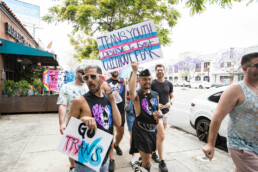
  March 3, 2026 Greetings, Meteor readers, I don’t know about the rest of y'all, but I’m a stress baker and given how bad things are, my oven has been working overtime. On Saturday, I made a burnt basque cheesecake that my taste testers said was perfection.  In today’s newsletter, we take a look at the Supreme Court’s latest use of its emergency docket. Plus, three questions with author Savala Nolan about her new book, Good Woman: A Reckoning. Pain au chocolat next, Shannon Melero Crocker  WHAT'S GOING ONNo argument: Yesterday, in an emergency docket decision, the Supreme Court chose to “pause” a California policy that prevented teachers from informing parents about a student’s gender expression. For the safety of queer students, California’s board of education had directed teachers to not discuss changes in gender expression or any kind of social transitioning with parents, out of concern that some students might face abuse at home. In response, a group of parents and teachers filed an emergency appeal claiming that the policy violated their religious rights. The Supreme Court sided with those parents and teachers. “The State argues that its policies advance a compelling interest in student safety and privacy,” the decision reads. “But those policies cut out the primary protectors of children’s best interests: their parents.” (Nevermind that the parents are arguing not for the sake of their children, but for the right to exercise their own personal religious beliefs over their children’s lives.) The decision essentially means that students do not have an expectation of privacy if they choose to confide in a teacher or start to explore their gender identity (if they, for example, ask to be called by a different name) at school. The pause on California’s policy doesn’t mean teachers are now compelled to out students; rather they will be expected to answer questions from parents who are trying to find out if their child is socially transitioning. If they don’t, they run the risk of being punished for violating parents’ rights to exercise their religious beliefs.  A DRAG MARCH FOR TRANS RIGHTS IN SAN DIEGO (VIA GETTY AIMGES) There are several alarming issues competing in this case, but perhaps none more alarming than the one brought up by Justice Elena Kagan in a dissent joined by Justice Ketanji Brown Jackson. Speaking of the haste with which the conservative judges came to a decision in the case, Kagan wrote, “The court is impatient: It already knows what it thinks, and insists on getting everything over quickly. A mere decade ago, this court would never have granted relief [without a] full briefing, oral argument, conference, and opinion writing, along with the time they take.” Kagan also noted that the Court had received a “scant and inadequate briefing” about the merits of the case and called the majority’s decision “tonally dismissive.” That is the dark magic of the court’s emergency docket: the ability to decide quickly and with minimal explanation which rights supersede others. Kagan herself admits that the parents’ group had certain rights, but so did the California Department of Education, which had created the policy for the protection of students. We are seeing, in real time, an erosion of due process at the highest court in the land, and it isn’t the judges who are paying the price. This time, it’s students, who are daily running out of safe places to express themselves, and who will suffer at the hands of six conservatives and the stroke of a pen. AND:
 Three Questions About…God the MotherIn Savala Nolan’s new book, Good Woman, clarity is the goal.BY SHANNON MELERO  AUTHOR AND ESSAYIST SAVALA NOLAN (COURTESY OF SAVALA NOLAN) There are certain things you read as a writer that make you think, I should stop trying because nothing I do will ever be this good. Most recently, I felt this way after finishing essayist Savala Nolan’s latest book, Good Woman: A Reckoning, which Ms. Magazine has named one of the most anticipated feminist books of this year. Good Woman is a collection of poignant, brutally honest essays exploring the various cages women put themselves into so that they might be considered “good”—good mothers, good wives, good daughters—and the ways in which those cages can be small deaths. The book opens with a gut-punching essay titled “Mothers Superior,” which weaves Nolan’s experiences as a mother and how that changed her understanding of God. In a line that gave me chills, Nolan writes, “Calling God a father seems like wishful thinking, delusion, or outright deception.” I asked Nolan about the godlike work of mothering and how that extends into different facets of life. There’s a lot of friction between mainstream feminism and religious belief, almost to the point where in some feminist spaces you’re really looked down on for believing in God. But you don’t shy away from using that as a point of entry for a bigger conversation about feminist concepts. What was the thinking behind bringing folks into the fold that way? I can relate to the idea that you can't be a deep feminist and also believe in God, although I would add the wrinkle that, at least in American culture, there are certainly Black feminists who have a relationship with God that is interesting and central and different than what you would consider the mainstream white feminist approach. But for me personally, I am a feminist and I'm also a womanist in the Alice Walker sense, [which is] a little bit more earthy and loving than feminism. I also have had a lifelong interest in God and those two things have always been at odds, although I couldn’t quite put my finger on why. What I came to realize after having a child and experiencing motherhood for myself was that the problem was not so much whether or not God exists, but how God was spoken about in American, Judeo-Christian culture. God was always presented to me as a father and that description defied all of my experience because it was mothering that was so much more like what God was supposed to be. This idea that I was supposed to be able to rely on God and trust God and feel God's care 24 hours a day, no matter what… that did not feel like something that I associate with fathers. Because fathers don't really do that. That's a motherly quality. That round-the-clock, tireless day-in-day out kind of caretaking is motherly. Once I was able to really experience that myself, I was able to see that motherhood is actually the right metaphor for any god that's worth believing in. That idea has some kind of spiritual woo-woo juiciness to it, but it has political, real-life juiciness to it as well. [We need to] have policy goals around treating motherhood like something that deserves to be compensated or seen or understood as foundational to the economy. If one way of [highlighting that work] is saying, Hey, what mothers are doing is on the level of God, then that can translate into political arguments. You’re very intentional about describing motherhood as a verb that transcends gender and is not solely rooted in the act of giving birth, but in godlike levels of attentiveness and care. Fatherhood, historically, is not that, but you write that fatherhood could, at some point, become more like mothering. What would that look like? Because when I read it, I felt like you were asking me to imagine a color that’s never been seen. Motherhood is accessible to anyone. There’s not only one way to mother. If we pull the lens back, even just a millimeter, you start to see there are people who perform mothering in a friend group or for their office, their colleagues, or there are people who mother their aging parents. We're talking about a level of attunement, a sense of responsibility, and an emotional openness. Anyone could mother, including a dad. Which is not to say fatherhood isn’t its own special thing. [But in order for dads to mother] I think men would have to be socialized a little differently, and we'd have to understand motherhood in a cultural sense as a godlike function that is worthy of anyone aspiring to do it, because it is the most essential and profound way any of us can connect with the bigger mystery of the universe. Toni Cade Bambara says the goal of the artist is to make the revolution irresistible. I want to make the idea of mothering irresistible. Even to men. What are you hoping people take away from this book as a whole? [When] I hit midlife, I had my career going, my marriage, had a baby—you know, all the stuff. I realized that being the way I was told to be by my culture—agreeable, helpful, obedient, quiet, in control of my body—were making me sick. What you’re told as a girl is that if you’re all of these things, you’ll find happiness. But like many women…I realized that’s a bill of goods. It’s snake oil. I did all that shit and it didn't work. So I just started to question, with searing intensity, how I'd been socialized in every area of my life, and I started to shed it. At that time, I was finding that [my daughter] had so much joy and freeness. And I just thought, This precious little child is also going to be 40-something one day and following the same trajectory. That put some fear in me. So I wrote this book in the hopes that it helps people hit that epiphany sooner than midlife. It isn’t fair that we have to wait to pass 40 to start clearing all of this mess. My dream is that more women can find this clarity way sooner than I did.  FOLLOW THE METEOR     Thank you for reading The Meteor! Got this from a friend? |
