
Doctors and Nurses vs. ICE
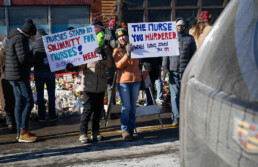
  January 27, 2026 Hey there, Meteor readers, The ice outside my door is so thick, I could probably skate on it if I really tried. But considering everything going on in the world, that’s not the worst thing to see in the morning.  WNBA STAR AND UNRIVALED CO-FOUNDER BREANNA STEWART. (SCREENSHOT VIA INSTAGRAM). In today’s newsletter, Dr. Heather Irobunda helps us understand what healthcare providers are feeling right now. Plus, the next general strike is coming. Throwing salt, Shannon Melero  WHAT'S GOING ONFighting for our health: “There’s this thought that our scrubs—our professions—would protect us,” says Dr. Heather Irobunda, a New York-based OB/GYN and reproductive rights advocate. To see Alex Pretti “shot like that was very jarring for our field.” Pretti, an ICU nurse at a Veterans Affairs hospital in Minneapolis who was murdered by federal agents on Saturday, has sparked action across the country. His killing—much like the killings of Renee Good, Keith Porter, and Silverio Villegas Gonzelez—has reminded us that everyone is unsafe as long as ICE and CBP agents are allowed to operate unchecked. While activists have long been raising the alarms about ICE’s unmitigated cruelty, Pretti’s status as a nurse has added a new dimension to the conversation. The medical field has come out strongly against Alex Pretti’s killing, emphasizing nurses’ roles as guardians of the vulnerable. (The Washington State Nurses Association pointed out a germane directive in The Code of Ethics for Nurses: “Where there are human rights violations, nurses ought to and must stand up for those rights and demand accountability.”) It’s hard to continue defending agents once they’ve murdered a caretaker who, in his last act on earth, was trying to shield someone from pepper spray. Is that not the kind of person—the kind of man—we ask our children to work toward becoming?  PROTESTORS IN MINNEAPOLIS THIS WEEK (VIA GETTY IMAGES) For those in the medical field, ICE’s increased presence isn’t just a question of morality or policy; it’s a threat to public health. On one level, Dr. Irobunda says, the connection is extremely straightforward. “One of the biggest markers of health is mortality,” she says. “They are killing people in the streets.” And there’s a ripple effect. Dr. Irobunda shares that one of her patients, a pregnant woman with gestational diabetes, lost her husband to deportation. He was the primary breadwinner, and when he was arrested, she couldn’t afford food and was eating only rice and plantain for days at a time. More than likely, her child will have diabetes at birth. Patients are also skipping appointments—including, as reporting from The 19th highlights, crucial prenatal care—for fear of being arrested on their way to the doctor or hospital. In Dr. Irobunda’s neighborhood hospital in Queens, ICE agents “routinely hang out down the street,” she says. ICE isn’t just looking to arrest patients, but also doctors and nurses with visas or permanent residence, who are “scared to come to work, too.” She explains that due to a shortage of healthcare workers in the U.S., doctors have been traveling from other countries to treat patients. But issues with visa delays and concerns over ICE have made getting doctors into hospitals that much harder. Despite the dangers, the medical community has been incredibly vocal about the health implications of ICE’s scare tactics. Just last month, healthcare workers staged a protest outside an ICE facility in Portland, Oregon. Doctors have also accused ICE of medical neglect for people in detention—a plausible accusation considering that in both the Good and Pretti killings, ICE blocked medical personnel from the scene.  PROTESTORS IN OREGON "EXERCISING" THEIR FIRST AMENDMENT RIGHTS OUTSIDE OF AN ICE FACILITY. (VIA GETTY IMAGES) “A lot of us were taught that this is an apolitical job,” Dr. Irobunda says. “In an ideal society where everybody's treated equally and getting what they need, we wouldn't have to be political.” But in a system where policy can have the power to change health outcomes for millions, Dr. Irobunda says, “we have to be involved. No one’s safe unless we’re all safe.” AND:
 THE SMILE OF A WINNER ON AND OFF THE FIELD (VIA GETTY IMAGES)
 FOLLOW THE METEOR     Thank you for reading The Meteor! Got this from a friend? |


Renee Nicole, and Keith, and Marimar, and...
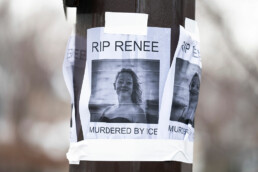
  January 9, 2026 Hey there, Meteor readers, Anyone else already getting impatient waiting for Heated Rivalry, Season Two? We NEED to get back to the cottage.  In today’s newsletter, we look at the story that’s on all our minds today—the murder of Renee Nicole Good—and the long road of violence that preceded it. Plus, a moment of good news for parents, and your weekend reading list. One day at a time, The Meteor Team  WHAT'S GOING ONA growing list of names: Yesterday, a masked ICE agent in Minneapolis shot and killed Renee Nicole Good, who had allegedly been blocking agents from entering her neighborhood. Shortly after the shooting, a Department of Homeland Security spokesperson referred to Good as a “violent rioter” and called the killing an act of self-defense. DHS Secretary Kristi Noem even suggested that Good was part of a group carrying out a “domestic act of terrorism” using vehicles as weapons. But video from the scene shows Good giving way to federal vehicles and trying to respond to conflicting orders from DHS agents, shortly before she was approached and shot through her windshield. Witnesses to the murder have also contradicted DHS’s account of what happened, and video also appears to show ICE preventing medical personnel from nearing the scene. Good’s murder has sparked protests in Minneapolis and calls for investigations into ICE’s tactics. Renee Nicole Good was a parent. Just like Keith Porter, who was shot and killed by an off-duty ICE officer in December for reportedly not complying with an order. Renee Nicole Good had a life, a family, a job. Just like Silverio Villegas Gonzalez, who was shot and killed by ICE agents during a traffic stop in September. Renee Nicole Good was sitting in her car, just like Marimar Martinez, a teaching assistant in Chicago who was shot five times by ICE agents in October. (Miraculously, Martinez survived.) Renee Nicole Good’s community was being terrorized by a violent group of thugs hiding behind masks and the emblem of a federal agency—just like communities in Boyle Heights, Westlake, Santa Ana, Pasadena, and Chicago. And that’s not even to speak of what happens where videos rarely record: In 2025, 32 people died while in ICE custody—the most in more than two decades. Movements in America often gain traction after a horrific event spurs people into action. The violence has to be so profound, so unbearable, or so vividly recorded to shake us from a passive state. But those boiling points are never the first incidents. Patrisse Cullors, Alicia Garza, and Opal Tometi launched Black Lives Matter back in 2013, after the man who killed Trayvon Martin was acquitted—seven years before the murder of George Floyd sparked massive protests across the country. Tarana Burke amplified stories of sexual assault and harassment for more than a decade before reporters exposed Harvey Weinstein’s crimes and MeToo went viral. The question I find myself asking is: Will Renee Nicole Good be the one? Will her murder be the turning point for us to stay in the streets, for judges to intervene, for any lawmaker still waffling to decide “no more”? Or will she blend in with the rest of the violence? A month from now, will we forget her name as we’ve forgotten Keith, Silverio, Marimar, and the dozens of others who never had their moment in the national news spotlight? How much does the body count have to rise for every last person to flood the streets for justice? Because it must be all of us. Our elected leaders are not equipped to take on this task alone. Rep. Ayanna Pressley made her stand and demanded an investigation into the killing of Renee Nicole Good; the GOP blocked it. Former Chicago Mayor Lori Lightfoot is launching an ICE Accountability Project, which is a step in the right direction, and Rep. Robin Kelly is filing articles of impeachment against DHS Secretary Kristi Noem. But between 2015 and 2021, ICE agents were involved in 23 fatal shootings. No agents were indicted. Will this be the year we stop at one? AND:
 A POSTCARD FROM MAMDANISTAN 😘 (VIA GETTY IMAGES)
 WEEKEND READING 📚On history: On the heels of a protester’s violent death at the hands of law enforcement, it might be useful to reread Jill Lepore’s 2020 piece on whether we still recall the lessons learned in blood at Kent State. (The New Yorker) On healing: There are glimmers of hope for the uninsured in America. (The Baffler) On heroes: To celebrate Wyoming’s recent abortion win, here’s a profile of Julie Burkhart, an unstoppable abortion care provider in the state. Even an arsonist burning down her clinic wasn’t enough to slow her down. (The Story Exchange)  FOLLOW THE METEOR Thank you for reading The Meteor! Got this from a friend? |
