
122 Days Living Without Water
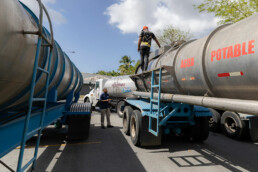
  June 26, 2026 Greetings, Meteor readers, My kid demands to listen to the K-Pop Demon Hunters soundtrack every night before bed, and I’ve started turning it into an opportunity for aerobics. Last night she looked at me and said, “Why you dancin’ like that, mama?” Rude.  Today we bring you an update on a state of emergency that hits uncomfortably close to home. Plus, it’s primary day for Michigan, Kansas, Missouri, Virginia, and Washington. Go get your stickers! With love, Shannon Melero  WHAT'S GOING ONEmpty faucets: For the last 122 days, Puerto Rico has been experiencing a severe water crisis. An estimated 180,000 households have lost running water for days at a time, and while the situation has slightly improved, many homes and businesses are still experiencing hours of either total water loss or potable water loss. The National Guard has been delivering potable water to affected areas in repurposed milk trucks. On Monday, conditions had reached such crisis levels that the government announced a plan for water rationing across the island. How did we get here? In June, power failures, which have become a near-daily occurrence over the nine years since Hurricane Maria, caused service disruptions at a water filtration plant. Then, a few days later, massive ruptures were found in the Superacueducto, a major pipeline that carries water from treatment centers into cities like San Juan, Carolina, and Loíza. Residents there were left without service while the Puerto Rico Aqueduct and Sewer Authority (PRASA) attempted repairs. But the work has been slow, and as water spills from the Superacueducto and electricity becomes spottier at filtration centers, another problem compounds this horrific situation: There’s a drought. More than 82% of the island—which is home to a rainforest—was under abnormally dry conditions as of the end of July. Officials have been confounded. At one point, Governor Jeniffer González Colón “even invoked God, begging him for rain,” Susanne Ramirez de Arellano, a journalist living in Old San Juan, tells The Meteor. “We’re left wondering what kind of a plan she actually has to face this water crisis besides asking for divine intervention.”  WATER TRUCKS PREPARING FOR DISTRIBUTION IN MID-JULY. (VIA GETTY IMAGES) Meanwhile, “abuelas are hauling five-gallon buckets up three flights of stairs to flush a toilet and wash a plate,” writes activist and movement strategist Luis Jonathan Hernandez. “Mothers are heating bottled water on a stove to bathe their kids.” Ramirez de Arellano says although residents are “furious to say the least,” they’re also “resilient. Life must go on. But this water crisis has brought many, including myself, to the end of their tether.” These problems are not new; they are the result of decades of neglect, fiscal mismanagement, and, as always, colonialism. Aqueducts don’t break overnight. Infrastructure does not erode in a weekend. These things are guided to failure by malicious hands. And a coarse salt in the wound is that, as Hernandez puts it, “This is the same summer everybody decided they were Puerto Rican.” It was only a few short months ago we bore witness to Bad Bunny’s Super Bowl halftime show and the internet was awash in praise and cultural dissection of Benito’s message. Everyone seemed to understand that they were witnessing something powerful, something bigger than a singular event. And yet, as Hernandez reminds us: “At that Super Bowl, in front of the whole world, he climbed an electrical pole to point straight at the island’s power crisis, and the crowd cheered the spectacle and let the meaning slide right off them.” It is a cruel irony that a small island surrounded by ocean, known for some of the most beautiful waters on the earth and besieged by rain on a semi-reliable schedule, is experiencing such a massive drought. It is perhaps even more cruel that they are enduring this completely alone. When I talk to people about the crisis they have one of two responses: I thought that ended or I didn’t know that was happening. In his writings, Hernandez gives marching orders to Puerto Ricans living in the diaspora: Don’t just carry the flag, carry the water. So to you, my dear Meteor reader, I step out of my journalist chair for a moment to deliver a personal plea. Do not forget about my people. Help us carry the water. AND:
 IS THE SCHIAPARELLI IN THE ROOM WITH US? (SCREENSHOT VIA YOUTUBE)
 FOLLOW THE METEOR     Thank you for reading The Meteor! Got this from a friend? |


We All Have a Climate Disaster Story
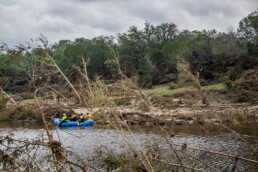
  July 8, 2025 Howdy, Meteor readers, It’s Amazon Prime Day, and in case you’ve been adding to cart, remember: it’s just a week-long scam to line Bezos’ pockets without providing meaningful discounts. There are other stores. In today’s newsletter, we’re grieving with the people of central Texas as they navigate an unbearable tragedy. Plus, a glimmer of hope for Planned Parenthood’s Medicaid patients. Thinking of Silvana and María, Shannon Melero  WHAT'S GOING ONUnforgiving waters: On Friday, a devastating flash flood struck central Texas, washing away homes, vehicles, and much of an all-girls’ summer camp, Camp Mystic. The death toll is over 100 but is expected to rise as rescuers continue searching the Guadalupe River for remains of the deceased. As is often the case when a tragedy of this size occurs, many are wondering what, if anything, could have been done differently to preserve life. According to a timeline compiled by NPR, the National Weather Service (NWS) and the Texas Division of Emergency Management issued warnings of imminent flooding in the area, with alerts upgrading in severity hours before the river started to swell. But some Texas officials are blaming the NWS—an organization that lost 600 workers this year because of Trump’s federal restructuring and funding cuts to its parent, the National Oceanic and Atmospheric Administration—for inadequate warnings. Trump denied the correlation, saying, “This is a 100-year catastrophe.” Well, yes and no. This kind of flooding used to be a 100-year catastrophe, but human behavior and government failures have quite literally changed the game. While there will need to be an investigation to determine if the shortages at NWS (including the fact that a key manager in charge of local warnings reportedly left after cuts this spring) exacerbated the situation, one thing is certain: extreme weather events are becoming more frequent, and this flood’s severity was impacted by worsening climate change. “With a warmer atmosphere, there is no doubt that we have seen an increase in the frequency and the magnitude of flash flooding events globally,” meteorologist Jonathan Porter told the L.A. Times. “The key question is, what did people do with those warnings…What was their weather safety plan, and then what actions did they take based upon those timely warnings, in order to ensure that people’s lives were saved?” Perhaps the loss of life could have been minimized with more evacuations from the area, nicknamed Flash Flood Alley, but it is an inescapable fact that more and more people will die as the Earth continues to warm. And as we’ve seen from the number of young girls swept away by flood waters, it will be the most vulnerable who pay the price. Whether we realize it or not, we’ve reached a point where every single one of us has a climate disaster story. (If you just thought to yourself, I don’t, remember the last two summers were the hottest summers since 1940 and not everyone lived to tell the tale. You’ve lived through at least two climate disasters.) Maybe you lost everything fleeing Hurricane Maria—or found yourself breathing poor air in New York City as smoke from the Canadian wildfires made its way south. Either way, living through or dying from a natural disaster is becoming unremarkable. The time for climate denialism is long gone. If the government is unwilling to take the financial and political steps needed to slow climate change, the “100-year catastrophes” will continue to mount. How you can help survivors in Texas: AND:
 WHAT REMAINS OF A HOSPITAL INSIDE EVIN PRISON. (VIA GETTY IMAGES)

 FOLLOW THE METEOR     Thank you for reading The Meteor! Got this from a friend? |

How the LA Fires Got So Bad So Fast
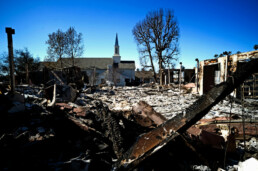
  January 13, 2025 Greetings, Meteor readers, The news from California has been heartbreaking; the Palisades, Eaton, and Hollywood Hills wildfires continue to sweep through the region, destroying entire neighborhoods, displacing thousands of people, and destroying wildlife. We hope all of our LA-based readers are keeping as safe as possible. For anyone looking for a way to help those affected by the fires, please take a look at this list compiled by Mutual Aid Los Angeles Network.  In today’s newsletter, we piece together the connection between the California fires and climate change. Plus, your weekend reading list. With love, Shannon Melero  WHAT'S GOING ONIn the line of fire: The Palisades and Eaton wildfires, along with a smaller fire in the Hollywood Hills, are being called “the most destructive” fires in the history of Los Angeles. So far, five people have been killed and roughly 180,000 people are under evacuation orders in the area. January isn’t peak fire season in California—so how did these particular fires get so bad so fast? The short answer is, for the most part, climate change. The longer answer is just how unseriously people in power are taking climate change. Experts have been saying for years that climate change would continue to exacerbate extreme weather events—hurricanes, fires, lightning storms, droughts, and wild weather swings. In California, those predictions have borne out: Climate change has contributed to hotter and drier weather, making for dangerous wildfire conditions. California’s famous Santa Ana winds are blowing with gusts as high as 100 mph. Add all of that to other consequences of climate change, such as recent dry weather and an “exceptionally wet climate from winter 2023 to spring 2024” (which created younger vegetation that isn’t as fire-resistant), and you have a region primed for a particularly bad fire season. There are other factors besides climate change, too: One scientist, UCLA professor Jon Keeley, told Mother Jones that power line failures, rapid population growth, and loss of fire-blocking vegetation in California have also played a large role in the fast spread of these fires. Finally, there’s California’s under-preparedness in the face of our new “pyrocene” era: There’s been a yearslong firefighter shortage in the state. As the blazes broke out this week, every single LAFD firefighter was asked to call in with their availability, a first in almost 20 years. (That includes those fire brigades composed of incarcerated people who get paid about 74 cents an hour for their labor.) All these factors have contributed to this week’s devastation in LA. What has not played a role are the city’s DEI initiatives—although that didn’t stop some right-wing pundits from claiming otherwise.The right is also placing blame on LAFD Fire Chief Kristin Crowley for prioritizing diverse hiring practices over “filling the fire hydrants properly.” (Just because it’s going to drive me crazy, I need to emphasize that it is not the fire chief’s job to fill the goddamn fire hydrants.) Activists often remind us that all of our struggles are interconnected. A fire in California does not exist in a vacuum; it lives in concert with a number of other political issues—none more so than climate change and how our leaders respond to it…or fail to do so. AND:
 PRESIDENTS CLINTON, BUSH, OBAMA, TRUMP, AND BIDEN, ALONG WITH THEIR SPOUSES AND VICE PRESIDENTS GORE, PENCE, AND HARRIS AT THE FUNERAL SERVICE FOR PRESIDENT JIMMY CARTER. (VIA GETTY IMAGES)
 WEEKEND READING 📚On being the “other” mother: A woman who chose surrogacy reflects on the thorny relationship it created—and where it left them when tragedy struck. (Electric Literature) On justice deferred: A “horrendous” sexual assault trial in Alaska has been delayed more than 70 times in the last 10 years. Here’s how similar slowdowns have become routine in the state. (ProPublica) On “Mas Fotos”: Bad Bunny’s sixth album has become more than just an album. Julianne Escobedo Shepherd dives into the deeper meanings of the artist’s “textured love letter to Puerto Rico’s Indigenous and homegrown musical styles.” (Hearing Things)  FOLLOW THE METEOR     Thank you for reading The Meteor! Got this from a friend? Subscribe using their share code or sign up for your own copy, sent Tuesdays and Thursdays. |
